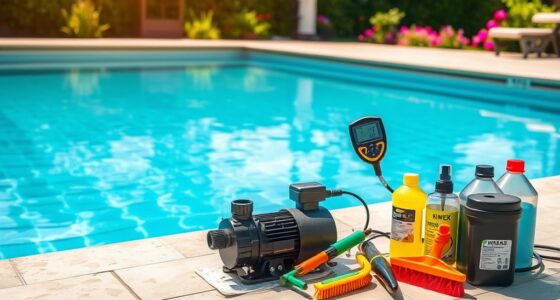
If you’re comparing maintenance needs, fiberglass pools are the easiest, with smooth surfaces that resist algae and require fewer chemicals. Vinyl pools need liner replacements every 5 to 10 years, adding ongoing costs and effort. Concrete pools demand frequent resurfacing and more regular upkeep, making them higher maintenance. Understanding these differences helps you choose the best option for your lifestyle. Keep exploring to uncover more details about each pool type’s care requirements.
Key Takeaways
- Fiberglass pools typically require less maintenance and fewer chemicals due to their smooth, algae-resistant surface.
- Vinyl liner pools need liner replacements every 5 to 10 years, adding ongoing maintenance and costs.
- Concrete pools demand regular resurfacing and more frequent chemical balancing for upkeep.
- Fiberglass pools generally have lower ongoing maintenance costs and easier cleaning routines.
- Surface material differences significantly impact long-term maintenance efforts and overall pool care.

Choosing the right pool depends on your priorities, budget, and space. When comparing concrete, vinyl, and fiberglass pools, it’s essential to contemplate factors like cost comparison and installation timeline, as these can considerably influence your decision. Concrete pools tend to be the most customizable option, but they usually come with higher upfront costs and longer installation times. The cost comparison shows that concrete pools are generally the most expensive, both in initial construction and ongoing maintenance, due to their complex build process and need for regular resurfacing. The installation timeline for concrete pools can range from six to twelve weeks, depending on the complexity and weather conditions, meaning you’ll need patience before enjoying your new backyard oasis.
Vinyl pools hit a sweet spot for many homeowners because they are more affordable than concrete and quicker to install. The cost comparison reveals that vinyl pools typically have a lower initial price, primarily because they are prefabricated and require less on-site construction. Installation is usually completed within two to four weeks, making vinyl pools an appealing choice if you want to enjoy your pool sooner rather than later. However, keep in mind that vinyl liners need replacing every 5 to 10 years, adding to maintenance costs over time. Their installation timeline is relatively short, which minimizes disruption and allows you to start enjoying your pool sooner. Additionally, the ease of maintenance and the surface material can influence ongoing upkeep costs and efforts.
Fiberglass pools are known for their durability and relatively quick installation process. The cost comparison indicates that fiberglass pools are generally mid-range—more expensive than vinyl but less costly than concrete. The advantage here is the shorter installation timeline, often completed within one to three weeks, depending on the size and complexity. Because fiberglass shells are pre-made, they’re installed as a single unit, reducing construction time and potential delays. Maintenance-wise, fiberglass pools tend to be easier to care for because their smooth surface resists algae buildup and requires fewer chemicals, translating to lower ongoing maintenance costs. This resilience makes fiberglass pools a popular choice for homeowners seeking longevity with less hassle.
Ultimately, your choice should align with your budget, how quickly you want to have a functioning pool, and your long-term maintenance plans. Concrete pools might be best if you desire a custom design and don’t mind the higher costs and longer wait. Vinyl pools are ideal if you’re budget-conscious and want quick installation, but be prepared for liner replacements down the line. Fiberglass strikes a balance, offering durability, faster setup, and manageable maintenance. By weighing these factors carefully, you can select the pool type that best fits your lifestyle and backyard vision. Considering the long-term maintenance implications can help ensure your investment remains a source of enjoyment for years to come.
Frequently Asked Questions
Which Pool Type Is Most Eco-Friendly?
You’ll find fiberglass pools are the most eco-friendly option because they use eco-friendly materials and require less chemical maintenance, reducing environmental impact. They also have lower energy needs for heating and cleaning. Vinyl pools are fairly sustainable too, with fewer materials used during installation. Concrete pools tend to be less eco-friendly due to their extensive materials and higher chemical and energy requirements. Overall, fiberglass pools stand out as the best sustainable pool option.
How Do Repair Costs Compare Over Time?
Ever wondered how repair costs stack up over time? With a cost comparison in mind, fiberglass pools usually have lower repair frequency and costs due to their durability, making them more budget-friendly long-term. Vinyl pools might need more frequent repairs, especially liner replacements, increasing expenses. Concrete pools often cost more to repair because of cracks and surface issues, but they tend to last longer, balancing out the investment.
Are There Color Options Available for Each Type?
Yes, you have several pool color options for each type, enhancing your customization possibilities. Concrete pools offer the most variety, allowing you to choose from many finishes and colors. Vinyl pools typically come with limited color choices, but some liners offer subtle shades. Fiberglass pools usually have a few standard colors, like blue or white, but custom gel coats can expand your options. Your selection depends on your preferred look and style.
Which Pool Type Is Best for Hot Climates?
Imagine your pool as a cool oasis in the blazing sun. Fiberglass pools are your best bet for hot climates—they resist heat better and warm up quickly. With ample shade options, you can keep the temperature comfortable longer. Concrete pools, however, absorb more heat and may require extra cooling measures. Vinyl pools stay cooler but may not withstand intense heat as well as fiberglass, making them less ideal for scorching environments.
How Long Does Installation Typically Take?
Installation times vary by pool type; fiberglass pools usually take 1 to 2 weeks, vinyl pools around 4 to 6 weeks, and concrete pools can take 8 weeks or more. During installation, you’ll need to manage pool chemical requirements carefully and follow seasonal maintenance tips to keep your pool in top shape. Planning ahead guarantees you’re prepared for regular upkeep and enjoy your pool without surprises.
Conclusion
No matter which pool you pick—concrete, vinyl, or fiberglass—you’re signing up for an epic adventure in backyard bliss! Each option comes with its own maintenance saga, but imagine the endless summer days and unforgettable poolside parties that make every effort totally worth it. So, choose wisely, get ready for the ultimate splash zone, and turn your backyard into the coolest, most incredible water wonderland anyone has ever seen. Your perfect pool adventure starts now!