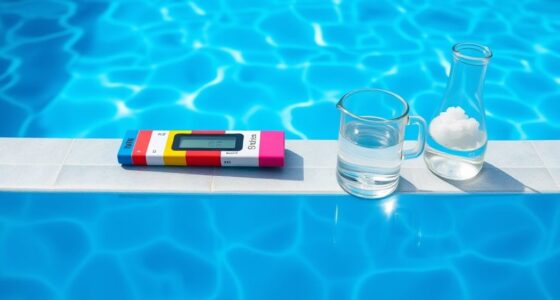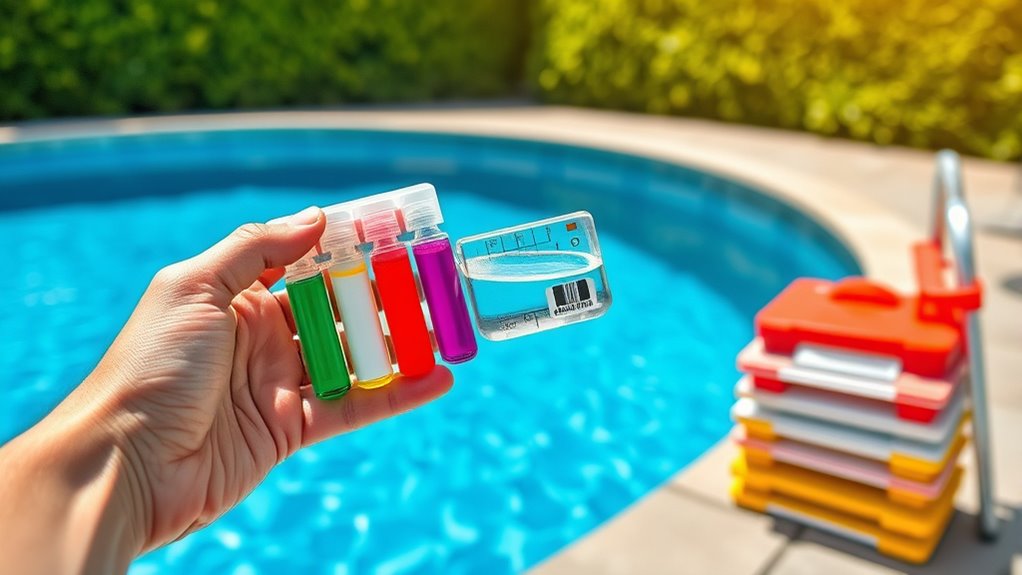

To test your pool water, you can use test strips for quick, color-changing results or liquid test kits for more accuracy across parameters like pH, chlorine, alkalinity, and calcium hardness. It’s best to check your water at least twice a week during peak season, especially after storms or heavy use. Monitoring these parameters helps you maintain safe, clear water and prevent equipment issues. Keep exploring to learn more about perfecting your pool water maintenance routine.

Get pool and patio gear delivered free with Prime
- Fast, free delivery on millions of items
- Prime Video, Amazon Music and more included
- Member-only deals all year
Key Takeaways
- Use test strips for quick, routine checks; liquid kits or digital meters for more precise measurements.
- Test pool water at least twice weekly during peak season, more often after storms or heavy use.
- Monitor key parameters like pH, chlorine, alkalinity, and calcium hardness to maintain water balance.
- Perform tests after chemical treatments and keep detailed records to track trends and ensure proper adjustments.
- Regular testing ensures safe, clear water, protects equipment, and prolongs pool lifespan.
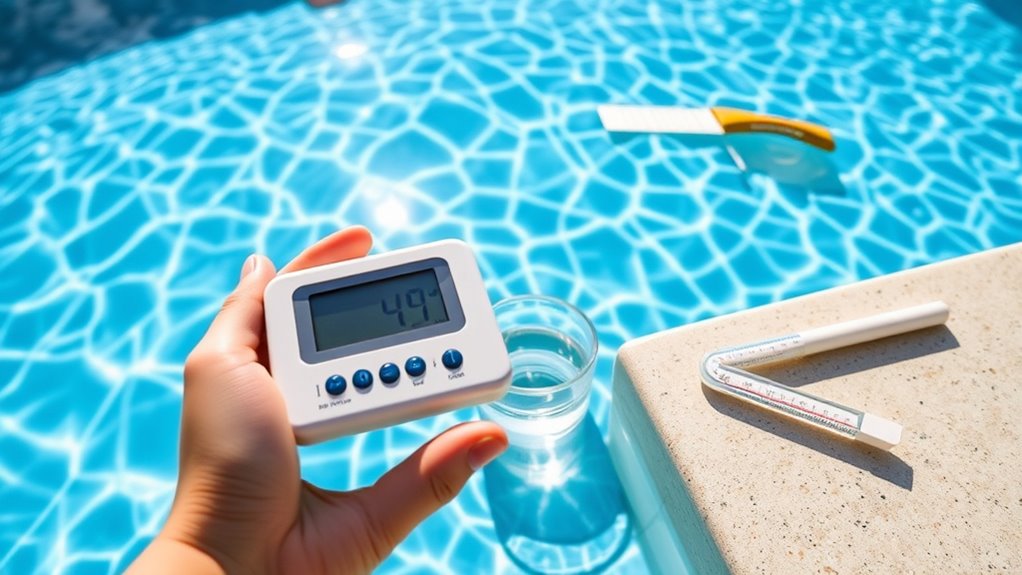
Have you ever wondered if your pool water is safe and properly balanced? Maintaining the right pool water chemistry isn’t just about keeping the water clear and inviting; it’s about guaranteeing it’s safe to swim in. The key to achieving that is regular testing. When it comes to testing your pool water, understanding the different testing equipment options is essential. You can choose from test strips, liquid test kits, or digital meters—each has its pros and cons. Test strips are quick and easy, giving you a color-coded reading in seconds, but they might not be as precise. Liquid test kits, on the other hand, offer more accuracy and can measure multiple parameters, such as pH, chlorine levels, alkalinity, and calcium hardness. Digital meters provide even more accuracy, often giving real-time readings with minimal effort, but they tend to be more expensive.
Once you’ve selected your testing equipment options, establishing a routine is indispensable. Testing your pool water at least twice a week during peak swimming season is recommended. This frequency ensures you catch any imbalances early before they develop into bigger problems. If you notice heavy usage or after a storm, more frequent testing might be necessary. Consistent testing helps you maintain proper pool water chemistry, which is critical for swimmer comfort and equipment longevity. Low pH can cause skin irritation and damage to your pool’s surface, while high pH levels can lead to cloudy water and scale buildup. Chlorine levels should be kept within the recommended range to effectively disinfect the water without causing skin or eye irritation. Regular testing also allows you to adjust your chemical treatments accurately, avoiding over- or under-application.
In addition to routine checks, it’s wise to perform a thorough water test after initial setup or chemical treatments. This ensures your water chemistry is balanced from the start, reducing the risk of problems down the line. Maintaining proper water quality is essential for both safety and equipment durability. Keep a log of your test results to track trends over time, making it easier to anticipate and correct issues proactively. Remember, proper testing isn’t just about maintaining aesthetics; it’s about safeguarding your health and prolonging the life of your pool equipment. By understanding your testing equipment options and sticking to a consistent testing schedule, you take control of your pool’s health, ensuring it remains a safe, enjoyable oasis for everyone.
Frequently Asked Questions
How Do Temperature Changes Affect Pool Water Testing Accuracy?
Temperature fluctuations can considerably impact your pool water testing precision. When water is too hot or cold, test chemicals may react differently, leading to inaccurate readings. To guarantee accurate results, test your water at a consistent temperature, ideally between 77-80°F. Avoid testing right after swimming or when the water’s temperature is changing rapidly, as these conditions can skew your test results and compromise your pool maintenance.
Can Natural Water Sources Impact My Pool Water Test Results?
Natural water sources can definitely impact your pool water test results due to water source contamination and seasonal water quality changes. When you fill or top off your pool with natural water, contaminants like bacteria, algae, or minerals might skew test readings. Seasonal variations, such as rain or runoff, can also introduce pollutants, making it essential to test your water regularly and adjust your treatment routine accordingly to maintain safe, balanced water.
What Are Signs of Inaccurate Test Kit Readings?
Like a compass gone awry, inaccurate test kit readings can lead you astray. You might notice inconsistent results, or colors that seem off, which could indicate your test kit needs calibration or that reagents have expired. Always check the expiration date and verify proper calibration. If readings seem suspicious, retest with fresh reagents and a calibrated kit to keep your pool water balanced and safe.
How Long Should I Wait After Adding Chemicals to Test Water?
You should wait about 15 to 30 minutes after adding chemicals to your pool water before testing. This allows for proper chemical reaction times, ensuring accurate results. Also, make sure your test kit is stored properly in a cool, dry place, as exposure to sunlight or moisture can affect readings. Waiting the right amount of time and maintaining your test kit helps you get reliable, consistent test results.
Are Digital Testers More Reliable Than Test Strips?
Think of digital testers as the sharp-shooters of pool testing—they’re generally more reliable than test strips. Digital accuracy tends to be higher, giving you precise readings every time. Test strip reliability can vary depending on brand and storage, but digital testers provide consistent results with less guesswork. If you want peace of mind and quick, accurate results, investing in a digital tester is the smarter choice for maintaining perfect water quality.
Conclusion
Testing your pool water regularly is like tending to a garden—you need to check in often to catch issues before they grow. I once skipped a test, only to find algae taking over the next week. Just as consistent watering keeps plants healthy, frequent testing keeps your pool sparkling and safe. Remember, a little effort now prevents bigger problems later, turning your backyard oasis into a worry-free retreat you can enjoy all season long.
Halloween Picks
halloween
As an affiliate, we earn on qualifying purchases.