Robotic cleaners are great for hassle-free daily upkeep, saving you time and effort with minimal maintenance. However, they don’t match traditional vacuums in power, especially for deep cleaning, stubborn dirt, or heavy-duty tasks. Manual vacuums give you more control and thoroughness, especially on carpets or cluttered spaces. To find out how to balance convenience and deep cleaning, explore more on the pros and cons of each option.
Key Takeaways
- Robotic cleaners offer hands-free daily maintenance but have limited suction power for deep cleaning tasks.
- Traditional vacuums provide more thorough cleaning, especially for stubborn dirt and deep carpet fibers.
- Robotic vacuums require less daily upkeep but depend on sensors and software updates for optimal performance.
- Manual vacuums are more versatile with attachments and better suited for spot cleaning and hard-to-reach areas.
- Combining both devices maximizes convenience, with robots handling routine cleaning and manual vacuums tackling intensive jobs.
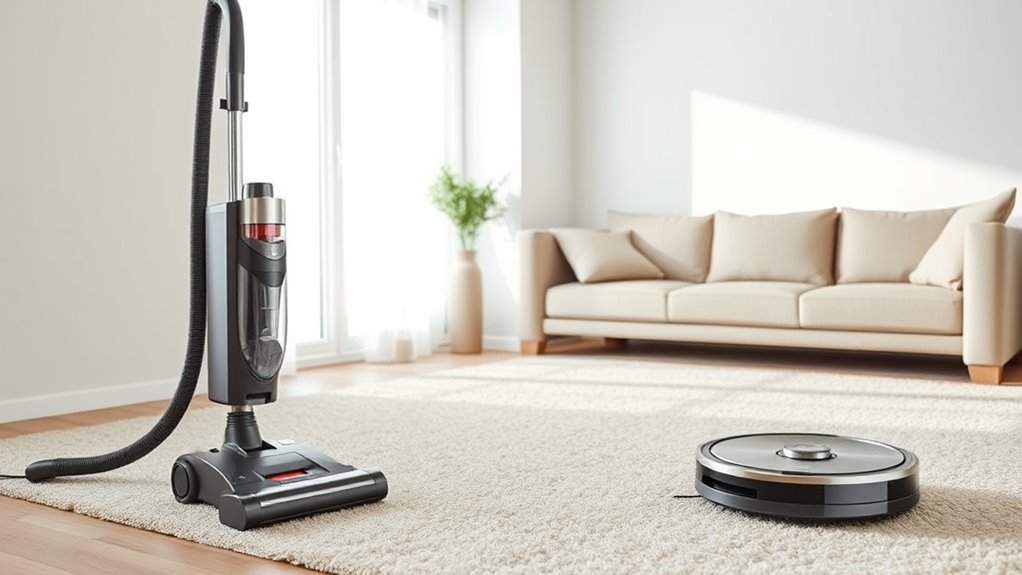
Are robotic cleaners truly replacing traditional vacuums, or do they serve different purposes? It’s a question many homeowners ask as these devices become more popular. Robotic vacuums excel at maintaining clean floors with minimal effort on your part, but they don’t completely replace the need for manual operation. Traditional vacuums are often more powerful and versatile, especially when deep cleaning or tackling stubborn dirt. While robotic cleaners can handle daily tidying, they are generally designed to supplement, not fully replace, the more thorough cleaning tasks that require a manual operation.
Robotic cleaners supplement but don’t fully replace traditional vacuums for deep cleaning needs.
When comparing these two options, it’s important to contemplate maintenance routines. Robotic vacuums tend to require less hands-on upkeep day-to-day. You just need to empty their dustbins regularly and occasionally clean sensors or brushes to keep them running smoothly. In contrast, traditional vacuums demand more active maintenance—changing filters, replacing bags or cartridges, and checking that brushes and belts are in good condition. This ongoing routine can be more time-consuming but also allows for deeper cleaning and greater control over the cleaning process.
Robotic cleaners are designed for convenience, but their performance can be affected by the layout of your home. They navigate around furniture and obstacles using sensors and mapping technology, but tight corners or cluttered spaces might hinder their effectiveness. You don’t need to intervene during their operation, which is a significant advantage. However, if you want to perform spot cleaning or reach awkward areas, a traditional vacuum with manual operation offers more precision and power. You can adjust your cleaning technique, target specific spots, or switch attachments for different surfaces—features that robotic vacuums often lack.
Furthermore, the maintenance routines of robotic cleaners are generally simpler, but they require periodic updates of their software or app connections to stay functioning efficiently. They also have limited suction power compared to high-end traditional vacuums, making them less suitable for deep cleaning carpets or heavily soiled areas. On the other hand, traditional vacuums require more involved maintenance but deliver a more thorough clean, especially for deep-seated dirt and allergens. Additionally, the technology behind robotic vacuums continues to improve, enhancing their navigation and cleaning efficiency over time.
Ultimately, robotic cleaners serve as excellent daily or weekly maintenance tools, reducing the workload and freeing up your time. Traditional vacuums, however, remain indispensable for intensive cleaning sessions, detailed spot work, and handling tougher debris. You’ll find that combining both approaches offers the best of both worlds: convenience and deep cleaning power. The key is understanding their respective roles and choosing the right device based on your cleaning needs, lifestyle, and willingness to perform routine maintenance.
Frequently Asked Questions
How Do Robotic Cleaners Handle Uneven Flooring Surfaces?
Robotic cleaners handle uneven flooring surfaces fairly well, but floor shift challenges can affect their performance. They adapt to carpet versus hardwood handling by adjusting suction power and brush height, though they may struggle with high thresholds or thick carpets. You’ll notice they navigate most surfaces smoothly, but for complex transitions, manual intervention might be necessary. Regular maintenance and choosing models with advanced sensors help improve their ability to handle uneven floors effectively.
What Is the Energy Consumption Difference Between Vacuuming and Robotic Cleaning?
Think of your cleaning routine as a battle for energy efficiency. Robotic cleaners generally sip power, making them more eco-friendly with lower power consumption. Traditional vacuums, on the other hand, gulp down electricity, especially when run for extended periods. So, if you want to save energy and cut costs, robotic cleaners are your silent allies, consuming less power and keeping your home spotless without draining your energy budget.
Can Robotic Cleaners Replace Traditional Vacuuming Entirely?
Robotic cleaners can’t fully replace traditional vacuuming because of their limitations, like struggling with thick carpets or cluttered spaces. While robotic devices excel at maintaining cleanliness and saving time, vacuum versatility remains essential for deep cleaning tasks. You’ll find robotic cleaners great for daily upkeep, but for thorough, detailed cleaning, traditional vacuums still hold the advantage. Combining both approaches offers the best overall cleanliness for your home.
How Effective Are Robotic Cleaners on Pet Hair Removal?
Did you know robotic cleaners can pick up up to 90% of pet hair? They’re pretty effective for pet hair removal on hard floors, but less so on carpets. If you’re focused on carpet cleaning, a traditional vacuum might still be your best bet. Robotic cleaners excel at quick, regular cleaning, especially for pet hair on bare floors, but for deep carpet cleaning, you might need to combine methods.
What Maintenance Is Required for Robotic Vacuum Cleaners?
You need to regularly check the battery life of your robotic vacuum to guarantee peak performance. Keep the battery charged and replace it if it starts to weaken. Also, perform filter maintenance by cleaning or replacing filters every few months, depending on usage. Clear debris from brushes and sensors to maintain efficiency. These steps help your robotic cleaner run smoothly and extend its lifespan.
Conclusion
Choosing between traditional vacuuming and robotic cleaners boils down to your lifestyle. While vacuuming offers control and thoroughness, robotic cleaners bring convenience and automation. It’s like comparing hands-on effort with effortless technology—each has its perks and drawbacks. So, whether you prefer the tactile feel of a vacuum or the futuristic ease of robots, understanding their differences helps you make the best choice for your home. Ultimately, it’s about finding what fits your needs best.