
To safely store pool chemicals and reduce accidental exposure, keep them in a cool, dry, well-ventilated area away from kids, pets, and food. Use locked cabinets or sheds, and make certain labels are clear and waterproof. Always follow manufacturer instructions and wear protective gear when handling. Regularly inspect containers for leaks or damage, and dispose of expired chemicals properly. Continuing with these safety steps will help you better protect your household and prevent accidents.
Key Takeaways
- Store pool chemicals in a cool, dry, well-ventilated area away from food and combustible materials.
- Keep chemicals in original, waterproof containers with clear labels indicating contents and safety warnings.
- Lock storage cabinets or sheds to restrict access, especially from children and pets.
- Follow manufacturer instructions for handling and mixing, and always use protective gear during use.
- Regularly inspect storage areas for leaks, corrosion, or expired chemicals, and dispose of unusable substances properly.
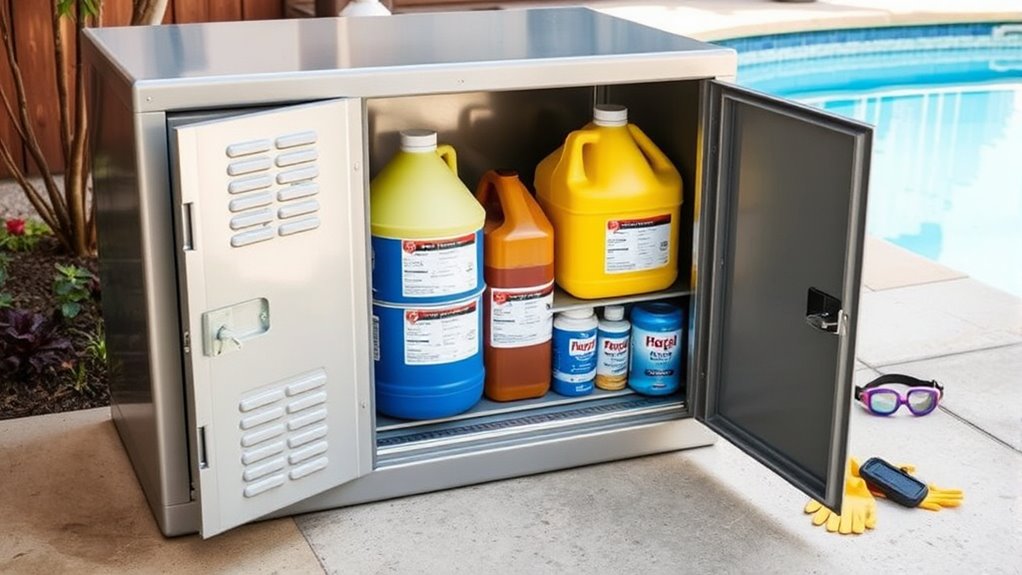
Storing pool chemicals safely is essential to prevent accidents and protect your home and family. Improper storage can lead to chemical spills, leaks, or accidental mixing, which pose serious health and safety risks. To minimize these dangers, focus on chemical spill prevention by keeping chemicals in secure, well-ventilated areas away from children and pets. Use sturdy, leak-proof containers and ensure they’re stored upright to prevent spills. Regularly inspect your storage area for signs of leaks or corrosion, and address issues immediately to prevent potential accidents.
Proper labeling plays an indispensable role in safe chemical storage. Every container should have clear, visible labels that specify the chemical inside and include safety warnings. Proper labeling helps you and anyone else in your household quickly identify contents, reducing the chance of accidental misuse or dangerous mixing. Use waterproof labels or write directly on containers with permanent markers to prevent fading or peeling over time. Labels should also include important information such as the date of purchase or opening, so you can keep track of the age of your chemicals and dispose of expired or degraded products properly.
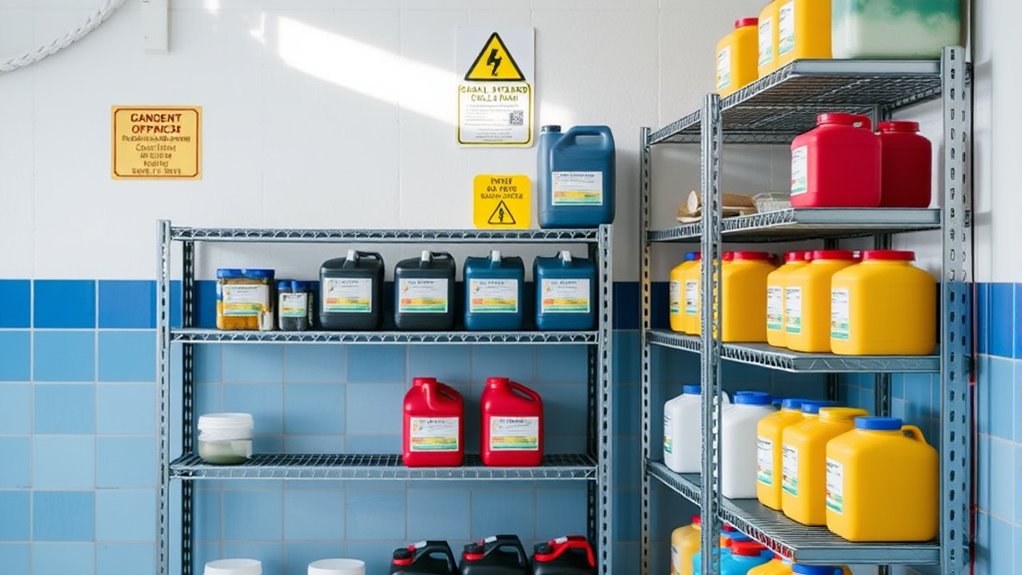
When it comes to storage location, choose a cool, dry, and well-ventilated area. Avoid storing pool chemicals near combustible materials, food, or household items that could be damaged by chemical exposure. Keep chemicals in a locked cabinet or shed to prevent children and pets from accessing them. Always store chemicals separately from other household substances to avoid accidental mixing, which can produce dangerous reactions. For example, never store chlorine tablets near acids or other cleaning agents.
Handling your pool chemicals with care is equally important. Always read and follow the manufacturer’s instructions before opening or using any product. Use appropriate protective gear such as gloves and goggles to avoid skin and eye contact during handling. When transferring chemicals, do so carefully to prevent spills, and clean up any accidental leaks immediately using appropriate materials, like absorbent pads or neutralizing agents. Additionally, understanding chemical storage safety best practices can significantly reduce the risk of accidents and ensure your chemicals remain effective and secure.
Finally, develop a routine to regularly review your chemical storage practices. Check labels, inspect containers for leaks, and ensure your storage area remains secure and organized. Proper storage not only reduces the risk of accidental exposure but also prolongs the effectiveness of your chemicals. By prioritizing chemical spill prevention and maintaining proper labeling, you create a safer environment for everyone around your pool. Protecting your family and home starts with responsible, cautious storage practices that keep hazardous chemicals contained and clearly identified at all times.
Frequently Asked Questions
How Should Pool Chemicals Be Labeled for Safety?
You should use clear, visible chemical labeling to guarantee safety. Include the chemical’s name, proper handling instructions, and hazard symbols. Use safety signage to warn others of potential dangers. Make sure labels are durable and easy to read, even if exposed to moisture. Proper chemical labeling helps prevent accidents, making it easier for everyone to handle pool chemicals safely and respond quickly in emergencies.
What Are the Signs of Chemical Contamination in Storage Areas?
Like a detective searching for clues, you look for signs of contamination, such as unusual odors, discoloration, or corrosion. If you notice a chemical spill or fumes, follow proper chemical spill response procedures and guarantee ventilation requirements are met. These steps help prevent harmful exposure. Regularly inspect storage areas to catch leaks early, keep containers sealed tightly, and never ignore strange smells or residue—your quick action keeps everyone safe.
Can Pool Chemicals Be Stored Outdoors Safely?
Yes, you can store pool chemicals outdoors if you follow safety guidelines. Keep chemicals in a well-ventilated, shaded area away from direct sunlight and moisture. Avoid chemical mixing and make certain the storage temperature remains stable, ideally between 50°F and 70°F, to prevent hazardous reactions. Use sealed, clearly labeled containers, and always handle chemicals with care to reduce risks of spills or contamination.
How Often Should Storage Areas Be Inspected for Hazards?
You should inspect your storage areas weekly to catch hazards early. Imagine a spill could happen if ventilation is poor, increasing risk of chemical exposure. Regular checks make certain proper ventilation and that no leaks or spills occur. During inspections, review your chemical spill response plan and make sure all supplies are accessible. Staying vigilant helps prevent accidents and keeps your storage safe and compliant with safety standards.
What Personal Protective Equipment Is Recommended When Handling Chemicals?
When handling pool chemicals, you should wear protective clothing like gloves and goggles to prevent skin and eye contact. Use respiratory gear, such as a mask or respirator, to avoid inhaling fumes or dust. Always guarantee your PPE fits properly and is in good condition. This minimizes exposure risks, keeps you safe, and helps you handle chemicals responsibly, especially in case of spills or accidental releases.
Conclusion
Imagine your pool chemicals as tiny, powerful guardians—if kept safe, they protect your family and friends. But if mishandled, they can turn into wildfires waiting to ignite. By storing chemicals properly, you’re like a wise captain steering clear of dangerous storms. Remember, a single careless mistake can turn a sunny day into a disaster. Keep chemicals secure, follow safety guidelines, and make sure everyone enjoys the pool safely—because prevention is your best safeguard.