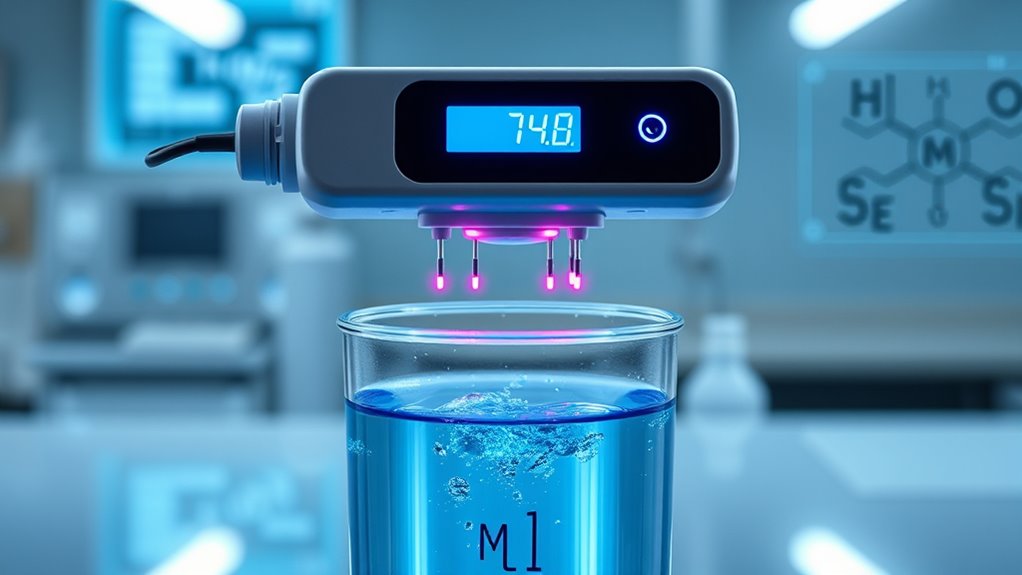

AI-powered water monitoring devices continuously analyze key water parameters like pH and dissolved oxygen, helping you keep water chemistry balanced. They automatically calibrate sensors to guarantee accuracy, detect anomalies early, and reduce manual intervention. With real-time data processing and predictive insights, you can maintain high water quality efficiently. By understanding how these advanced systems work, you’ll discover ways to improve water management and stay ahead of potential issues. Keep exploring to learn more about their powerful capabilities.

Get pool and patio gear delivered free with Prime
- Fast, free delivery on millions of items
- Prime Video, Amazon Music and more included
- Member-only deals all year
Key Takeaways
- AI algorithms process sensor data in real-time to detect water chemistry imbalances and trigger automatic corrective actions.
- Continuous sensor calibration ensures accurate measurements of pH, dissolved oxygen, and contaminants, maintaining water quality.
- Anomaly detection flags sensor malfunctions or water issues early, enabling prompt maintenance and preventing chemistry deviations.
- Predictive analytics optimize calibration models over time, reducing manual interventions and enhancing system reliability.
- Integrated AI-driven monitoring supports proactive water management, ensuring safe, balanced water chemistry across various applications.
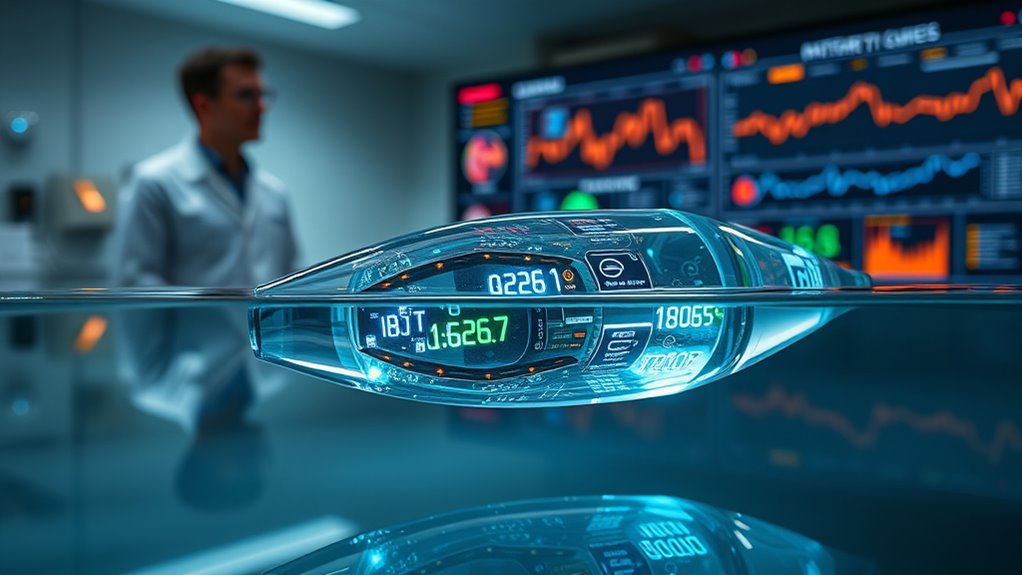
Water quality monitoring has become more efficient and accurate thanks to AI-powered devices. These advanced tools have revolutionized how you track and maintain water chemistry, making it easier to detect issues early and respond swiftly. At the core of this technology are sensors that continuously analyze water parameters like pH, dissolved oxygen, and contaminants. To guarantee these sensors deliver reliable data, regular sensor calibration is essential. Proper calibration adjusts the sensors so they provide precise readings, which directly impacts data accuracy. When sensors are well-calibrated, you can trust that the information they gather reflects the true water conditions, reducing errors and false alarms. This calibration process often involves automated routines, guided by AI algorithms that detect when sensors drift out of calibration and prompt recalibration procedures, saving you time and effort.
With AI, maintaining data accuracy becomes a seamless process. These devices process vast amounts of sensor data in real-time, filtering out noise and identifying anomalies that could indicate sensor malfunction or water quality issues. By continuously analyzing incoming data, AI algorithms can flag inconsistent readings and suggest calibration adjustments or maintenance needs. This proactive approach ensures your water monitoring system remains reliable, avoiding costly oversights. The integration of AI also enables predictive analytics, helping you anticipate potential problems before they escalate. For example, if the system detects a gradual shift in pH levels, it can alert you to investigate further, preventing chemical imbalances that might harm ecosystems or compromise safety. Additionally, advancements in sensor technology play a crucial role in enhancing overall system performance and accuracy.
Moreover, these AI-powered devices often feature self-correcting capabilities. They learn from historical data, refining their calibration models over time to enhance accuracy. This means fewer manual interventions and more consistent data quality. As a result, you gain a clearer picture of water chemistry dynamics, facilitating better decision-making. Whether you’re managing a municipal water supply, an industrial process, or a natural water body, this heightened level of precision ensures you’re always acting on trustworthy information. The combination of sensor calibration and AI-driven data accuracy not only improves monitoring fidelity but also streamlines operations, reducing operational costs and increasing confidence in your water quality management. In the end, AI-powered water monitoring devices empower you to keep water chemistry balanced with greater confidence, efficiency, and responsiveness, safeguarding public health and environmental integrity.
AI water quality monitoring device
As an affiliate, we earn on qualifying purchases.
As an affiliate, we earn on qualifying purchases.
Frequently Asked Questions
How Do AI Devices Detect Specific Water Contaminants?
You use AI devices that detect specific water contaminants through advanced sensor calibration and pattern recognition. These sensors identify unique chemical signatures, and AI algorithms analyze the data to pinpoint contaminants accurately. As the sensors calibrate regularly, they maintain precision in contaminant detection, ensuring reliable results. This combination allows you to monitor water quality effectively, quickly identifying pollutants and keeping your water chemistry balanced.
What Is the Lifespan of AI Water Monitoring Sensors?
You can expect AI water monitoring sensors to last around 1 to 3 years, depending on sensor durability and usage conditions. Regular maintenance schedules help extend their lifespan by preventing fouling and calibration drift. Keep an eye on performance indicators and follow manufacturer guidelines for cleaning and calibration to guarantee accuracy and longevity. Proper care ensures your sensors stay reliable, giving you consistent water quality data over time.
Can AI Devices Operate in Extreme Environmental Conditions?
Sure, AI devices thrive in extreme environments—if you disregard environmental durability and power source reliability. They’re designed with rugged features, but don’t count on them working flawlessly in scorching heat, freezing cold, or corrosive conditions without extra protection. You’ll need to guarantee robust power sources and durable materials, or else your high-tech sensors might just give up, proving that even AI has its limits in Mother Nature’s toughest tests.
How Is Data Privacy Maintained With AI Water Monitors?
You guarantee data privacy with AI water monitors by relying on data encryption to protect your information from unauthorized access. User authentication adds an extra layer, verifying your identity before allowing data access. These measures keep your sensitive data secure, preventing breaches and maintaining your trust. By combining encryption and authentication, you can confidently use AI water monitors, knowing your privacy is prioritized and well-protected.
Are AI Water Monitoring Systems Cost-Effective for Small-Scale Use?
Yes, AI water monitoring systems can be cost-effective for small-scale use. You should compare costs carefully, considering the initial investment and ongoing expenses. These systems often offer scalability options, allowing you to start small and expand as needed. By choosing devices suited to your scale, you can benefit from accurate data and efficient water management without overspending, making them a practical choice for small operations.
Conclusion
As you embrace these AI-powered water monitors, you’re like a modern-day Aquaman, ensuring your water stays balanced and pure. With real-time data and quick adjustments, you prevent disasters before they strike—no need for a crystal ball. Just like the engineers of the Titanic’s time wished for better tools, today’s tech gives you the power to safeguard your water supply effortlessly. Stay ahead, stay smart, and keep your water chemistry shipshape!
Halloween Picks
halloween
As an affiliate, we earn on qualifying purchases.