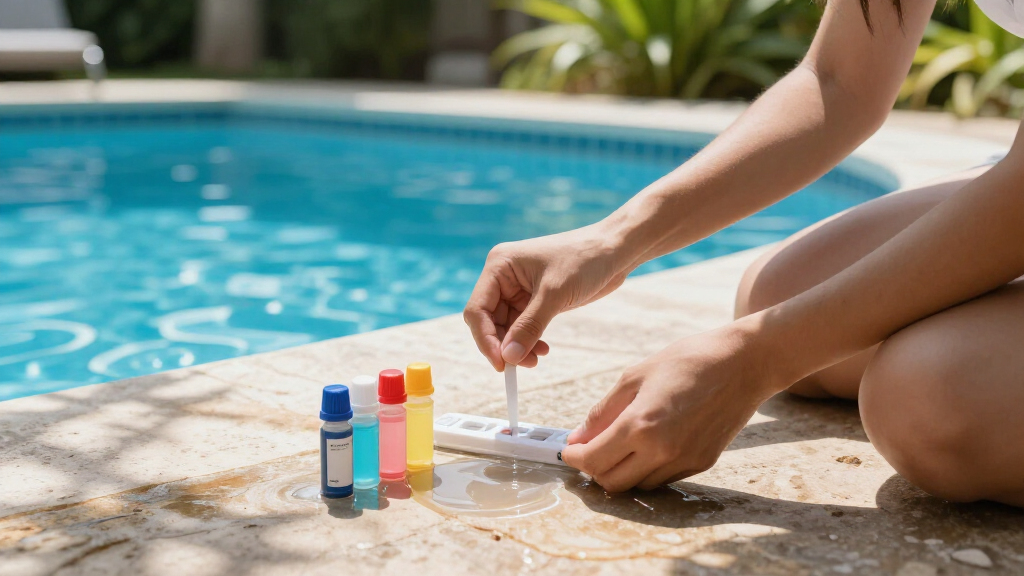

Pool chemical test kits range from simple dip-and-read strips to professional-grade liquid reagent systems, and the difference in accuracy and longevity is bigger than most buyers expect. The Taylor Technologies K-2005 takes the top spot for its lab-grade DPD chemistry, nine-parameter coverage, and refillable design that keeps working season after season. If budget is the priority, the LUPO 6-in-1 delivers reliable chlorine and pH readings at a fraction of the price, while 7-in-1 test strips remain the fastest option for quick daily checks. The core tradeoff in this category is precision versus convenience: strips take seconds but only approximate, while liquid kits demand more time and technique yet catch problems strips miss entirely. Keep reading for the full breakdown of all 11 kits and which one fits your pool routine.

Get pool and patio gear delivered free — and shop member deals
- Fast, free delivery on millions of items
- Access to Prime Big Deal Days deals on October 6–7
- Prime Video, Amazon Music and more included
Complete the kit


Key Takeaways
- Taylor‘s DPD kits (K-2005 and K-1005) separated themselves through replaceable reagents — cheaper kits become throwaways once chemicals run out, while Taylor systems are refilled for years.
- Test strips, including the app-connected 7-in-1 option, consistently won on speed but lost on precision for total chlorine and low-level sanitizer readings, making them better as daily spot-checkers than primary testers.
- The LUPO 3-in-1 proved the best true entry point: fewer parameters means fewer mistakes, and its price undercuts every liquid-reagent rival except generic strip packs.
- 5-way kits from Poolmaster and XtremepowerUS occupy a middle ground, but the Poolmaster’s sturdier housing and clearer color blocks made it the better of the two for routine home use.
- App-based testing added convenience but not accuracy — the companion app mainly logs readings rather than improving them, so buyers shouldn’t pay a premium expecting smarter chemistry.
| LUPO 3-in-1 Pool Test Kit for Swimming Pools & Spas |  | Best Budget Starter Kit | Parameters Tested: Total Chlorine, Total Bromine, pH | Number of Tests: 100 | Includes: Storage case, waterproof instructions, comparator, OTO reagent, Phenol Red reagent | VIEW LATEST PRICE | See Our Full Breakdown |
| Taylor Technologies K-1005 DPD, 9-in-1 Pool Test Kit |  | Best Full-Diagnostics Kit | Test Parameters: Free & Total Chlorine, Bromine, pH, Acid & Base Demand, Total Alkalinity, Calcium Hardness, Cyanuric Acid (CYA) | Tests Included: Reagents for 9 test types | Included: Reagents, comparator, storage case | VIEW LATEST PRICE | See Our Full Breakdown |
| Swimming Pool Spa Water Chemical Test Kit for Chlorine and pH (WWD POOL 11029) |  | Best Value Two-Way Kit | Parameters Tested: Chlorine, Bromine, pH | Brand: WWD POOL | Model Number: 11029 | VIEW LATEST PRICE | See Our Full Breakdown |
| Taylor Technologies K-1004 DPD 6-in-1 Pool Test Kit |  | Best for Beginners | Test Parameters: Free & Total Chlorine, Bromine, pH, Acid Demand, Total Alkalinity | Reagent Size: 0.75 ounces each | Chlorine Range: 0.5–5 ppm | VIEW LATEST PRICE | See Our Full Breakdown |
| LUPO 6-in-1 Pool Test Kit for Swimming Pools & Spas |  | Best Mid-Range Upgrade | Parameters Tested: Total Chlorine, Total Bromine, pH, Base Demand, Acid Demand, Total Alkalinity | Number of Tests: 100 | Includes: Heavy-duty storage case, waterproof instructions, comparator, sample tube, reagents | VIEW LATEST PRICE | See Our Full Breakdown |
| Taylor Technologies K-2005 DPD 9-in-1 Complete Pool Test Kit |  | Best for Serious Pool Owners | Test Parameters: Free & Total Chlorine, Total Bromine, pH, Acid & Base Demand, Total Alkalinity, Calcium Hardness, Cyanuric Acid | Method: DPD liquid reagent drop-count | Includes: Comparator, 13 reagents, storage case | VIEW LATEST PRICE | See Our Full Breakdown |
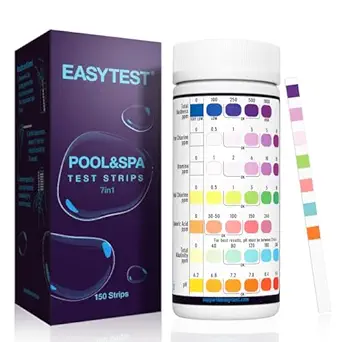
| All-New Pool and Spa Test Strips 7 in 1 Quick Super Accurate Swimming Pool Test Kit |  | Best Value for Volume Testing | Number of Tests: 150 strips | Chemicals Tested: pH, Chlorine, Bromine, Hardness, Alkalinity, Cyanuric Acid, Free Chlorine | Usage: Dip in water, wait 60 seconds, compare color chart | VIEW LATEST PRICE | See Our Full Breakdown |
| Poolmaster 5-Way Pool & Spa Water Test Kit with Liquid Reagents | 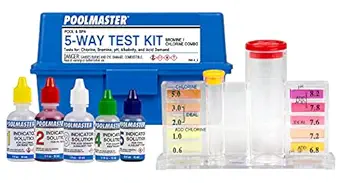 | Best Mid-Range Liquid Kit | Testing Types: Chlorine, Bromine, pH, Acid Demand, Total Alkalinity | Method: Liquid reagents with clear-view comparator | Reagent Volume: 1 oz. and 1/2 oz. bottles | VIEW LATEST PRICE | See Our Full Breakdown |
| XtremepowerUS 5-Way Swimming Pool Test Kit for pH, Chlorine, Bromine, Alkalinity |  | Best Budget Liquid Kit | Testing Options: Chlorine, Bromine, pH, Acid Demand, Total Alkalinity | Method: Liquid reagents with color comparison | Case Material: Polyethylene | VIEW LATEST PRICE | See Our Full Breakdown |
| Pool Test Strips with App 7 in 1 (150 Strips) – Easy & Accurate Water Testing |  | Best Smart Option for Beginners | Number of Strips: 150 | Parameters Tested: pH, Free Chlorine, Alkalinity, Total Chlorine, Bromine, Hardness, Stabilizer | Strip Length: 7 inches | VIEW LATEST PRICE | See Our Full Breakdown |
| Lupo DPD 9-in-1 Pool Test Kit for Swimming Pools & Spas |  | Best Full-Range Testing on a Budget | Parameters Tested: Free Chlorine, Total Chlorine, Total Bromine, pH, Base Demand, Acid Demand, Total Alkalinity, Calcium Hardness, Cyanuric Acid | Test Method: DPD liquid reagent with color comparator | Includes: Comparator, sample tube, test tube, dropper, reagents, storage case, waterproof guide | VIEW LATEST PRICE | See Our Full Breakdown |
| pool chemical test kit | Includes | Test Method |
|---|---|---|
| LUPO 3-in-1 Pool Test Kit for | Storage case, waterproof instructions, comparator, OTO reagent, Phenol Red reagent | Color-matching comparator |
| Taylor Technologies K-1005 DPD | — | DPD titration and color matching |
| Swimming Pool Spa Water Chemic | Test solutions, test vials, carrying case | Liquid reagent with clear-view color matching |
| Taylor Technologies K-1004 DPD | — | DPD liquid reagent with comparator |
| LUPO 6-in-1 Pool Test Kit for | Heavy-duty storage case, waterproof instructions, comparator, sample tube, reagents | Color matching and drop counting |
| Taylor Technologies K-2005 DPD | Comparator, 13 reagents, storage case | — |
| All-New Pool and Spa Test Stri | — | — |
| Poolmaster 5-Way Pool & Spa Wa | Solutions #1 through #5 | — |
| XtremepowerUS 5-Way Swimming P | Step-by-step instructions, quick-reference guide | — |
| Pool Test Strips with App 7 in | — | — |
| Lupo DPD 9-in-1 Pool Test Kit | Comparator, sample tube, test tube, dropper, reagents, storage case, waterproof guide | DPD liquid reagent with color comparator |
More Details on Our Top Picks
LUPO 3-in-1 Pool Test Kit for Swimming Pools & Spas
For a straightforward chlorine-and-pH check, this LUPO 3-in-1 kit covers the absolute basics at a price that’s hard to beat. It measures total chlorine, bromine, and pH with enough reagent for roughly 100 tests, and the color-coded comparator makes results readable within seconds. Where the Taylor K-1004 splits chlorine into free and total readings, this kit only reports total chlorine — fine for casual maintenance, but a real limitation if you’re troubleshooting cloudy water or chloramine buildup. The saltwater compatibility is a plus at this price, though buyers should plan on fresh reagents each season since OTO and phenol red degrade over time. Compared with the LUPO 6-in-1, you give up alkalinity and acid/base demand testing entirely.
Pros:- Very low cost per test with 100 tests of reagent included
- Works with freshwater and saltwater systems
- Simple color-matching process that beginners can follow immediately
- Comes with a durable storage case and waterproof instructions
Cons:- Only measures total chlorine, not free chlorine, so it can miss chloramine problems
- Reagents must be replaced every season regardless of remaining volume
- Color interpretation is subjective and harder in low light
Best for: Casual pool and hot tub owners who just want a quick weekly chlorine and pH check without spending much
Not ideal for: Owners troubleshooting water balance problems — with no alkalinity or hardness testing, it can’t diagnose the cause of pH drift
- Parameters Tested:Total Chlorine, Total Bromine, pH
- Number of Tests:100
- Includes:Storage case, waterproof instructions, comparator, OTO reagent, Phenol Red reagent
- Suitable For:Swimming pools, spas, hot tubs
- Water Types:Freshwater, saltwater
- Test Method:Color-matching comparator
Our verdict“A sensible, low-commitment pick for routine weekly checks — but not a diagnostic tool for problem water.”
Taylor Technologies K-1005 DPD, 9-in-1 Pool Test Kit
The Taylor K-1005 is the most complete liquid-reagent kit in this lineup, testing nine parameters including calcium hardness and cyanuric acid — two readings the LUPO 6-in-1 and Taylor K-1004 simply don’t offer. That matters because CYA and hardness are usually the hidden culprits behind persistent algae or scaling, and without them you’re guessing at chemical adjustments. The DPD method also separates free from total chlorine, giving a far more accurate sanitation picture than the LUPO 3-in-1’s OTO-only reading. The tradeoff is complexity: juggling multiple reagents and pictogram instructions takes longer per test, and the kit is bulkier and pricier than simpler options. For pool owners who want to diagnose rather than just monitor, it earns its spot near the top.
Pros:- Nine parameters including cyanuric acid and calcium hardness
- DPD testing distinguishes free from total chlorine
- Replaceable reagents extend the kit’s life for years
- Clear pictogram instructions made in the USA
Cons:- More complex multi-reagent workflow than 2-way or 3-way kits
- Bulky case is awkward to store or travel with
- Higher upfront cost than basic kits
Best for: Hands-on pool owners and part-time pool professionals who need complete water chemistry data including CYA and hardness
Not ideal for: Vacation-home or occasional spa users who want a 30-second check — the extra reagents and steps are wasted effort
- Test Parameters:Free & Total Chlorine, Bromine, pH, Acid & Base Demand, Total Alkalinity, Calcium Hardness, Cyanuric Acid (CYA)
- Tests Included:Reagents for 9 test types
- Included:Reagents, comparator, storage case
- Test Method:DPD titration and color matching
- Made In:USA
- Reagents Replaceable:Yes
Our verdict“The closest thing to a professional lab in a case — buy it if you want to solve water problems, not just observe them.”
Swimming Pool Spa Water Chemical Test Kit for Chlorine and pH (WWD POOL 11029)
At just 132 grams with a carrying case included, the WWD POOL 11029 is the lightest, simplest option here — a true grab-and-go kit for chlorine, bromine, and pH. Its clear-view test vials and printed color scales deliver a reading in under a minute, which makes it more convenient than the heavier Taylor K-1005 for quick trips to a vacation rental or spa. The catch is scope: like the LUPO 3-in-1 it stops at three parameters, but it doesn’t match the LUPO’s 100-test reagent supply or saltwater claims, so heavy users will burn through solution faster. The color-matching accuracy is adequate for routine maintenance but falls short of DPD kits when free chlorine readings matter. Think of it as the cheapest reliable way to answer one question: is my sanitizer and pH in range?
Pros:- Extremely lightweight and portable at 132 grams
- Includes all solutions plus a carrying case
- Very low price point with clear measurement scales
- Covers chlorine, bromine, and pH in one quick test
Cons:- Limited to three parameters with no alkalinity or hardness testing
- Smaller reagent supply than the LUPO 3-in-1’s 100 tests
- No digital readout — subjective color matching only
Best for: Spa and small-pool owners, or vacation-property caretakers, who need an ultralight kit for occasional checks
Not ideal for: Anyone managing a full-size pool season-long — the limited parameters and small reagent supply won’t keep up
- Parameters Tested:Chlorine, Bromine, pH
- Brand:WWD POOL
- Model Number:11029
- Item Weight:132 g
- Test Method:Liquid reagent with clear-view color matching
- Includes:Test solutions, test vials, carrying case
Our verdict“The cheapest credible option for occasional chlorine and pH checks, as long as you accept its narrow scope.”
Taylor Technologies K-1004 DPD 6-in-1 Pool Test Kit
The Taylor K-1004 hits a sweet spot between simplicity and usefulness: it adds total alkalinity and acid demand testing to the basic chlorine/pH combo, which is exactly what a new pool owner needs to stop chasing pH swings. Its color-coded, step-by-step instructions are friendlier than the K-1005’s nine-test workflow, while still using proper DPD chemistry to separate free from total chlorine — something the LUPO 3-in-1 can’t do. Published ranges (chlorine 0.5–5 ppm, pH 6.8–8.2) cover typical residential targets comfortably. What you sacrifice versus the LUPO 6-in-1 is base demand testing and the bundled sample tube convenience; versus the K-1005, calcium hardness and CYA are absent. The .75 oz reagent bottles also run out faster than larger Taylor kits under heavy use.
Pros:- Adds total alkalinity and acid demand beyond basic chlorine/pH kits
- DPD method distinguishes free from total chlorine
- Color-coded instructions are genuinely beginner-friendly
- Durable construction with replaceable reagents
Cons:- No calcium hardness or cyanuric acid testing
- Small .75 oz reagent bottles deplete quickly with frequent testing
- Reagents require seasonal replacement
Best for: First-season pool owners who want to understand and correct alkalinity-driven pH problems without a steep learning curve
Not ideal for: Owners of stabilized pools who need cyanuric acid monitoring — you’ll outgrow this kit quickly
- Test Parameters:Free & Total Chlorine, Bromine, pH, Acid Demand, Total Alkalinity
- Reagent Size:0.75 ounces each
- Chlorine Range:0.5–5 ppm
- Bromine Range:1–10 ppm
- pH Range:6.8–8.2
- Test Method:DPD liquid reagent with comparator
- Reagents Replaceable:Yes
Our verdict“The ideal first serious kit — enough chemistry to learn from, not enough to overwhelm.”
LUPO 6-in-1 Pool Test Kit for Swimming Pools & Spas
Sitting between the LUPO 3-in-1 and the Taylor K-1005, this 6-in-1 kit adds total alkalinity plus acid and base demand testing while keeping LUPO’s approachable format and 100-test reagent supply. The claimed USA Swimming approval suggests better accuracy than typical budget kits, and the heavy-duty case with waterproof instructions is a genuine step up from the WWD POOL 11029’s basic carry bag. Compared directly with the Taylor K-1004, you get base demand testing and more reagent volume for similar money — but LUPO still reports only total chlorine, not free, which limits diagnostic value. It also skips calcium hardness and CYA entirely, so it’s not a true rival to the K-1005. Budget for replacement reagents, as none are included beyond the initial set.
Pros:- Six parameters including alkalinity and acid/base demand
- Reagents for 100 tests included
- Works with freshwater, saltwater, pools, spas, and hot tubs
- Heavy-duty case and waterproof instructions
Cons:- Measures only total chlorine, not free chlorine
- No calcium hardness or cyanuric acid testing
- Replacement reagents sold separately and needed each season
Best for: Budget-conscious pool owners upgrading from a basic 2-way or 3-way kit who want alkalinity and demand testing without Taylor pricing
Not ideal for: Detail-driven water chemists — the lack of free chlorine, hardness, and CYA readings leaves real diagnostic gaps
- Parameters Tested:Total Chlorine, Total Bromine, pH, Base Demand, Acid Demand, Total Alkalinity
- Number of Tests:100
- Includes:Heavy-duty storage case, waterproof instructions, comparator, sample tube, reagents
- Compatibility:Pools, spas, hot tubs; freshwater and saltwater
- Test Method:Color matching and drop counting
- Replacement Reagents Included:No
Our verdict“A smart halfway upgrade for owners who’ve outgrown a basic kit but don’t need Taylor’s full diagnostic suite.”
Taylor Technologies K-2005 DPD 9-in-1 Complete Pool Test Kit
The K-2005 is the most complete liquid-based kit in this lineup, covering seven core parameters plus acid and base demand — everything the Poolmaster 5-Way and XtremepowerUS 5-Way kits simply skip, like calcium hardness and cyanuric acid. Those two readings matter if you’re troubleshooting cloudy water or scaling, because guessing at stabilizer levels is how pools turn green. Compared with the strip-based options here, the drop-count method gives results you can act on with confidence rather than squinting at approximate color blocks. The tradeoff is real, though: this is a system, not a convenience product. You’ll replace reagents seasonally, and the workflow takes several minutes per test session. For owners who treat water chemistry as an ongoing project rather than a weekly chore, this kit earns its premium.
Pros:- Tests 9 parameters including calcium hardness and cyanuric acid
- Drop-count DPD method is more accurate than test strips
- Durable case with replaceable reagents for long-term use
- Made in the USA with clear pictogram instructions
Cons:- Reagents must be replaced every season, adding recurring cost
- Steeper learning curve than strip-style kits
Best for: Dedicated pool owners who want lab-grade accuracy and full control over hardness and stabilizer levels
Not ideal for: Casual or first-time pool owners who want a 30-second check — the reagent counting process feels tedious
- Test Parameters:Free & Total Chlorine, Total Bromine, pH, Acid & Base Demand, Total Alkalinity, Calcium Hardness, Cyanuric Acid
- Method:DPD liquid reagent drop-count
- Includes:Comparator, 13 reagents, storage case
- Reagent Refills:Available separately
- Made in:USA
Our verdict“If you want to diagnose problems rather than just confirm them, this is the kit that justifies its higher price.”
All-New Pool and Spa Test Strips 7 in 1 Quick Super Accurate Swimming Pool Test Kit
With 150 strips covering seven parameters, this option wins on sheer cost per test — roughly a season’s worth of routine checks for the price of a fraction of a Taylor K-2005 refill. It even reads cyanuric acid, something the similarly priced XtremepowerUS 5-Way can’t do with its liquid chemistry. What you give up is precision: strip readings are approximations, and your results depend entirely on lighting and your eye for color matching. Where the K-2005 tells you free chlorine is 3.2 ppm, this tells you it’s ‘somewhere between 3 and 5.’ That’s perfectly fine for routine monitoring between more thorough tests, but it won’t help you solve a stubborn water problem.
Pros:- 150 strips make this one of the cheapest per-test options available
- Tests 7 parameters including cyanuric acid
- Dip-and-read in about 60 seconds with no reagent bottles
- Works for both pools and hot tubs
Cons:- Manual color comparison is subjective and lighting-sensitive
- Less precise than liquid drop-count kits like the Taylor K-2005
Best for: Budget-conscious pool owners who test frequently and mainly need to confirm water is in range
Not ideal for: Troubleshooters battling algae or scaling — strip resolution is too coarse for diagnosis
- Number of Tests:150 strips
- Chemicals Tested:pH, Chlorine, Bromine, Hardness, Alkalinity, Cyanuric Acid, Free Chlorine
- Usage:Dip in water, wait 60 seconds, compare color chart
- Suitable for:Pools and hot tubs
Our verdict“The most economical way to keep tabs on your water between occasional professional-grade tests.”
Poolmaster 5-Way Pool & Spa Water Test Kit with Liquid Reagents
The Poolmaster 5-Way sits in a useful middle ground: it delivers liquid-reagent accuracy for the five most-tested parameters without the complexity or price of the Taylor K-2005. Compared with the nearly identical XtremepowerUS 5-Way, this kit’s edge is the integrated color-chip comparator — readings stay consistent because the reference colors are built right into the viewing unit rather than printed on a loose card. The catch is the phenol red reagent system isn’t interchangeable with other brands, so you’re locked into Poolmaster refills. And like the K-2005, it still involves counting drops and handling bottles, which makes it slower than any strip option. This pick makes the most sense for someone who wants better-than-strip accuracy on core parameters without paying for hardness and stabilizer testing.
Pros:- Liquid reagents give more reliable results than strips
- Integrated color-chip comparator reduces reading guesswork
- Organized storage case keeps five reagent bottles tidy
- Covers the core chemistry: chlorine, bromine, pH, acid demand, alkalinity
Cons:- Reagents aren’t interchangeable with other kits’ systems
- Drop-counting process is more involved than dip-and-read strips
Best for: Pool owners upgrading from strips who want liquid accuracy for the five everyday parameters
Not ideal for: Owners who need calcium hardness or cyanuric acid readings — this kit stops at alkalinity
- Testing Types:Chlorine, Bromine, pH, Acid Demand, Total Alkalinity
- Method:Liquid reagents with clear-view comparator
- Reagent Volume:1 oz. and 1/2 oz. bottles
- Includes:Solutions #1 through #5
- Features:Color comparator, organized storage case
Our verdict“A sensible halfway point between strip convenience and Taylor-level rigor, ideal for everyday chlorine and pH management.”
XtremepowerUS 5-Way Swimming Pool Test Kit for pH, Chlorine, Bromine, Alkalinity
This is the cheapest way into liquid-reagent testing in this roundup. It matches the Poolmaster 5-Way parameter for parameter, but costs meaningfully less — the compromise is a simpler comparator and looser build quality in the polyethylene case. Still, it comfortably outclasses strip kits like the 7-in-1 All-New strips when it comes to repeatable results, because drop counting doesn’t depend on your room’s lighting. The step-by-step instructions and quick-reference guide are genuinely helpful for anyone making their first move beyond test strips. Just don’t expect it to grow with you: there’s no path to hardness or stabilizer testing here, and the reagents run out faster than you’d guess with weekly testing.
Pros:- Lowest-priced liquid reagent kit in the roundup
- Clear color scales make readings straightforward
- Includes step-by-step instructions and quick-reference guide
- Durable polyethylene case for repeated seasonal use
Cons:- Only covers five basic parameters
- Reagent supply is modest for frequent testers
- Not suitable for professional or diagnostic use
Best for: First-time liquid-kit buyers on a tight budget who want the basics done right
Not ideal for: Anyone planning detailed water management — no hardness, stabilizer, or demand testing
- Testing Options:Chlorine, Bromine, pH, Acid Demand, Total Alkalinity
- Method:Liquid reagents with color comparison
- Case Material:Polyethylene
- Includes:Step-by-step instructions, quick-reference guide
- Suitable for:Pools, spas, hot tubs
Our verdict“A no-frills entry point to liquid testing that beats strips on consistency without beating up your wallet.”
Pool Test Strips with App 7 in 1 (150 Strips) – Easy & Accurate Water Testing
Where the All-New 7-in-1 strips leave you matching colors against a paper chart, this Bliss Pool kit goes a step further: scan the strip with the app and get dosing recommendations tailored to your pool. That coaching layer is what makes it the friendliest choice for someone who doesn’t yet know what ‘raise alkalinity to 110 ppm’ actually means in gallons of chemical. The oversized pads on the 7-inch strips are easier to read than standard strips, which partially offsets the usual subjectivity problem. Compared with liquid kits like the Taylor K-2005, accuracy still falls short — but most beginners need direction more than decimal points. The obvious dependency: no smartphone, no recommendations, and you’re back to a plain color chart.
Pros:- App converts readings into personalized chemical dosing advice
- Large pads on 7-inch strips are easier to read than typical strips
- 150 strips support a full season or more of frequent testing
- Covers 7 parameters including stabilizer and hardness
Cons:- Full functionality requires a smartphone app
- Strip accuracy still trails liquid drop-count kits
Best for: New pool owners who want their phone to translate test results into specific chemical actions
Not ideal for: Owners who avoid app-dependent products or want precise numeric readings without a phone
- Number of Strips:150
- Parameters Tested:pH, Free Chlorine, Alkalinity, Total Chlorine, Bromine, Hardness, Stabilizer
- Strip Length:7 inches
- App:Companion app with dosing recommendations
- Brand:Bliss Pool
- Item Weight:2.8 ounces
Our verdict“The gentlest on-ramp to pool chemistry for tech-comfortable beginners who want answers, not just numbers.”
Lupo DPD 9-in-1 Pool Test Kit for Swimming Pools & Spas
Nine parameters in one box is where this Lupo kit earns its spot, matching the parameter count of the Taylor Technologies K-2005 at a friendlier price. It covers everything from free chlorine and pH to calcium hardness and cyanuric acid, which means buyers can diagnose the full range of common water problems instead of guessing which reagent to order next. Compared with the LUPO 6-in-1, the jump here is the addition of calcium hardness and cyanuric acid testing — two numbers that matter if a pool uses stabilized chlorine or has recurring scaling. The tradeoff is real, though: a 9-parameter kit demands more technique than test strips, and beginners may find titration-style tests fiddly without watching a tutorial first. Still, for a pool owner who wants near-lab-grade coverage without Taylor pricing, this is the practical middle path.
Pros:- Tests all nine core parameters, including calcium hardness and cyanuric acid that cheaper kits skip
- Expert-grade accuracy backed by USA Swimming approval
- Color-coded comparator delivers readable results in seconds once you know the process
- Waterproof reference guide and hard storage case keep everything organized
- Works across pools, spas, and hot tubs with the same reagent set
Cons:- Requires handling and storing liquid chemical reagents, which have shelf lives and spill risks
- Nine different tests mean a steeper learning curve than strips or 3-way kits
- Reagent refills are an ongoing cost that test-strip users avoid
Best for: Budget-conscious pool or spa owners who want complete 9-parameter diagnostics, including calcium hardness and cyanuric acid, without paying Taylor K-2005 prices
Not ideal for: Casual hot-tub owners who only check chlorine and pH weekly — the LUPO 3-in-1 does that job with far less fuss and fewer reagents to store
- Parameters Tested:Free Chlorine, Total Chlorine, Total Bromine, pH, Base Demand, Acid Demand, Total Alkalinity, Calcium Hardness, Cyanuric Acid
- Test Method:DPD liquid reagent with color comparator
- Includes:Comparator, sample tube, test tube, dropper, reagents, storage case, waterproof guide
- Suitable For:Swimming pools, spas, hot tubs
- Parameters Count:9-in-1
- Result Speed:Color-coded results in seconds
- Accuracy Rating:Expert-grade, approved by USA Swimming
Our verdict“If you want Taylor K-2005-level completeness at a lower price and are willing to learn liquid testing, this Lupo kit is the smart buy.”
How We Picked
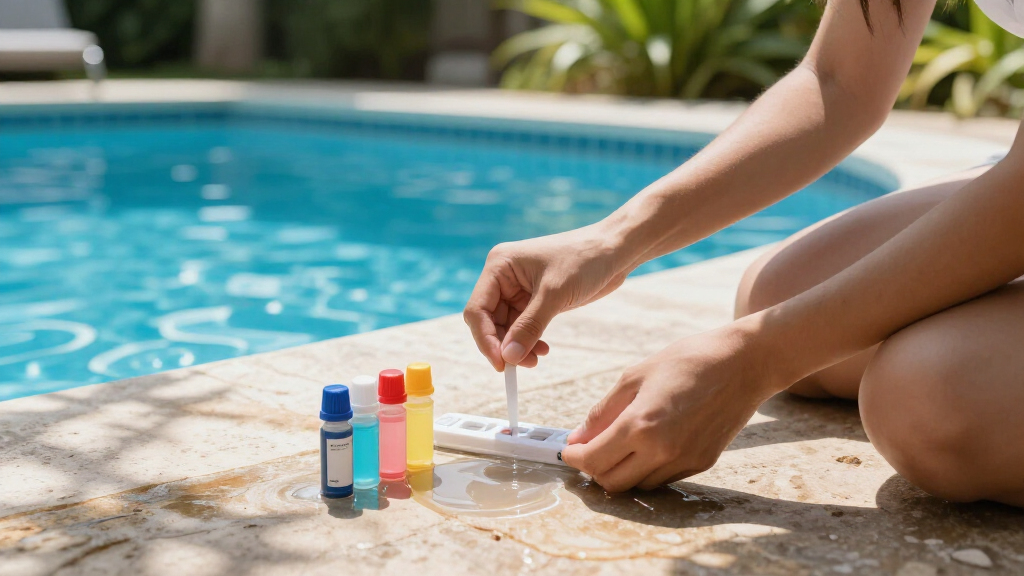
I evaluated each kit against four buyer-relevant criteria: accuracy of readings, ease of use for a typical homeowner, long-term cost including refills, and parameter coverage relative to pool type. Accuracy weighed heaviest because a kit that misreads chlorine by 1 ppm invites either algae or over-chlorination — both expensive problems. DPD-based liquid kits scored higher than OTO or strip alternatives because DPD distinguishes free from combined chlorine, a distinction that strips blur together.
Usability came next: how hard is the color matching, how many steps per test, and how forgiving is the process for beginners. Long-term value factored in refill availability and cost-per-test, which heavily favored Taylor’s refillable systems over sealed economy kits. Finally, coverage mattered differently depending on the buyer — a chlorine-and-pH bather has different needs than someone managing a saltwater or bromine spa, which is why the lineup includes kits at every tier rather than one ‘best’ for everyone.
| pool chemical test kit | Test Method |
|---|---|
| LUPO 3-in-1 Pool Test Kit for | Color-matching comparator |
| Taylor Technologies K-1005 DPD | DPD titration and color matching |
| Swimming Pool Spa Water Chemic | Liquid reagent with clear-view color matching |
| Taylor Technologies K-1004 DPD | DPD liquid reagent with comparator |
| LUPO 6-in-1 Pool Test Kit for | Color matching and drop counting |
| Taylor Technologies K-2005 DPD | — |
| All-New Pool and Spa Test Stri | — |
| Poolmaster 5-Way Pool & Spa Wa | — |
| XtremepowerUS 5-Way Swimming P | — |
| Pool Test Strips with App 7 in | — |
| Lupo DPD 9-in-1 Pool Test Kit | DPD liquid reagent with color comparator |
Factors to Consider When Choosing Pool Chemical Test Kits
Before picking a kit, it helps to understand what actually separates a good purchase from a regrettable one. These are the factors that shaped this ranking — and the mistakes I see buyers make most often.Liquid Reagents vs. Test Strips
This is the single biggest decision, and it shapes everything else. Liquid DPD kits measure free and combined chlorine separately, which tells you whether your sanitizer is actually working or already burned up fighting contaminants. Strips take fifteen seconds and never require counting drops, but they merge chlorine readings and drift with humidity, age, and finger contamination. A common mistake is treating strips as a complete testing solution — they’re fine for daily sanity checks, but they routinely miss combined chlorine problems that cause eye irritation and odor. Many pool owners end up owning both: strips for the quick morning glance, a liquid kit for the weekly deep read. If you only buy one, buy the liquid kit and accept the extra two minutes.
Parameter Coverage: What You Actually Need to Test
Marketing loves big numbers — 7-in-1, 9-in-1 — but more parameters only help if you’ll act on them. The core four for most pools are free chlorine, pH, total alkalinity, and cyanuric acid; pH and alkalinity together control whether your chlorine even works. Kits that add calcium hardness and bromine matter mainly for plaster pools and spas respectively. Cyanuric acid is the most commonly skipped test and the source of endless ‘why won’t my chlorine hold’ mysteries — outdoor pools using stabilized chlorine need it tested monthly. A 9-in-1 kit isn’t better if five of its parameters go unused; it’s just more reagents to expire. Match coverage to your water source and sanitizer type, not to the biggest number on the box.
Cost per Test, Not Cost per Kit
The sticker price is misleading because reagents expire and run out. A $15 kit that dies after one season costs more per test than a $60 kit refilled for five years. Taylor’s refill system makes its kits dramatically cheaper over time — replacement reagents cost a few dollars and extend the kit indefinitely. Strip jars look cheap until you divide the strip count into your testing frequency: daily testers burn through 150 strips in a season. Also check reagent expiration; discounted kits on marketplace sites are often old stock with degraded chemistry. My advice: calculate a two-year cost including one refill before comparing prices at all.
Color Matching and Readability
A test is only as good as your ability to read it, and this is where cheap kits quietly fail. Quality kits use printed color comparators that resist fading and shade increments a normal eye can distinguish; budget kits cram ten shades into a tiny block, making readings a guessing game. Lighting matters too — matching colors under a yellow porch light or at dusk produces wrong answers, so always test in daylight. If you (or a family member) have any color vision deficiency, this is a real constraint: some buyers should lean toward kits with wide, clearly spaced gradients or digital strip readers. Test strips suffer the same problem, and the app-connected version partially solves it, though camera white balance introduces its own errors.
Build Quality and Season Durability
Poolside is a hostile environment — UV, heat, splashed chlorine, and damp storage all degrade plastics and reagents. Flimsy cases crack, vials cloud, and reagent bottles corrode at the caps, which ruins dosing accuracy. The better kits here use impact-resistant cases with secure reagent seating so bottles don’t leak into each other during storage. Storage habits matter as much as materials: keep any kit indoors, away from sunlight, and never leave it on the pool deck between tests. Reagents typically last a season or two once opened; write the open date on bottles so you know when to distrust results. A well-built kit stored properly will outlast three cheap ones.
Your Pool Type and Sanitizer
Not every kit tests every sanitizer, and buying the wrong one wastes money immediately. Bromine users (mostly spa owners) need explicit bromine support — the XtremepowerUS and Poolmaster kits include it, while many chlorine-focused kits don’t. Saltwater pool owners still test the same core parameters as chlorine pools, so standard DPD kits work fine; the salt cell doesn’t change the chemistry you monitor, only how chlorine gets there. Biguanid (Baquacil) systems need dedicated test kits none of these provide. Well-water pools should prioritize calcium hardness and metals awareness, since source water problems show up as staining no chlorine test will explain. Start from your sanitizer, then choose coverage — never the reverse.
Frequently Asked Questions
How often should I actually test my pool water?
Chlorine and pH should be tested two to three times per week during swimming season, because both drift daily with use, sunlight, and weather. Total alkalinity, calcium hardness, and cyanuric acid change slowly, so testing those every two weeks to once a month is enough. After heavy rain, a pool party, or adding chemicals, test again within 24 hours — those events cause the biggest swings. This frequency is exactly why many owners pair strips with a liquid kit: strips cover the frequent chlorine/pH checks while the liquid kit handles the weekly full panel. Testing less than weekly is how small imbalances become algae blooms and cloudy water that cost far more to fix than the testing ever would.
Are test strips accurate enough, or do I really need a liquid kit?
For routine monitoring of a stable pool, quality strips are accurate enough to catch drift — and their speed means people actually use them consistently, which counts for a lot. Where they fall short is combined chlorine detection, low-level sanitizer readings, and precise alkalinity dosing. Strips read in wide ranges, so if your chlorine reads at the bottom of a block, you can’t tell whether you have 0.5 ppm or 1.5 ppm — a difference that matters when troubleshooting. A DPD liquid kit resolves that precision and tells you why your pool smells or irritates eyes. The honest answer: strips are fine as your daily tool if a liquid kit backs them up weekly, but strips alone will eventually leave you guessing.
Is the Taylor K-2005 worth the extra money over the K-1004 or K-1005?
It depends entirely on whether you need cyanuric acid and calcium hardness testing. The K-2005 includes both, plus acid and base demand tests that help you calculate exact dosing adjustments — that’s why it’s the kit pool professionals carry. The K-1004 and K-1005 skip those extras, which is fine for indoor pools or pools where stabilizer levels are already known and stable. Outdoor pools using trichlor or dichlor should choose the K-2005, because those sanitizers constantly raise cyanuric acid and overdosing ‘locks’ your chlorine. All three share the same refillable reagent system, so long-term cost differences are small. Paying for the K-2005 without needing CYA testing is wasted capability, not added value.
Why do my test results seem wrong or inconsistent?
Nine times out of ten the culprit is technique or expired chemistry, not the kit. Reagents degrade after opening — typically within a season — and old DPD gives falsely low chlorine readings that send owners chasing problems that don’t exist. Other common causes: testing right after adding chemicals before circulation, sampling near a return jet or skimmer instead of elbow-deep mid-pool, and matching colors in artificial light. With strips, wet fingers and humid storage quietly ruin whole jars. Always sample 12–18 inches below the surface in a clean container, rinse vials between tests, and replace reagents on schedule. If results still look off, take a water sample to a pool store for comparison — one free verification tells you which side is wrong.
Can I use one kit for both my pool and my spa?
Usually yes, with two conditions. First, the kit must support your spa’s sanitizer: bromine spas need a bromine-capable kit like the Poolmaster or XtremepowerUS 5-way, while chlorine spas work with any standard kit. Second, spa water runs much hotter and at higher sanitizer levels, so you may need to dilute samples for accurate high-range chlorine readings — something the kit instructions typically explain. The catch is reagent cross-use and hygiene: test the spa with its own sample container, never reuse pool vials without rinsing, since spa biofilm contamination distorts results. A single quality kit like the K-2005 handles both fine for most owners. If your spa sees heavy commercial-style use, a dedicated spa kit is the cleaner solution.
Conclusion
The right pick here depends less on price and more on how you maintain your water. For the best overall choice, the Taylor K-2005 earns it through professional-grade DPD chemistry, cyanuric acid coverage, and a refill system that makes it cheaper over time than anything sealed. The best value goes to the LUPO 6-in-1, which covers the core parameters dependably at a budget price, with the K-1004 as the step-up for buyers who want Taylor accuracy without paying for the full 9-test panel. Beginners should start with the LUPO 3-in-1 — fewer tests means fewer mistakes while you learn what your water does — and honestly, daily strip users can grab the 7-in-1 strip packs as a zero-learning-curve companion. For premium buyers, the Taylor K-2005 or K-1005 are the ceiling of this category. Spa and bromine owners have a specific need the others don’t meet: the Poolmaster 5-Way covers bromine with better build quality than its rivals. Whatever you choose, remember that consistency beats sophistication — the modest kit you use twice a week will outperform the professional kit sitting in a drawer.
Fall Picks
fall essentials
As an affiliate, we earn on qualifying purchases.