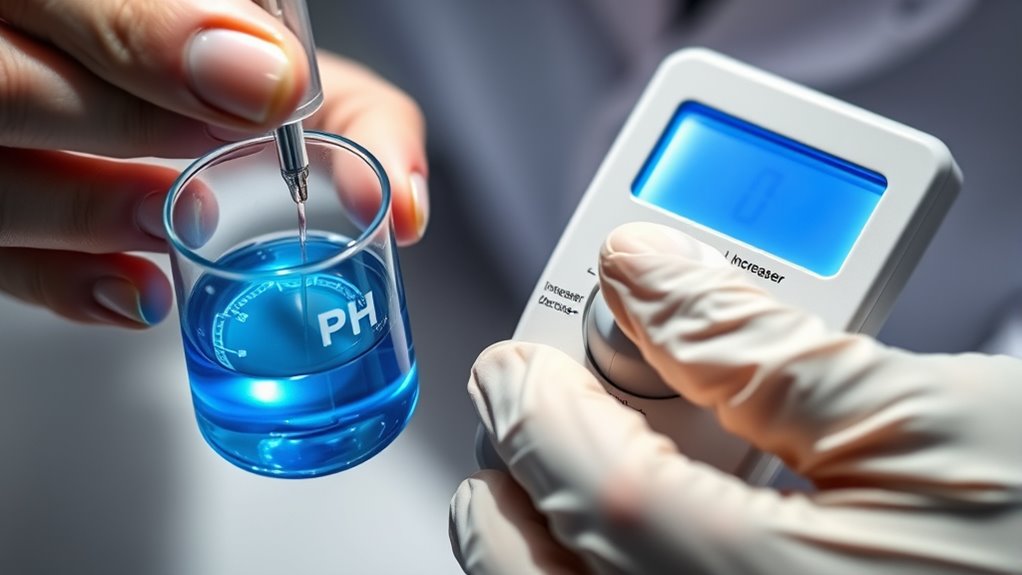
When adjusting pH levels, always handle increasers and decreasers carefully to prevent hazards. Wear gloves and goggles, and add acids or bases slowly, stirring gently between additions. Use proper tools like calibrated pH meters for accurate measurements before making adjustments. Remember, always add chemicals to water—not the other way around—and avoid overshooting your target pH. Staying safe and precise guarantees successful results—continue to explore to master these techniques effectively.

Get pool and patio gear delivered free with Prime
- Fast, free delivery on millions of items
- Prime Video, Amazon Music and more included
- Member-only deals all year
Key Takeaways
- Always wear protective gear like gloves and goggles when handling pH increasers or decreasers.
- Add chemicals slowly to water, avoiding direct addition of water to acids or bases.
- Properly calibrate your pH measuring tool before testing and adjusting pH levels.
- Use small, incremental amounts of pH adjusters to prevent overshooting the desired pH.
- Work in a well-ventilated area and handle chemicals carefully to minimize hazards.
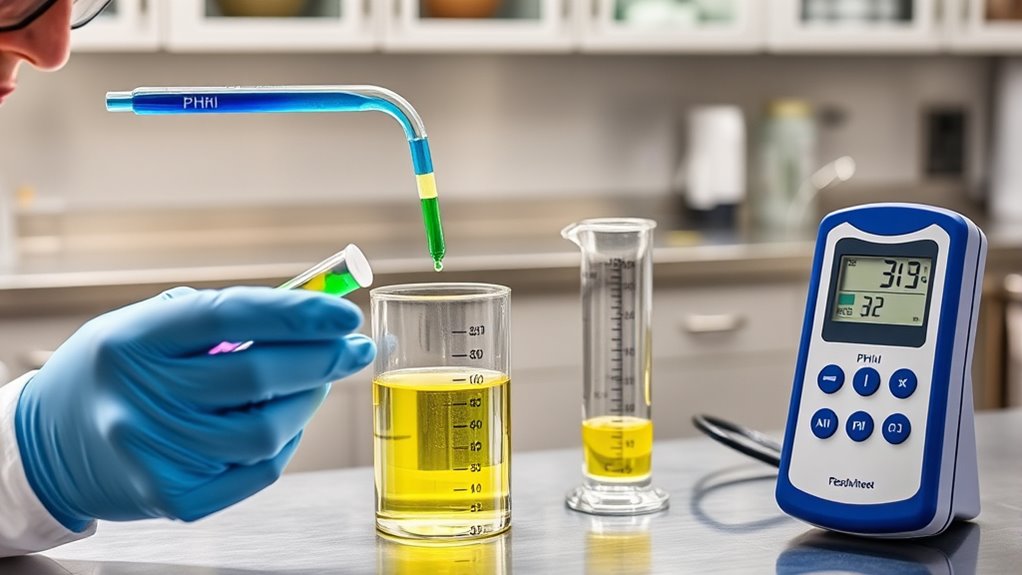
Adjusting pH is a crucial step in many processes, from gardening to water treatment. To do this effectively, you need to understand pH measurement methods and how to use common pH adjusters safely. Accurate pH measurement methods are essential because they guide your adjustments, ensuring you’re neither overdoing nor undercorrecting. You can measure pH using test strips, digital pH meters, or liquid test kits. Digital pH meters are highly accurate and give real-time readings, making them ideal for precise control. Test strips and liquid kits are more accessible and cost-effective but may be less precise. Whichever method you choose, always calibrate your tools properly before testing to get reliable results. Proper calibration ensures your readings are accurate and reliable, which is vital for correct pH adjustments.
Once you’ve determined the current pH level, you can decide whether to increase or decrease it. Common pH adjusters include substances like pH up (usually potassium hydroxide or sodium carbonate) and pH down (typically sulfuric acid or hydrochloric acid). These chemicals are effective but require careful handling. When adding pH up, start by adding small amounts gradually, stirring well and waiting a few minutes to observe the change. The same cautious approach applies when using pH down. Always add these adjusters slowly to prevent overshooting your target pH.
Safety should be your top priority when working with pH adjusters, especially acids and bases. Wear protective gloves, goggles, and work in a well-ventilated area. Acidic substances like sulfuric acid are corrosive and can cause severe burns if mishandled. Similarly, strong bases can be hazardous. Always add your pH adjuster to water, not the other way around, to minimize splashing or violent reactions. Use a clean container for each addition to prevent contamination, and thoroughly rinse your equipment afterward.
digital pH meter for water testing
As an affiliate, we earn on qualifying purchases.
As an affiliate, we earn on qualifying purchases.
Frequently Asked Questions
How Often Should I Test My Water Ph Levels?
You should test your water pH levels at least once a week to guarantee safety and stability. During periods of significant changes, such as adding chemicals or after heavy rainfall, increase testing frequency to every few days. The ideal intervals depend on your water system’s stability, but regular weekly checks help catch imbalances early. Consistent testing helps you maintain the right pH, keeping your water safe and balanced.
Can Over-Adjusting Ph Harm My Pool or Aquarium?
Over-adjusting pH can shake up your pool or aquarium like a storm in a teacup, risking pH fluctuation and chemical instability. When you go too far, it throws off the delicate balance, potentially harming aquatic life or damaging equipment. Always adjust gradually, checking levels frequently, to maintain steady pH and guarantee your water stays safe and healthy. Think of it as fine-tuning an instrument, not tuning it to chaos.
What Are Common Signs of Ph Imbalance?
You’ll notice pH imbalance symptoms like cloudy water, algae growth, or fish stress. pH indicators help you spot these signs quickly, showing color changes that signal when your water’s pH is off. If your water is too acidic or alkaline, it can harm aquatic life or damage equipment. Regularly check your pH levels and respond promptly to imbalance symptoms to keep your pool or aquarium healthy and safe.
Are Natural Ph Adjusters Safer Than Chemical Ones?
Coincidentally, choosing natural remedies often feels safer than chemical alternatives because they’re derived from nature and generally contain fewer additives. You might find that natural pH adjusters, like apple cider vinegar or baking soda, offer gentler, more controlled ways to balance your pH. However, always be cautious, as even natural remedies can cause imbalance if misused. Consulting a healthcare professional guarantees you’re making safe, effective choices when adjusting your pH.
How Do Temperature Changes Affect Ph Adjustments?
Temperature changes can considerably affect pH adjustments because of temperature influence on buffer capacity. As temperature rises, buffers may become less effective, causing pH levels to shift unexpectedly. Conversely, cooling can stabilize buffers, making adjustments more predictable. When adjusting pH, always consider temperature effects to avoid overcorrecting. Use precise measurements, and make incremental changes, especially if your solution’s temperature fluctuates, ensuring safe and accurate pH control.
Conclusion
Think of balancing pH like tending a delicate garden. When you add increasers or decreasers, you’re nurturing the soil to make certain your plants thrive. Too much or too little, and the garden suffers. With patience and care, you become a skilled gardener, steering the environment gently back to harmony. Remember, just as a garden blooms with thoughtful tending, your aquatic environment flourishes when you adjust pH carefully and responsibly.
Halloween Picks
halloween
As an affiliate, we earn on qualifying purchases.