
To keep your pool sanitized, you need effective chlorine essentials like pool shock and chlorine tablets. Use shock weekly to quickly eliminate bacteria, algae, and contaminants, while continuous chlorine tablets in dispensers or skimmers provide steady sanitation. Regularly test your water to maintain proper chlorine and pH levels, preventing issues like cloudiness or algae. Mastering these basics ensures your pool stays clean, safe, and inviting—ascend exploring to learn how to optimize your pool maintenance routine even further.
Key Takeaways
- Regularly test and maintain proper chlorine and pH levels to ensure effective sanitation.
- Use pool shock weekly or after heavy use to eliminate bacteria, algae, and organic contaminants.
- Place chlorine tablets in dispensers for consistent, slow-release sanitation during swimming season.
- Follow manufacturer instructions carefully to avoid over-chlorination and ensure swimmer safety.
- Maintain a routine schedule of testing and adjusting chemicals for clear, safe, and inviting pool water.
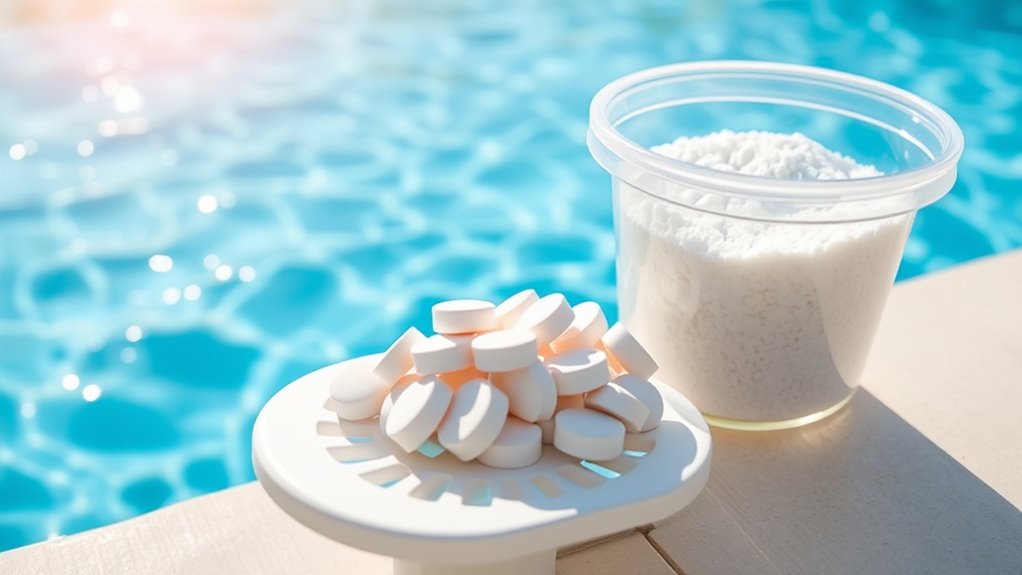
Keeping your pool clean and safe depends heavily on the right chlorine essentials. These are the key tools and chemicals that help you maintain proper sanitation, ensure clear water, and prevent algae growth. Among the most important are pool shock and chlorine tablets, which work together to keep your pool in top condition. Understanding how to use these essentials properly can make a significant difference in your pool maintenance routine.
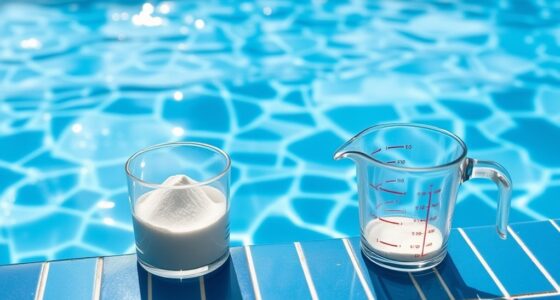
Pool shock is a powerful oxidizer that quickly raises the free chlorine level in your pool, effectively killing bacteria, algae, and organic contaminants. It’s typically used weekly or after heavy usage to give your pool a deep clean. When you add pool shock, it reacts with contaminants and destroys chloramines—those unpleasant compounds responsible for chlorinated water’s strong odor and irritation. Using pool shock as part of your routine ensures your water stays fresh, clear, and safe for swimming. Just remember to follow the instructions carefully, and avoid swimming until the shock has fully dissolved and the chlorine levels return to safe ranges.
Pool shock quickly boosts chlorine to eliminate bacteria, algae, and contaminants for a safe, clear swim.
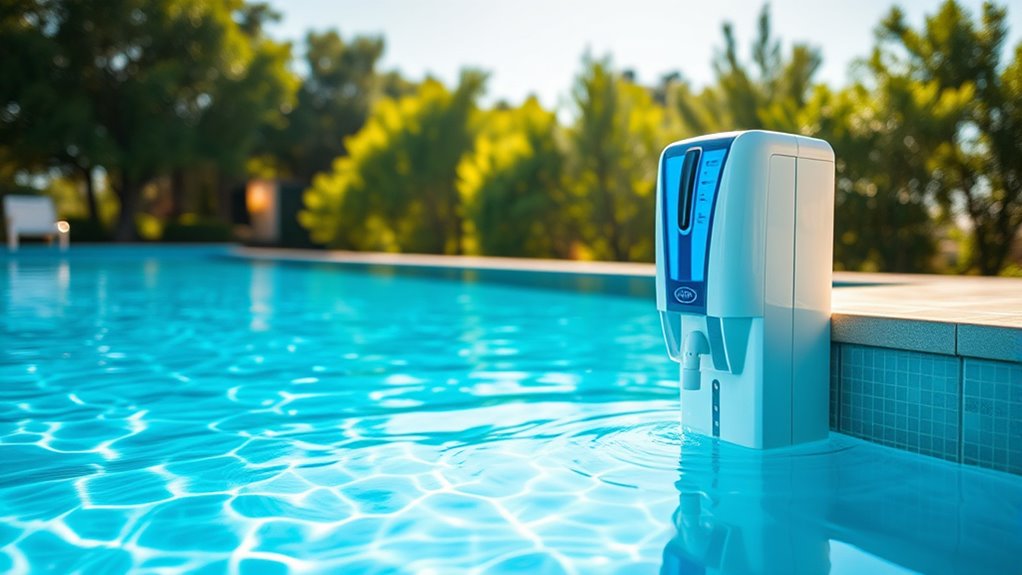
Chlorine tablets are another essential component of your pool sanitation arsenal. These tablets are designed for slow, steady release of chlorine, helping to maintain consistent sanitation levels over time. You can place them in a floating dispenser, skimmer basket, or chlorinator, depending on your pool setup. Chlorine tablets are convenient because they provide a continuous source of chlorine, reducing the need for frequent manual dosing. They’re especially useful during the swimming season when you want to keep your pool consistently sanitized without constantly measuring chemicals. Be cautious with the dosage, as overusing tablets can lead to excessive chlorine levels, causing irritation or damage to your pool equipment.
Both pool shock and chlorine tablets complement each other perfectly. The shock treatment is your go-to for periodic deep cleans, while chlorine tablets help sustain a healthy chlorine level daily. You should regularly test your pool water with a reliable kit to monitor chlorine levels and pH balance. This way, you can adjust your chlorine application as needed, preventing issues like algae blooms or cloudy water. Maintaining proper chlorine levels isn’t just about safety—it also ensures your water feels inviting and looks crystal clear. With these essentials on hand and a consistent maintenance schedule, you’ll keep your pool sparkling clean, safe, and ready for every swim. Additionally, understanding the importance of effective sanitization can help you better maintain your pool’s health and quality.
Frequently Asked Questions
How Often Should I Test My Pool’s Chlorine Levels?
You should test your pool’s chlorine levels at least 2-3 times a week to maintain proper pool maintenance. During heavy use or after a rainstorm, increase testing frequency to guarantee your chlorine remains balanced. Regular chlorine testing helps prevent algae growth and keeps your water safe. Using a reliable test kit, you can quickly check levels and make adjustments, ensuring your pool stays clean and enjoyable all season long.
Can I Use Household Bleach Instead of Pool Chlorine?
Imagine pouring clear household bleach into your pool, hoping to keep it sparkling and safe. You can use household bleach for pool sanitation, but it’s not ideal. Pool chlorine is specially formulated for water balance, stabilizers, and consistent sanitation. Household bleach often lacks these features and can cause imbalances, leading to cloudy water or algae. For safe, effective results, stick with pool-specific chlorine products.
What Are the Signs of Chlorine Overuse?
If you overuse chlorine, you might notice signs like red, itchy eyes, skin irritation, or a strong chlorine smell that lingers. These are clear indicators of imbalanced pool chemical levels, especially chlorine overdose symptoms. Excess chlorine can upset your pool’s chemical balance, making the water uncomfortable and potentially unsafe. To avoid this, regularly test your water and adjust chlorine levels accordingly, ensuring a safe and pleasant swimming environment.
How Does Temperature Affect Chlorine Effectiveness?
Think of your pool’s chlorine as a delicate dance partner, easily thrown off by temperature fluctuations. As water temperature rises, chlorine stability decreases, making it less effective at sanitizing. Conversely, cooler water helps maintain chlorine’s strength, ensuring it works efficiently. To keep your pool safe, monitor temperature changes and adjust chlorine levels accordingly, so your sanitizing efforts stay steady regardless of the weather’s mood swings.
Is It Safe to Swim Immediately After Adding Chlorine?
You shouldn’t swim immediately after adding chlorine, as it needs time to sanitize and balance your pool water. Wait at least 30 minutes to an hour, especially if you’ve used chlorine stabilizers, which help maintain effectiveness. During this wait, guarantee proper pool cover maintenance to prevent chlorine loss. Always test your water’s chlorine levels before swimming to ensure safety and comfort.
Conclusion
Now that you know the chlorine essentials, your pool will be so perfectly sanitized, it’ll sparkle like a diamond in the sun and be the envy of every swimmer in town. With just a little effort, you’ll turn your backyard into an aquatic paradise so pristine, even mermaids would want to take a dip! Keep your chlorine levels in check, and watch your pool become the most legendary, crystal-clear oasis everyone talks about—your personal slice of paradise.