
Using enzymes in your pool water helps break down oils, lotions, sweat, and other organics that can cloud water and reduce sanitizer effectiveness. You can add liquid or powdered enzymes directly into your pool, ideally during evening hours or after heavy use. Proper circulation and regular application guarantee enzymes work efficiently to keep your water clear and balanced. Want to discover more tips for maintaining a healthy pool? Keep going for detailed guidance.
Key Takeaways
- Enzymes like lipases break down fats and oils, reducing organic buildup in pool water.
- Applying liquid enzymes directly into the pool enhances their ability to target oils and organics.
- Pre-mixing enzymes with water before adding improves distribution and effectiveness.
- Regular enzyme use helps prevent organic debris from consuming chlorine, maintaining clearer water.
- Proper circulation ensures enzymes contact and break down organic matter efficiently for cleaner water.
Ever wondered how enzymes can improve your pool water quality? Enzymes are natural catalysts that help break down organic contaminants like oils, lotions, sweat, and other organic matter that can accumulate in your pool. When used correctly, they can considerably reduce the burden on your traditional chemical treatments, leading to cleaner, clearer water. Understanding enzyme types and application methods is key to maximizing their benefits. There are several enzyme types designed specifically for pool maintenance, including proteases, lipases, and amylases. Proteases target and break down proteins like body oils and lotions, while lipases focus on breaking down fats and oils. Amylases help degrade starches and other complex carbohydrates. Each enzyme type works on different organic compounds, so choosing the right combination depends on the specific issues your pool faces.
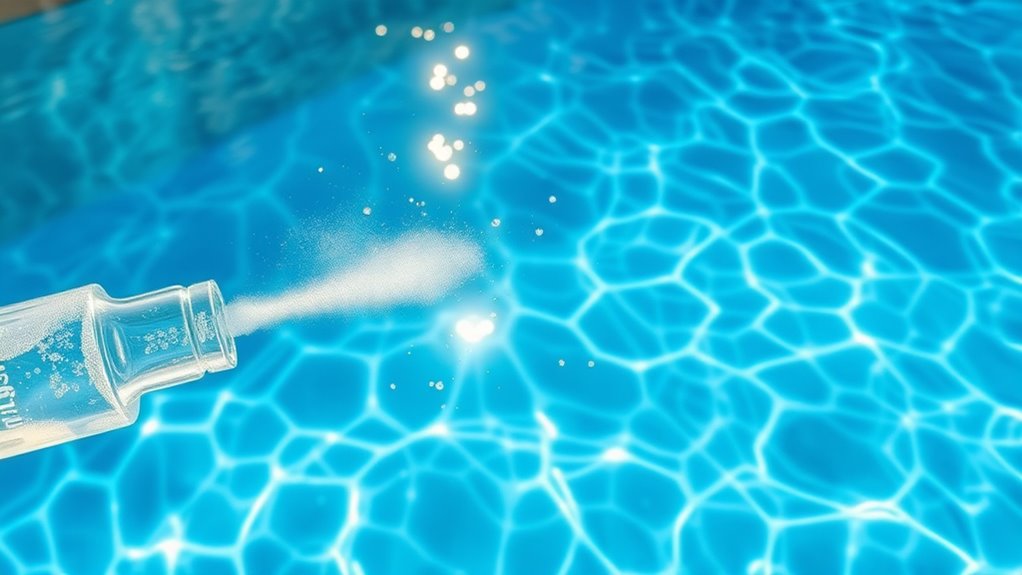
Application methods for enzymes vary, but most are straightforward and easy to incorporate into your routine. You can find enzyme products in liquid, powder, or concentrate forms. Liquid enzymes are often preferred because they mix quickly and evenly, providing rapid results. To apply, simply add the recommended dosage directly into your pool water, usually during the evening or after a heavy use period when organic buildup is highest. You might also choose to use enzymes regularly as part of your maintenance routine, which can help prevent the buildup of oils and other contaminants in the first place. Some pool owners prefer adding enzymes to their skimmer basket or filter system to aid in ongoing breakdown of organic matter as water circulates.
Another effective method involves pre-mixing enzymes with water and then pouring the mixture around the pool’s perimeter or directly into the skimmer. Consistency is important, so following the manufacturer’s instructions is essential for achieving ideal results. When applying enzymes, it’s also helpful to maintain proper circulation and filtration. Good water movement ensures enzymes contact organic contaminants thoroughly, speeding up the breakdown process. Using enzymes alongside regular chlorination or bromination can also enhance overall water quality, as enzymes help remove organic debris that might otherwise consume chlorine, making your sanitizer work more efficiently.
Frequently Asked Questions
How Often Should Enzymes Be Added to Pool Water?
You should add enzymes to your pool water weekly to maintain ideal enzyme dosing and keep the water clear. Follow a consistent maintenance schedule, especially during peak usage or hot weather, when oils and organic buildup increase. Regular enzyme treatments help break down oils and organics efficiently, reducing the need for harsh chemicals. Keep an eye on water clarity and adjust your schedule as needed to guarantee your pool stays clean and inviting.
Are Enzyme Treatments Safe for All Pool Types?
Think of enzyme treatments as the Swiss Army knife of pool maintenance—they’re generally safe for all pool types. You’ll want to check the enzyme safety label, though, to guarantee compatibility, especially with sensitive materials like vinyl or plaster. Enzymes effectively break down oils and organics, reducing the need for harsh chemicals. Just follow the manufacturer’s instructions, and you’ll keep your pool sparkling and safe, no matter its type.
Can Enzymes Replace Traditional Chlorine or Sanitizer?
Enzymes can’t fully replace traditional chlorine or sanitizers because enzyme stability and chemical compatibility are limited. They effectively break down oils and organics, reducing chlorine demand, but don’t eliminate pathogens on their own. For safe, clean water, you should use enzymes alongside chlorine or sanitizers, ensuring proper sanitation while benefiting from enzymes’ cleaning power. This combination maintains water quality without compromising safety or chemical balance.
Do Enzymes Affect Pool Water Ph Levels?
Imagine adding enzymes to your pool, and suddenly, you notice the pH level fluctuates. Enzymes generally don’t directly affect pH stability, but improper enzyme formulation can cause pH shifts due to enzyme stability issues. In a case study, a pool treated with enzymes experienced minor pH fluctuations because of enzyme instability at certain pH levels. Regular testing helps you maintain balanced water, preventing enzyme-related pH problems and ensuring effective sanitation.
What Are the Signs of Enzyme Overdose in Pools?
If you notice cloudiness, strong chemical smells, or skin irritation, you might be experiencing an enzyme overdose, which can harm your pool’s health. Overuse of enzymes can lead to imbalances in water clarity and pH, making your pool less enjoyable and potentially damaging equipment. Keep track of enzyme levels and follow recommended doses to prevent enzyme overdose, ensuring your pool stays clean, balanced, and safe for swimmers.
Conclusion
By incorporating enzymes into your pool water, you’re tackling oils and organics head-on, making maintenance easier and more effective. These natural solutions help keep your pool sparkling clean and smelling fresh, saving you time and effort. Remember, when it comes to pool care, a little effort goes a long way—don’t let problems pile up before you act. Embrace enzymes as your secret weapon and watch your pool stay pristine all season long.