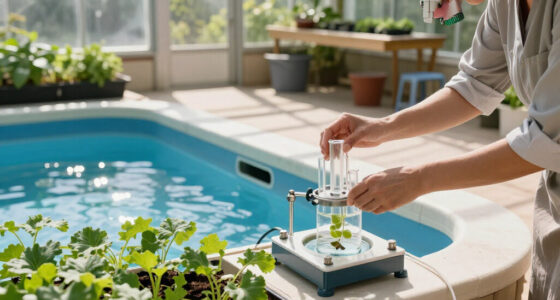

Green pool water usually happens because algae overgroes, often from chemical imbalances, low sanitizer levels, or poor circulation. To fix it, test your water and adjust the pH to 7.2–7.6, then increase your sanitizer or shocking the pool with chlorine. Brushing the walls and running the filter helps remove algae. Proper chemical maintenance prevents future issues, and if you want to learn more about keeping your pool clear, keep exploring these solutions.

Get pool and patio gear delivered free with Prime
- Fast, free delivery on millions of items
- Prime Video, Amazon Music and more included
- Member-only deals all year
Key Takeaways
- Algae overgrowth caused by chemical imbalance and low sanitizer levels turns pool water green.
- Test water regularly for pH, alkalinity, and sanitizer levels to identify imbalances promptly.
- Shocking the pool with high chlorine doses and maintaining continuous filtration helps clear algae.
- Brushing surfaces and using algaecide prevent algae attachment and promote clearer water.
- Consistent chemical maintenance and proactive treatment prevent future green water issues.

A green pool water often signals trouble that requires immediate attention. When your pool takes on a murky, algae-infested hue, it’s usually a sign that algae growth has spiraled out of control. Algae thrive in pools when the chemical balance is off, especially if the sanitizer levels drop or pH levels become unbalanced. A chemical imbalance creates the perfect environment for algae to proliferate, turning clear water into a green, cloudy mess. If you notice your water turning green, it’s a clear indication you need to act quickly to restore the proper chemical balance and eliminate algae.
A green pool indicates algae overgrowth due to chemical imbalance. Act quickly to restore balance and clear the water.
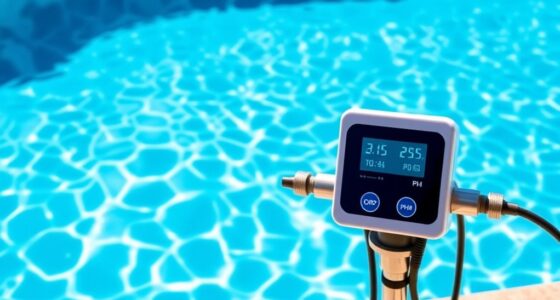
The first step you should take is testing your pool’s water. Use a reliable test kit to check the sanitizer levels, pH, and alkalinity. Low chlorine or bromine levels are often the root cause of algae growth, so you’ll want to increase your sanitizing agents accordingly. If your pH is too high or too low, it can reduce the effectiveness of your sanitizer, allowing algae to flourish. Adjusting these levels to the ideal range—usually pH between 7.2 and 7.6—is essential to preventing further algae growth and to ensuring your chemicals work effectively.
Once your water’s chemistry is balanced, the next step involves shocking the pool with a high dose of chlorine or a pool sanitizer designed to kill algae. Shocking floods your water with enough disinfectant to eradicate algae spores and bacteria. It’s important to run your pool’s filter continuously during this process to help circulate the chemicals thoroughly and remove dead algae. Brushing the pool walls and floor also helps dislodge algae from surfaces, making it easier for the chemicals to do their job. Regularly maintaining your filtration system and understanding pool water chemistry are key to preventing future outbreaks. After shocking, run your filter for at least 24-48 hours, and test your water regularly to confirm that sanitizer levels remain strong and algae are gone.
To prevent future algae outbreaks, maintain a consistent chemical routine. Regularly check and adjust your sanitizer and pH levels, and keep the pool clean by skimming debris and brushing the walls. Consider adding algaecide as a preventative measure, especially during warm weather or after heavy rain, which can introduce nutrients that fuel algae growth. Balancing chemicals properly not only keeps your water clear but also extends the life of your pool equipment. Remember, the key to avoiding a green, algae-filled pool is proactive maintenance, quick response to chemical imbalances, and diligent cleaning. This way, you’ll enjoy sparkling, inviting water and avoid costly, time-consuming algae battles in the future.
Frequently Asked Questions
How Long Does It Take to Clear a Green Pool?
It typically takes 24 to 48 hours to clear a green pool when you use a pool clarifier and algae inhibitors. First, you shock the pool and brush the sides to loosen algae. Then, add the clarifier and algae inhibitors as directed. Keep the filter running continuously, and within a day or two, the water should start to clear. Regular maintenance and testing help finish the process faster.
Can Algae Growth Be Prevented Entirely?
Algae growth can be nearly eliminated with proper algae prevention methods, but it’s tough to prevent it entirely. You should maintain consistent chemical barriers like regular chlorination and algaecides, and keep your pool’s pH levels balanced. Also, run your filter often and brush the walls to prevent algae spores from settling. These proactive steps considerably reduce algae risk, but some spores might still find a way in.
Are There Eco-Friendly Chemicals for Pool Cleaning?
Yes, you can use eco-friendly chemicals for pool cleaning. Biodegradable cleaners and natural algae fighters are great options that effectively maintain your pool without harming the environment. These products often contain plant-based ingredients and avoid harsh chemicals, making them safe for your family and aquatic life. By choosing these eco-friendly solutions, you guarantee a clean, healthy pool while reducing your ecological footprint.
What Maintenance Schedule Minimizes Algae Buildup?
To minimize algae buildup, follow a consistent pool maintenance schedule. Test your water weekly, maintaining proper pH and sanitizer levels, and brush the walls regularly to prevent algae spores from settling. Run your filter daily for several hours, especially during warm weather, and shock the pool monthly. Regular maintenance and algae prevention techniques keep your water clear, healthy, and free from algae growth, saving you time and effort in the long run.
Does Weather Affect Pool Water Discoloration?
Yes, weather affects pool water discoloration. Hot, sunny days encourage algae growth, turning your water green, especially if you skip water circulation. Cloudy weather can also diminish sunlight, slowing algae control. Using a pool cover helps limit debris and sunlight exposure, while maintaining proper water circulation prevents stagnation that causes discoloration. Regularly monitoring chemical levels and adjusting as needed ensures your pool stays clear, regardless of the weather conditions.
Conclusion
To keep your pool water clear and inviting, address the green color promptly. Regular maintenance, proper chemical balance, and quick treatment are like a shield protecting your pool from algae and bacteria. Think of your pool as a mirror of your care—if you stay vigilant and proactive, you’ll enjoy sparkling, blue water all season long. Don’t let algae take over; act fast and keep your pool as pristine as a clear lake on a sunny day.
Halloween Picks
halloween
As an affiliate, we earn on qualifying purchases.