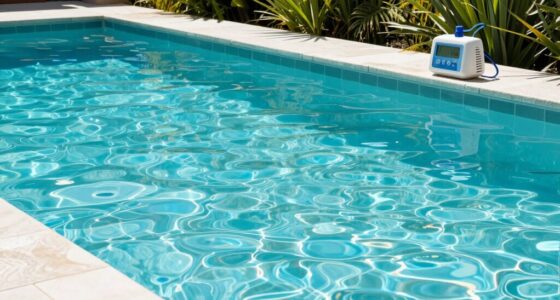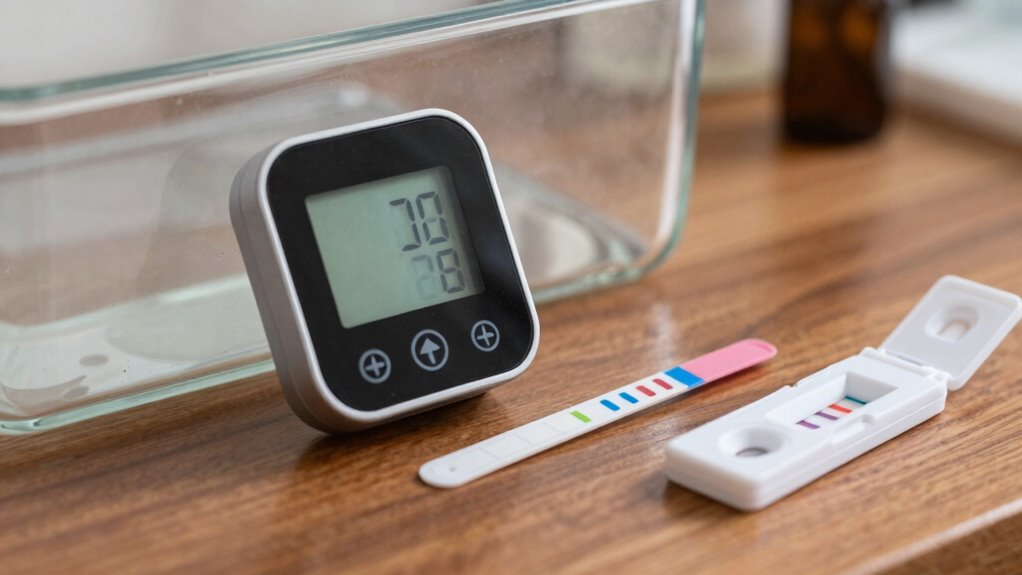

Smart water monitors are great for real-time oversight and quick alerts, but they don’t fully replace traditional test kits. They can’t detect all specific contaminants or provide detailed chemical analysis, which lab tests can. While monitors help you catch obvious issues, you’ll still need test kits for deeper insights. To better understand their limitations and how to use both effectively, stick around and discover more.

Get pool and patio gear delivered free with Prime
- Fast, free delivery on millions of items
- Prime Video, Amazon Music and more included
- Member-only deals all year
Key Takeaways
- Smart water monitors provide real-time data but lack detailed chemical analysis offered by test kits.
- They may miss subtle chemical changes detectable only through traditional lab or test kit methods.
- Test kits are essential for comprehensive testing of specific contaminants like heavy metals.
- Combining both methods ensures ongoing monitoring and detailed chemical assessment.
- Neither fully replaces the other; they serve complementary roles in water quality management.

Smart water monitors have gained popularity for their ability to provide real-time data and convenience, but they don’t fully substitute traditional test kits. When it comes to water quality, these devices offer continuous monitoring, alerting you immediately if something seems off. However, they can’t always capture the full picture, especially when it comes to detailed chemical analysis or detecting contaminants that require lab testing. While smart monitors are excellent for ongoing oversight, they often miss subtle shifts or complex issues that only thorough test kits can identify.
Smart water monitors offer real-time updates but can miss subtle chemical changes detected by traditional test kits.
In terms of cost comparison, smart water monitors might seem like a more economical option initially because they eliminate the need for repeated manual tests. Once you purchase the device, you don’t need to buy test strips or reagents again and again. However, consider the long-term expenses: these monitors often require periodic calibration, sensor replacements, or software updates, which can add up over time. Traditional test kits, on the other hand, have a lower upfront cost but can become costly if you test frequently or need detailed results. They also don’t rely on technology that might malfunction or become outdated, potentially reducing ongoing expenses. Additionally, understanding the limitations of smart water monitoring can help you make more informed decisions about water safety. It’s also worth noting that the accuracy of sensors can vary depending on the water conditions and the specific device used.
Furthermore, considering the accuracy and reliability of each method is crucial for ensuring your water quality is correctly assessed, especially in sensitive environments.
Your choice between the two depends largely on your priorities. If you want quick, continuous oversight of your water quality and are willing to invest in technology, a smart water monitor can be a practical solution. It’s especially useful if you’re managing an aquarium, pool, or small water system where ongoing monitoring is beneficial. On the other hand, if you prefer detailed chemical analysis or need to ensure water safety at a deeper level, traditional test kits still hold value. They provide specific measurements for things like pH, nitrates, or heavy metals, which many smart monitors can’t yet accurately measure.
Ultimately, smart water monitors and test kits serve different needs, and one doesn’t fully substitute the other. For thorough water management, it’s wise to use both: rely on smart devices for real-time alerts and quick checks, but keep test kits handy for periodic, in-depth analysis. This balanced approach ensures you stay on top of water quality while understanding its nuances, all without overspending or overlooking critical details.
As an affiliate, we earn on qualifying purchases.
Frequently Asked Questions
How Accurate Are Smart Water Monitors Compared to Lab Tests?
Smart water monitors are quite accurate in evaluating water purity, but they’re not perfect. They rely on advanced monitoring technology to provide real-time data, yet lab tests still offer more precise and thorough results. You can use monitors for quick checks and ongoing tracking, but for detailed analysis or legal compliance, lab tests remain the gold standard. Ultimately, combining both gives you the best understanding of your water quality.
What Specific Water Quality Parameters Can Smart Monitors Assess?
Imagine a gentle ripple across a clear pond—that’s how smart water monitors assess water quality parameters. They can measure water pH, giving you insights into acidity or alkalinity, and detect microbial presence to gauge safety. While they don’t replace detailed lab tests, these monitors provide real-time data, helping you keep an eye on your water’s health. You get instant updates without the need for complex testing every time.
Are Smart Water Monitors Suitable for All Types of Water Sources?
Smart water monitors aren’t suitable for all water sources because of water source diversity and monitoring limitations. They work well for consistent, predictable sources like tap or reservoir water but may struggle with complex or contaminated sources such as industrial effluent or natural bodies. You’ll need traditional test kits in these cases, as smart monitors can’t reliably detect all contaminants or adapt to the variability found across different water sources.
How Often Do Smart Water Monitors Require Calibration?
You might think smart water monitors never need calibration, but that’s not entirely true. Typically, calibration frequency depends on sensor durability and usage conditions, usually requiring calibration every few months. Regular calibration ensures accurate readings, especially if sensors are exposed to harsh environments or debris. Keep an eye on sensor performance indicators, and consult the manufacturer’s guidelines for ideal calibration intervals to maintain reliable water quality monitoring.
What Is the Typical Cost Difference Between Monitors and Test Kits?
The cost comparison shows that smart water monitors generally require a higher initial equipment investment compared to test kits. Test kits are more affordable upfront, often costing just a few dollars per use, while smart monitors can range from hundreds to over a thousand dollars. However, monitors offer ongoing convenience and real-time data, which can justify the higher equipment investment over time for continuous water quality monitoring.
Conclusion
While smart water monitors offer real-time insights and convenience, they don’t fully replace traditional test kits. For instance, imagine a community relying solely on monitors missing a sudden chemical spike; without test kits, quick confirmation would be delayed. So, for now, using both tools together guarantees more thorough water quality management. Embrace smart monitors for ongoing monitoring, but keep test kits handy for verification and detailed analysis when needed.
Fall Picks
fall essentials
As an affiliate, we earn on qualifying purchases.