
ORP, or Oxidation-Reduction Potential, measures your pool water’s ability to disinfect by showing how effectively chlorine is working. When ORP levels are high—around 650-750 mV—your disinfectant fight against bacteria and organic matter is strong. Low ORP means chlorine isn’t working well, risking cloudy water and germs. Keeping an eye on this number helps you maintain safe, clear water. Want to learn how to optimize your pool’s health? Keep going for the details.
Key Takeaways
- ORP measures water’s ability to oxidize contaminants, indicating sanitizer effectiveness.
- Ideal ORP levels for pools are typically between 650–750 mV, reflecting proper chlorine activity.
- Higher ORP values mean stronger chlorine disinfection; lower ORP suggests insufficient sanitation.
- Maintaining proper pH and chemical balance enhances ORP accuracy and chlorine efficiency.
- Regular ORP testing helps ensure safe, clear, and healthy pool water by optimizing chlorine performance.
What Is ORP and How Does It Measure Pool Sanitization?
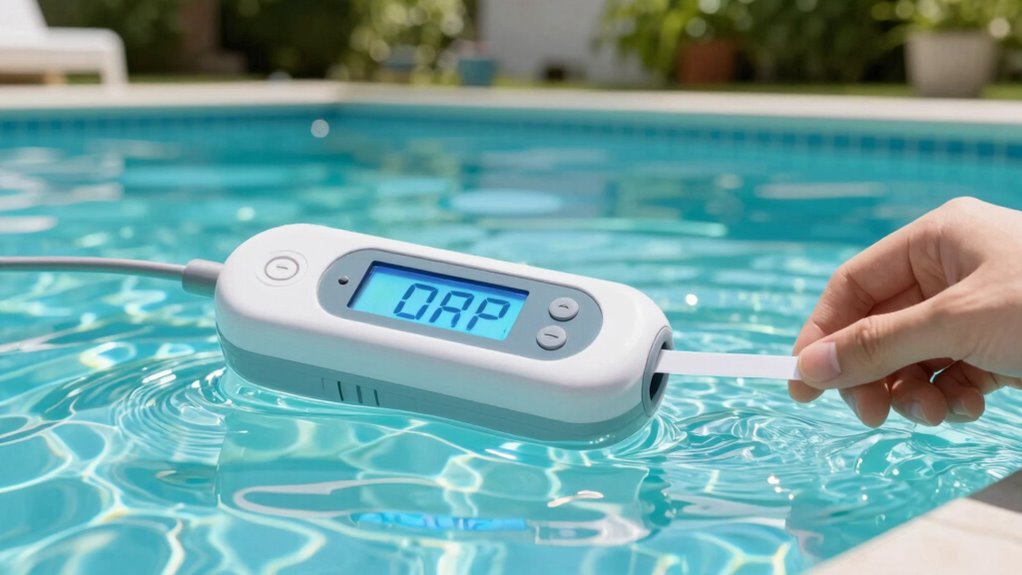
If you want to keep your pool safe and clean, understanding ORP is essential. ORP, or Oxidation-Reduction Potential, measures the water’s ability to oxidize contaminants through water oxidation. It indicates how effectively your pool’s sanitizer, like chlorine, is working to disinfect. When ORP levels are high, it means your chlorine is doing a good job at breaking down bacteria and organic matter, enhancing chlorine efficacy. Conversely, low ORP suggests the sanitizer isn’t working at its best, and pollutants may remain in the water. Think of ORP as a real-time indicator of your pool’s overall sanitization health. By monitoring ORP, you can ensure your chlorine is performing at its peak, keeping your pool safe, clear, and hygienic. Proper pool automation systems can help optimize ORP levels automatically, ensuring consistent sanitization. Regular testing of ORP levels is crucial for maintaining optimal water quality and preventing potential health hazards. Additionally, understanding the oxidation process can help you better interpret ORP readings and adjust your pool maintenance accordingly. Recognizing how chlorine’s effectiveness influences ORP can further improve your ability to manage your pool’s sanitation efficiently. Monitoring ORP regularly can also help you detect imbalances early, saving time and resources in the long run.
Why Maintaining Proper ORP Levels Matters for Your Pool’s Health
Maintaining proper ORP levels is essential because it directly impacts your pool’s ability to stay clean and safe. When ORP is correctly balanced, your pool can effectively eliminate bacteria and contaminants, reducing health risks. Poor ORP levels can lead to cloudy water, unpleasant odors, and algae growth. To achieve ideal chemical balancing, you need consistent pool maintenance and monitoring. Understanding how chlorine works helps you optimize your sanitization process and maintain proper ORP levels more effectively. Proper chemical balancing is vital for the longevity of your pool equipment and the overall enjoyment of your swimming environment. Regular testing of ORP levels can prevent imbalances that compromise water quality. Imagine: – Clear, sparkling water that invites swimmers – Reduced chemical use due to efficient sanitization – Fewer algae outbreaks and bacteria buildup – Less time spent on extensive cleaning and repairs Keeping ORP within the right range ensures your pool stays hygienic and inviting. It’s a crucial part of chemical balancing that protects your investment and enhances your swimming experience.
How to Test and Interpret Your Pool’s ORP Readings Effectively
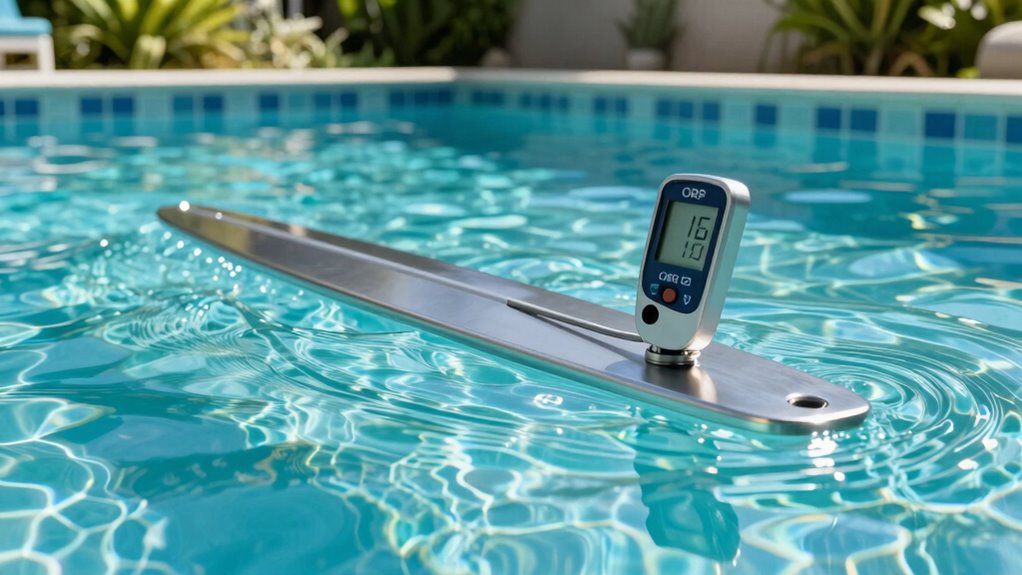
To guarantee your pool stays safe and properly balanced, it’s vital to know how to accurately test and interpret your ORP readings. Use a reliable ORP meter or probe to get precise measurements regularly. Before testing, ensure your pH balance is within the ideal range (7.2–7.6), as pH fluctuations can skew ORP results. When you take a reading, compare it to your target ORP level, typically between 650–750 mV, depending on your pool’s needs. Elevated ORP readings indicate strong chlorine activity, helping with algae prevention. Conversely, low readings suggest insufficient sanitizer levels. Consistent testing and proper interpretation enable you to maintain ideal chemical balance, prevent algae growth, and ensure your pool remains safe, clear, and inviting. Incorporating an understanding of chemical balance can further optimize your pool maintenance routine and ensure your water quality remains consistent. Regularly monitoring water chemistry parameters allows for timely adjustments and more effective sanitation. Additionally, understanding how chlorine effectiveness correlates with ORP levels can help you fine-tune your sanitation process. Remember that proper calibration of your testing equipment is essential for reliable results.
Tips for Adjusting Chlorine and Other Chemicals Based on ORP Feedback
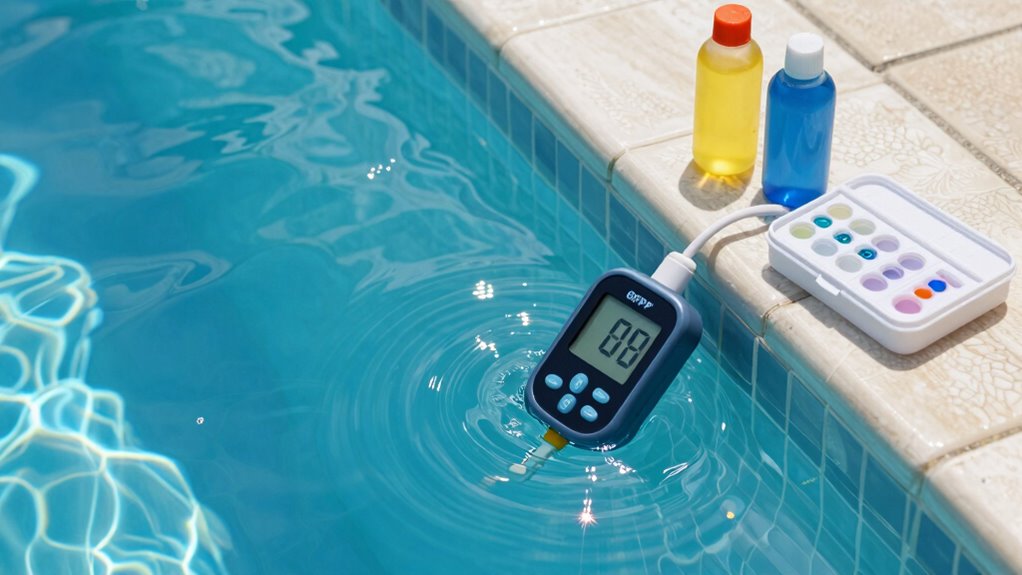
When your ORP readings fluctuate, adjusting your chlorine and other chemical levels becomes essential to maintaining a safe and balanced pool. Using pool automation systems can make this process easier by providing real-time feedback, helping you fine-tune chemical balancing. To respond effectively:
- Increase chlorine gradually if ORP levels are low, ensuring proper disinfection without overshooting.
- Use pH adjusters to stabilize pH levels, which influence ORP accuracy.
- Add stabilizers like cyanuric acid to protect chlorine from sunlight, maintaining consistent ORP readings.
- Regularly test other chemicals like alkalinity and calcium hardness to support overall water balance.
- Incorporating Free Floating devices can help distribute chemicals evenly throughout the pool.
- Understanding the ORP process can help you interpret how chemical adjustments impact overall water safety and clarity.
- Familiarizing yourself with sensor calibration techniques can improve the accuracy of ORP measurements and lead to better chemical management.
- Maintaining proper water chemistry is vital for consistent ORP readings and effective pool sanitation.
Troubleshooting Common ORP Issues to Keep Your Pool Safe and Clear
Troubleshooting common ORP issues is essential for keeping your pool safe and crystal clear. When your ORP readings are inconsistent or low, it often points to imbalances in your chemical levels or equipment maintenance problems. First, check your chemical balance, ensuring chlorine and stabilizers are within recommended ranges. Imbalanced chemicals can hinder chlorine’s effectiveness, lowering ORP. Next, inspect your equipment, including sensors and circulation systems, for proper operation and cleanliness. Dirty or malfunctioning sensors can give false readings, leading to improper chemical adjustments. Regularly calibrate and maintain your equipment, and keep chemicals balanced to optimize ORP performance. Proper water circulation is also crucial, as stagnant water can cause inaccurate ORP readings and reduce disinfection efficiency. Additionally, using advanced sensors designed for precise ORP measurement can improve the accuracy of your readings. Keeping your sensor calibration up-to-date is vital for accurate monitoring. Maintaining proper water chemistry levels helps ensure consistent ORP readings and effective sanitation. Keep an eye on your chemical levels regularly to prevent imbalances that can compromise your pool’s safety. Addressing these issues promptly helps maintain a safe, healthy pool and prevents algae growth or bacteria buildup.
Frequently Asked Questions
How Often Should I Test My Pool’s ORP Levels?
You should test your pool’s ORP levels at least twice a week to maintain proper chemical balance. Regular testing makes sure your chlorine is effectively sanitizing the water and prevents issues like algae or bacteria growth. If your pool gets heavy use or after a rainstorm, increase testing frequency. Consistent checks help you adjust chemical levels promptly, keeping your pool safe, clear, and inviting for swimmers.
Can High ORP Levels Cause Skin Irritation?
High ORP levels can be like a lightning bolt to your skin, causing irritation if you have sensitive skin. When pool chemistry gets out of balance, it can lead to increased chlorine activity, which may cause redness, itching, or rashes. To keep your skin happy, regularly test and adjust your pool’s ORP levels, maintaining proper chemical balance. This way, you protect your skin while enjoying a safe, clean swimming experience.
What Equipment Is Best for Continuous ORP Monitoring?
You should choose a reliable ORP sensor designed for continuous monitoring, ideally one with corrosion prevention features to withstand pool environments. Regular sensor calibration is essential to guarantee accurate readings, so opt for equipment that offers easy calibration procedures. This combination helps maintain ideal chlorine levels, prevents equipment damage, and ensures consistent water quality, ultimately making your pool safer and more enjoyable.
How Do Temperature Changes Affect ORP Readings?
Temperature changes impact ORP readings because they influence chemical reactions in your pool water. As water warms, reactions speed up, causing ORP levels to rise; cooling slows reactions, lowering ORP. To maintain accuracy, you need regular sensor calibration, especially if temperature fluctuates substantially. Proper calibration ensures your ORP readings reflect true water quality, despite temperature variations, helping you keep your pool safe and properly chlorinated.
Is There a Safe ORP Level for Saltwater Pools?
Yes, there’s a safe ORP level for saltwater pools, typically between 650 and 750 millivolts. Maintaining proper saltwater chemistry is essential, so you should regularly calibrate your ORP sensors to guarantee accurate readings. Proper ORP calibration helps keep your chlorine levels effective and your pool safe. Keep an eye on the ORP levels, and adjust your chlorine output as needed to maintain ideal water quality and safety.
Conclusion
By understanding ORP and its role in pool sanitization, you can confidently maintain a safe, clear swimming environment. For example, imagine testing your pool and noticing a low ORP reading; by adjusting your chlorine levels accordingly, you prevent algae growth and bacteria buildup. Regular monitoring guarantees your pool stays inviting and healthy. Keep an eye on those readings, make informed adjustments, and enjoy worry-free swimming all season long!