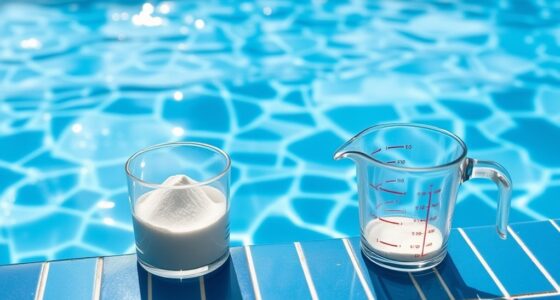
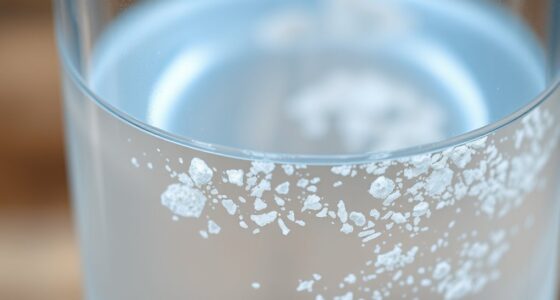
To prevent scale without damaging your surfaces, regularly test your calcium hardness levels and keep them within the recommended range. Balance your pH to reduce calcium precipitation, and consider natural methods like polyphosphates or zeolite to soften water gently. Using a water softener with proper maintenance can help manage calcium buildup safely. By effectively monitoring and adjusting your water chemistry, you’ll protect surfaces and equipment—learn more ways to keep your system healthy below.
Key Takeaways
- Maintain calcium hardness within recommended levels to prevent scale formation while avoiding excessive mineralization that can cause etching.
- Regularly test water chemistry and adjust pH to keep minerals dissolved and minimize calcium precipitation.
- Use natural water softening agents like polyphosphates or zeolite to reduce calcium levels gradually without damaging surfaces.
- Employ water softeners or ion exchange systems carefully, monitoring sodium levels to prevent surface etching.
- Keep surfaces clean and properly balanced to prevent mineral deposits, ensuring scale is minimized without surface damage.
What Is Calcium Hardness and Why It Matters for Scale Prevention
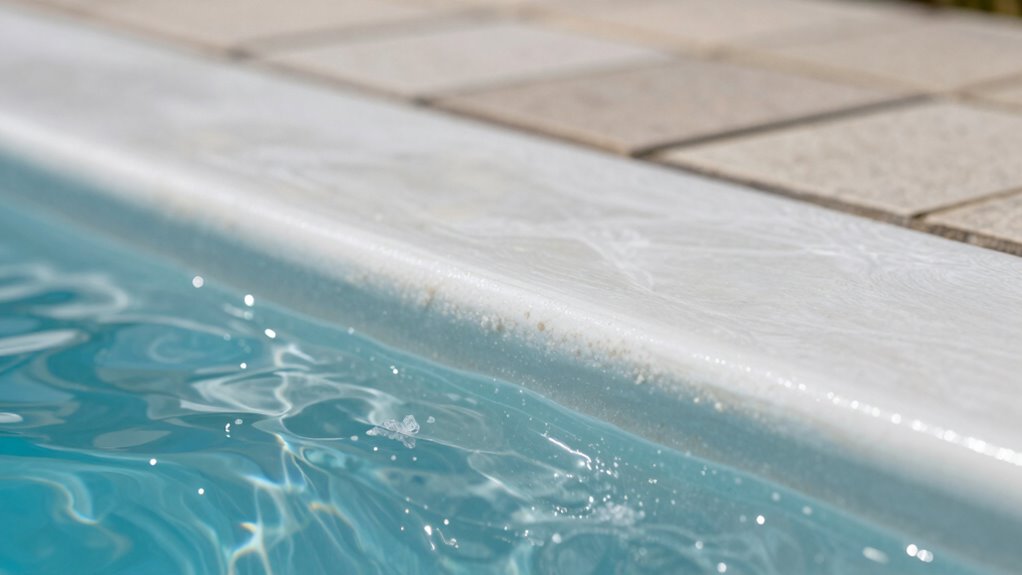
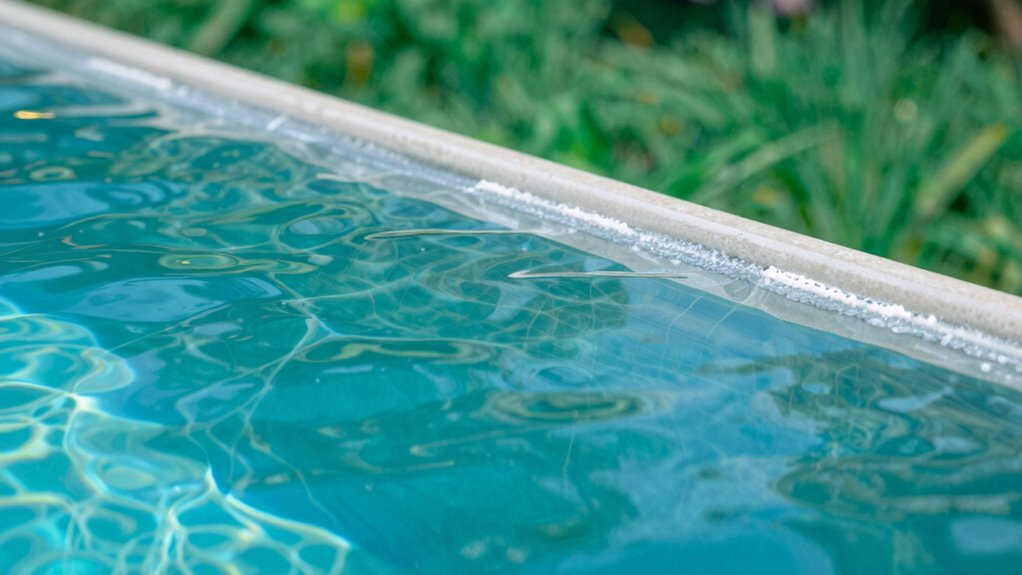
Calcium hardness refers to the amount of dissolved calcium ions in your water, which can considerably impact your pool’s health. Water mineralization plays a key role here, as high calcium levels increase the likelihood of scale formation on surfaces and equipment. When calcium levels are too high, minerals precipitate out of the water, creating a white, chalky deposit that adheres to pool walls, filters, and heaters. This buildup not only looks unsightly but can also hinder water flow and reduce equipment efficiency. Keeping calcium hardness within the recommended range helps prevent excessive mineralization, which in turn minimizes scale formation. Proper management of calcium levels ensures your pool remains balanced, saving you from costly repairs and maintaining a clean, inviting swimming environment. Additionally, understanding tax planning strategies can help pool owners allocate resources effectively for maintenance and upgrades. Maintaining optimal calcium hardness levels is essential for preventing scale buildup without the need for surface etching or harsh chemical treatments.
How to Safely Test and Monitor Your Calcium Levels

To guarantee your pool’s calcium hardness stays within the safe range, you need to regularly test and monitor the levels. Calcium testing involves using test kits or digital meters designed specifically for pools, providing quick and accurate readings. Hardness monitoring should be done weekly or after significant water changes to catch fluctuations early. Follow the instructions carefully, ensuring the sample is representative of your pool water. Keep detailed records to track trends over time, which helps identify if calcium levels are rising or falling. Proper testing and monitoring enable you to make informed adjustments, preventing scale buildup or surface etching. Regularly reviewing your regional water profiles can help anticipate natural variations in calcium levels and plan your maintenance accordingly. Additionally, understanding the contrast ratio of your filtration system can contribute to better water clarity and quality. Staying vigilant with calcium testing ensures your pool maintains ideal water balance, prolongs equipment life, and keeps your surfaces in pristine condition. Incorporating test result trends into your routine can further enhance your ability to maintain optimal water chemistry and avoid potential issues before they develop. Being aware of potential scaling risks can help you implement preventive measures more effectively.
Natural Ways to Reduce Calcium Hardness Without Damaging Surfaces

When aiming to lower calcium hardness naturally, you can use methods that are gentle on your pool surfaces and equipment. One effective approach is to promote pH balancing, which helps prevent mineral deposits from forming and reduces calcium buildup. Regularly testing your water’s pH ensures it stays within the ideal range, minimizing calcium precipitation. You can also introduce natural water softening agents such as zeolite or polyphosphate treatments, which bind calcium ions without damaging surfaces. These options work gradually, reducing mineral deposits and preventing scale formation. Avoid harsh chemicals that can etch or damage your pool surface. Instead, focus on maintaining proper pH levels and using natural treatments to control calcium hardness safely and effectively, preserving your pool’s integrity and appearance. Understanding mineral deposits can help you make better decisions for natural water treatment options. Additionally, staying informed about water chemistry can further optimize your approach to preventing scale buildup. Incorporating knowledge of calcium carbonate solubility can also guide you in adjusting your water chemistry for optimal results. To enhance your understanding, consider exploring mineral deposit formation to better grasp how scale develops over time.
Using Water Softeners and Equipment to Prevent Scale Safely
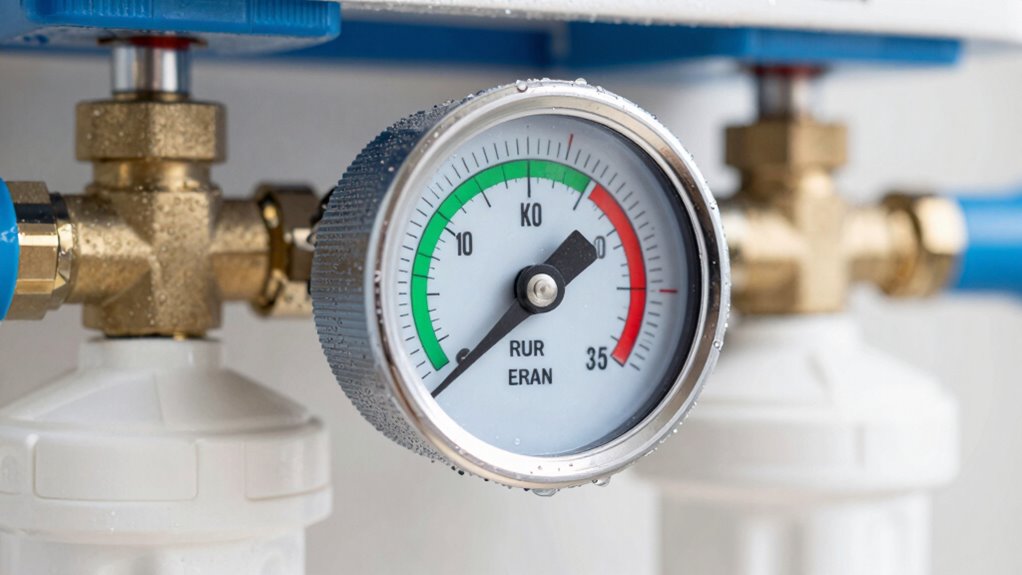
Using water softeners and treatment equipment is an effective way to prevent scale buildup safely. Ion exchange systems are commonly used to reduce calcium hardness by replacing calcium and magnesium ions with sodium or potassium ions. These systems require proper salt management to guarantee peak performance and avoid overuse. Regularly check salt levels and top off the brine tank as needed. Proper maintenance prevents salt bridging and ensures the resin regenerates effectively. Avoid over-softening, which can lead to increased sodium levels, and always follow manufacturer guidelines. Proper system maintenance is crucial for optimal operation and longevity of your water treatment setup. Additionally, monitoring water quality helps ensure your system functions correctly and efficiently. Understanding water chemistry can help you better manage your softening process and prevent issues. Maintaining the correct softening levels helps prevent both scale formation and potential damage to surfaces. Proper water softening procedures can also extend the lifespan of your plumbing and appliances. By managing your water softening equipment correctly, you minimize scale formation without damaging surfaces or using harsh chemicals. This approach offers a safe, efficient way to protect your plumbing and appliances from scale-related issues.
Tips for Keeping Water Chemistry Balanced and Protecting Surfaces
Properly managing your water softening system helps maintain balanced water chemistry, which in turn protects your plumbing and surfaces. To prevent issues like algae growth and mineral deposits, regularly test your water’s pH and calcium levels. Use appropriate treatments to keep mineral buildup in check and avoid surface etching. Keeping surfaces clean and free of residue also minimizes algae control problems. Consider this quick reference:
| Action | Benefit | Tips |
|---|---|---|
| Regular Testing | Detect imbalances early | Use test kits monthly |
| Adjust Chemical Levels | Prevent mineral deposits and algae | Follow manufacturer guidelines |
| Surface Maintenance | Protect surfaces from etching | Clean surfaces frequently |
| Understanding Water Chemistry | Ensures long-term system health | Educate yourself on water balance |
A proper understanding of water chemistry is essential for maintaining optimal system performance and avoiding costly repairs. Additionally, controlling calcium hardness levels helps prevent scale formation that can damage surfaces over time. Balancing water chemistry guarantees your surfaces stay smooth, clear, and resistant to damage.
Common Mistakes to Avoid When Managing Calcium Hardness

Many people overestimate how much water softening they need, which can lead to overly low calcium levels and surface damage. Ignoring regular testing prevents you from catching changes in calcium hardness early, risking imbalanced water. To keep your water chemistry in check, avoid these common mistakes and stay proactive with testing and adjustment. Additionally, understanding golf history and milestones can help you appreciate the importance of precision—just as proper calcium management requires careful attention. Recognizing water chemistry fundamentals can further improve your ability to maintain optimal water quality and prevent damage.
Overestimating Water Softening
It’s common to overestimate how much water softening will reduce calcium hardness, leading to unnecessary chemical use and increased costs. Softening treatments may not eliminate calcium buildup caused by mineralization, especially in areas with high water mineralization. Relying solely on softening can give a false sense of security, overlooking the persistent calcium hardness that contributes to scaling issues. Properly managing calcium hardness requires understanding that softening reduces dissolved calcium but doesn’t always prevent scale formation. Use this table to gauge softening efficiency:
| Softening Effect | Limitations |
|---|---|
| Reduces calcium | Doesn’t eliminate mineral buildup |
| Lowers hardness | May need additional scale control |
| Improves clarity | Not a complete solution for scale prevention |
Ignoring Regular Testing
Neglecting regular testing of your water’s calcium hardness can lead to unnoticed calcium buildup and costly equipment damage. Without consistent testing, you might miss early signs of increasing calcium levels, which can result in stubborn scale forming on surfaces. This buildup not only reduces efficiency but also risks surface etching, especially if calcium levels become too high. Regular testing allows you to catch these issues before they escalate, providing the opportunity to adjust your water treatment plan accordingly. Ignoring these tests means you won’t know when to take preventative measures, increasing the likelihood of scale-related problems. Stay vigilant with routine testing to maintain ideal calcium levels, prevent surface etching, and extend the lifespan of your equipment.
Frequently Asked Questions
Can Low Calcium Hardness Lead to Other Water Quality Issues?
Yes, low calcium hardness can cause water quality issues. You might notice mineral depletion, which weakens your water’s ability to prevent corrosion. This can lead to water scaling in some areas while causing erosion in others. Additionally, low calcium levels can make your water more corrosive, risking damage to pipes and appliances. Maintaining proper calcium hardness balances mineral content, helping prevent both scaling and corrosion issues effectively.
How Does Calcium Hardness Affect Pool or Hot Tub Maintenance?
Calcium hardness directly impacts your pool or hot tub maintenance by influencing calcium scale formation. When calcium levels are too high, it leads to calcium scale, which can damage surfaces and equipment. Maintaining proper calcium hardness prevents surface etching and reduces the need for costly repairs. Regular testing and balancing your water guarantees you avoid scale buildup, keeping your system smooth, clear, and well-maintained without risking surface damage.
Are There Environmental Concerns With Reducing Calcium Hardness?
Reducing calcium hardness is like thinning a river’s flow; it can impact the water ecosystem if not managed carefully. While lowering calcium helps prevent scale and surface etching, excessive reduction may lead to corrosive water, harming aquatic life and damaging equipment. Consider the environmental impact of your treatments, and aim for balanced calcium levels to protect both your pool and the surrounding ecosystem.
What Are the Signs of Calcium Hardness Imbalance in Water?
If you notice cloudy water, white residue, or scaling on your surfaces, these are signs of calcium hardness imbalance. Calcium scale often forms on pipes and equipment, indicating high calcium levels, while low levels can cause surface etching and corrosion. Keep an eye out for these issues to prevent damage, and consider adjusting your water treatment to maintain a balanced calcium hardness, avoiding both scale buildup and surface etching.
Does Calcium Hardness Influence the Effectiveness of Water Treatment Chemicals?
Yes, calcium hardness influences the effectiveness of water treatment chemicals. Higher calcium levels affect water mineralization, which can cause chemical interactions that reduce the efficiency of treatments like sanitizers and dispersants. When calcium hardness is balanced, chemicals work more effectively, preventing scale buildup and maintaining water clarity. To optimize treatment, monitor calcium levels regularly and adjust chemical dosages accordingly, ensuring proper interactions and improved overall water quality.
Conclusion
By understanding calcium hardness and keeping an eye on your water chemistry, you might notice that a simple test or natural adjustment could coincide with clearer, scale-free surfaces. When you balance your water properly, it’s like catching a gentle breeze—subtle, but enough to prevent scale buildup without risking damage. With patience and care, you can enjoy smooth, clean surfaces, making every drop work in your favor without the surprise of etching or corrosion.