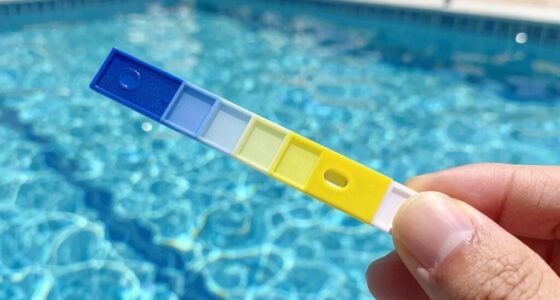
If your pool’s pH keeps bouncing out of range, external factors like rain, debris, algae, or weather changes might be affecting it. Improper calibration of your pH controller or sensor placement can also cause fluctuations, as well as chemical imbalances or poor circulation. Regular maintenance, correct placement, and calibration are essential for stable pH control. Keep exploring to uncover detailed strategies that can help you maintain consistent, balanced water chemistry all season long.
Key Takeaways
- Inaccurate calibration or dirty sensors can cause pH controllers to misread levels, leading to frequent adjustments.
- External factors like rain, algae, and debris introduce organic matter that disrupts pH stability.
- Improper sensor placement or poor water circulation results in uneven pH readings and bouncing.
- Chemical imbalances, such as excess alkalinity or acidity, weaken chemical stability and cause fluctuations.
- Inconsistent maintenance or calibration of pH controllers prevents precise regulation, causing the pH to bounce out of range.
Why Does My Pool pH Keep Fluctuating?

Have you noticed your pool’s pH levels constantly changing? This often happens because of inconsistent chemical balancing. When you don’t regularly test and adjust chemicals, the pH can swing unexpectedly. Additionally, equipment calibration plays a key role; if your pH meter isn’t properly calibrated, readings become inaccurate, leading you to add the wrong amount of chemicals. Environmental factors, like rain, algae growth, and even swimmer load, also influence pH levels. Without proper chemical balancing and calibrated equipment, your pool’s pH can fluctuate wildly, making it harder to maintain stable water. Regular testing, correct chemical adjustments, and ensuring your testing equipment is properly calibrated will help keep your pool’s pH within the ideal range. Understanding chemical stability can also deepen your awareness of the importance of balance and harmony in maintaining stable pool chemistry, especially considering how environmental influences impact pH fluctuations. Recognizing the role of AI-driven solutions in monitoring and adjusting chemical levels can further improve pool maintenance practices.
How Do pH Controllers Maintain Stable Pool Water?

pH controllers maintain stable pool water by automatically monitoring and adjusting the pH levels in real-time. They use advanced sensor technology to constantly measure the water’s acidity or alkalinity, detecting even slight changes quickly. When the sensor detects a deviation from the set pH range, the controller triggers a chemical injection system to add either acid or base. This process relies on understanding chemical reactions: adding acid lowers pH, while adding base raises it. The controller’s precise adjustments prevent pH from bouncing out of range, keeping your water balanced. By continuously responding to water conditions, pH controllers eliminate manual testing and guesswork, ensuring consistent water quality and reducing the risk of corrosion or algae growth. Proper filtration and pump protection are also essential to maintain the efficiency of the system and prevent clogs that could interfere with pH regulation. Additionally, proper calibration of sensors is crucial for accurate pH readings and reliable system performance.
Top Causes of pH Fluctuations in Pools
You might notice your pool’s pH levels shift unexpectedly, often due to imbalanced chemical levels or external factors. Changes in algae, debris, or rainfall can cause pH fluctuations that are hard to predict. Recognizing these causes helps you maintain a stable and healthy swimming environment. Additionally, improper chemical balance can undermine your efforts to keep the pH within the desired range. External influences like weather conditions can also significantly impact pH levels, making regular monitoring essential. Maintaining proper water chemistry is crucial for consistent pH stability and overall pool health. Some pools may also experience pH bouncing due to astrological influences, as cultural beliefs sometimes link celestial phenomena with environmental changes. Understanding the contrast ratio of your pool’s filtration and lighting can further improve your pool’s clarity and overall appearance.
Imbalanced Chemical Levels
Imbalanced chemical levels are a primary cause of pH fluctuations in pools, disrupting water stability and safety. When chemicals are out of balance, chlorine stability suffers, making it harder to keep the water sanitized. Insufficient chlorine allows algae to grow, which can cause pH levels to rise unexpectedly. Conversely, excess chemicals can lead to corrosive water, lowering pH and creating unsafe conditions. Regularly testing and adjusting your pool’s chemical levels helps maintain a proper chemical balance, preventing sudden pH swings. Proper chemical management not only keeps your water clear and safe but also supports effective algae prevention. By maintaining consistent chemical levels, you minimize the risk of pH bouncing out of range, ensuring a more stable and enjoyable swimming experience. Additionally, using dryer balls can help reduce detergent residues that may affect water chemistry in laundry processes, indirectly contributing to overall water quality. Maintaining proper water chemistry is essential for preventing pH fluctuations and ensuring a safe swimming environment, and being aware of chemical interactions can further help maintain pool stability.
External Environmental Factors
External environmental factors play a significant role in causing pH fluctuations in your pool. Sunlight from solar panels and exposure to weather conditions can increase pH levels, making water more alkaline. Using pool covers helps regulate these changes by limiting sunlight and debris, reducing pH swings. Wind, rain, and nearby vegetation also introduce contaminants that affect pH balance. Understanding these influences helps you maintain stable water chemistry. Here’s a quick overview:
| Factor | Effect on pH | Mitigation |
|---|---|---|
| Solar panels | Increase pH with UV exposure | Use pool covers when not swimming |
| Pool covers | Stabilize pH by blocking sunlight | Keep covers on during the day |
| Weather changes | Fluctuate pH with rain or wind | Regular testing and adjustments |
| Vegetation | Adds organic matter, lowers pH | Remove debris promptly |
| Debris & pollutants | Disrupt chemistry, cause swings | Skim and clean regularly |
Additionally, proper water circulation is essential in preventing uneven pH distribution throughout the pool.
How Calibration and Maintenance Affect pH Control
Regular calibration checks make certain your pH controllers stay accurate, preventing unexpected fluctuations. Proper equipment maintenance keeps everything functioning smoothly and reduces errors. Consistent testing procedures help you catch issues early and maintain reliable pH levels. Additionally, ensuring that the piercing care and hygiene practices are followed can prevent contamination that might interfere with sensor accuracy. Implementing automated detection tools can further enhance calibration accuracy and streamline maintenance routines. Regularly inspecting and cleaning sensors is also crucial for maintaining overall measurement precision and avoiding drift over time. Incorporating proper calibration techniques ensures your system remains dependable and reduces the chances of pH bouncing out of range. Staying informed about personality assessments can provide useful insights into team dynamics, which can be beneficial when managing pool maintenance staff or operations.
Regular Calibration Checks
Performing regular calibration checks is essential to guarantee your pH controllers work accurately and reliably. Proper calibration depends on correct pH sensor placement; ensure the sensor is submerged in the sample water without air bubbles or obstructions. Regular calibration frequency, typically every few weeks or after significant water changes, helps maintain precision. If your sensor drifts or readings become inconsistent, recalibrate immediately to prevent pH fluctuations. Keep a schedule and record each calibration to track performance over time. Accurate calibration ensures your controller responds correctly to pH shifts, avoiding unnecessary adjustments. Neglecting regular checks can lead to inaccurate readings, causing your pool’s pH to bounce out of range. Consistent calibration is a simple yet crucial step in maintaining stable pH levels and prolonging your equipment’s lifespan.
Proper Equipment Maintenance
Proper equipment maintenance directly impacts the accuracy and reliability of your pH control system. When your equipment is well-maintained, it guarantees consistent chemical balance in your pool, preventing fluctuations that cause your pH levels to bounce. Regular cleaning of probes and sensors removes buildup that can skew readings, while timely calibration keeps measurements precise. Don’t overlook the importance of equipment upgrades; newer technology often offers better accuracy and durability, reducing errors over time. Proper maintenance also minimizes unexpected failures, saving you money and hassle. Additionally, understanding the principles of Free Floating can help in troubleshooting issues related to water chemistry. By staying proactive with your equipment, you help ensure your pH controller functions smoothly, maintaining stable water chemistry, and keeping your pool in ideal condition.
Consistent Testing Procedures
Since calibration and maintenance are essential for accurate pH readings, establishing consistent testing procedures guarantees your control system remains reliable. Regular testing helps you detect pH imbalances early, allowing you to take corrective action before chemical instability affects water quality. Use proper testing methods, such as calibrated pH meters or test strips, and record results consistently. This guarantees you maintain proper pH balancing, preventing swings that can cause your pool’s chemistry to become unstable. Consistent testing also helps verify that your pH controllers are functioning correctly, avoiding false readings that lead to overcorrection. By sticking to a routine, you guarantee your pool’s water remains safe, clear, and chemically stable, reducing the chances of your pH bouncing out of range and maintaining excellent water conditions.
Where to Place and How to Maintain Your pH Sensor

To make certain of accurate pH readings, you need to carefully choose the right location for your sensor. Proper sensor placement ensures it stays in the flow of water without being affected by debris or splashing, which can skew results. Position the sensor away from return jets and skimmers, as turbulence can cause inconsistent readings. Keep the sensor submerged in the pool’s steady flow zone for reliable data. Regular maintenance is essential; clean the sensor regularly to prevent buildup and ensure accurate readings. Additionally, check and adjust calibration frequency as recommended by the manufacturer. Proper placement and consistent calibration help your pH controller function effectively, reducing the chances of pH bouncing and maintaining a stable, balanced pool environment.
Troubleshooting pH Bouncing: Quick Tips and Solutions
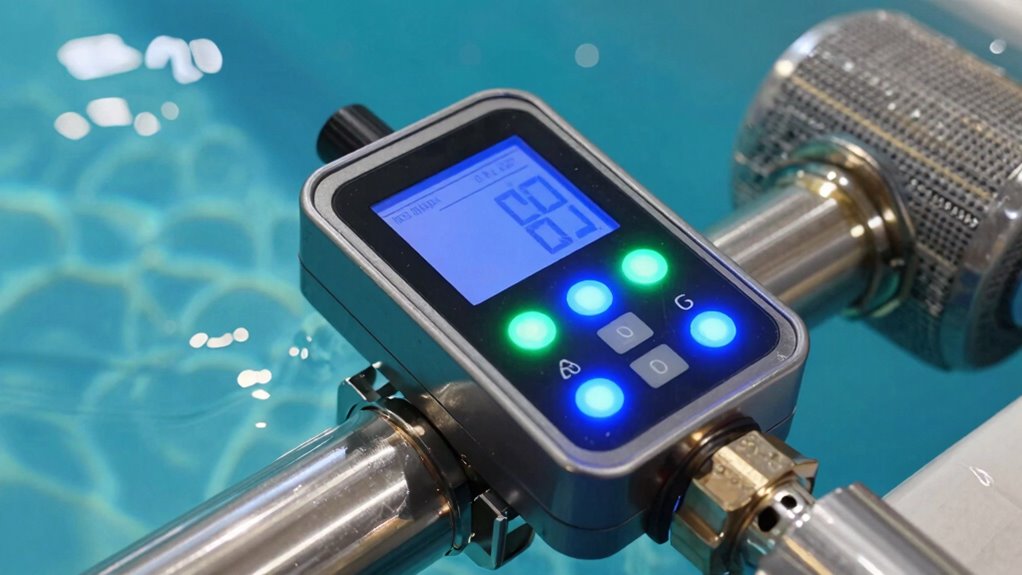
When your pH readings fluctuate unexpectedly, it can be frustrating and difficult to maintain a stable pool environment. pH bouncing often indicates issues with sensor placement, contamination, or calibration errors. To troubleshoot, start by checking if your sensor is clean and properly positioned—debris or mineral buildup can cause inaccurate readings. Test your mineral balance, as imbalanced minerals can influence pH levels and cause instability. If pH spikes after adding pool shock, ensure you’re not over-shocking, which can temporarily disrupt pH. Regularly calibrate your pH controller to ensure accuracy. Maintaining proper mineral balance and avoiding contamination will help reduce bouncing. Quick adjustments and routine maintenance keep your pH stable, ensuring clearer water and healthier swimming conditions.
Choosing the Best pH Controller for Your Pool
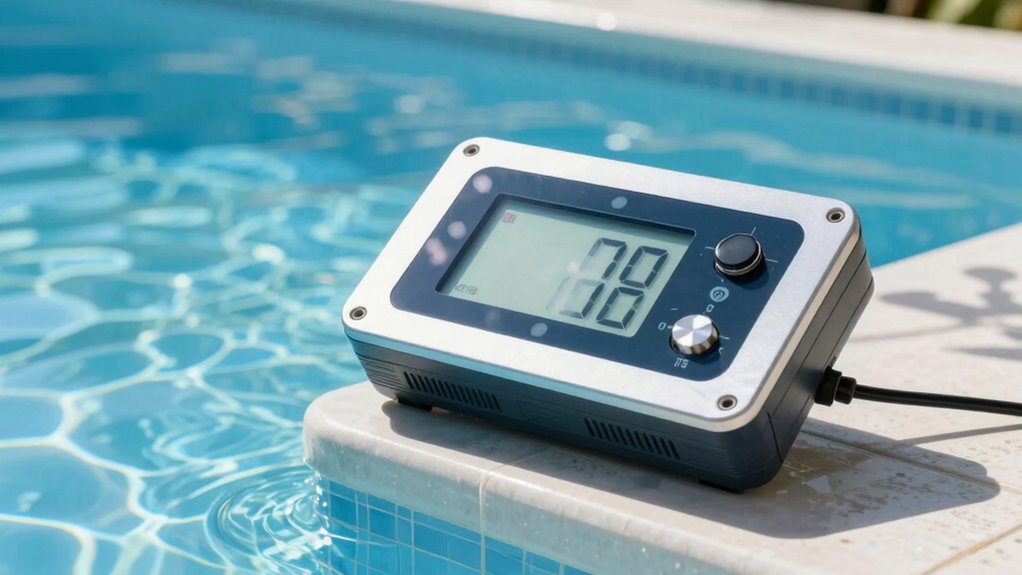
Choosing the right pH controller for your pool is essential for maintaining balanced and healthy water. A good controller ensures your pH levels stay steady, reducing the risk of corrosion or scaling. When selecting one, consider compatibility with your pool sanitizer system, as the controller will work alongside it to keep water safe. Look for features that support algae prevention, such as precise dosing and reliable sensors, to avoid algae growth caused by fluctuating pH levels. Ease of installation and user-friendly controls also matter, making adjustments simple. Investing in a high-quality pH controller ensures consistent pH regulation, minimizes manual testing, and helps maintain clear, healthy water. Ultimately, the right choice keeps your pool in ideal condition, saving you time and effort.
How Proper pH Management Improves Water Quality
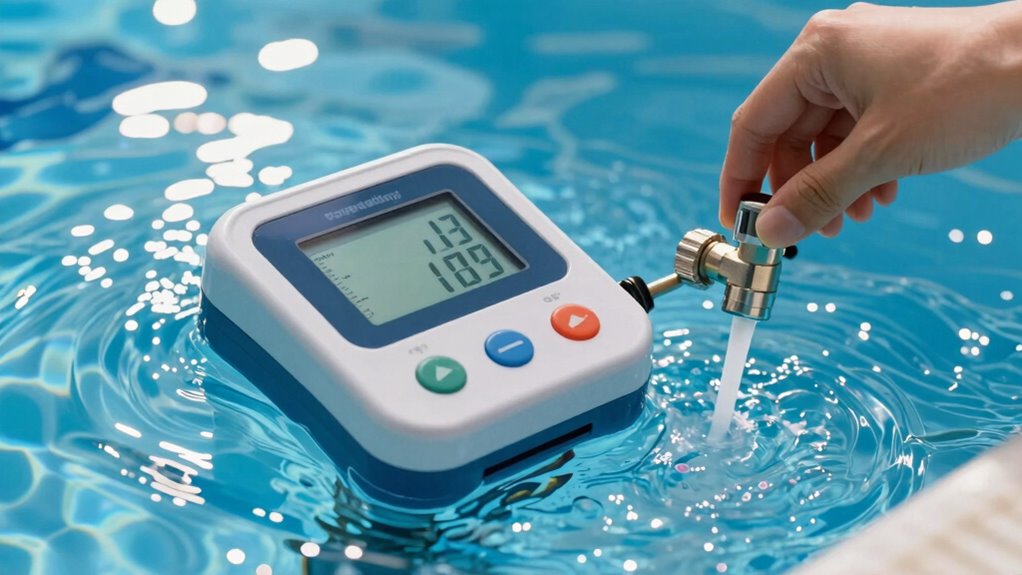
Maintaining proper pH levels directly impacts your pool’s water quality, guaranteeing it remains clear, safe, and comfortable for swimmers. When pH balance is ideal, algae growth slows, sanitizers work effectively, and water clarity improves. Conversely, imbalanced pH can cause cloudy water, scaling, or corrosion. To grasp this better, consider the following:
| pH Level | Effect on Water | Resulting Issue |
|---|---|---|
| Too low | Acidic water | Skin irritation, corrosion |
| Optimal | Balanced pH | Clear, safe water |
| Too high | Alkaline water | Cloudiness, scale formation |
| Fluctuating | Inconsistent water quality | Unsatisfactory swimming experience |
Consistent pH management ensures your pool stays inviting by maintaining water clarity and preventing damage.
When to Call a Professional for pH Control Problems

Even with regular testing and adjustments, some pH control issues can be too complex or persistent for DIY solutions. If you notice your pH keeps bouncing out of range despite adding chemicals, it may be time to call a professional. Poor water circulation caused by clogged or malfunctioning pool accessories can hinder proper pH balancing. A professional can evaluate circulation systems and identify underlying problems, such as faulty pumps or filters. They also have the expertise to diagnose issues with water chemistry that regular testing might miss. Attempting to fix persistent problems without proper knowledge can worsen the situation. When your efforts fail to stabilize pH or water clarity remains poor, reaching out to an expert ensures your pool stays safe, balanced, and enjoyable.
Frequently Asked Questions
Can Weather Changes Affect My Pool’s pH Levels?
Yes, weather fluctuations can definitely affect your pool’s pH levels. Temperature effects cause water to expand or contract, impacting pH balance. Warmer weather often raises pH, making the water more alkaline, while cooler temperatures can lower it. Changes in sunlight, rain, and wind also influence chemical balance. You should regularly test your pool’s pH and adjust chemicals accordingly to keep the water balanced and safe for swimming.
How Often Should I Check My pH Controller’s Calibration?
You should check your pH controller’s calibration at least once a month to ensure accurate readings. Regular sensor calibration is vital for proper pool maintenance routines and to prevent pH fluctuations. Keep an eye on sensor performance and re-calibrate if you notice inconsistent readings or after any pool chemical adjustments. Consistent maintenance routines help maintain stable pH levels, reducing bounce and keeping your pool safe and balanced.
Are There Eco-Friendly Options for pH Correction?
You can’t put all your eggs in one basket, so explore eco-friendly options like biodegradable chemicals and eco-friendly additives to correct pH. These alternatives are gentle on the environment and safe for swimmers. Look for products labeled as biodegradable or environmentally safe, and always follow dosing instructions. Using these options helps maintain your pool’s balance while protecting nature, making every splash more sustainable and worry-free.
What Are Signs of a Faulty pH Sensor?
You’ll notice signs of a faulty pH sensor when the readings become inconsistent or drift unexpectedly, indicating issues with sensor accuracy. To prevent this, check if your sensor needs recalibration, which should be done regularly based on the manufacturer’s recommendations. If calibration doesn’t improve accuracy, the sensor might be damaged or worn out, causing your pH levels to bounce and making it harder to maintain proper water chemistry.
How Does Pool Usage Impact pH Stability?
When it comes to pool usage, you’re walking a tightrope with pH stability. Frequent swimming, adding chemicals, and splashing cause chemical imbalances that challenge your pH levels. Heavy use can lead to fluctuations, making it seem like your pool’s on a roller coaster. To keep it steady, you need consistent equipment maintenance and monitor chemical levels closely, ensuring the pH stays within the ideal range and your pool remains inviting.
Conclusion
By understanding why your pH keeps bouncing, maintaining proper calibration, and staying vigilant with regular checks, you can keep your pool water balanced and inviting. When you place your sensor correctly, troubleshoot issues promptly, and choose the right controller, you create a stable environment that’s safe, clear, and sparkling. Stay proactive, stay attentive, and let your pool’s pH stay steady—so you can enjoy every swim without worry.