
To prevent small chemistry issues from turning into green water, regularly test and adjust your water’s pH, alkalinity, and stabilizer levels to stay within recommended ranges. Run your pump consistently to promote circulation and oxygenation. Shock your pool periodically with chlorine or alternatives to kill bacteria and algae spores before they grow. Keep the water clean by skimming and vacuuming often, and inspect equipment for corrosion. Stay vigilant with these steps, and you’ll keep your water clear and healthy.
Key Takeaways
- Regularly test and adjust water chemistry to maintain proper pH, alkalinity, and stabilizer levels.
- Maintain consistent sanitation by shocking the water and removing debris frequently.
- Ensure proper water circulation and filtration to prevent stagnation and algae growth.
- Use corrosion inhibitors and corrosion-resistant materials to protect equipment from chemical imbalances.
- Monitor chemical levels closely and make gradual adjustments to prevent sudden shifts that promote algae.
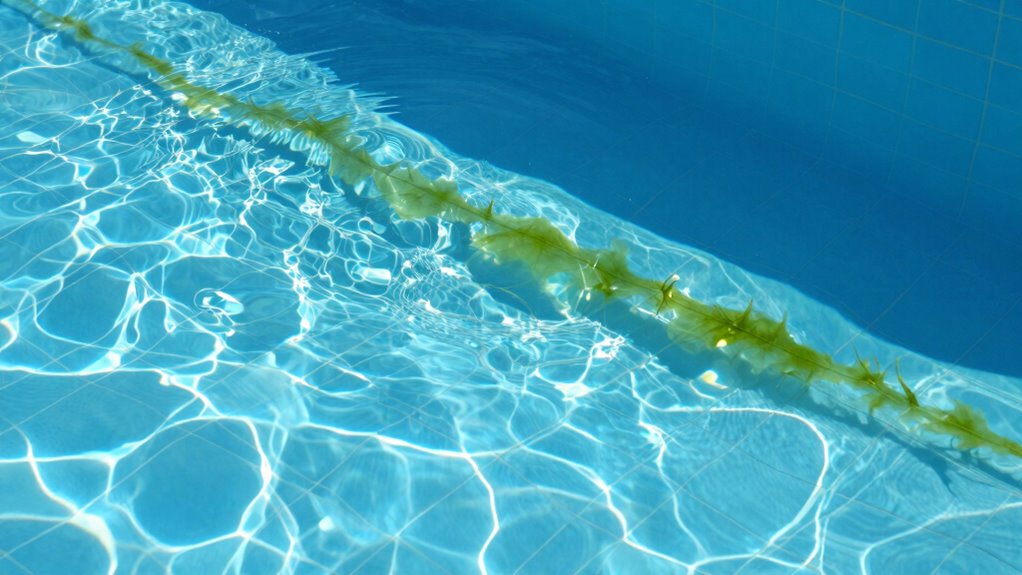
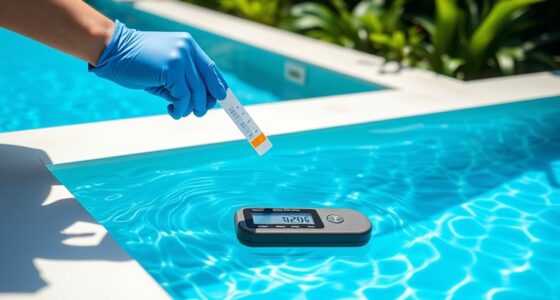
Small chemistry problems can quickly escalate into costly and unsightly green water if not addressed promptly. When you notice even the tiniest signs of cloudiness or discoloration, it’s vital to act fast to prevent further deterioration. One of the most effective ways to keep your water clear and healthy is by maintaining proper pH balance. The pH level influences how chemicals interact in your water, and an imbalance can lead to corrosion or algae growth, both of which contribute to that undesirable green tint. Test your water regularly using reliable test strips or a digital pH meter, and aim to keep the pH between 7.2 and 7.6 for maximum stability. If your pH is off, adjust it gradually with pH increasers or decreasers to avoid shocking the system. Regularly monitoring and adjusting water chemistry parameters can significantly reduce the risk of green water issues. Proper water chemistry management also involves understanding how different chemical levels interact, which can help you prevent unexpected problems. Ensuring your water’s chemical balance remains stable is essential for preventing unwanted algae growth and maintaining clarity. Corrosion prevention plays an indispensable role in avoiding green water problems. When metal parts, such as pumps, filters, or pipes, corrode, they release particles into the water that promote algae growth and further cloudiness. To prevent this, make sure your equipment is made of corrosion-resistant materials or add corrosion inhibitors to your water treatment routine. These inhibitors form a protective film on metal surfaces, reducing their vulnerability to rust and corrosion. Regular inspection and maintenance help you catch early signs of corrosion before they turn into larger issues. Clean and replace filters as needed, and keep an eye on metal components for signs of deterioration. Ensuring your equipment is properly maintained can extend its lifespan and keep your water quality high. Additionally, corrosion-resistant materials can be a wise investment for long-term pool health. Balancing your water chemistry isn’t just about pH; it also involves controlling other factors like alkalinity, calcium hardness, and stabilizer levels. Maintaining these parameters within recommended ranges creates an environment that’s less hospitable to algae and bacteria, which are primary culprits behind green water. Use testing kits to monitor these levels periodically, and adjust with appropriate chemicals when necessary. Keep your water circulation system functioning properly, as stagnant water promotes algae proliferation. Running your pool or spa pump regularly ensures fresh, oxygenated water and discourages the growth of green slime. Additionally, understanding water treatment strategies can help you develop a comprehensive approach to water quality management. Staying consistent with these practices is key to preventing small issues from developing into full-blown water quality crises. Proper sanitation practices are your best defense against small chemistry problems snowballing into larger issues. Regularly shock your pool or spa with chlorine or non-chlorine shock treatments to eliminate algae spores and bacteria before they establish a foothold. Keep debris out of your water by skimming and vacuuming frequently, and maintain proper filtration cycles. With diligent attention to pH balance, corrosion prevention, and overall water chemistry, you’ll prevent minor issues from becoming major headaches. By staying proactive, you’ll enjoy clear, inviting water that’s safe and visually appealing.
As an affiliate, we earn on qualifying purchases.
Frequently Asked Questions
Can Algae Growth Be Completely Prevented in Small Water Systems?
Algae growth can’t be completely prevented in small water systems, but you can substantially control it. Focus on algae control by limiting sunlight exposure and maintaining proper water filtration. Regular cleaning and using biological or chemical treatments help keep algae at bay. Consistent monitoring and adjusting water conditions will reduce the chances of algae thriving, ensuring your small water system stays clear and healthy without turning green.
What Are the Safest Chemical Treatments for Small-Scale Water Issues?
Like a gentle hand guiding a delicate brush, choose safe chemical treatments for water issues. You should opt for water treatment options that prioritize chemical safety, such as low-dose chlorine or commercial algaecides labeled for small systems. Always follow manufacturer instructions carefully, and use protective gear. Regular testing guarantees your water remains safe, healthy, and clear without risking harmful chemical exposure. This approach keeps your small water system safe and effective.
How Often Should I Test Water Quality in Small Setups?
You should perform water testing regularly to maintain quality in small setups. Following the frequency guidelines, test your water at least once a week for pH, ammonia, nitrites, and nitrates. If you notice any changes or issues, increase testing to see what’s happening. Consistent monitoring helps catch problems early, preventing green water and ensuring a healthy environment. Stick to these guidelines, and you’ll keep your setup stable and clear.
Are Natural Remedies Effective Against Green Water Problems?
Natural remedies like plant-based solutions and mineral enrichments can help combat green water issues. You might add beneficial plants that outcompete algae, or use mineral-based treatments to inhibit algae growth. These methods are effective because they promote a balanced ecosystem, reducing algae naturally. Regularly monitoring water quality and maintaining proper filtration enhances their effectiveness. Always guarantee you’re using safe, natural products to protect your aquatic environment.
What Signs Indicate a Chemical Imbalance in the Water?
You might notice signs of a chemical imbalance through pH fluctuations, which cause water to become unstable and cloudy. Nutrient overload can lead to algae blooms, turning water green quickly. If you see sudden changes in water color, increased algae growth, or a foul smell, it indicates imbalance. Regular testing helps you monitor pH levels and nutrient levels, allowing you to take timely action before conditions worsen.
Conclusion
By addressing small chemistry issues early, you prevent them from turning into costly green water problems. Regular maintenance and prompt action can save you money and effort in the long run. Did you know that untreated water problems can increase treatment costs by up to 50%? Staying vigilant and proactive guarantees your water stays clear and healthy, avoiding those green, algae-filled waters that no one wants to deal with. Keep up with small fixes before they grow into big headaches.