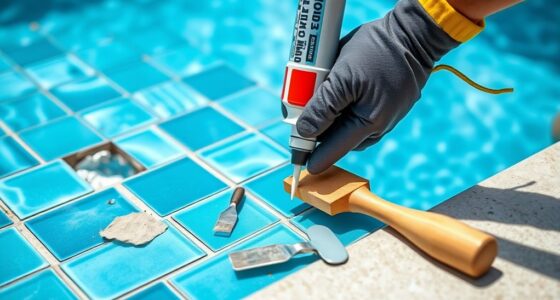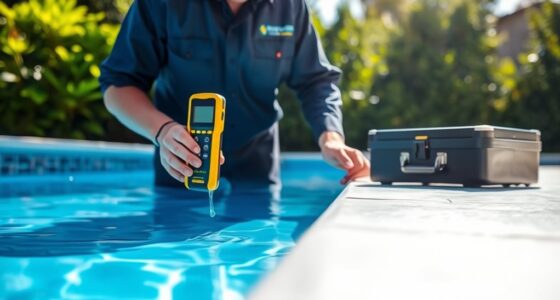
To identify pool liner tears, carefully inspect the entire surface for small holes, tears, or wrinkles, especially around corners, seams, and stress points like the skimmer or drain. Look for loose or sagging areas that may indicate damage. Once you spot a tear, drain enough water to expose it, clean and dry the area, and then apply a vinyl patch with adhesive, pressing firmly to create a watertight seal. Continuing on will help you master the patching process.
Key Takeaways
- Carefully inspect the entire liner for tears, holes, or frayed edges, focusing on stress-prone areas like seams and corners.
- Determine the size and severity of the tear to assess if DIY patching is feasible or if professional repair is needed.
- Drain water just enough to expose the damaged area, then clean and dry the surface thoroughly before patching.
- Use a vinyl patch kit, applying adhesive evenly and pressing firmly to eliminate air bubbles and ensure a secure bond.
- Allow proper curing time as per instructions before refilling, and regularly check the patch for durability during initial use.
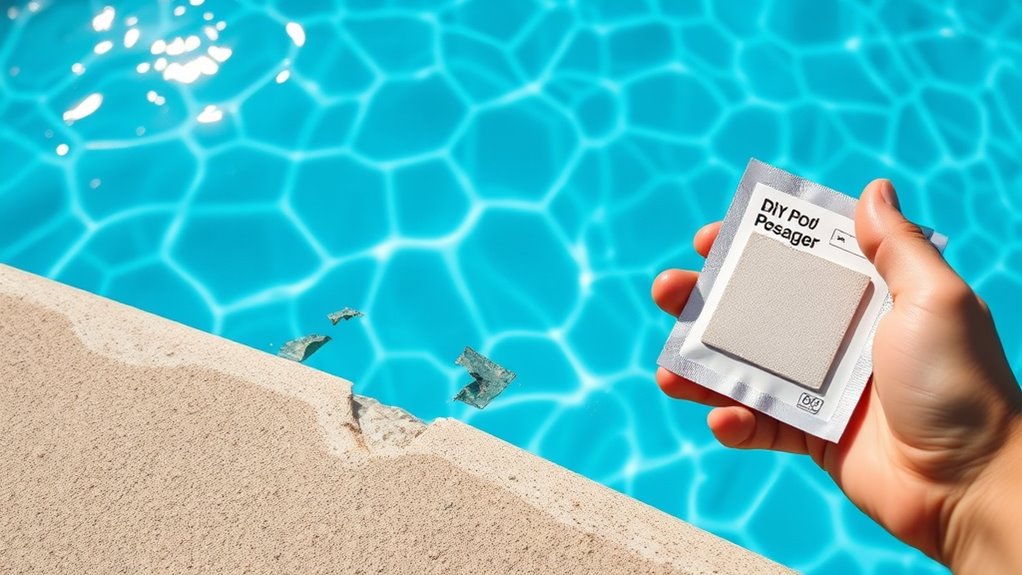
Have you ever noticed a tear in your pool liner and wondered how to fix it? Addressing tears promptly is crucial for maintaining your pool’s integrity and avoiding costly repairs down the line. Identifying where the damage has occurred is the first step in effective pool maintenance and DIY repairs. Start by carefully inspecting the entire liner surface, especially around areas that experience frequent stress, such as corners, seams, and near the skimmer or drain. Look for small holes, rips, or frayed edges, paying close attention to any areas where the liner appears loose or sagging. Sometimes, tears are obvious, but other times, they’re subtle, like a thinning spot or a slight wrinkle that might develop into a tear if left unattended.
Once you’ve located the damage, assess its size and severity. Small tears or punctures are easier to repair yourself, especially if you’re comfortable with DIY repairs. For larger tears, you might need professional help or consider replacing the liner entirely, but many minor damages can be patched quickly and effectively. Keep in mind that the key to a successful repair is proper preparation. Drain the pool enough to expose the damaged area, but don’t completely empty it unless necessary. Clean the area thoroughly, removing any debris, algae, or old adhesive residues. A clean, dry surface ensures the patch adheres properly and lasts longer.
When it comes to patching, selecting the right materials is crucial. Use a vinyl patch kit designed specifically for pool liners; these kits often come with adhesive, patches, and instructions. Cut the patch to be slightly larger than the tear, rounding the edges to prevent peeling. Apply the adhesive evenly to the patch and the surrounding liner, then press them firmly together, ensuring there are no air bubbles or wrinkles. Hold the patch in place as recommended by the manufacturer, usually for a few minutes, and then allow it to cure fully before refilling the pool. Follow the instructions carefully to ensure a watertight seal that withstands pool chemicals and water pressure.
Frequently Asked Questions
How Long Does a Typical Pool Liner Patch Last?
A typical pool liner patch lasts around 1 to 3 years, depending on your pool maintenance and the liner materials used. Proper cleaning and drying before patching can prolong its lifespan. If you regularly maintain your pool and choose durable liner materials, your patch may last longer. Keep an eye on the patched area for signs of wear, and address any issues promptly to ensure your pool stays in great shape.
Can I Patch a Tear Underwater?
Yes, you can patch a tear underwater using effective underwater patching techniques. To do so, clean the area thoroughly, dry it as much as possible, and then apply a waterproof, flexible patch designed for pool liners. While underwater patching can be quick, remember that pool liner durability varies, so monitor the patch regularly. With patience and proper technique, your pool stays pristine and protected for longer.
What Tools Do I Need for Patching?
To patch a tear, you’ll need essential tools like a clean cloth, scissors, and a utility knife for prepping the area. Patching supplies should include a pool patch kit with adhesive, a vinyl patch, and a roller to smooth out bubbles. Make sure to have these tools and supplies ready before you start, so you can quickly and effectively repair the tear, ensuring your pool stays in top shape.
Is Professional Repair More Effective Than DIY?
You might think professional repairs are always better, but DIY patching can be just as effective if you carefully follow proper steps. While professionals have advanced tools, your knowledge of pool chemical maintenance and liner material options can guarantee a successful fix. Investigating the durability of patch materials versus original liner material shows DIY can work well for minor tears. Ultimately, choose based on tear size, your skill, and available tools.
How Can I Prevent Future Liner Tears?
To prevent future liner tears, you should regularly maintain proper pool chemical balance, ensuring the water isn’t too acidic or alkaline, which weakens the liner. Also, choose a durable liner material suited for your pool environment, and avoid sharp objects or rough surfaces that could cause damage. Regular inspections and timely repairs help catch small issues before they develop into tears, prolonging your liner’s lifespan.
Conclusion
By spotting tears early and patching them yourself, you become the guardian of your pool’s health. Think of your liner as the heart of your oasis—protect it, and it’ll reward you with endless summer memories. Don’t let small tears turn into big problems; take action now. With a little effort, you’ll keep your pool pristine and inviting, transforming maintenance into a satisfying victory. After all, a well-kept pool is a happy pool!