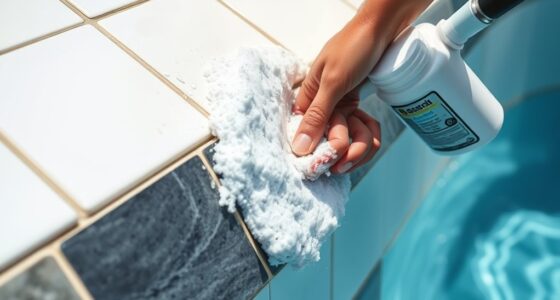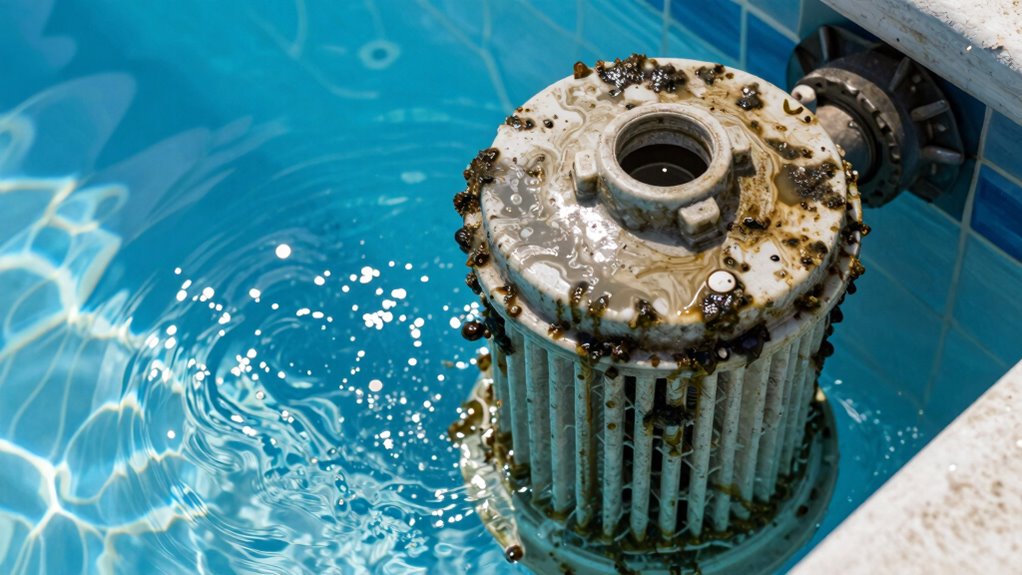
If your pool filter is dirty or clogged, you’ll notice less water flow from return jets, longer filtering times, and murky water despite running the pump. You might also hear louder noises or see pressure spike on the gauge, indicating restrictions. Stagnant spots or algae buildup can signal poor circulation. Ignoring these signs can lead to chemical imbalances and algae outbreaks, but more clues on how to fix the issue await as you explore further.

Get pool and patio gear delivered free with Prime
- Fast, free delivery on millions of items
- Prime Video, Amazon Music and more included
- Member-only deals all year
Key Takeaways
- Cloudy or murky water despite running the filter indicates inadequate water flow and possible filter blockage.
- Reduced or weak return jet flow suggests the filter is starving for flow.
- Elevated pressure gauge readings or frequent filter cycles point to debris buildup restricting flow.
- Unusual noises or high-pressure spikes from the pump signal flow restrictions caused by a dirty filter.
- Persistent algae growth and chemical imbalances often result from poor filtration due to a clogged or neglected filter.
As an affiliate, we earn on qualifying purchases.
How a Clogged Pool Filter Restricts Water Flow

Have you noticed your pool taking longer to circulate water or the flow seeming weaker? A clogged filter media is likely the culprit. Over time, debris, dirt, and algae accumulate in the filter, blocking water from passing through efficiently. This buildup causes increased pressure and restricts flow, making your pump work harder. To fix this, you need to perform a backwash process, which flushes out the accumulated debris and restores proper flow. Regularly cleaning or replacing your filter media prevents blockages from forming in the first place. When the filter is clean, water circulates smoothly, maintaining clarity and ideal sanitation. Proper filter maintenance is essential for preventing clogged filters and ensuring optimal water flow. Ignoring these signs can lead to poor circulation, so stay proactive by monitoring your filter’s condition and performing routine backwashing. Maintaining filter efficiency is crucial for a healthy pool environment. Additionally, understanding filter media types can help you choose the best solution for your specific pool needs. Being aware of filter system components can further enhance your maintenance routine and prevent flow restrictions. Additionally, understanding how proper maintenance routines impact overall filter performance can help extend the lifespan of your equipment.
Recognizing Reduced Circulation and Water Clarity Issues

When your pool’s circulation slows down or the water appears cloudy, it’s a clear sign that your filter isn’t working properly. Reduced water circulation can lead to poor filtration efficiency, making debris and contaminants linger. To recognize these issues, look for:
- Cloudy or dull water that won’t clear up with normal filtration
- Stagnant spots or areas with little to no movement
- Unusual algae growth or slimy surfaces
- Increased chemical imbalances despite regular treatment
- Proper pump operation is essential to maintain consistent water flow and prevent these problems. Additionally, filter maintenance plays a crucial role in ensuring optimal circulation and water clarity. Regularly inspecting and cleaning your filter system can prevent buildup that obstructs water flow. Ensuring your filter media is clean and in good condition is vital for effective filtration. These signs indicate your pool isn’t circulating water effectively, which hampers filtration efficiency. When water isn’t moving properly, debris and impurities aren’t being filtered out, leading to poor water clarity. Addressing circulation problems promptly helps keep your pool clean and inviting.
Signs Your Pool Filter Is Dirty or Blocked

A pool filter that’s dirty or blocked can quickly compromise your water quality and circulation. If you notice your pool water appears cloudy or murky despite running the pool pump, it’s a sign your filter needs attention. Reduced flow, longer filtration times, and increased pressure on the pool pump also indicate a clogged filter. Regular filter maintenance is essential to prevent these issues. Here’s a quick visual guide:
| Symptom | Cause | Action |
|---|---|---|
| Cloudy water | Dirty or blocked filter | Clean or replace filter |
| Low water flow | Clogged filter or pump issue | Check and clear filter |
| High-pressure gauge reading | Filter buildup | Backwash or filter change |
| Pump running loudly | Restricted flow | Inspect and maintain |
| Increased filter runtime | Dirty filter | Schedule filter cleaning |
Staying on top of filter care can also extend the lifespan of your pool equipment and ensure optimal performance. Proper filter maintenance can prevent costly repairs and improve water clarity. Additionally, inspecting the filter regularly helps identify early signs of deterioration. Regularly checking pump efficiency is also crucial, especially since electric dirt bikes with high horsepower, like KTM models, can place additional strain on your pool’s circulation system. Being aware of potential filter issues can help you troubleshoot problems before they escalate. Stay vigilant—timely filter maintenance keeps your pool crystal clear.
Pump Noises and Pressure Spikes: What They Mean
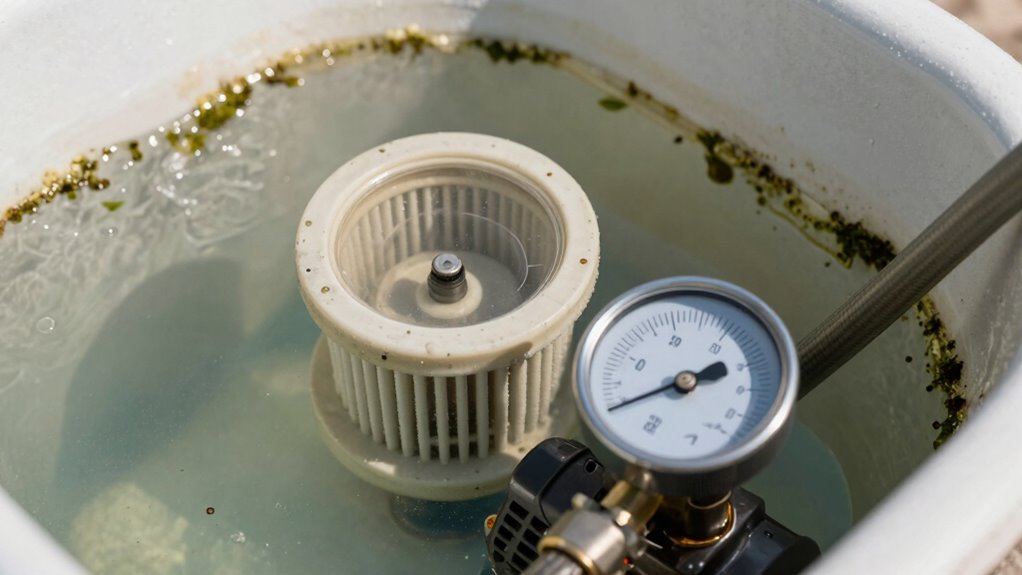
If your pool filter starts making unusual noises or you notice sudden pressure spikes, it’s a clear sign that something’s off with your system. These filter noises and pressure fluctuations often point to issues like blockages or inadequate flow. Pay attention to:
Unusual filter noises and pressure spikes signal potential blockages or flow issues needing immediate attention.
- Loud pump noises — they could indicate air in the system or a failing motor.
- Rapid pressure spikes — suggest restricted flow or a dirty filter.
- Whining or grinding sounds — might mean impeller problems or debris buildup.
- Sudden drops in pressure — can signal a leak or a broken pressure gauge.
- Regular maintenance and understanding DIY tools can help you troubleshoot these issues early.
- Proper filter sizing and flow are essential to prevent these symptoms from occurring in the first place.
These signs mean you should check for blockages or a dirty filter that’s starving your pump of flow. Ignoring them can cause damage and reduce your pool’s circulation efficiency.
How to Verify if Your Filter Is Starving for Flow
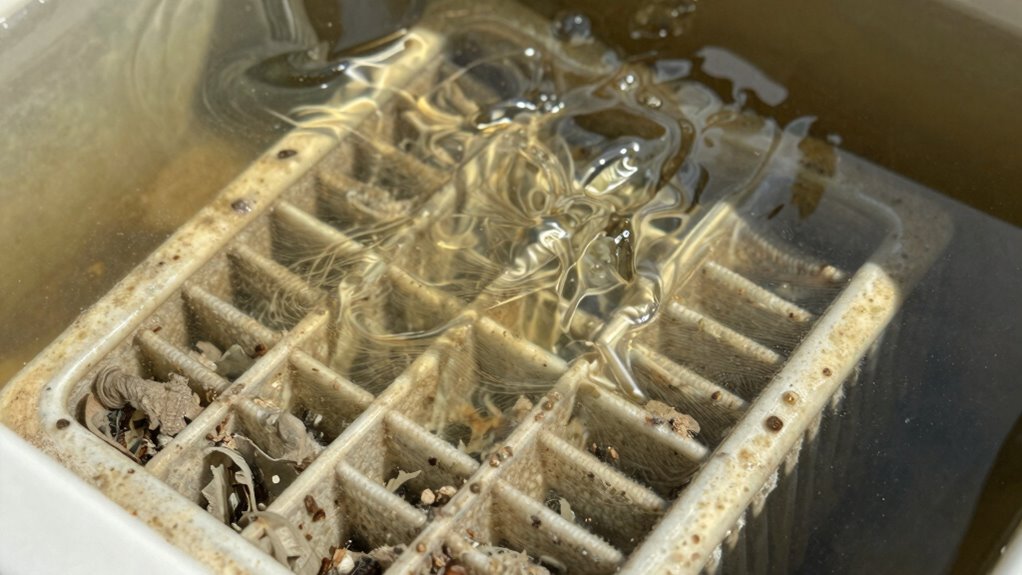
To determine whether your filter is starving for flow, start by checking the pressure gauge on your pool system. A significant drop in pressure suggests reduced water flow, which can shorten your pool filter lifespan and hinder proper filtration. Observe the gauge during operation; if it’s lower than the recommended range, it indicates inadequate flow. Additionally, pay attention to water flow dynamics around your pool’s return jets—weak or inconsistent flow signals a problem. You can also perform a flow test by noting how quickly water circulates or drains. If flow seems sluggish, your filter may be clogged or undersized, leading to poor filtration. Verifying these signs helps you identify flow issues early, ensuring your pool’s filtration system functions *ideal*. Incorporating professional equipment and proper maintenance practices can further optimize your system’s performance. Regularly inspecting and cleaning your filter is essential to prevent clogging and maintain optimal flow rates. Understanding system capacity can help prevent undersized filters that cause flow problems. Additionally, monitoring your filter pressure differential can provide early warnings of developing restrictions. Performing regular testing of flow rates can help catch issues before they become severe.
Chemical and Algae Problems From Poor Filtration

Poor filtration can lead to algae growth and chemical imbalances in your tank. You might notice green water or cloudy conditions, signaling algae issues, or spot irregular pH levels and chemical fluctuations. Recognizing these signs early helps prevent bigger problems down the line. Additionally, microplastics in dust can contribute to indoor air quality concerns that may indirectly affect your pool environment.
Algae Growth Risks
Algae growth can quickly become a serious problem when filtration systems are neglected or ineffective, especially if your filter becomes clogged or dirty. Without proper flow, algae can thrive, leading to an algae bloom that turns your pool green and murky. A clogged pool skimmer reduces debris removal, creating an ideal environment for algae to flourish. To avoid this, watch for these signs:
- Cloudy or murky water despite brushing.
- Visible green or brown patches on the pool surface.
- Persistent algae on pool walls or floor.
- Frequent algae blooms after cleaning efforts.
Failure to maintain proper filtration means nutrients and organic matter feed algae, making it harder to control growth. Regular cleaning and checking your filter help prevent these algae growth risks from spiraling out of control.
Chemical Imbalance Signs
When your filtration system isn’t functioning properly, chemical imbalances can quickly develop, leading to cloudy water, pH swings, and other problems. A dirty filter restricts water flow, causing your pool heater to work harder and unevenly distribute chemicals. If you notice frequent pH fluctuations or cloudy water, check your skimmer basket—clogged baskets reduce flow and hinder chemical circulation. Without proper flow, sanitizer levels drop, increasing algae risk and promoting chemical instability. A poorly maintained filter also prevents chlorine and pH adjusters from evenly dispersing, resulting in imbalanced water chemistry. Regularly clean your skimmer basket, ensure your filter is clean, and monitor your pool’s chemical levels to prevent these issues. Proper flow keeps chemicals balanced, maintaining clear, healthy water.
Longer Filter Cycles and Ineffective Cleaning Results
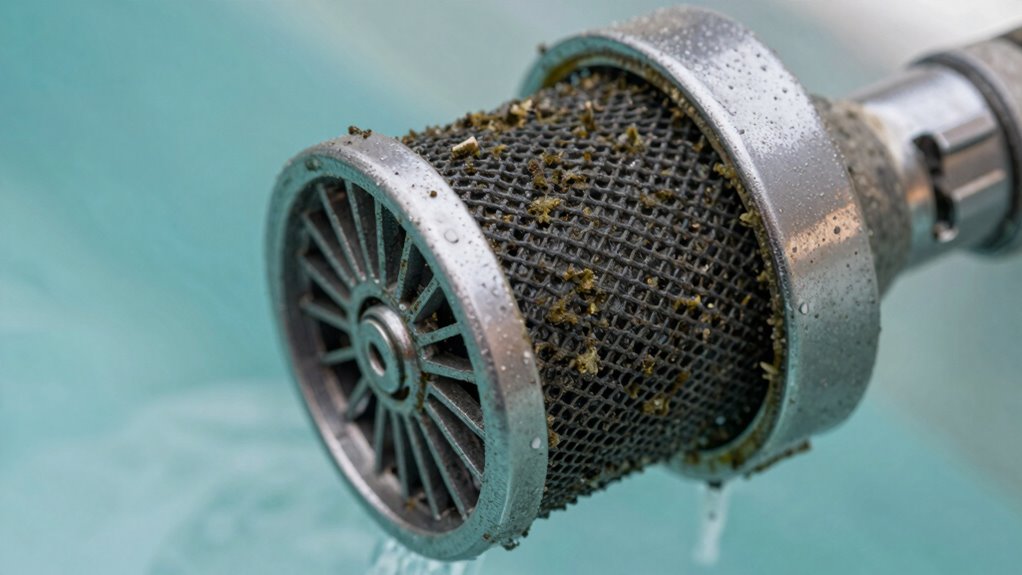
If your filter isn’t cleaned regularly, you might notice that it takes longer to cycle through and doesn’t clean as effectively. This happens because debris buildup hampers proper water flow, making your filter work harder. To avoid this, prioritize regular filter maintenance and debris removal. Here are some signs to watch for:
- Longer filter cycles that drag on longer than usual
- Cloudy or murky pool water despite running the filter
- Increased pressure readings on the filter gauge
- Reduced water circulation, leading to stagnation
These clues indicate your filter is starving for flow. Addressing debris buildup and maintaining your filter guarantees it runs efficiently, keeps your water clear, and prevents costly repairs. Proper filter maintenance is key to a healthy, sparkling pool.
Troubleshooting: Cleaning or Replacing Your Pool Filter
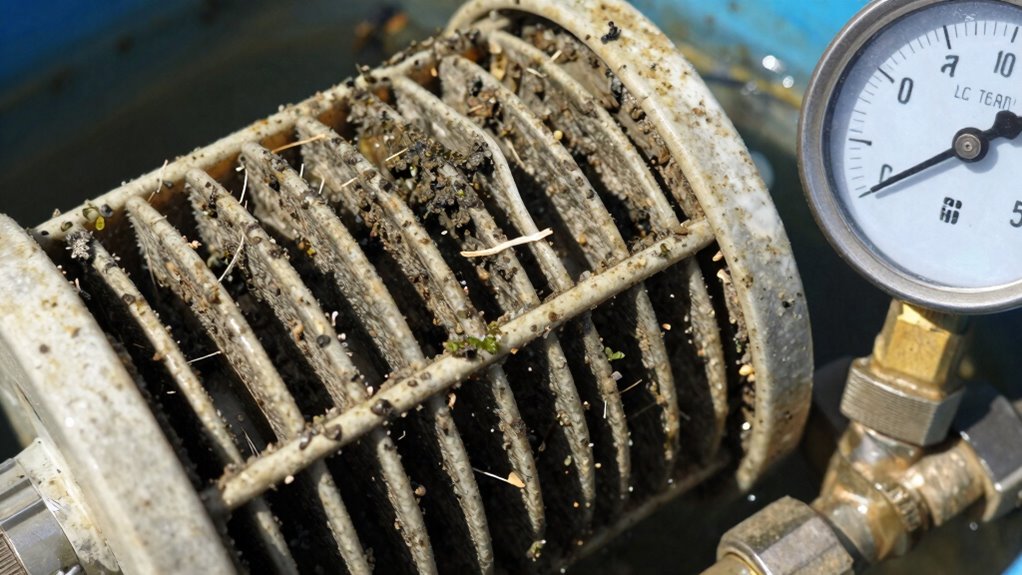
Knowing when to clean or replace your pool filter is key to maintaining clear water. If cleaning doesn’t improve flow or filtering, it’s time to contemplate a replacement. Regularly inspecting your filter helps prevent bigger issues and keeps your pool in top shape.
When to Clean Filter
Regularly inspecting your pool filter helps prevent issues before they worsen. Knowing when to clean your filter depends on a few signs. First, check if your pool’s flow rate decreases, causing water to become cloudy or murky. Second, monitor your pool chemistry—imbalances can indicate poor filter performance. Third, observe if your filter pressure gauge reads higher than normal, signaling a need for cleaning. Fourth, notice if your filter appears visibly dirty or clogged. If any of these signs emerge, it’s time for filter maintenance. Cleaning your filter regularly keeps the water clear and prevents strain on your pump. Staying ahead of these symptoms ensures your pool stays inviting and well-balanced, avoiding costly repairs down the line.
Replacing the Filter
When cleaning your pool filter no longer restores clear water and normal flow, replacing the filter becomes necessary. A clogged or worn filter reduces circulation, making it hard for your pool skimmer to do its job. If backwashing doesn’t improve flow or water clarity, it’s time to consider a new filter. Replacing the filter ensures proper filtration and flow, preventing debris buildup and algae growth. During the process, review your filter type and size to match your pool’s needs. Here’s a quick comparison:
| Action | Purpose | Result |
|---|---|---|
| Backwashing | Remove dirt from sand/DE filters | Restores flow temporarily |
| Cleaning | Remove debris from cartridges | Improves filtration |
| Replacing Filter | Install new filter media | Ensures long-term clarity |
| Inspect Pool Skimmer | Check for obstructions | Maintains proper flow |
Preventative Tips to Keep Your Pool Filter Flowing Smoothly
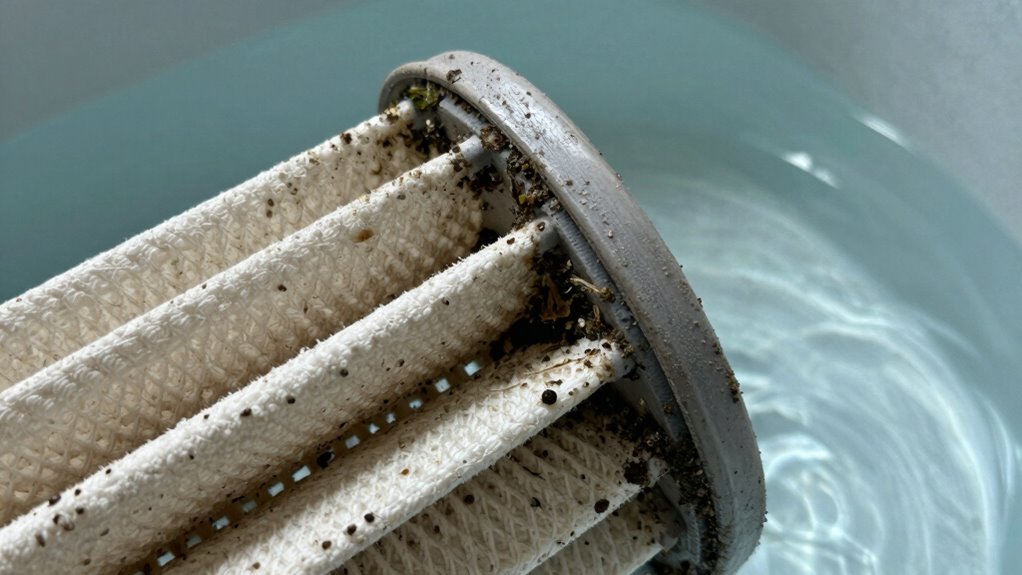
To keep your pool filter flowing smoothly, routine maintenance is essential. Proper pool maintenance not only ensures clear water but also extends your filter’s lifespan. Here are four preventative tips:
- Regularly clean or replace your filter according to the manufacturer’s schedule to prevent clogs.
- Check and clean skimmer baskets and pumps to reduce debris load on the filter.
- Maintain proper chemical balance, as imbalances can cause buildup and strain the filter.
- Backwash or rinse the filter periodically to remove accumulated dirt and debris.
Frequently Asked Questions
How Often Should I Replace My Pool Filter?
You should replace your pool filter every 1 to 2 years, depending on the filter’s lifespan and your pool usage. Follow the replacement schedule recommended by the manufacturer, as filters typically wear out over time. Regular cleaning can extend its life, but don’t wait too long—dirty filters hinder flow and reduce efficiency. Keep an eye on filter performance and replace it promptly to maintain clean, healthy water.
Can a Dirty Filter Affect My Pool’s Chemical Balance?
Yes, a dirty filter can definitely influence your pool’s chemical balance. When the filter is clogged, it doesn’t circulate water properly, leading to poor water clarity and uneven distribution of chemicals. This can cause a chemical imbalance, making it harder to maintain proper pH and sanitizer levels. Regularly cleaning or replacing your filter ensures better flow, which helps keep your water clear and chemically balanced.
What Tools Are Best for Cleaning a Clogged Pool Filter?
For effective filter cleaning, use a garden hose with a spray nozzle to dislodge debris, a filter brush for scrubbing pleats, and a filter cleaner solution to break down oils and dirt. Regular filter cleaning helps prevent clogs and maintains proper flow. Always check manufacturer instructions for specific cleaning techniques, and consider using a backwash valve or high-pressure hose for clog prevention and ideal pool filtration.
How Do I Know if My Pump Is Working Properly?
You’ll know your pump is working properly if you hear consistent, smooth noise and notice steady water flow. If it’s noisy or noisy with unusual sounds, it might be struggling or malfunctioning. Low or irregular water flow, along with strange noises, suggests issues. Check for leaks or blockages, and verify the pump’s motor runs smoothly. Regularly inspect and maintain your pump to keep it operating efficiently and prevent problems.
Are There Environmental Factors That Contribute to Filter Clogging?
Ever wonder if the environment impacts your filter? Yes, environmental debris like leaves, dirt, and bugs can clog your filter faster, especially during windy or rainy weather. Climate impact also plays a role—hot, dry conditions can increase dust and pollen, while storms wash more debris into your pool. Regular cleaning and mindful skimming help prevent clogging, ensuring your filter keeps your pool crystal clear and properly circulated.
Conclusion
If your pool’s not sparkling like it used to, it might be whispering that it’s feeling a little overwhelmed. Regular care and a keen eye for subtle signs can keep the flow steady and your water crystal clear. Think of it as giving your pool a gentle nudge back to its best self—sometimes a simple boost is all it takes to restore its natural brilliance. Stay attentive, and your pool will thank you with every shimmering splash.
Halloween Picks
halloween
As an affiliate, we earn on qualifying purchases.