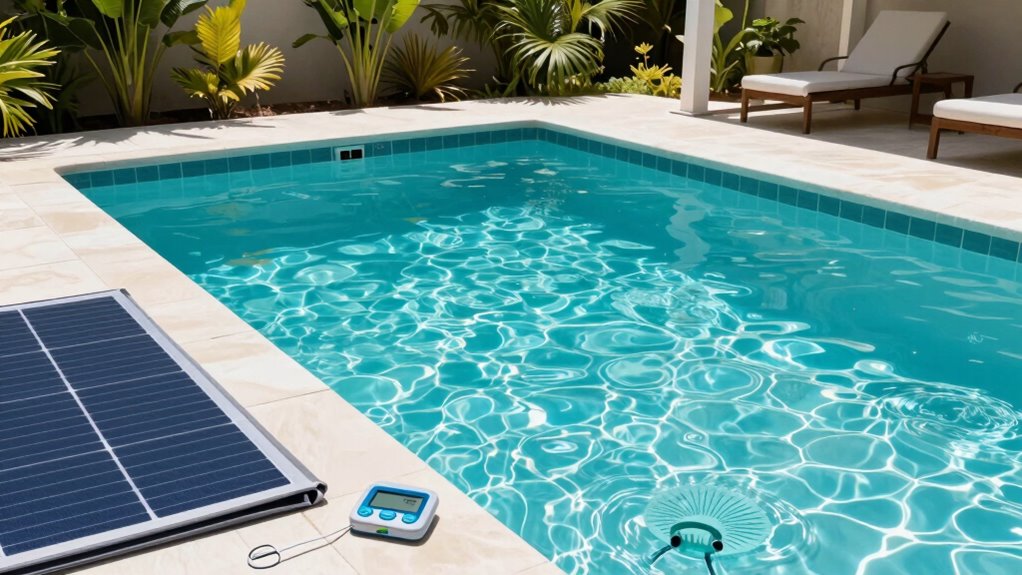

To build a smarter pool care routine around your climate, adjust your maintenance based on temperature, sunlight, and weather patterns. In hot, sunny areas, test chemicals daily and clean filters regularly. Cooler or shaded zones need weekly checks, while heavy rain or wind require more frequent adjustments. Consistently monitoring water chemistry and cleaning equipment helps prevent issues and keeps your pool clear. Keep going for detailed tips on customizing your routine for best results.

Get pool and patio gear delivered free — and shop member deals
- Fast, free delivery on millions of items
- Access to Prime Big Deal Days deals on October 6–7
- Prime Video, Amazon Music and more included
Key Takeaways
- Adjust testing frequency based on climate, increasing during hot, sunny months and reducing in cooler or shaded periods.
- Monitor and modify chemical levels more often during periods of heavy rain or high winds.
- Regularly clean filters and skimmers to handle debris influx, especially in windy or stormy weather.
- Incorporate seasonal routines, such as daily checks in summer and weekly in milder months.
- Consider environmental factors like algae growth rates and debris to customize maintenance schedules effectively.
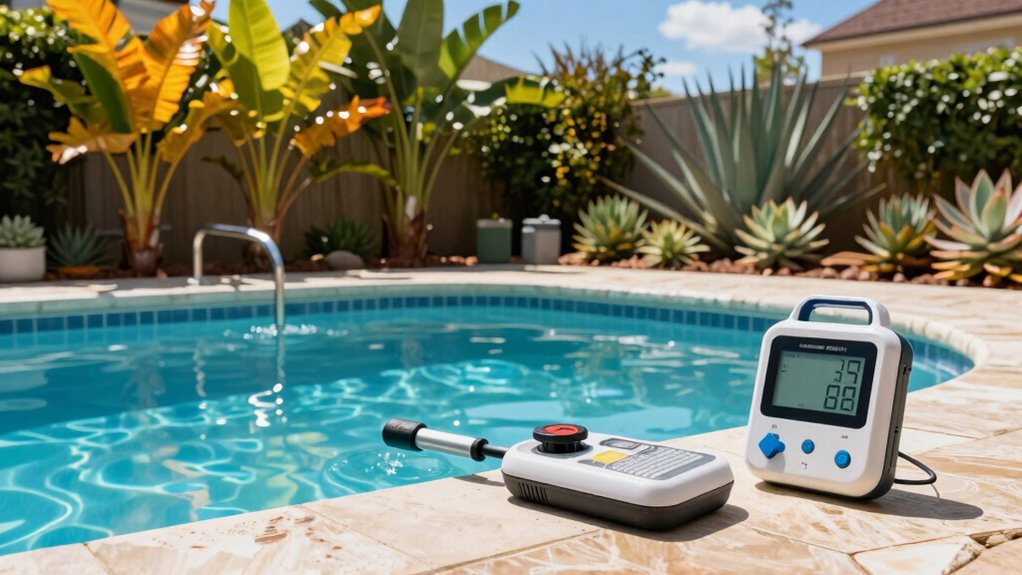
Maintaining a clean and healthy pool requires a consistent care routine, especially during peak swimming season. Your climate plays a significant role in how often and how thoroughly you need to care for your pool. In warmer, sunnier environments, you’ll find algae growth and bacteria thrive more quickly, demanding more vigilant chemical balancing and equipment maintenance. Conversely, in cooler or more temperate zones, your routine might be less intensive but still crucial for ensuring a safe swimming environment.
Climate significantly influences how often and thoroughly you should maintain your pool for optimal safety and clarity.
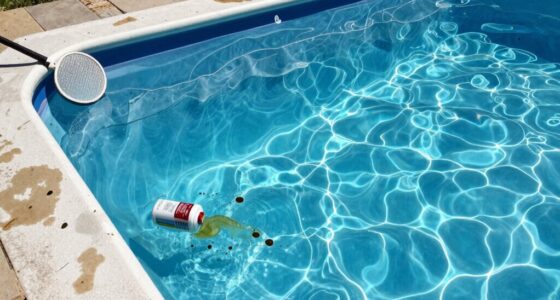
Start by regularly testing your pool water. Use a reliable test kit to check pH levels, chlorine, alkalinity, and calcium hardness. Proper chemical balancing keeps your pool water safe and prevents issues like cloudiness, scaling, or algae buildup. During hot months, you might need to test and adjust the chemicals more frequently—sometimes daily—since sunlight and heat can accelerate chemical consumption. In cooler climates, testing weekly might suffice, but don’t skip it altogether; consistent monitoring ensures the water remains balanced and inviting.
Equally important is equipment maintenance. Your pool’s filtration system, pump, and skimmers need routine checks to operate efficiently. During peak season, debris such as leaves, insects, and dirt can clog your filters faster, reducing water circulation and increasing strain on your equipment. Regularly clean out skimmer baskets and backwash the filter as needed. In hot climates, algae prevention is critical, so consider adding algaecides or clarifiers as part of your routine and ensuring your pump runs long enough each day to circulate water thoroughly. Proper equipment maintenance not only prolongs the life of your pool system but also helps maintain water clarity and hygiene. Additionally, staying on top of filter performance can prevent costly repairs and ensure optimal water flow. Understanding how different environmental factors impact water chemistry can further help you tailor your routine effectively.
Adjust your routine based on your environment. If you live in an area prone to heavy rain or high winds, you might need to test and adjust chemicals more often, as runoff and wind-blown debris can disrupt water chemistry. If your pool is shaded or less exposed to sunlight, algae growth will slow, reducing the frequency of chemical adjustments. Always keep an eye on weather patterns and adapt your routine accordingly. Additionally, understanding the impact of your environment on biodiversity around your pool area can help you select natural and eco-friendly maintenance options.
Finally, establish a schedule that suits your climate and pool usage. Consistency is key. Whether it’s daily testing during the summer or weekly maintenance in milder months, sticking to a routine ensures your pool stays clean, safe, and ready for swimming whenever you want. By understanding your climate’s influence on chemical balancing and equipment maintenance, you can build a smarter, more efficient pool care routine that keeps your water pristine year-round.
As an affiliate, we earn on qualifying purchases.
Frequently Asked Questions
How Does Local Water Quality Affect My Pool Maintenance?
Local water quality directly impacts your pool maintenance by affecting water chemistry and filtration efficiency. If your water has high mineral content or contaminants, you’ll need to adjust chemicals more often to balance pH and alkalinity. Poor water quality can clog filters faster and reduce their efficiency, making your pool harder to keep clean. Regular testing and treatment help maintain ideal water chemistry, ensuring your filtration system works effectively and your pool stays inviting.
What Are Signs My Pool Needs More Frequent Cleaning?
Your pool needs more frequent cleaning when you notice cloudy water, increased algae growth, or debris accumulating rapidly. These signs indicate imbalanced pool chemistry and overtaxed filtration systems. Regularly test water quality and inspect filters to maintain clarity. When these issues persist, it’s time to clean more often, ensuring your filtration systems operate efficiently and your pool remains inviting and safe. Consistent care keeps your swimming experience enjoyable and hassle-free.
How Can Seasonal Changes Impact Chemical Balancing?
Seasonal changes greatly impact chemical balancing in your pool. Chemical fluctuations happen as temperatures shift, affecting pH, alkalinity, and sanitizer levels. You need seasonal adjustments, like adding more chlorine during warmer months or balancing pH when temperatures drop. Regular testing becomes essential to prevent algae growth and maintain water clarity. By staying attentive to these seasonal variations, you guarantee your pool remains safe, clean, and inviting year-round.
Are There Climate-Specific Pool Safety Tips to Consider?
Protect your pool properly by prioritizing climate-specific safety tips. Start with sturdy pool cover options to prevent accidents during off-season or stormy weather. Implement UV protection strategies like shading or using UV-resistant pool covers to shield swimmers from harmful rays. Always supervise children closely, especially in sunny or windy conditions. These precautions help minimize risks, making your pool a safe, enjoyable oasis suited to your climate’s unique challenges.
What Equipment Is Essential for Climate-Adapted Pool Care?
You need essential pool equipment like a high-quality cover, proper filtration, and a reliable heater for climate adaptation. A solar blanket helps retain heat in colder climates, while a variable-speed pump improves energy efficiency. Consider installing a dehumidifier or misting system if you’re in a humid area. These tools help you maintain your pool effectively, no matter your climate, ensuring your pool stays clean, safe, and enjoyable year-round.
Conclusion
By tuning into your climate’s whispers, you can craft a pool care routine that’s both gentle and effective. Think of it as a dance—adapting your steps to the subtle rhythms of weather and season. With a little attentiveness, you’ll keep your pool shimmering and inviting, no matter what the skies send your way. Embrace these mindful adjustments, and your oasis will always be a tranquil retreat, whispering serenity with every splash.
Fall Picks
fall essentials
As an affiliate, we earn on qualifying purchases.