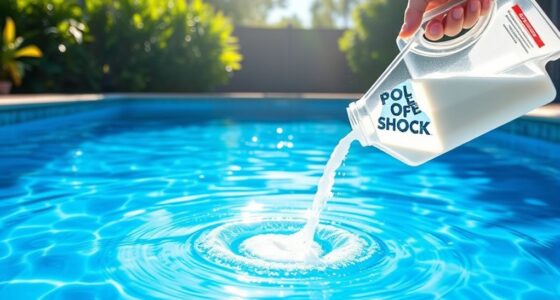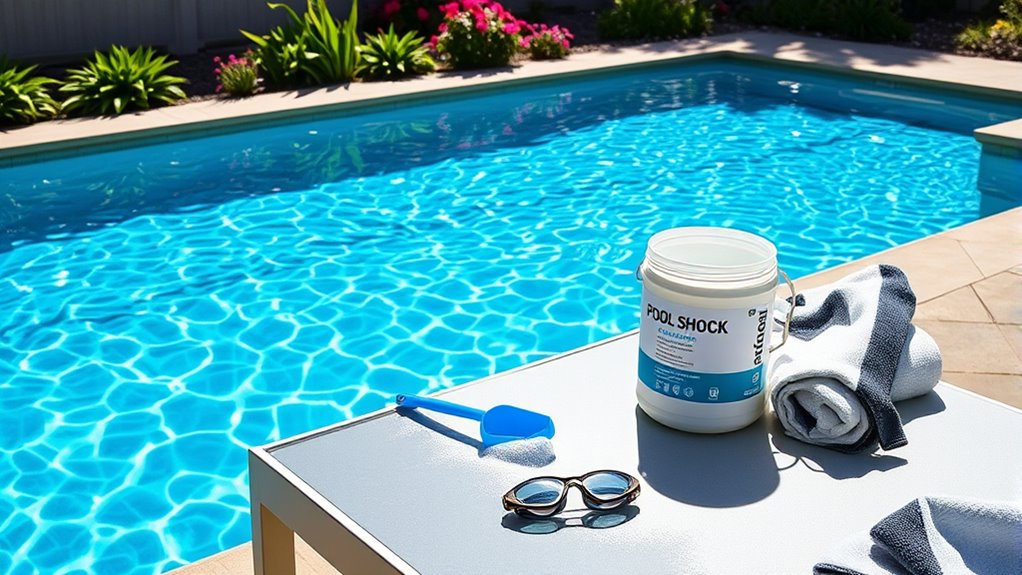

Knowing when and how to shock your pool is key to maintaining clear, healthy water. Shock treatment is necessary when chlorine levels are low, algae appears, or after heavy use or storms. To shock, add a high dose of chlorine or oxidizing chemicals according to the manufacturer’s instructions, ensuring your pH is balanced first. Wait 24 to 48 hours before swimming, and keep testing your water to get the timing just right. Keep going, and you’ll master proper shock techniques.
Key Takeaways
- Shock your pool when chlorine levels are low, after heavy use, storms, or algae spotting to restore water clarity.
- Ensure pH is between 7.2 and 7.6 before shocking for maximum chlorine effectiveness.
- Add the appropriate amount of shock based on pool size and manufacturer instructions, following safety guidelines.
- Wait 24-48 hours after shocking before swimming, and monitor chlorine and pH levels regularly.
- Proper maintenance, including regular testing and balanced chemicals, prevents the need for frequent shocking.
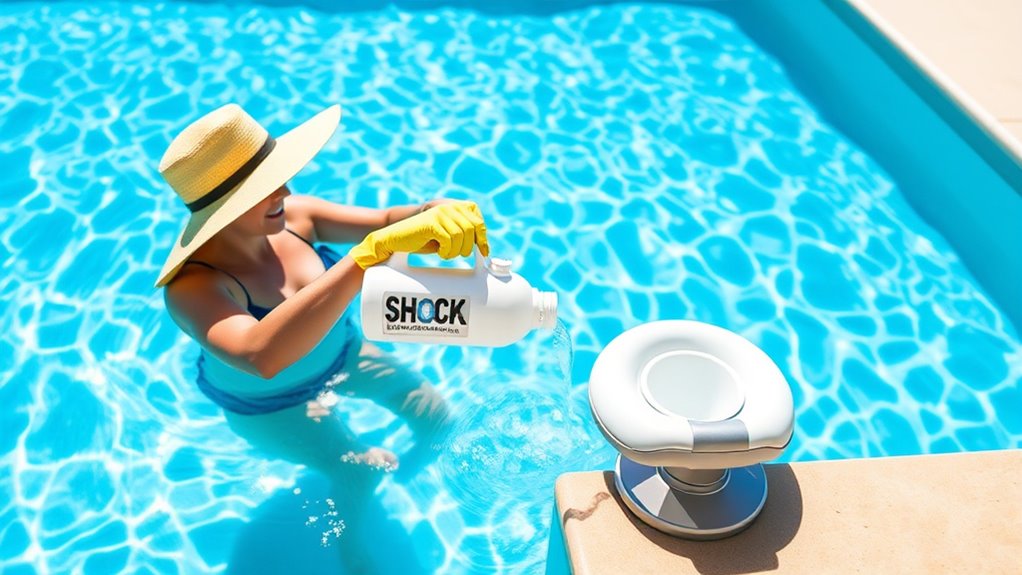
Have you ever wondered how shock treatments work and why they remain a controversial therapy? When it comes to maintaining a clean, healthy swimming pool, understanding how shock treatments function can help you keep your water crystal clear. Essentially, shock treatment involves adding a high dose of chlorine or other oxidizing agents to your pool. This process rapidly breaks down organic contaminants, such as bacteria, algae, and other pollutants that regular chlorination might not fully eliminate. However, for shock treatments to be effective, you need to pay close attention to your pool’s pH balance and chlorine levels beforehand. If your pH is too high or too low, the chlorine won’t work as efficiently, and the shock might not do its job properly. Ideally, you want to keep your pH between 7.2 and 7.6 to guarantee maximum chlorine activity. When pH levels are out of range, chlorine can become less effective at sanitizing, which defeats the purpose of shocking your pool.
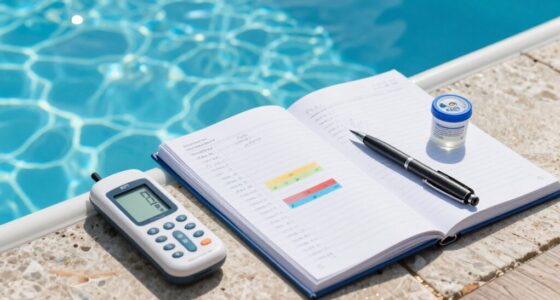
Before shocking, check your current chlorine levels with a reliable test kit. If your chlorine is already high, shocking might not be necessary or could even lead to over-chlorination. Conversely, if chlorine levels are too low, your pool is more vulnerable to algae growth and bacteria. Once you determine the appropriate time to shock—typically after heavy usage, a rainstorm, or spotting algae—you need to add the right amount of shock treatment based on your pool size. Always follow the manufacturer’s instructions carefully. After shocking, it’s essential to wait until the chlorine levels drop back to normal before swimming again, which usually takes 24 to 48 hours. During this period, keep an eye on your chlorine levels and pH balance to guarantee they return to safe, balanced levels.
Maintaining proper chlorination and pH balance isn’t just about clarity; it’s also about safety. Imbalanced pH can cause skin and eye irritation, while improper chlorine levels can leave your pool susceptible to bacteria and algae. Shock treatments, when done correctly, help restore these key parameters, ensuring your pool stays inviting and safe for everyone. Remember, regular testing and adjusting your chemicals are key to preventing issues before they arise. So, while shock treatments might seem straightforward, they require careful monitoring of pH balance and chlorine levels to work effectively. With a little attention to these details, you’ll enjoy a sparkling, healthy pool all season long.
As an affiliate, we earn on qualifying purchases.
Frequently Asked Questions
Can Shock Treatments Be Used With Saltwater Pools?
Yes, shock treatments can be used with saltwater pools. Saltwater compatibility means you can safely shock your pool without damaging the salt system. You may choose chlorine alternatives like non-chlorine shocks or specialized shock products designed for saltwater pools. Regular shocking helps maintain water clarity and hygiene, so it’s essential to follow the manufacturer’s instructions to keep your pool balanced and safe for swimming.
How Often Should I Shock My Pool During Peak Season?
Think of your pool like a garden that needs regular tending. During peak season, you should shock your pool about once every 1-2 weeks to maintain proper chemical balance and prevent algae growth. If you notice cloudy water or algae, increase shock treatments accordingly. Consistent shock treatment frequency keeps your pool sparkling, safe, and inviting, ensuring your swim remains enjoyable and chlorine levels stay balanced.
Are There Any Safety Precautions for Indoor Pool Shocking?
When shocking your indoor pool, prioritize pool safety by wearing gloves and goggles to prevent chemical burns or irritation. Always handle pool chemicals in a well-ventilated area, and follow the manufacturer’s instructions carefully. Keep children and pets away during and after chemical handling, and store chemicals securely. Proper chemical handling minimizes risks, ensuring a safe environment for everyone while maintaining a clean, healthy pool.
Can Shocking Cause Skin or Eye Irritation?
Sure, shocking can cause skin or eye irritation—who would’ve guessed that adding chemicals could turn into a fiery surprise? It all comes down to chemical reactions and pool material compatibility. If you don’t follow instructions or use the right products, you risk irritation. Always wear protective gear, avoid splashing, and guarantee proper chemical balance. That way, you keep your pool sparkling without turning yourself into a temporary science experiment.
What Are the Signs of Over-Shocking a Pool?
If you over-shock your pool, you’ll notice chlorine levels become excessively high and the water loses clarity, turning murky or cloudy. You might also experience skin or eye irritation, and algae or bacteria could still linger despite the high chlorine. Keep an eye on these signs to avoid damaging your pool’s balance; it’s best to test chlorine levels regularly and maintain proper pool chemistry.
Conclusion
When you shock your pool, you restore clarity, eliminate bacteria, and balance chemicals. When you shock your pool, you safeguard your family, preserve your investment, and enjoy pristine water. When you shock your pool, you guarantee safety, enhance enjoyment, and maintain health. So, don’t wait until problems arise—shock your pool regularly, follow the proper steps, and enjoy sparkling water all season long. Because a well-maintained pool is a happy, healthy, and inviting backyard retreat.