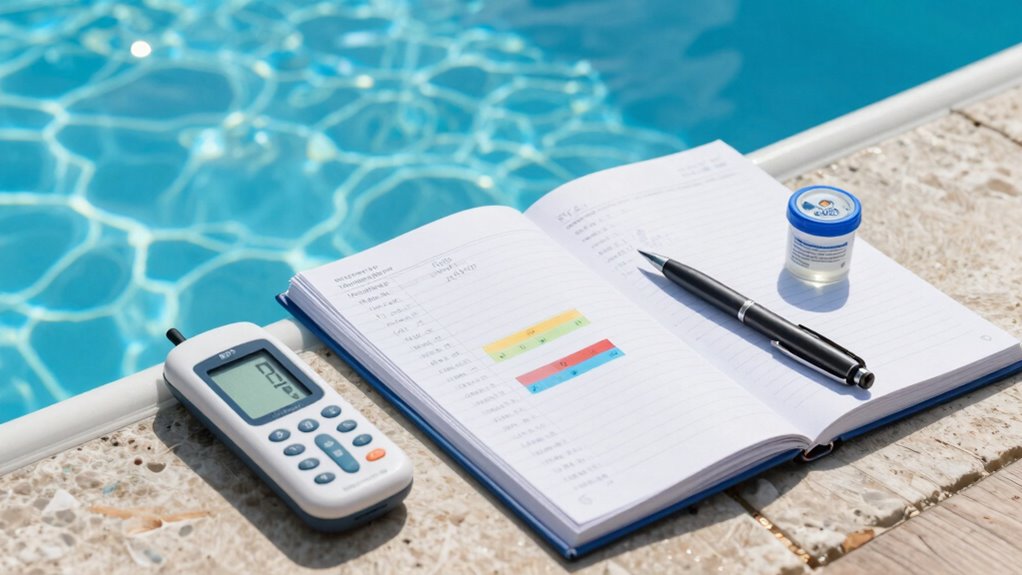

A good pool chemistry log should track essential water parameters like pH, chlorine, alkalinity, calcium hardness, and temperature to maintain balance. You also need to record your maintenance routine, such as chemical additions, filter backwashing, and test dates, along with environmental factors like rain or wind that affect water quality. Keep an eye on water clarity, debris, and recurring issues. Continue exploring to discover more tips on creating an effective and thorough pool log.
Key Takeaways
- Regularly record essential chemical levels such as pH, chlorine, alkalinity, and calcium hardness.
- Log testing dates, times, and specific chemical adjustments or additions made.
- Track water temperature, clarity, debris, algae presence, and other water condition observations.
- Document environmental factors like rain, wind, and external influences affecting water chemistry.
- Maintain inventory of chemicals used, quantities, brands, and dosing consistency over time.
Have you ever wondered how to keep your pool crystal clear and safe for swimming? The key lies in maintaining a well-organized pool chemistry log. This log isn’t just a record-keeping tool; it’s your secret weapon for guaranteeing your pool stays inviting and hygienic. When you track your pool’s chemical balance, you’re actively monitoring essential levels like pH, chlorine, alkalinity, and calcium hardness. Keeping these within the recommended ranges prevents algae growth, cloudy water, and bacterial buildup. Regularly recording these measurements allows you to spot trends and address issues before they escalate, saving you time and costly repairs down the line.
Maintaining a pool chemistry log ensures crystal-clear, safe swimming water by tracking essential chemical levels and water conditions.
A good pool chemistry log also emphasizes a consistent maintenance schedule. This schedule guides you on when to test your water, add chemicals, and backwash filters. By sticking to a routine, you avoid sudden imbalances that can compromise water quality. It’s important to note the date and time of each test and chemical addition, so you understand how your pool responds over time. This way, you can adjust your maintenance to better suit your pool’s specific needs, especially during peak usage or seasonal changes.
In addition to chemical levels, your log should include details about your water temperature and any visible issues such as cloudiness, debris, or algae. These observations help you correlate chemical adjustments with water quality, giving you a thorough picture of your pool’s health. If you notice recurring problems, your log can help you identify underlying causes, whether it’s inadequate filtration, improper chemical dosing, or environmental factors like rain or wind. Understanding the chemical balance and how it interacts with environmental influences is crucial for effective pool maintenance. Recognizing how water chemistry interacts with external factors can help you make more informed decisions about your pool’s care.
Furthermore, a complete pool chemistry log should track chemical usage, including quantities and brands of chemicals added. This not only helps in budgeting and inventory management but also ensures consistency. Over time, you’ll develop a better understanding of how much of each chemical your pool needs to maintain perfect balance, reducing waste and preventing overdosing.
Ultimately, a good pool chemistry log isn’t just a record of numbers; it’s a proactive tool that helps you maintain a safe, clean, and beautiful pool. By diligently tracking chemical balance, adhering to a maintenance schedule, and noting water conditions, you empower yourself to keep your pool in top shape. With a little discipline and attention to detail, you’ll enjoy sparkling, safe water all season long.
As an affiliate, we earn on qualifying purchases.
Frequently Asked Questions
How Often Should I Update My Pool Chemistry Log?
You should update your pool chemistry log at least twice a week during regular pool maintenance. Frequent updates help you track chemical balancing effectively, ensuring your pool stays safe and clean. After heavy use or storms, check it more often. Regular monitoring allows you to catch issues early, adjust chemicals promptly, and maintain ideal water quality. Consistent logging keeps your pool inviting and reduces long-term maintenance efforts.
What Tools Are Best for Recording Pool Chemistry Data?
You should use digital apps or waterproof logs for recording pool chemistry data. These tools make pool maintenance and chemical balancing easier by providing easy access and organized records. Mobile apps allow quick updates, reminders, and trend tracking, while waterproof logs are durable and great for on-the-spot notes. Both tools help guarantee your pool stays properly balanced, reducing chemical imbalances and keeping the water clean and safe.
How Do I Interpret Fluctuations in Chemical Levels?
When you see fluctuations in chemical levels, it’s important to take into account chemical stability and test frequency. Variations may mean your chemicals aren’t balanced or that you’re testing too infrequently. Regular testing helps catch changes early, so you can adjust chemicals promptly. Keep track of your test results, note trends over time, and maintain consistent test frequency. This approach ensures your pool remains safe, clean, and chemically balanced.
Should I Include Weather Conditions in My Log?
Including weather conditions in your log can be incredibly helpful, as studies show that weather impact can alter chemical stability in pools. When it’s hot, evaporation speeds up, affecting chlorine levels, while rain can dilute sanitizers. By tracking weather, you gain insight into fluctuations, enabling you to adapt chemicals proactively. This practice guarantees your pool stays balanced, safe, and enjoyable regardless of changing weather patterns.
How Can I Ensure My Log Remains Accurate Over Time?
To guarantee your log stays accurate over time, you should regularly calibrate your testing equipment to maintain measurement accuracy. Store your test kits and chemicals properly to preserve chemical stability, preventing false readings. Consistently record data immediately after testing, and double-check entries for errors. By doing these, you keep your pool chemistry data reliable, helping you maintain a safe, well-balanced pool with minimal guesswork.
Conclusion
Keeping a good pool chemistry log is your secret weapon for crystal-clear water. By tracking these key metrics, you’ll navigate the complex dance of chemicals with confidence, avoiding costly mistakes and ensuring your pool stays inviting. Think of your log as the heartbeat of your pool’s health — when it’s steady and well-maintained, your pool blooms like a vibrant garden. Stay diligent, and your oasis will always be a invigorating retreat.