Understanding ORP sensors and automated chemical controllers is key to maintaining water quality effectively. ORP sensors measure the water’s ability to gain or lose electrons, indicating its oxidative or reductive state, while controllers adjust chemical dosing based on these readings. Proper calibration, signal processing, and system integration guarantee accurate, real-time adjustments that prevent costly errors and protect health. Keep exploring to learn how these technologies work together to optimize water management systems.
Key Takeaways
- ORP sensors measure water’s oxidative or reductive potential, providing real-time data for water quality management.
- Proper calibration with standard solutions ensures accurate electrode readings and compensates for drift over time.
- Signal processing techniques filter noise and temperature effects, delivering stable, precise ORP measurements.
- Automated controllers adjust chemical dosing based on ORP levels, maintaining water chemistry within optimal ranges.
- Regular maintenance, calibration, and temperature compensation enhance system reliability and data accuracy.
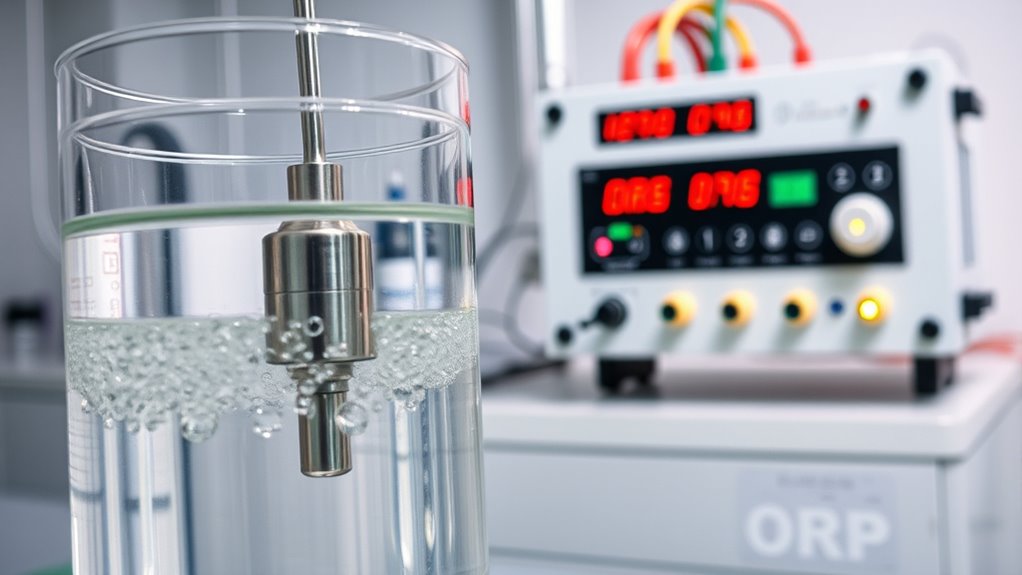
Oxidation-Reduction Potential (ORP) sensors play a crucial role in monitoring and maintaining water quality in various applications. These sensors help you measure the water’s ability to either gain or lose electrons, which indicates its overall oxidative or reductive state. To guarantee accurate readings, electrode calibration is essential. You need to calibrate your ORP electrodes regularly, following manufacturer instructions, to account for potential drift and contamination. Proper calibration involves using standard solutions with known ORP values, allowing you to set a dependable baseline. This process ensures your sensor provides precise measurements, which are critical for effective water treatment and process control. Once calibrated, the sensor’s electrode responds to changes in water chemistry, but raw signals can be noisy or inconsistent without proper signal processing. This step filters and interprets the data, transforming electrical signals into meaningful information. Signal processing techniques, such as filtering, amplification, and digital conversion, help you minimize interference from temperature fluctuations or electrical noise, ensuring your readings are stable and accurate. Many modern ORP sensors incorporate integrated signal processing electronics, simplifying this task and improving the reliability of the data you receive. When the sensor detects a shift in ORP levels, it sends signals to your automated chemical controllers, which then adjust chemical dosing accordingly. This automation reduces manual intervention, saves time, and maintains water quality within desired parameters. The effectiveness of this system hinges on your ability to maintain proper electrode calibration and maximize signal processing. If calibration is neglected or signals are not properly processed, the readings can drift, leading to incorrect dosing and compromised water quality. To prevent this, you should establish routine calibration schedules and regularly verify signal integrity. Advanced systems might include self-calibration features or real-time diagnostics, alerting you when electrodes need cleaning or replacement. Proper signal processing also involves compensating for temperature variations, as ORP readings are temperature-dependent. Many sensors incorporate temperature compensation algorithms, ensuring your data reflects true water chemistry rather than environmental influences. Additionally, understanding the relationships between water chemistry and electrode performance can help optimize system reliability. By paying close attention to electrode calibration and investing in effective signal processing, you enhance the accuracy and reliability of your ORP measurements. This, in turn, enables your automated chemical controllers to operate at their best, maintaining water quality, reducing chemical wastage, and ensuring compliance with environmental standards. Essentially, mastering these key aspects of ORP sensor operation allows you to harness their full potential in water treatment systems, industrial processes, or swimming pool management. Consistent calibration and robust signal processing are the backbone of trustworthy data, empowering you to make informed decisions and maintain safe, high-quality water environments.

Apera Instruments ORP60-E Replacement ORP Probe for ORP60 Pocket ORP Tester (AI1207)
- ORP Range: ±1000mV
- Temperature Range: 0-50°C
- Sensor Type: Platinum with gel electrolyte
As an affiliate, we earn on qualifying purchases.
As an affiliate, we earn on qualifying purchases.
Frequently Asked Questions
How Do ORP Sensors Differ From Ph Sensors?
You’ll find that ORP sensors measure oxidation-reduction potential, while pH sensors detect acidity or alkalinity. ORP sensors require regular sensor calibration to confirm accurate readings, and they’re more susceptible to signal interference from chlorine or other oxidizers. pH sensors focus on hydrogen ion activity and are generally less affected by interference. Both need proper maintenance, but their different functions make them essential for monitoring water quality effectively.
What Maintenance Is Required for ORP Sensors?
Think of your ORP sensor like a delicate musical instrument—you need to keep it well-tuned. Regular sensor calibration ensures accurate readings, while checking chemical compatibility prevents sensor damage. You should also clean the sensor gently to remove deposits and replace it when it shows signs of wear. Proper maintenance maintains your ORP sensor functioning reliably, just like tuning a guitar ensures it sounds perfect every time.
Can Automated Controllers Handle Multiple Chemical Processes Simultaneously?
Yes, automated controllers can handle multiple chemical processes simultaneously by utilizing multi-process coordination and sensor integration. You can program them to monitor various parameters across different processes, ensuring each one operates efficiently and safely. These controllers synchronize sensor data, automate adjustments, and optimize chemical dosing, allowing you to manage complex operations seamlessly. This efficiency helps reduce manual intervention, improves consistency, and enhances overall process control.
How Do Environmental Factors Affect ORP Sensor Accuracy?
Environmental factors like temperature fluctuations and pH changes can impact your ORP sensor’s accuracy. To keep readings reliable, you should regularly perform sensor calibration and use temperature compensation features. These steps help adjust for environmental variations, ensuring your ORP measurements remain precise. Ignoring these factors might lead to skewed data, so always monitor and maintain your sensors under changing conditions for ideal performance.
What Are the Common Troubleshooting Steps for Sensor Malfunctions?
When troubleshooting sensor malfunctions, start by checking sensor calibration to guarantee accuracy. Inspect wiring connections for any loose or damaged wiring issues that could disrupt signal transmission. Clean the sensor’s glass or membrane to remove debris or buildup. Verify the power supply is stable and functioning properly. If problems persist, consider replacing the sensor or consulting the manufacturer’s guidelines to resolve specific issues effectively.
Conclusion
By understanding ORP sensors and automated chemical controllers, you gain confidence in managing water quality efficiently. Sure, it might seem complex at first, but with the right knowledge, you can prevent costly errors and ensure safety. Don’t let fear hold you back—embrace these tools and see the positive impact on your water management. You have the power to make informed decisions that protect your environment and loved ones, starting today.