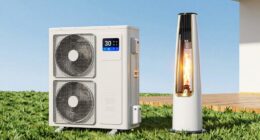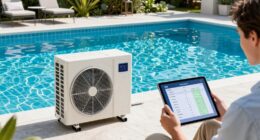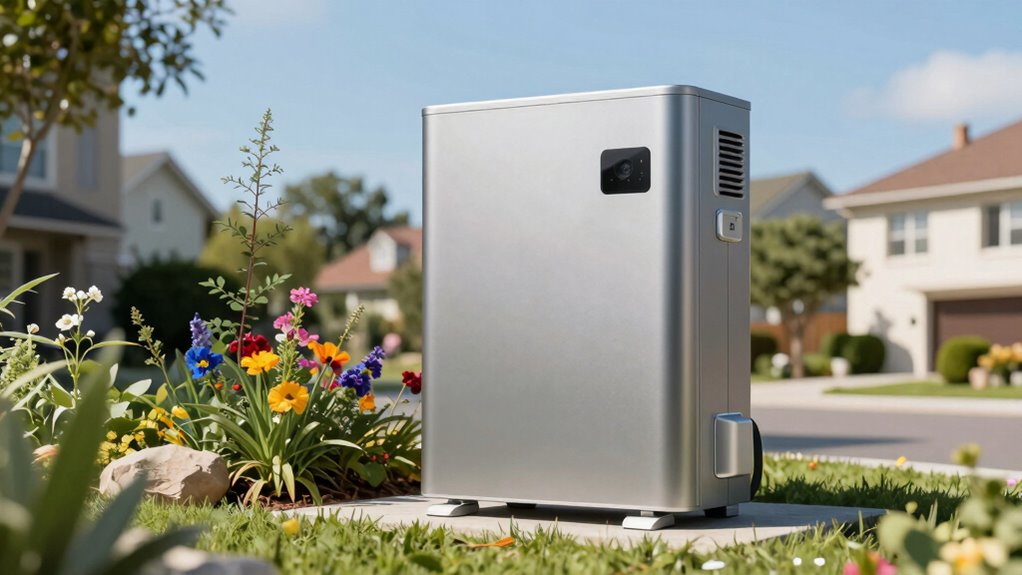

Inverter heat pumps adjust their compressor speed to match your home’s heating or cooling needs, which makes them run more smoothly and quietly. This continuous modulation reduces noise and prevents energy waste, helping you lower your bills. They also adapt to outdoor conditions for better efficiency and longer lifespan. If you want to understand how inverter technology benefits your comfort and savings, keep exploring how it works and why it’s a smart choice.
Key Takeaways
- Inverter heat pumps adjust compressor speed continuously, resulting in quieter operation by avoiding sudden starts and stops.
- They modulate output precisely, maintaining consistent indoor temperatures and reducing energy waste.
- Continuous speed control lowers electricity consumption, leading to significant reductions in energy bills.
- Inverter technology reduces system wear and extends heat pump lifespan by minimizing mechanical stress.
- Overall, inverters enhance efficiency and comfort while decreasing noise levels and environmental impact.
What Is an Inverter Heat Pump, and How Does It Work?
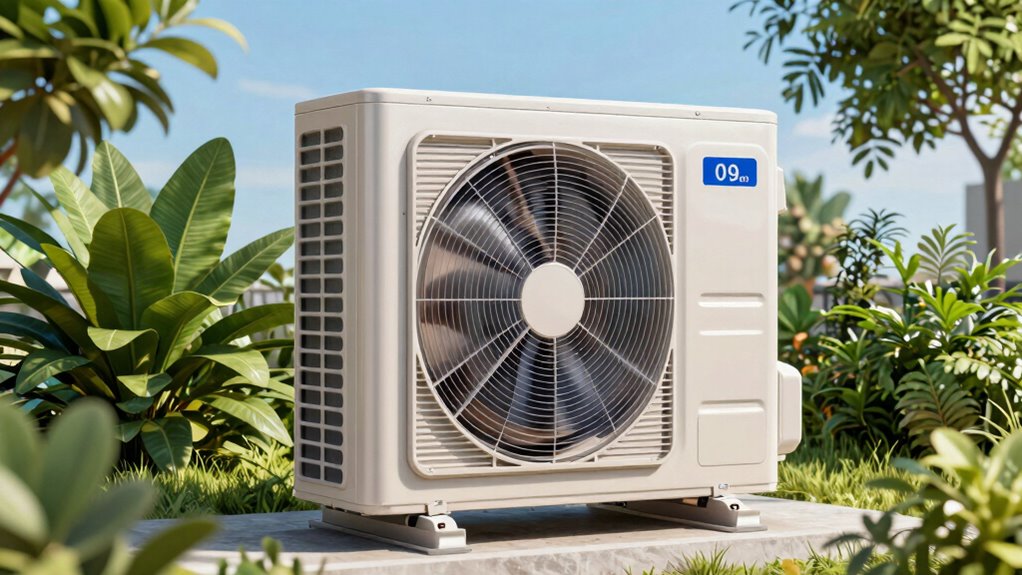
An inverter heat pump is a highly efficient heating and cooling system that adjusts its compressor speed to match your home’s needs. Thanks to smart technology, it can modulate its output, providing precise temperature control while reducing energy consumption. This adaptability means it runs only as hard as necessary, which lessens environmental impact by lowering greenhouse gas emissions. Unlike traditional systems that turn on and off frequently, inverter heat pumps maintain a steady operation, improving overall efficiency. As a result, you save on energy bills and contribute to a greener planet. Its intelligent design ensures ideal performance with minimal waste, making it a sustainable choice for eco-conscious homeowners. Additionally, noise levels are significantly reduced with inverter technology, creating a more comfortable indoor environment. This smart approach to climate control reflects modern advancements in energy-efficient heating and cooling solutions. Moreover, the technology allows for precise temperature regulation, ensuring consistent comfort regardless of outdoor conditions.
How Inverter Technology Makes Heat Pumps Quieter and More Efficient?

Because inverter technology continuously adjusts the compressor’s speed, heat pumps operate more smoothly and quietly than traditional systems. This results in significant noise reduction, making your home more comfortable. Additionally, by matching the compressor’s speed to your heating or cooling needs, the system uses less energy, boosting energy efficiency. Here are four ways inverter tech enhances performance:
- It minimizes sudden starts and stops, reducing noise and wear.
- It maintains consistent temperatures for greater comfort.
- It adapts to changing conditions, preventing energy wastage.
- It prolongs the lifespan of the heat pump by reducing strain. Smart thermostat setup can further optimize inverter heat pump operation for maximum benefits.
Implementing precise control systems ensures your inverter technology delivers optimal performance and energy savings.
In addition, advanced inverter controls help fine-tune operation for even better efficiency and quieter operation. To maximize these advantages, integrating smart home automation can enhance overall system responsiveness and comfort.
How Inverter Heat Pumps Help You Save on Energy Bills?

Inverter heat pumps help you save on energy bills by dynamically adjusting their compressor speed to match your heating or cooling needs. Unlike traditional units that operate at a fixed speed, inverters ramp up or slow down, using only the energy necessary. This precise control results in less electricity consumption, leading to a better cost comparison over time. You’ll notice lower monthly bills because the system avoids unnecessary energy waste. Additionally, inverter technology reduces the environmental impact by consuming less power and emitting fewer greenhouse gases. Over the lifespan of the unit, these energy savings add up considerably, making inverter heat pumps a smarter, more eco-friendly choice. Innovative technology in inverter heat pumps optimizes performance and efficiency for homeowners seeking sustainable heating and cooling solutions. Moreover, the variable speed compressor enhances the system’s ability to adapt seamlessly to changing temperature demands and supports energy-efficient operation. The reduction in noise levels is another benefit, making inverter heat pumps quieter during operation and improving overall comfort. This technology also often includes smart controls that allow for further optimization and convenience.
Should You Choose an Inverter or Non-Inverter Heat Pump?
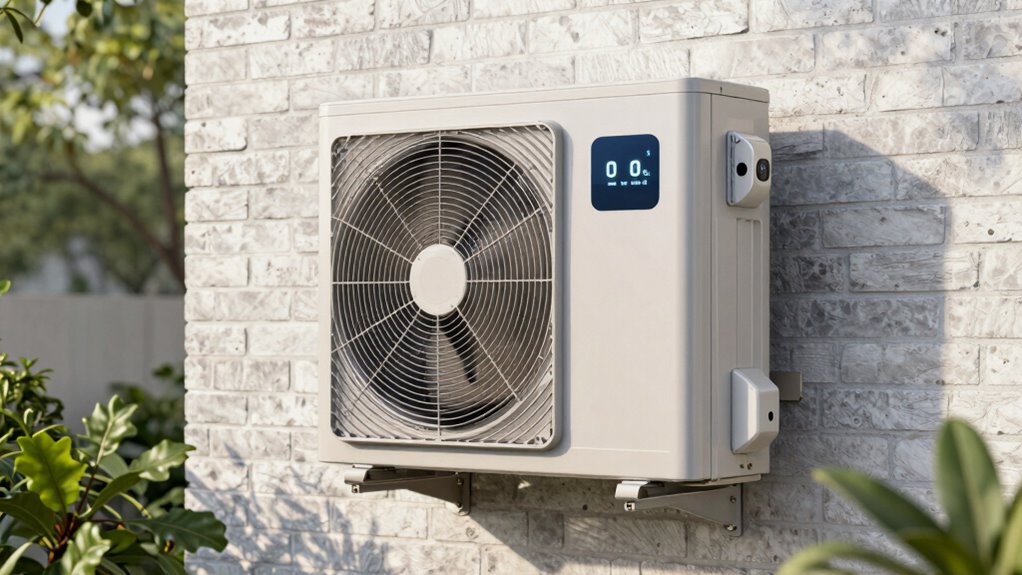
Choosing between an inverter and a non-inverter heat pump depends on your priorities for efficiency, cost, and comfort. Inverter models typically offer better energy savings and quieter operation, but they can be more expensive initially. When comparing brands, look for proven reliability and customer reviews to ensure quality. Installation considerations also matter; inverter units may require specialized setup, affecting costs and complexity. Additionally, understanding how vehicle performance parts influence overall efficiency can offer insights into optimizing your system. For example, technology updates can impact the long-term performance of heat pumps and should be considered when making your choice. Considering system design can further enhance your understanding of how these units operate efficiently. It’s also helpful to consider energy consumption patterns, which vary based on the type of system you select. Being aware of efficiency ratings can guide you toward more sustainable choices. Consider these factors: 1. Brand comparisons reveal which models last longer and perform better. 2. Non-inverter units often have lower upfront costs but higher energy bills. 3. Inverter systems adapt speed, providing consistent comfort. 4. Proper installation impacts long-term efficiency and maintenance needs.
Deciding hinges on balancing initial investment with ongoing savings and comfort preferences.
Tips for Choosing the Best Inverter Heat Pump for Your Home
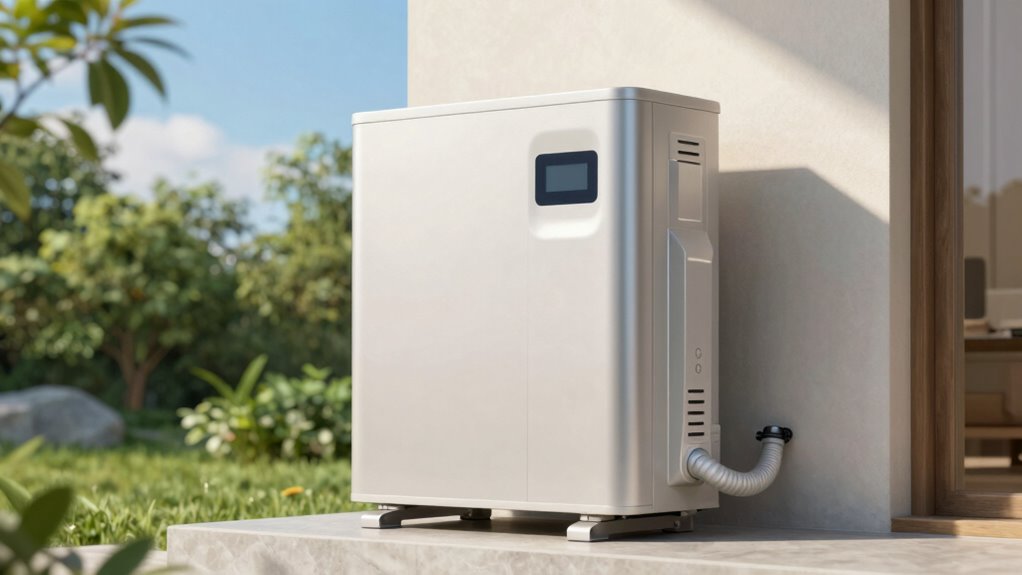
Selecting the right inverter heat pump for your home involves considering several key factors to guarantee ideal performance and efficiency. First, prioritize energy efficiency ratings—look for models with high SEER and HSPF ratings to lower your bills and reduce environmental impact. Next, evaluate installation considerations, such as available space, ductwork, and compatibility with your existing system. Proper sizing is essential; an oversized unit can waste energy, while an undersized one struggles to meet your heating and cooling needs. Also, check for quiet operation and reliable warranties. Additionally, choosing models with weatherproofing features can help ensure durability in various climates. Incorporating smart home safety features can further optimize your system’s operation and security. When selecting an inverter heat pump, understanding compliance standards can help you make a safer and more reliable choice. Making informed choices ensures you get a system that’s efficient, quiet, and suitable for your specific home.
Frequently Asked Questions
Can Inverter Heat Pumps Operate Effectively in Extremely Cold Climates?
Yes, inverter heat pumps can operate effectively in extremely cold climates. Their cold climate performance is impressive because they adapt to low temperatures, maintaining efficiency in low temperatures. You’ll find that inverter technology allows these heat pumps to modulate their output, providing consistent heating without wasting energy. This guarantees reliable performance, even during harsh winters, helping you save on energy bills while staying warm in frigid conditions.
What Maintenance Is Required for Inverter Heat Pumps?
You should perform routine checks and filter replacements regularly to keep your inverter heat pump running smoothly. Coincidentally, these simple tasks prevent energy inefficiency and prolong your system’s lifespan. Inspect the outdoor unit for debris, clean or replace filters as needed, and guarantee that all electrical connections are secure. By staying on top of maintenance, you’ll enjoy ideal performance, lower bills, and quieter operation over time.
How Long Is the Typical Lifespan of an Inverter Heat Pump?
You can expect an inverter heat pump to last around 10 to 15 years with proper maintenance. Its advanced design guarantees high energy efficiency, which helps you save on your energy bills over time. Regular servicing, such as cleaning filters and checking refrigerant levels, extends its lifespan and maintains peak performance. Investing in quality and routine care guarantees you maximize your cost savings while enjoying reliable, efficient heating and cooling.
Are Inverter Heat Pumps More Environmentally Friendly Than Traditional Models?
Yes, inverter heat pumps are more environmentally friendly than traditional models. They use less energy, helping you reduce your carbon footprint and support renewable energy efforts. By adjusting their compressor speed, they operate more efficiently, consuming less electricity and emitting fewer greenhouse gases. This means you save money and contribute positively to the environment, making inverter heat pumps a smarter, greener choice for heating and cooling your home.
Do Inverter Heat Pumps Require Special Installation Considerations?
Think of installing an inverter heat pump like planting a resilient tree; it needs the right conditions to thrive. You’ll need to take into account installation requirements and compatibility considerations to guarantee optimal performance. Usually, professional installation is recommended because electrical and space considerations matter. Proper setup guarantees your inverter heat pump runs efficiently, quietly, and saves energy. Skipping these steps could lead to issues, much like a young sapling struggling without proper care.
Conclusion
Choosing an inverter heat pump is like installing a silent, energy-saving hero in your home. With its clever technology, it adjusts to your needs, quietly humming along while saving you money. Imagine a device that’s always working just right—never wasting energy or making noise. By selecting the right inverter heat pump, you’re not just upgrading your comfort, but also investing in a smarter, quieter future for your home.