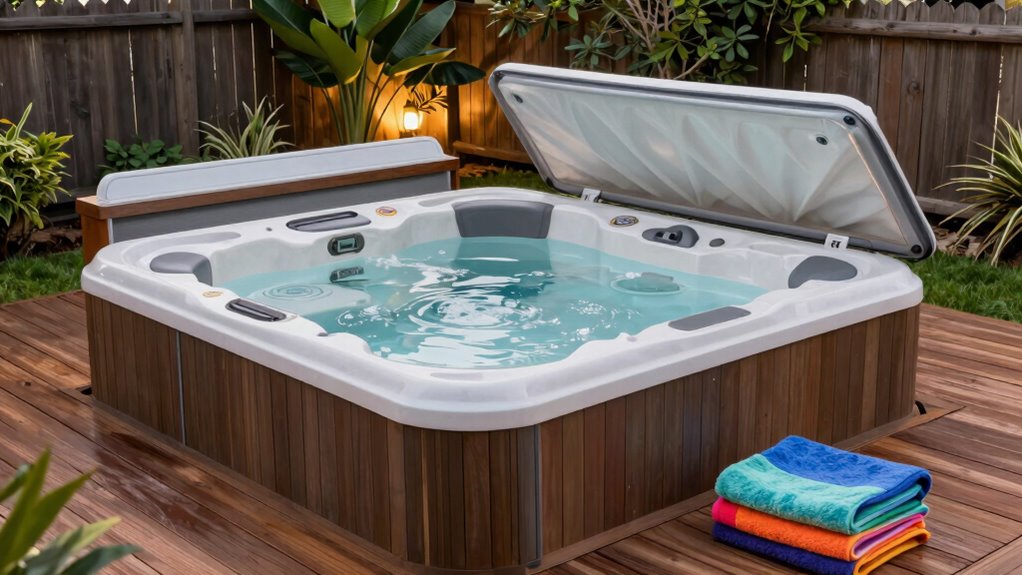

To create a safer hot tub setup for your family, regularly test and maintain proper chemical levels to prevent bacteria and skin irritation. Install slip-resistant surfaces, handrails, and steps for safe entry and exit. Always supervise children, keep the cover secured when not in use, and check the temperature to prevent overheating. Address any damage immediately, and encourage showering before use. Keep these safety tips in mind to protect your loved ones—and you’ll discover more ways to guarantee safe and fun hot tub experiences.
Key Takeaways
- Install slip-resistant surfaces and secure handrails around the hot tub for safe entry and exit.
- Set the temperature at or below 104°F to prevent overheating and reduce health risks.
- Keep the hot tub cover securely in place when not in use to prevent accidental falls or unauthorized access.
- Supervise children at all times and encourage showering before entering to minimize contaminants.
- Regularly inspect and maintain the hot tub, including water chemistry, filters, and structural components, for safe operation.
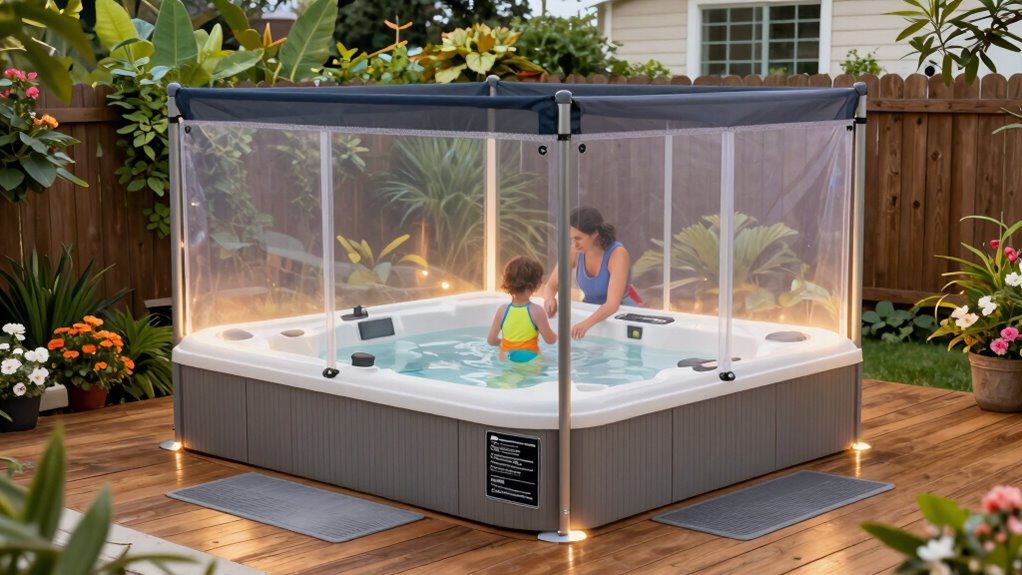
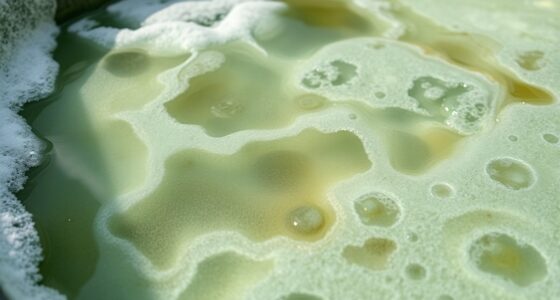
A hot tub can be a wonderful way for families to relax and enjoy quality time together, but safety should always come first. One of the most important steps in creating a safe hot tub setup is understanding how to properly manage hot tub chemicals. Keeping the water balanced isn’t just about clarity; it’s about preventing skin irritation, infections, and other health issues. You should regularly test the water using test strips or a testing kit to check pH levels, sanitizer levels, and alkalinity. Maintaining the correct balance keeps the water safe and comfortable for everyone. Be sure to add the right amounts of chlorine or bromine, depending on your chosen sanitizer, and always follow the manufacturer’s instructions. Overuse can cause skin dryness or irritation, while underuse can lead to bacterial growth. Regularly testing the water ensures that chemical levels stay within safe ranges, helping to prevent potential health risks.
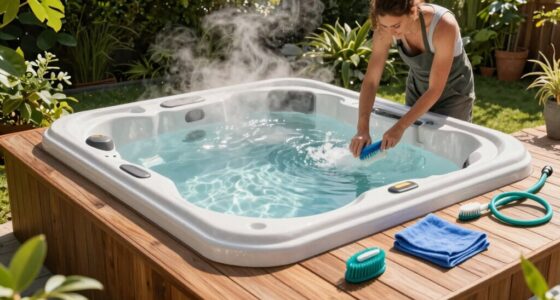
To keep your hot tub safe and functioning well, establishing consistent maintenance routines is key. Regularly cleaning your hot tub involves draining and refilling the water, typically every 3 to 4 months, depending on usage. Before using the hot tub, wipe down surfaces with a non-abrasive cleaner to remove dirt and prevent buildup of bacteria. Clean the filters weekly to ensure proper water circulation and filtration, which directly impacts water quality. Use a filter cleaner periodically to extend its lifespan and maintain efficiency. Inspect the hot tub’s components—jets, covers, and controls—regularly for signs of wear or damage. If you notice cracks or leaks, address them immediately to prevent accidents or further issues. Proper water chemistry management is essential for maintaining a healthy hot tub environment and preventing the growth of harmful bacteria. Additionally, understanding the importance of water treatment methods can help you choose the most suitable sanitizing options for your hot tub. It’s also beneficial to familiarize yourself with hot tub safety guidelines to further reduce risks associated with hot tub use.
Safety also involves physical precautions. Always supervise children in and around the hot tub, and limit the time they spend inside to prevent overheating or dehydration. Encourage everyone to shower before entering to minimize contaminants in the water. Keep the hot tub cover securely in place when not in use to prevent accidental falls or unsupervised access. Make sure the area around the hot tub is slip-resistant, and install handrails or steps if necessary to facilitate safe entry and exit. You should also check the temperature regularly; keeping it at or below 104°F helps prevent overheating.

Upgraded 100 * 100 inch Square Hot Tub Mat, Extra Large Inflatable Hot Tub Pad Outdoor Indoor, Waterproof Slip-Proof Backing, Absorbent Spa Pool Ground Base Flooring Protector Mat
- Size: 100 x 100 inches square
- Protection: Protects hot tub and floor
- Waterproof: Water-resistant and absorbent
As an affiliate, we earn on qualifying purchases.
As an affiliate, we earn on qualifying purchases.
Frequently Asked Questions
What Are the Best Child-Proof Hot Tub Covers?
The best child-proof hot tub covers prioritize child safety and cover durability. Look for covers with locking mechanisms to prevent accidental access, such as latches or clamps. Durable materials like high-density foam and sturdy vinyl guarantee longevity and resistance against wear and tear. Choose covers that fit snugly over your hot tub, and verify they meet safety standards. These features help keep children safe while maintaining the cover’s effectiveness over time.
How Often Should I Test Hot Tub Water Quality?
Like a vigilant sailor tending to their vessel, you should test your hot tub water quality at least 2-3 times a week. Focus on maintaining proper chemical balance, adjusting pH and sanitizer levels as needed. Regular testing guarantees your water remains clear and safe, while water filtration works behind the scenes to remove impurities. By staying proactive, you keep your family protected and your hot tub inviting.
Are There Specific Safety Certifications for Hot Tubs?
Yes, there are specific safety certifications for hot tubs, like the ETL and CSA marks, which guarantee the hot tub meets safety standards. When doing hot tub maintenance, always check for these labels. Also, install clear safety signage to warn users of potential risks and proper usage. These measures help prevent accidents and make your hot tub a safer environment for everyone.
How Can I Prevent Hot Tub Electrical Hazards?
Think of hot tub safety like a fortress—your best defense against electrical hazards. You can prevent risks by ensuring proper electrical grounding, which directs stray currents safely into the ground. Additionally, install a ground-fault circuit interrupter (GFCI) or circuit breaker safety device, which instantly cuts power if it detects a fault. Regularly inspect wiring and connections to stay ahead of potential issues, keeping your family safe and secure.
What Are the Signs of Hot Tub Equipment Failure?
You’ll notice signs of hot tub equipment failure if you see inconsistent water temperature, strange noises, or frequent tripping of the GFCI. A chemical imbalance can cause cloudy water or foul odors, while neglecting filter maintenance may lead to reduced water flow and equipment strain. Regularly check your equipment, maintain proper chemical levels, and clean filters to catch issues early and prevent equipment failure.
Conclusion
Creating a safer hot tub setup protects your family and guarantees everyone can enjoy relaxing moments together. Remember, nearly 80% of hot tub-related injuries involve children under 5, often due to lack of supervision or safety measures. By installing safety covers, barriers, and monitoring devices, you greatly reduce these risks. Prioritize safety, stay vigilant, and enjoy your hot tub responsibly—making it a joyful, worry-free retreat for everyone.