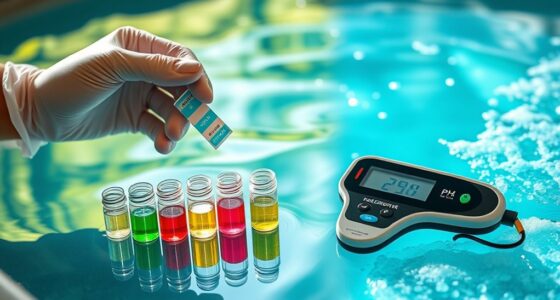

Each week, test your spa water’s pH, alkalinity, and sanitizer levels to catch imbalances early. Clean or replace your filters regularly to remove debris and bacteria that can cause cloudiness. Promptly adjust chemicals as needed to maintain proper balance, and re-test after making changes. Keeping detailed logs helps you spot trends and prevent issues before they happen. Consistently following these steps will help you enjoy clear, inviting water every time—more helpful tips are just ahead.

Get pool and patio gear delivered free with Prime
- Fast, free delivery on millions of items
- Prime Video, Amazon Music and more included
- Member-only deals all year
Key Takeaways
- Conduct weekly water tests for pH, alkalinity, and sanitizer levels, and record the results for trend monitoring.
- Adjust chemical levels promptly using appropriate pH increasers, decreasers, or sanitizers to maintain optimal water chemistry.
- Clean or replace spa filters regularly to prevent debris buildup, bacteria, and cloudiness.
- Re-test water after chemical adjustments to ensure proper balance and clarity.
- Follow a consistent maintenance schedule that includes routine testing, chemical adjustments, and filter cleaning.

A consistent spa care routine can transform your skin and enhance your overall well-being. One of the key components to maintaining clear, inviting water is understanding how to keep your spa properly balanced. Regularly performing water testing allows you to monitor the chemical levels in your spa, guaranteeing the water remains clean and safe. When you test the water, you check for pH levels, alkalinity, and sanitizer residuals. Proper water testing isn’t just about keeping the water clear; it’s about preventing issues like cloudiness, algae growth, and skin irritation. By catching imbalances early, you can take swift action to correct them, saving you from more complicated problems down the line. Maintaining proper water chemistry is essential for preventing cloudy water and ensuring a safe spa experience.
Regular water testing and balancing keep your spa clear, safe, and inviting while preventing common issues.
Chemical balancing plays an essential role in maintaining water clarity. Once you’ve tested the water, you’ll know if the levels are off. If the pH is too high or too low, it can cause the water to become cloudy and uncomfortable. Too much sanitizer can cause foaming and skin irritation, while too little allows bacteria and algae to thrive. Adjusting these levels is straightforward—adding pH increasers or decreasers, sanitizer, or alkalinity buffers as needed. Consistently balancing the chemicals ensures your spa water remains transparent and inviting, and it also prolongs the lifespan of your spa equipment. Incorporating a comprehensive maintenance schedule can help you stay on top of these tasks regularly. Additionally, understanding the importance of biodiversity in maintaining a healthy aquatic environment can inspire more eco-friendly practices in your spa maintenance routine. Regular water testing can also help you identify subtle changes in water quality that might otherwise go unnoticed until problems develop, allowing for early intervention.
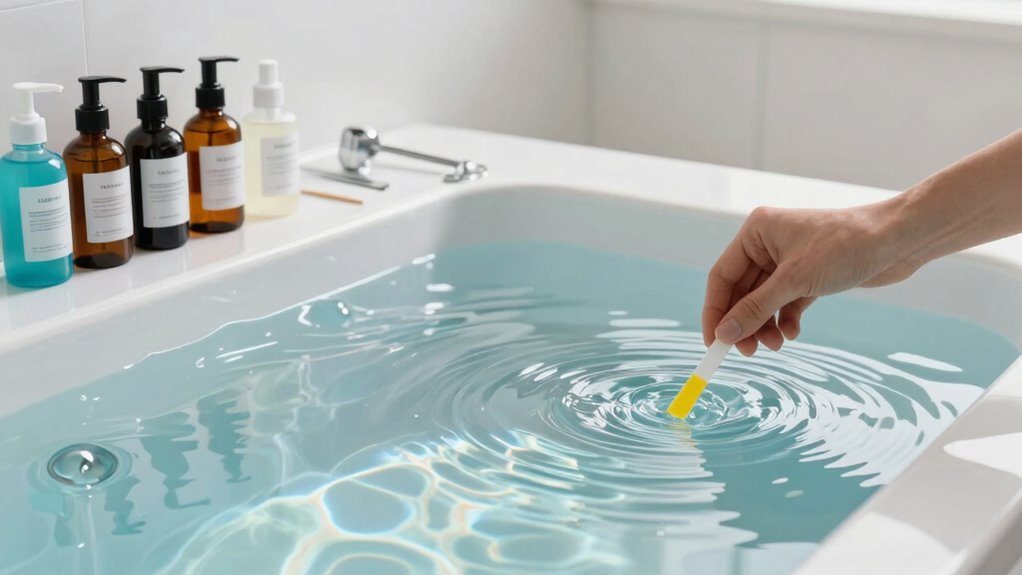
Incorporate weekly water testing into your routine, ideally before each use or at least once a week when the spa isn’t in use. Keeping a log of your test results can help you track patterns and catch issues before they escalate. When you identify a problem, don’t delay in taking corrective measures. For instance, if your water tests show low sanitizer levels, add more sanitizer and re-test after a few hours. If pH levels are off, adjust them accordingly and re-test to confirm the correction. It’s a simple process that makes a significant difference in preventing cloudy water. Additionally, regular cleaning of your spa filters supports water clarity. Dirty filters can harbor bacteria and debris that contribute to cloudiness. Rinsing or replacing filters as recommended by the manufacturer keeps the water flowing smoothly and reduces the chance of water quality issues. Incorporating a cleaning schedule and understanding the importance of water balance will help you create a maintenance routine that keeps your spa water crystal clear and your experience enjoyable. Staying on top of these tasks ensures your spa remains a relaxing retreat, free of cloudy water and unwanted surprises.
As an affiliate, we earn on qualifying purchases.
Frequently Asked Questions
How Often Should I Replace My Spa’s Water?
You should replace your spa’s water every 3 to 4 months to keep it clean and safe. During this time, regularly check your spa filter and clean or replace it as needed to maintain proper filtration. Also, monitor your water pH levels weekly, aiming for a balanced range. Proper maintenance, including water replacement, guarantees clear water and prevents cloudiness, keeping your spa inviting and hygienic.
What Are Common Signs of Cloudy Water?
You’ll notice cloudy water when your spa’s water chemistry is off, causing an imbalance that leads to murkiness. Mineral deposits can also contribute, making the water look hazy or dull. If you see a film or foam, or if the water feels slimy, these are signs of contamination. Regular testing and balancing of chemicals help prevent these issues, keeping your water clear and inviting.
Can I Use Household Cleaning Products in My Spa?
Using household cleaning products in your spa is like trying to fix a delicate watch with a hammer—you risk damage and safety hazards. DIY cleaning might seem tempting, but chemicals meant for household surfaces often contain harsh ingredients that can upset your spa’s chemical balance. Always prioritize chemical safety by using spa-specific products, which are formulated to keep your water clear and safe, avoiding costly repairs or skin irritations.
How Do Temperature Changes Affect Water Clarity?
Temperature fluctuations can profoundly impact water clarity, causing instability that leads to cloudy water. When temperatures change rapidly, it disrupts water stability, encouraging algae growth and mineral buildup. To keep your spa water clear, maintain consistent temperature levels and avoid sudden changes. Regularly monitor and adjust your heater to prevent temperature fluctuations, ensuring a stable environment that keeps your water crystal clear and inviting.
Is Professional Maintenance Necessary for Clear Water?
Think of your spa like a well-tuned orchestra—every element needs to work in harmony. Professional maintenance isn’t always necessary but highly recommended to guarantee ideal spa filtration and chemical balancing. Skilled technicians can spot issues early, preventing cloudy water and ensuring your spa stays crystal clear. Regular professional checkups help maintain water quality, so you can relax without worrying about unexpected cloudiness or imbalance disrupting your spa experience.
Conclusion
Think of your spa as a cherished garden, where each weekly care ritual is like tending to delicate blossoms. When you commit to this routine, you’re nurturing clarity and tranquility, allowing your sanctuary to glow brightly, free from cloudy shadows. Your consistent effort becomes the sunlight that wards off murkiness, revealing pure, inviting waters. With care and dedication, your spa will remain a peaceful oasis—an everlasting symbol of relaxation and harmony in your life.
Fall Picks
fall essentials
As an affiliate, we earn on qualifying purchases.