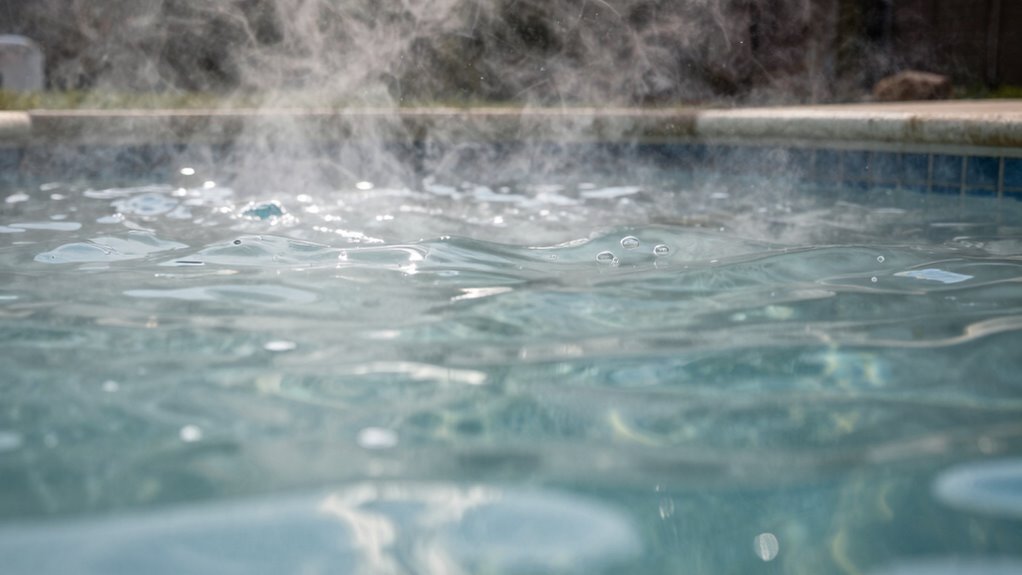

When you shock your pool, it temporarily suspends particles and disrupts the water’s balance, causing cloudiness. Excess chlorine reacts with organic contaminants, dirt, and algae, making fine particles stay suspended. Improper chemical balance, poor filtration, or inadequate circulation can make the cloudiness worse. If you keep things in check and maintain proper chemical levels, you can clear it up faster. For more tips on preventing and fixing cloudy water, keep exploring these causes.
Key Takeaways
- Shock treatment temporarily disrupts chemical balance, causing suspended particles that cloud the water.
- Excess chlorine reacts with organic contaminants, creating fine particles that remain suspended.
- Improper filtration or dirty filters fail to remove oxidized debris, leading to cloudiness.
- Poor circulation during or after shocking prevents even chemical distribution and filtration.
- Heavy debris or debris introduced during shocking can increase particles and reduce water clarity.
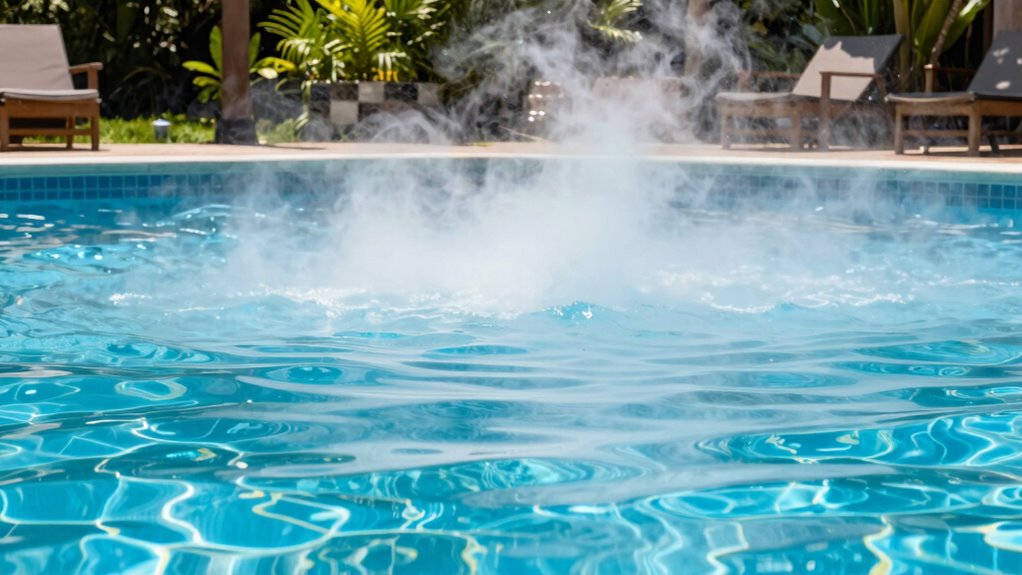
After shocking your pool, it’s common to notice cloudy water, which can be frustrating. This cloudiness often results from a combination of factors that disrupt the pool’s usual clarity. One of the main causes is an imbalance in pool chemical levels. When you add a shock treatment—usually chlorine or other oxidizers—it temporarily throws off the delicate pool chemical balance. Excess chlorine can react with organic contaminants, algae, or even dirt, creating fine particles that remain suspended in the water. If your pH, alkalinity, or stabilizer levels are off, these reactions get amplified, leading to cloudy water. Maintaining proper pool chemical balance before and after shocking helps guarantee that the shock treatment works effectively and reduces the chances of cloudiness. Additionally, proper chemical balance is essential for preventing long-term water issues. Proper testing and adjustment of chemicals before shocking can also help minimize chemical imbalances that lead to cloudiness. Ensuring consistent water chemistry can significantly reduce the likelihood of cloudiness after shock treatments. Regularly checking and adjusting chemical levels contributes to water clarity and overall pool health.
Another essential factor is filtration system maintenance. A well-maintained filtration system is your first line of defense against cloudiness. When you shock your pool, the filter needs to work harder to remove the increased load of debris, dead algae, and oxidized contaminants. If your filter isn’t clean or functioning properly, these particles won’t be effectively removed, resulting in persistent cloudiness. Regularly cleaning or replacing filter media, backwashing sand filters, or rinsing cartridge filters assures best circulation and filtration efficiency. When the filtration system operates smoothly, it traps and removes the tiny particles that cause cloudiness, leaving your water clearer and more inviting. Proper filtration system maintenance is key to achieving and maintaining crystal-clear water. Additionally, the timing and method of shocking can influence water clarity. If you add shock when the pool is heavily used, filled with debris, or if the water isn’t circulating well, you’re more likely to end up with cloudy water afterward. Properly running your pool pump for several hours before and after shocking helps distribute the chemicals evenly and promotes better filtration. Also, dispersing the shock slowly across the water surface prevents localized high concentrations of chemicals, which can contribute to cloudiness.

Clorox® Pool&Spa™ Swimming Pool Super Water Clarifier, Creates Crystal Clear Pool Water, 1 Quart (Pack of 1)
- Super Water Clarifier: Concentrated solution clears cloudy water
- Creates Crystal Clear Water: Transforms dull water into sparkling clarity
- Easier Filtration: Captures tiny particles for cleaner water
As an affiliate, we earn on qualifying purchases.
As an affiliate, we earn on qualifying purchases.
Frequently Asked Questions
Can Algae Cause Cloudy Pool Water After Shocking?
Yes, algae growth can cause cloudy pool water after shocking. When algae are present, shocking might not immediately kill all of them, leading to lingering algae particles that cloud the water. Additionally, a chemical imbalance can prevent proper algae removal, causing cloudiness. To clear your pool, guarantee you balance the chemicals properly, brush the walls, and run the filter continuously to remove algae debris and restore clarity.
How Long Should I Wait to Swim After Shocking?
You should wait at least 24 to 48 hours before swimming after shocking your pool. During this time, make sure your pool’s chemical balance is balanced, and shock residue is fully removed. Proper filtration helps clear up cloudiness, and testing the water confirms safety. Patience prevents skin or eye irritation, allowing the chemicals to settle and the water to become safe, sparkling, and swim-ready.
Does Rain Affect Cloudy Pool Water Post-Shock?
Yes, rain can affect cloudy pool water after you shock it. When it rains, it introduces debris and dilutes your pool’s chemical balance, making it harder for your pool filtration to clear the water. Heavy rain can wash dirt into your pool, increasing cloudiness. To fix this, run your filter continuously, check and adjust your chemical balance, and remove debris promptly to help restore clear water.
Is It Necessary to Vacuum After Shocking?
Do you want your pool to sparkle again? Yes, you should vacuum after shocking. Shocking stirs up debris and unsettled particles, making your water cloudy. Vacuuming helps remove these contaminants, ensuring proper pool chemical balance. It also aids in maintaining equipment by preventing buildup that can strain filters and pumps. Regular vacuuming, combined with equipment maintenance, keeps your pool crystal clear and safe for swimming.
Can High pH Levels Cause Cloudiness After Shocking?
Yes, high pH levels can cause cloudiness after shocking your pool. When the pH is too high, it creates a chemical imbalance that prevents proper chlorine disinfection, leading to cloudy water. To restore water clarity, you should balance your pH levels first, then shock the pool again if needed. Maintaining proper chemical balance guarantees clear water and effective sanitation, preventing future cloudiness issues.
Conclusion
So, when your pool turns cloudy after shocking, it’s often a sign that your water chemistry is out of balance or that debris is lingering. Don’t throw in the towel just yet—patience and proper balancing are key. Keep testing, cleaning, and adjusting your chemicals, and you’ll clear up the water in no time. Remember, sometimes you have to face the storm before you see the sunshine, so stay the course and trust the process.