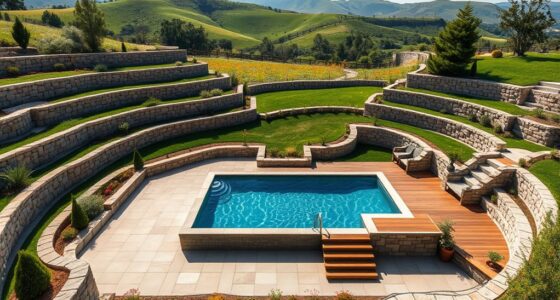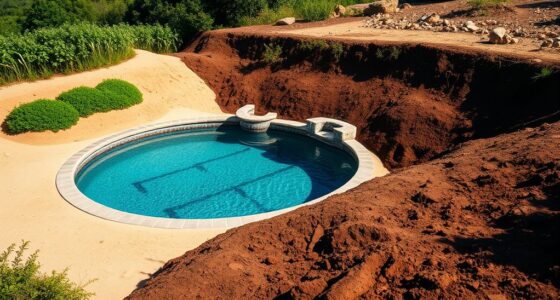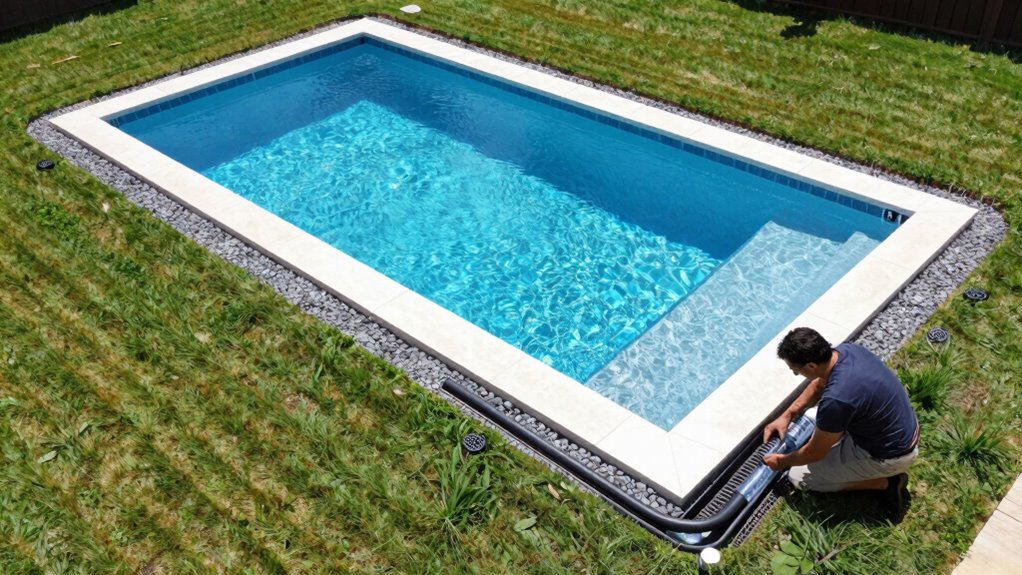
To plan better drainage around your new pool, start by ensuring a gentle slope of at least 2% away from the pool and foundation to direct water flow. Assess your soil type, adding organic matter if needed for clay soils. Incorporate drainage features like berms, ground cover, or underground pipes to prevent pooling and erosion. Regularly maintain these systems and check local regulations before making modifications. Keep building your knowledge to make sure your landscape stays resilient and water flows where you want it.
Open a free Amazon Business account
Business pricing, bulk buying and tax-exempt orders.
As an affiliate, we earn on qualifying purchases.
Key Takeaways
- Ensure a minimum 2% slope away from the pool for effective water runoff.
- Incorporate drainage features like perforated pipes or catch basins to manage excess water.
- Modify existing landscape grading to direct water away from pools and foundations.
- Select well-draining soil or amend clay soils with organic matter to improve drainage.
- Regularly maintain drainage systems and verify compliance with local building codes.
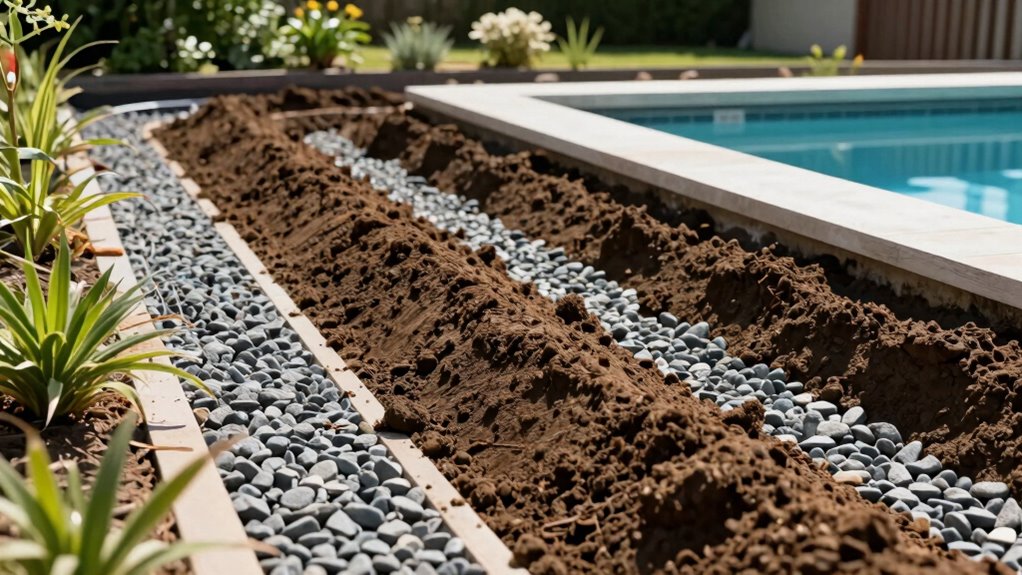
Planning effective drainage around your new pool is vital to prevent flooding, erosion, and water damage. To achieve this, you need to carefully consider how the landscape is graded. Proper landscape grading ensures that water naturally flows away from your pool and foundation, rather than pooling or seeping into unwanted areas. When planning your grading, keep in mind the natural slope of your yard, aiming for a gentle slope of at least 2% away from the pool area. This simple adjustment can greatly reduce the risk of water accumulation near the pool’s edge or your home’s foundation.
Ensure proper grading with at least a 2% slope away from your pool to prevent water pooling and foundation issues.
Understanding the soil composition in your yard is equally important. Different soils drain at different rates; sandy soils typically drain quickly, while clay soils tend to retain water and drain slowly. If your soil has high clay content, you’ll need to take extra steps to improve drainage, such as incorporating organic matter or installing drainage systems like French drains. Conversely, if your soil drains well naturally, you might not need extensive modifications. Knowing your soil’s properties allows you to tailor your drainage solutions effectively, preventing water from pooling or causing erosion around the pool area. Additionally, soil composition can influence the longevity of your landscape and the stability of any grading modifications you implement. Properly assessing soil drainage capacity can help you select the most suitable improvements for your yard.
As you plan your landscape, consider how to incorporate features that promote proper drainage. For example, creating a slight berm or raised edge around the pool can help direct runoff away from the structure. You might also want to plant grass or ground cover with strong root systems that stabilize the soil and prevent erosion. Installing subterranean drainage systems, like perforated pipes or catch basins, can further channel excess water away from the pool area, especially in regions prone to heavy rainfall. These features can be integrated seamlessly into your landscape design for both function and aesthetics. Properly designing drainage features not only enhances their effectiveness but also ensures they remain durable over time.
It’s also wise to assess the surrounding landscape for potential water flow issues. If your yard slopes toward your house or other structures, you’ll need to modify the grading or add drainage solutions to redirect water. Regular maintenance of these systems is vital, especially after storms or heavy rains, to ensure they continue functioning properly. Additionally, understanding landscape grading and how it influences water flow can help you design more effective drainage plans. When considering stormwater management, incorporating sustainable practices can further enhance your landscape’s resilience. Finally, always check local building codes and regulations before starting any grading or drainage work, as there may be specific requirements or restrictions in your area.
perforated drainage pipes for landscape
As an affiliate, we earn on qualifying purchases.
As an affiliate, we earn on qualifying purchases.
Frequently Asked Questions
What Are the Common Signs of Poor Drainage Around a Pool?
If you notice soil erosion or water pooling around your pool, these are signs of poor drainage. You might see the soil washing away or pooling water that doesn’t drain properly after rain. These issues can lead to foundation problems or damage to your pool’s surroundings. Addressing drainage early helps prevent further erosion and water-related damage, ensuring your pool remains safe and well-maintained.
How Much Does Professional Drainage Planning Typically Cost?
Professional drainage planning usually costs between $1,000 and $3,500, depending on your yard’s size and complexity. This cost includes detailed planning strategies, site assessments, and recommendations for proper drainage solutions. To get an accurate estimate, you should consult local experts who can evaluate your specific needs. Investing in professional planning helps prevent costly water issues later, ensuring your pool stays dry and well-drained for years to come.
Can Drainage Issues Affect Pool Longevity?
Drainage issues can chip away at your pool’s lifespan like relentless waves eroding a shoreline. Poor soil stability and neglecting vegetation management can cause shifting ground and water pooling, leading to cracks or structural damage. If you overlook proper drainage planning, your pool may suffer from ongoing wear and tear, shortening its longevity. Staying proactive with soil stability and managing vegetation helps protect your investment, ensuring your pool remains a safe, beautiful oasis for years to come.
What Materials Are Best for Pool Drainage Systems?
You should choose perforated drainage pipes made from durable materials like PVC or corrugated plastic for efficient water flow. When selecting drainage pipe types, consider their flexibility and lifespan. For gravel bed specifications, opt for clean, well-graded gravel to guarantee proper water filtration and drainage. Proper drainage pipe selection and gravel bed setup prevent pooling and soil erosion, ultimately protecting your pool’s foundation and extending its lifespan.
How Long Does It Take to Install New Drainage Around a Pool?
You can expect to install new drainage around your pool in about one to three days, depending on the system’s complexity. During this time, you’ll focus on pool landscaping, ensuring proper grading, and setting up drainage maintenance routines. Efficient planning speeds up installation, minimizes disruptions, and guarantees effective water flow. Regular drainage maintenance afterward keeps your pool area safe, beautiful, and well-drained for years to come.
Conclusion
Planning your pool drainage is like laying a sturdy foundation for a house; it guarantees everything flows smoothly and keeps problems at bay. By carefully considering slopes, drainage systems, and soil conditions, you’re setting the stage for years of enjoyment without unwanted water woes. When you get drainage right, you create a seamless harmony between your pool and the landscape—turning potential chaos into a well-orchestrated symphony of water management.
NFL season / tailgating Picks
team gear
As an affiliate, we earn on qualifying purchases.