If your recovery goals focus on muscle relaxation and stress relief, a hot tub is your best option thanks to warm water and buoyancy. But if you want to incorporate light activity or reduce stiffness through movement, a pool with cooler water is ideal. Consider how much maintenance you’re willing to handle and your budget. To explore how each option supports different recovery needs, keep exploring the details below.
Key Takeaways
- Hot tubs are ideal for muscle relaxation and stress relief with their warm, soothing water.
- Pools support active recovery through low-impact, gentle exercise in cooler water.
- Temperature differences influence recovery focus: hot tubs for passive soothing, pools for light activity.
- Maintenance needs vary: hot tubs require frequent chemical checks, pools need extensive cleaning and balancing.
- Choose based on whether your recovery goal is muscle relaxation or active movement.
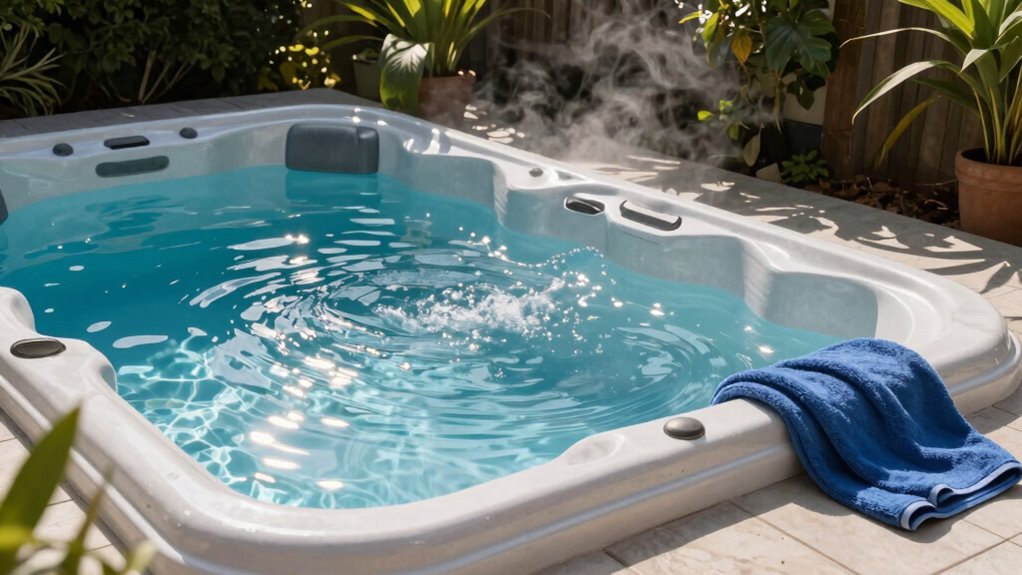
Have you ever wondered whether a pool or a hot tub is the better fit for your backyard? When recovery is your main goal, choosing between the two can feel overwhelming, but understanding their differences can simplify your decision. One of the key factors you should contemplate is water temperature. Hot tubs typically maintain a cozy 100 to 104 degrees Fahrenheit, providing warm, soothing water that helps relax muscles and ease tension. Pools, on the other hand, usually stay between 78 and 82 degrees, offering a revitalizing experience that’s ideal for active recovery, like gentle swimming or water aerobics. If your priority is muscular relaxation and stress relief, a hot tub’s consistently warm water might be the better choice. Conversely, if you prefer cooler water for recovery, increasing circulation and reducing inflammation, a pool’s temperature range could be more beneficial.
Another important aspect to regard is maintenance requirements. Hot tubs demand regular attention because their smaller volume of water heats up quickly and can become a breeding ground for bacteria if not properly sanitized. You’ll need to check chemical levels frequently, drain and refill periodically, and clean filters to prevent buildup. Pools generally require more extensive maintenance efforts, including skimming debris, balancing chemicals, and maintaining filtration systems, but their larger volume of water means they’re often more forgiving in terms of chemical stability. If convenience and ease of maintenance are priorities, a hot tub might appeal more because it’s quicker to clean and manage, especially if you’re recovering from injury or illness and need frequent, simple use. Additionally, biodiversity-friendly maintenance practices can help reduce chemical use and environmental impact. Incorporating proper filtration systems can further enhance safety and reduce maintenance time, making both options more manageable. It’s worth noting that water treatment technology has advanced significantly, making both options more environmentally friendly and simpler to care for. Furthermore, innovations in energy-efficient systems can help reduce operational costs over time.
The recovery process itself also influences your choice. Hot tubs promote relaxation, improve circulation, and help soothe sore muscles through warmth and buoyancy. They’re excellent for gentle stretching or passive recovery routines. Pools, however, support more active recovery, allowing you to engage in low-impact exercise that can reduce stiffness and promote healing without overexertion. Think about your specific recovery needs: if stress relief and muscle relaxation are your focus, a hot tub’s water temperature and calming environment serve you well. If you want to incorporate light activity into your recovery plan, a pool’s versatility offers more options. Additionally, understanding recovery-focused features can help you select the ideal backyard addition to meet your health goals.
Ultimately, once you understand the role of water temperature and maintenance requirements, choosing between a pool and a hot tub becomes clearer. It’s about matching the feature to your recovery goals—whether that’s soothing sore muscles with warm water or engaging in gentle movement in cooler surroundings. Both options can support your recovery journey, but your specific needs and lifestyle will determine the best fit for your backyard oasis.
As an affiliate, we earn on qualifying purchases.
Frequently Asked Questions
Which Option Is More Energy-Efficient for Regular Use?
A hot tub is more energy-efficient for regular use because it consumes less energy compared to a pool. Hot tubs have smaller volumes of water, leading to lower energy consumption for heating and circulation. This makes them more cost-efficient over time, especially if you use them frequently. You’ll find that hot tubs save you money on energy bills and offer a cozy, relaxing experience without the high operational costs of maintaining a pool.
How Does Climate Affect Pool Versus Hot Tub Maintenance?
Climate greatly influences maintenance challenges for pools and hot tubs. In colder climates, hot tubs require more insulation and heating, increasing energy and upkeep costs, while pools may freeze and need winterizing. Conversely, warmer climates demand frequent cleaning and chemical balancing for both. Climate adaptation becomes essential—hot tubs need weatherproof covers, and pools require robust filtration. Your choice depends on local weather, impacting ongoing maintenance and overall enjoyment.
Are There Health Benefits Specific to One Over the Other?
Hot tubs offer notable hydrotherapy advantages, easing muscle tension and promoting relaxation, which can aid recovery. They also provide cardiovascular benefits through warm water immersion that improves circulation. Pools, on the other hand, are great for low-impact cardio workouts and full-body exercise, helping boost your overall cardiovascular health. Your choice depends on whether you prioritize targeted hydrotherapy or all-encompassing cardiovascular fitness, but both can support your recovery and health goals.
What Are the Initial Installation Costs for Each?
You’ll find that initial installation costs for pools are generally higher, typically ranging from $20,000 to $50,000, due to larger sizes and complex construction requirements. Hot tubs are more affordable, usually between $3,000 and $10,000. Pools offer more design flexibility and aesthetic options, but hot tubs provide quicker setup. Consider your budget and how you want to customize your space when deciding.
How Do Safety Considerations Differ Between Pools and Hot Tubs?
Think of safety as your guiding compass. Pools pose slip hazards around wet surfaces and require vigilant chemical safety to prevent skin and eye irritation. Hot tubs, while cozy, demand caution against overheating and slipping on wet steps. You must guarantee proper chemical balance and non-slip surfaces for both. Regular maintenance and supervision are your best tools to keep risks at bay and enjoy your relaxation space safely.
Conclusion
Imagine sinking into warm, bubbling water after a long day, your muscles melting into pure relaxation. Whether you opt for a invigorating pool’s cool embrace or a cozy hot tub’s soothing heat, you’re choosing a haven for recovery. Picture yourself unwinding, each session revitalizing your body and mind. Whatever you decide, you’re creating a personal retreat where comfort and healing become your daily escape, transforming your space into a sanctuary of recovery and peace.