Planning your entire backyard zone helps your big purchases play nicely together, creating a smooth, cohesive outdoor space. When you consider how furniture, landscaping, lighting, and features interact, everything looks and functions better. It also saves you from costly mistakes or mismatched items later on. By designing with the big picture in mind, you’ll build a balanced, functional yard that feels inviting and polished. There’s more to discover about making the most of your outdoor space.
Key Takeaways
- Planning the entire zone ensures furniture and features complement each other and fit seamlessly into the overall layout.
- Holistic design enhances safety, ambiance, and functionality, creating a cohesive outdoor environment.
- Considering ecological elements and wildlife habitats during planning boosts ecological balance and natural beauty.
- Integrating smart technology and sustainable practices during planning reduces costs and improves efficiency.
- Visualizing future needs and zone functions prevents costly adjustments and creates a balanced, practical backyard.
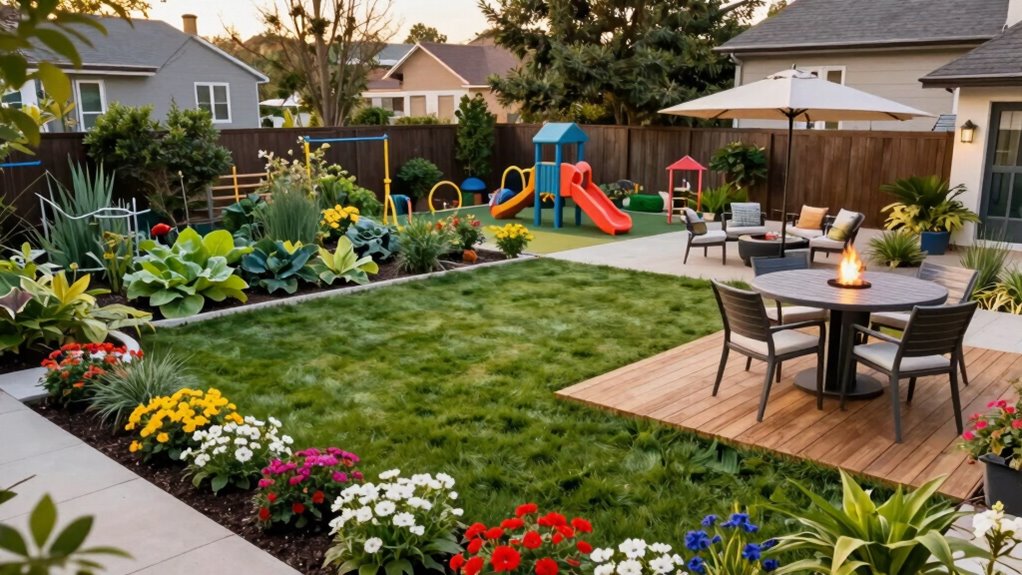
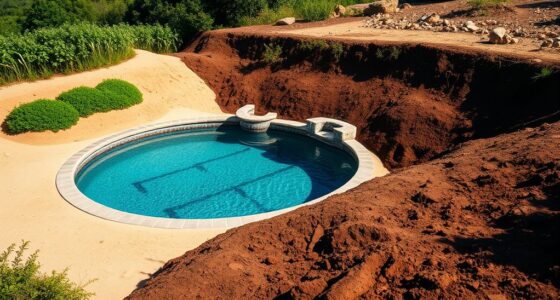
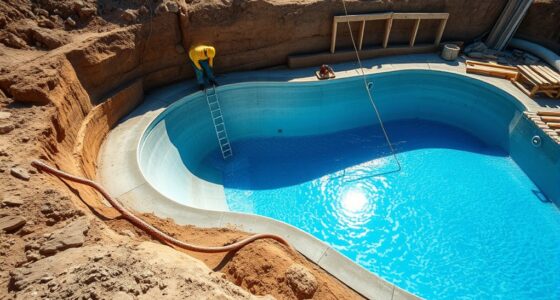
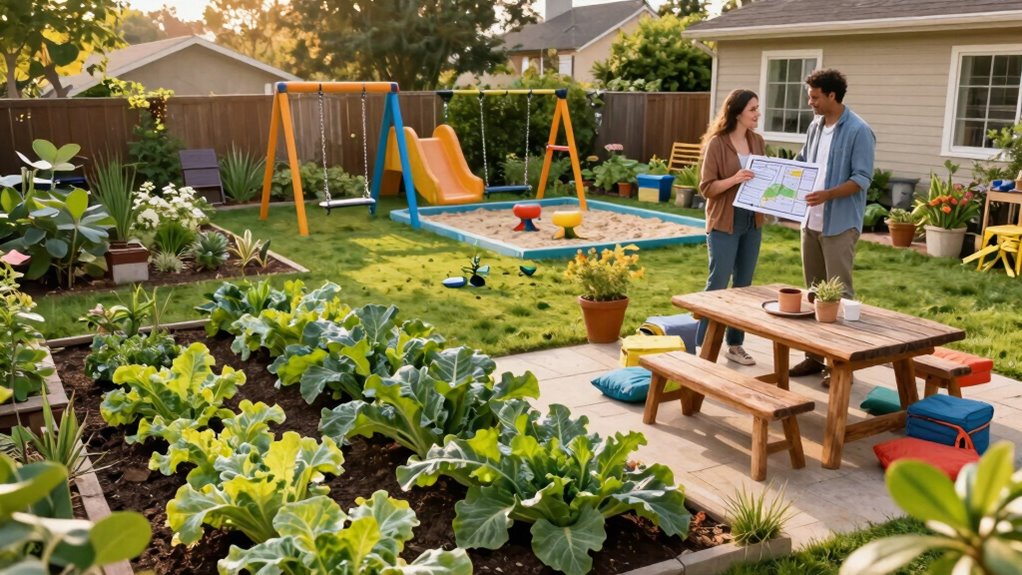
Are you ready to transform your outdoor space into a functional and beautiful backyard? When you plan your big purchases with the entire zone in mind, everything comes together more seamlessly. Instead of buying individual pieces like furniture or a new grill without considering how they fit into the overall layout, you think about how each element interacts with the others. This holistic approach helps you create a cohesive space that’s inviting, practical, and tailored to your lifestyle. For example, selecting garden lighting that complements your landscape design enhances both safety and ambiance, making your backyard usable day and night. Proper lighting extends your outdoor hours, highlights key features, and adds a cozy glow to gatherings. Thinking about landscape design during your planning process ensures all elements work together harmoniously. At the same time, thoughtful planning ensures you don’t overlook valuable opportunities for supporting local wildlife. Incorporating wildlife habitats into your backyard not only nurtures the environment but also adds a touch of natural beauty. When you consider this during your planning phase, you can choose plants, nesting areas, and water features that attract and sustain birds, butterflies, and beneficial insects. This way, your investments—whether it’s a birdbath, native plants, or a small pond—serve multiple purposes. They become focal points, enhance ecological balance, and contribute to a vibrant, lively yard. Additionally, understanding outdoor lifestyle trends can inspire innovative features that elevate your space’s functionality and enjoyment. Planning ahead also allows you to identify cost-effective solutions that maximize your budget while achieving your desired aesthetic. Considering sustainable practices during your planning can further enhance your yard’s ecological health and reduce ongoing maintenance costs. Incorporating smart technology into outdoor features can further improve convenience and energy efficiency. Thinking ahead also helps you avoid common pitfalls, like ending up with mismatched furniture or cluttered spaces that feel disjointed. Instead, you create zones within your backyard—perhaps a cozy seating area, a vegetable patch, and a play zone—each designed to flow naturally into the next. As you select big-ticket items, like a new patio or an outdoor kitchen, picture how they’ll integrate with existing features and future additions. This prevents costly replacements or rearrangements later on. Planning the entire zone also encourages you to prioritize sustainability and efficiency. For instance, choosing energy-efficient garden lighting reduces your electricity use, and installing rain barrels or compost bins can turn waste into valuable resources. When you think about your backyard as an interconnected space, your purchases work better because they support each other’s purpose and contribute to a balanced, functional environment. Ultimately, a well-thought-out plan makes your investment more satisfying, saving you money and effort while giving you a backyard that’s both beautiful and practical.
outdoor furniture sets for backyard
As an affiliate, we earn on qualifying purchases.
As an affiliate, we earn on qualifying purchases.
Frequently Asked Questions
How Do I Determine the Best Zone for Each Backyard Activity?
You determine the best zone for each backyard activity by analyzing how much space each needs and how often you’ll use them. Start with zone division, assigning areas for play, gardening, or relaxing based on activity zones. Consider foot traffic and sunlight, then adjust boundaries to guarantee easy access and safety. Mapping out your yard ensures each activity has its ideal spot, making your backyard more functional and enjoyable.
What Budget Considerations Should I Keep in Mind for Full-Zone Planning?
You should focus on budget allocation to guarantee your entire zone stays within your financial limits. Prioritize cost-effective materials that offer durability without overspending. Consider blending high-quality essentials with affordable fillers to maximize your budget. Planning ahead helps you avoid costly last-minute purchases, making the entire project more efficient. Keep a detailed budget plan to track expenses and adjust choices as needed, ensuring your backyard zone remains both beautiful and affordable.
How Long Does It Typically Take to Complete a Comprehensive Backyard Plan?
Surprisingly, an all-encompassing backyard plan usually takes about 3 to 6 months, giving you time to perfect elements like landscape lighting and irrigation systems. Ironically, rushing through this process might save months but cost more in the long run if you overlook details. A well-planned zone ensures everything from lighting to irrigation aligns seamlessly, making your backyard both beautiful and functional. Patience pays off in creating your dream outdoor space.
Are There Specific Plants or Features Suited for Different Backyard Zones?
You should choose plants and features suited for each backyard zone based on their specific needs. Native plants thrive in their natural environment, requiring less maintenance and water, making them ideal for dry or low-traffic areas. Water features work well near patios or quiet corners, adding tranquility. Selecting the right native plants and strategically placing water features enhances your backyard’s beauty, functionality, and sustainability, creating a seamless outdoor space.
How Can I Ensure the Plan Remains Adaptable Over Time?
Did you know that 70% of homeowners find their outdoor spaces need modifications within five years? To keep your plan adaptable, focus on zone flexibility by choosing versatile plants and features that can be easily adjusted or replaced. Incorporate future modifications into your design now, like removable planters or modular structures, so your backyard can evolve effortlessly over time without major overhauls.
Conclusion
When you plan your backyard as a whole, you’re planting seeds for harmony and growth. Each element, from the lush greenery to the cozy seating areas, becomes a symbol of your vision coming to life. Just like a well-tended garden, a thoughtfully designed zone blooms with beauty and purpose. When everything is connected, your backyard transforms into a sanctuary—an enduring reflection of your planning and care, flourishing in unity and serenity.