
TL;DR

Get pool and patio gear delivered free with Prime
- Fast, free delivery on millions of items
- Prime Video, Amazon Music and more included
- Member-only deals all year
Planet Natural recommends a 30-minute first pass to sort garden tools into those ready for cleaning and storage, those needing repair, and those that should be taken out of service or assessed. The report stresses that the time limit is not a promise that tools will be fully dry, repaired or disinfected by the end of the session.
Planet Natural has published a 30-minute garden tool maintenance guide that advises gardeners to sort equipment by its condition before cleaning or putting it away. The report says the session is a first pass, not a guarantee that repairs, drying or disinfectant treatment will be complete, and stresses that tools with potentially unsafe damage should be labeled and kept out of use.
The suggested session begins with a stable, well-lit work area and basic supplies: a stiff brush, cloths, mild detergent, water and the maintenance instructions for cutting tools. The report advises wearing protection against sharp edges and using eye protection when brushing away rust or debris. It also says to keep children and pets away from the work area.
Tools are sorted by next action: clean and store sound equipment with ordinary soil or removable residue; set aside serviceable tools for sharpening or repair; and label damaged or uncertain equipment for replacement or later assessment. Examples in the last group include cracked handles, split sockets, badly corroded metal, missing safety catches and bent working parts. A tool with a loose handle should not be left among ready-to-use equipment.
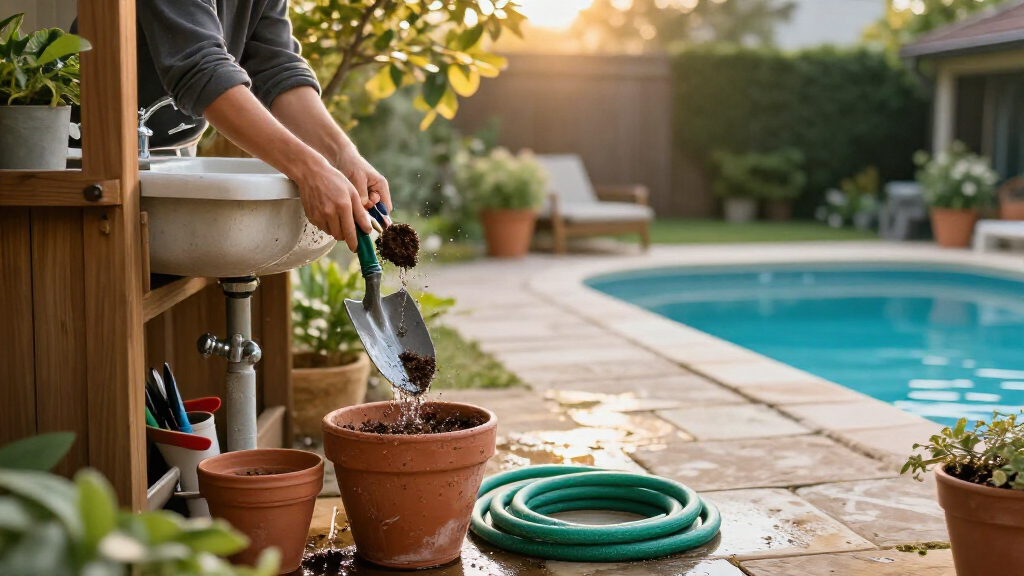
For a spade, the report recommends removing soil from the blade and socket, washing remaining grime as needed, drying the tool thoroughly and applying a light coat of suitable tool oil according to its maker’s directions. For pruners, it advises clearing plant residue from the cutting head and pivot, checking the spring, latch and blade alignment, then lubricating as directed. Sharpening, replacing parts and disinfecting are separate tasks when required; the session may simply identify them for follow-up.
Keeping Unsafe Tools Out of Use
The guide’s central safety point is to distinguish routine cleaning from repair and assessment. A loose connection, failed latch or cracked handle can make a tool unsafe even if it looks cleaner after a quick session. Tagging questionable equipment and removing it from circulation reduces the risk that someone will unknowingly use it before the defect is addressed.
The report also distinguishes cleaning from disinfection. Removing visible soil and sap does not establish that a tool is free of plant pathogens. Disinfection may be needed after working on diseased plants or before moving equipment between garden sites, but the appropriate product and method depend on the situation. Readers are directed to follow product labels and tool-maker instructions, including any specified contact time, protective equipment and rinsing steps.
Setting a 30-minute limit can make the work easier to start, but the report presents it as a way to organize an initial sort rather than a deadline for every job. That distinction matters: wet tools need time to dry, and damaged parts or chemical treatment may require work beyond the first session.
Products Worth Considering

eufy Security Video Doorbell E340, Dual Cameras, 2K FHD, 8GB Local Storage

Samsung 65 The Frame QLED 4K TV (2026) QN65LS03HEFXZA Bundle

Samsung QN65LS03FAFXZA 65 The Frame QLED 4K Art Mode Vision AI Smart TV (2025)
As an affiliate, we earn on qualifying purchases.
The Three Tools in the Guide
The source organizes its advice around a spade, pruners and a garden fork. For the spade, it says to check the socket as well as the blade because packed dirt can conceal deterioration. Light surface rust may be addressed with an appropriate brush or abrasive, while deep pitting or a weakened blade should be assessed rather than treated as a cosmetic problem. Oil should be applied only after the metal is dry, with excess wiped away.
For pruners, removing residue makes it easier to inspect the cutting action. The report advises following the manufacturer’s service instructions before disassembling a tool, since springs and small fasteners can be lost. Chipped edges, excessive movement or poor blade alignment may call for parts or service. It says pruners with a failed latch need a safe temporary cover and repair, rather than loose storage.
For a fork, the inspection includes its handle, grip, socket, connection and tines. The report cautions against testing a questionable handle by levering or digging. A loose replaceable fastener is not the same as a split wooden handle, and sanding a rough patch will not repair structural damage. Repairs should follow the maker’s method and use the correct parts.
Repairs and Treatment Depend on Condition
The report does not specify a single disinfectant, concentration or treatment time for every tool and plant disease. It says product choice and method should be guided by the specific disease, local nursery or manufacturer guidance, and the label for the product being used. Readers should not infer that a quick wipe is sufficient or that a familiar brand always uses the same formulation.
It also does not provide a universal repair procedure for damaged handles, blades or other parts. The appropriate response depends on the tool’s construction and the extent of the damage. The source warns against concealing defects with tape, using unsuitable chemicals or attempting unfamiliar sharpening; the details of any needed replacement or professional service remain tool-specific.
Complete Repairs Before Returning Tools
After the first sort, gardeners can finish cleaning and drying sound tools, then store them according to the manufacturer’s instructions. Tools flagged for repair should remain out of service until the defect has been addressed and the equipment can be checked again. Sharpening, replacement parts and any needed disinfection can be scheduled as separate tasks rather than rushed to fit the initial 30 minutes.
For chemical treatment, the next step is to read the actual product label and follow its directions for compatible surfaces, application, contact time, protective equipment, ventilation, rinsing and disposal. The report’s guidance is general; it does not announce a new product, official safety standard or universal storage method.
Key Questions
Does the 30-minute session mean all the tools will be ready for storage?
No. Planet Natural describes it as a first pass for sorting and identifying work. Tools may still need to dry, be repaired, sharpened or treated with a disinfectant according to its required contact time.
Which garden tools should be taken out of service?
The report says to label and set aside tools with concerns such as cracked handles, split sockets, badly corroded metal, missing safety catches or bent working parts whose condition is uncertain. Do not leave potentially unsafe tools among equipment ready for use.
Does cleaning a tool disinfect it?
No. Cleaning removes visible dirt and residue; it does not establish that plant pathogens have been eliminated. Use a suitable disinfection method when needed and follow the product label and relevant manufacturer or local guidance.
Can I use one household cleaner for soil, sap and disinfection?
The report advises against assuming cleaners, lubricants and disinfectants do the same job. Use products compatible with the tool and follow their labels. Do not mix disinfectants with other cleaners or chemicals.
Source: planetnatural.com