
TL;DR

Get pool and patio gear delivered free with Prime
- Fast, free delivery on millions of items
- Prime Video, Amazon Music and more included
- Member-only deals all year
A Rural Sprout report outlines reasons gardeners may consider Joe Pye weed, a North American native perennial, including its adaptability and value as a nectar source for pollinators. The report describes the plant’s performance in different light and soil conditions, but does not establish that it is suitable for every yard or provide independent research on its benefits.
Rural Sprout has published a report recommending Joe Pye weed, a North American native perennial, for gardens because it can grow in varied conditions and draws pollinators when in bloom. The piece offers a gardener’s observations and advice rather than new research; its title’s claim that the plant should grow in every yard is a recommendation, not a universal finding.
The report describes Joe Pye weed growing in both sun and part shade, with the sunnier plant producing more blooms in the writer’s experience. It also says the perennial suits moist ground, including rain gardens, and can cope with summer dryness. The author attributes some drought resilience to a deep taproot that can reach moisture below the surface. These are observations from the report, not a guarantee of performance in every garden.
Joe Pye weed is placed in the genus Eutrochium; the report notes that gardeners may still encounter the older genus name, Eupatorium. It describes the plant as native across a broad area of North America, from southeastern Canada to Florida and west toward the Great Plains. The report says flower clusters open in summer and can continue attracting bees, butterflies, hoverflies and moths from midsummer into fall.
According to the report, seed heads can also provide winter food for birds, including goldfinches, chickadees, wrens and swamp sparrows. It presents Joe Pye weed as a multi-season garden plant: flowers feed visiting insects, then seeds can remain available to birds. The source does not provide counts, study results or a comparison with other perennials to quantify these benefits.
A Perennial With More Than Summer Blooms
The recommendation matters to gardeners choosing plants for spaces with uneven light or changing soil moisture. A plant that tolerates part shade, wet periods and some summer dryness may be useful in a yard where other perennials struggle. The report’s own example, however, shows that conditions affect results: the plant in sun flowered more than the one in shade.
Its reported value to insects and birds also makes Joe Pye weed relevant to people planning a wildlife-friendly garden. The report describes flowers as a nectar source through part of the growing season and seed heads as food for birds later on. Those benefits depend on the plant flowering and setting seed, and on local conditions and wildlife; the article does not establish that planting it will produce a specific increase in pollinator visits.
Products Worth Considering

Bose TV Speaker (2nd Gen) Compact Soundbar with Bluetooth and HDMI Connectivity

Samsung 85-Inch M70H Series Mini LED 4K Smart TV (2026)

Dyson Cyclone V10 Origin Cordless Vacuum
As an affiliate, we earn on qualifying purchases.
From Fence-Line Escape to Garden Pick
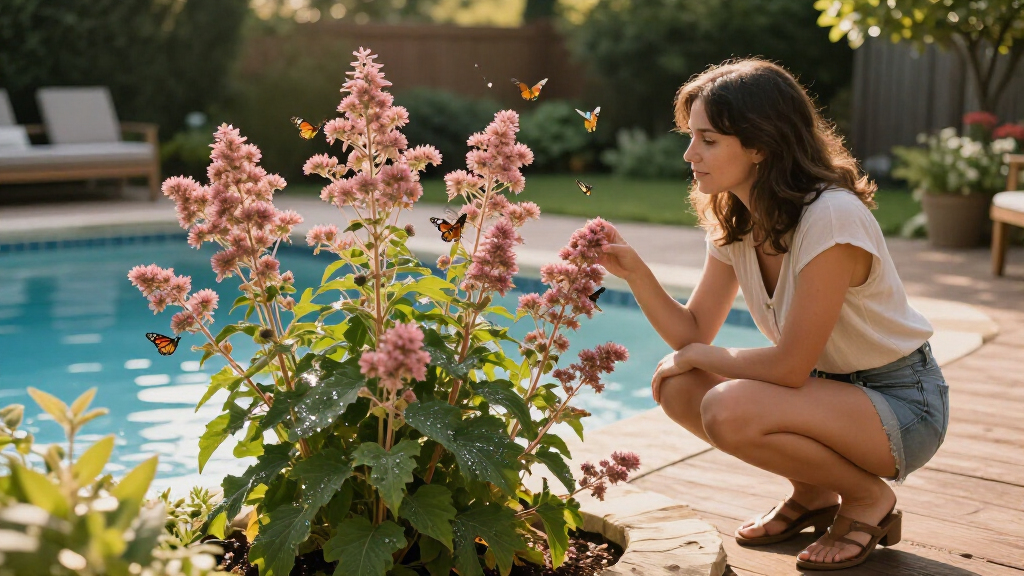
The report’s recommendation grew out of the author’s experience with an offshoot that spread from a neighbor’s garden beneath a fence. It first appeared as a leafy stem, grew through spring and opened into clusters of pink flowers in summer. The writer says bees, butterflies, hoverflies, moths and skippers began visiting the garden after the plant bloomed.
The article also addresses the name. It says the plant is now commonly placed in Eutrochium, while Eupatorium remains a name readers may see. The report recounts a story linking “Joe Pye” to a Native American healer, but says it found no reliable sources confirming that account. The origin of the common name is therefore presented as uncertain, not settled history.
““The only difference was that mine grew even taller to peek over the fence.””
— Rural Sprout report
Garden Results Are Not Guaranteed
The report is a personal gardening account, and the supplied material does not include independent studies, measured pollinator data or trial results comparing Joe Pye weed with other plants. It also does not identify the exact species or cultivar in the author’s garden. The broad claim that the plant belongs in every yard should be read as the article’s recommendation, not as evidence that it suits every site.
Specific guidance on mature height, spacing, regional planting dates and cultivar differences is not included in the supplied excerpt. The author says the plant grew in different conditions, but that experience does not establish how it will perform in all climates or soils. The report also leaves the historical origin of the name unresolved.
Check Local Growing Guidance
The source offers gardeners reasons to consider Joe Pye weed but does not set out a formal next step or report a new horticultural finding. Readers interested in planting it can check local extension services, native-plant groups or reputable nurseries for species and cultivar advice suited to their region. That can help clarify expected height, available space, light needs and soil moisture before planting.
For now, the report’s main takeaway remains a garden recommendation grounded in one writer’s experience: Joe Pye weed may be a useful native perennial, particularly where pollinator food and adaptable planting choices are priorities. Whether it fits a specific yard depends on local growing conditions and the gardener’s needs.
Key Questions
What is Joe Pye weed?
Joe Pye weed is a group of North American native perennials placed in the genus Eutrochium. The older name Eupatorium may still appear in gardening references, according to the report.
Does Joe Pye weed need full sun?
The report says it grew in both sun and part shade in the author’s experience, with more blooms on the sunnier plant. It does not provide a universal light requirement for every species or cultivar.
Does it attract pollinators?
The report describes its summer flower clusters as a nectar source visited by bees, butterflies, hoverflies and moths. It does not provide pollinator counts or quantify how its performance compares with other plants.
Is Joe Pye weed suitable for every yard?
Not necessarily. The title’s recommendation is broader than the evidence supplied. Local climate, growing space, soil conditions and the chosen species or cultivar may affect whether it is a good fit.
Is the story behind the name confirmed?
No. The report mentions an account connecting the name to a Native American healer but says it found no reliable sources for that story. It treats the name’s origin as uncertain.
Source: rss