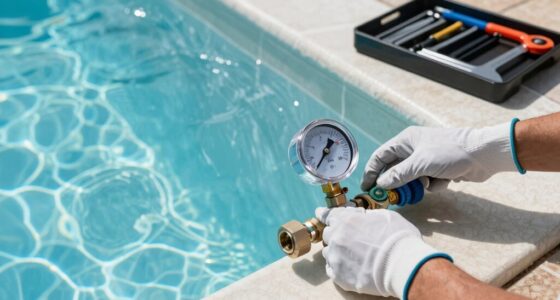
Many pool skimmer issues are simpler to fix than they seem. You can clear a clogged skimmer basket by removing debris and rinsing it off, which improves flow. Check that your outlet valves are fully open and free of blockages to restore circulation. If there’s a leak or air entering the system, tightening fittings and inspecting seals usually do the trick. With these easy steps, you’ll boost your skimmer’s performance and keep your pool cleaner. Keep going to discover more helpful tips.

Get pool and patio gear delivered free with Prime
- Fast, free delivery on millions of items
- Prime Video, Amazon Music and more included
- Member-only deals all year
Key Takeaways
- Regularly clean and rinse the skimmer basket to prevent debris buildup and improve water flow.
- Ensure outlet valves are fully open to maintain proper circulation and debris removal.
- Check for and tighten leaks or air leaks to restore optimal water flow and skimmer efficiency.
- Clear any blockages in pipes or return jets to improve circulation and debris collection.
- Properly position and adjust the skimmer for better water circulation and debris capture.

Have you ever noticed debris accumulating in your pool despite your skimmer? It’s frustrating to see leaves, bugs, or dirt pile up on the surface when you rely on your skimmer to keep the water clean. Often, the culprit comes down to a simple issue with your skimmer basket or water flow. These problems might seem complicated at first, but they’re usually straightforward to fix once you know what to look for.
First, check the skimmer basket. It’s easy for debris to get trapped and block water from passing through properly. If the basket is full or clogged, it can severely hinder water flow, making your skimmer less effective. Removing and cleaning the basket regularly should be part of your routine maintenance. Simply lift it out, discard the debris, rinse it with a hose, and put it back. This quick step can drastically improve the skimmer’s performance and reduce debris buildup in your pool.
Check and clean the skimmer basket regularly to improve water flow and keep your pool debris-free.
Next, consider the water flow. Inadequate flow can cause debris to settle rather than be pulled into the skimmer. This might happen if the skimmer’s outlet valve is partially closed or if there’s a blockage somewhere in the plumbing. You should ensure the valve is fully open and inspect for any obstructions in the pipes or return jets. Sometimes, a simple backflush or clearing out a clogged pipe can restore proper water movement. When water flows freely, the skimmer can do its job more efficiently, preventing debris from accumulating on the surface. Proper water circulation is essential for keeping debris from settling and for the overall health of your pool. Regularly checking for system leaks can also help maintain optimal water flow and prevent air from entering the system. Additionally, ensuring that the pool’s filtration system is working correctly can help improve overall water clarity and debris removal. Adequate filter maintenance is crucial for sustained pool cleanliness and efficiency.
Another common issue is the placement of the skimmer itself. If it’s positioned too far from the main debris sources or in a location where water doesn’t circulate well, it won’t be as effective. Moving or adjusting the skimmer’s position can help improve its ability to catch floating debris before it sinks or spreads across the pool surface. Additionally, check the pump’s pressure gauge. Low pressure often indicates a need for cleaning or priming, which can boost water flow and increase the skimmer’s efficiency.
Finally, don’t forget to inspect for leaks or air leaks in the system. Air can disrupt water flow and cause the skimmer to work less effectively. Tightening fittings, checking seals, or replacing worn-out parts can resolve these issues. With a little patience and routine maintenance, these problems are simple to fix and can dramatically improve your pool’s cleanliness.
In addition, maintaining proper biodiversity around your pool area can help reduce the amount of debris that finds its way into the water, making skimmer upkeep easier. With a little patience and routine maintenance, these problems are simple to fix and can dramatically improve your pool’s cleanliness.
As an affiliate, we earn on qualifying purchases.
Frequently Asked Questions
How Often Should I Check My Pool Skimmer for Issues?
You should check your pool skimmer weekly for issues, especially during peak swimming season. Regular skimmer maintenance helps prevent clogs from pool debris, ensuring proper water flow. Look for signs of debris buildup, leaks, or damaged parts. By staying vigilant, you can catch problems early, keep your skimmer functioning efficiently, and avoid costly repairs later. Consistent checks make pool maintenance easier and help keep your water clean and clear.
Can a Clogged Skimmer Cause Water Quality Problems?
A clogged skimmer acts like a traffic jam, blocking water circulation and causing water quality problems. When skimmer maintenance isn’t performed regularly, debris builds up, reducing filtration efficiency and allowing algae and bacteria to flourish. This impacts water clarity and safety. To keep your pool’s water pristine, check your skimmer often, clear out debris promptly, and guarantee proper water flow—simple steps that prevent bigger issues down the line.
Is It Safe to Repair a Skimmer Myself?
Yes, it’s generally safe to repair your skimmer yourself if you follow proper safety precautions. Regular skimmer maintenance and DIY repairs can save you money and help keep your pool in top shape. Make sure to turn off the pump before starting, wear protective gear, and consult your pool’s manual or online tutorials for guidance. If you’re unsure about any step, consider consulting a professional to avoid causing damage.
What Are Signs of a Broken Skimmer Basket?
You’ll notice a broken skimmer basket if it’s cracked, torn, or damaged, making it harder to hold debris. When you’re doing skimmer basket maintenance, look for signs like debris bypassing the basket, water flow slowing down, or the basket falling apart. These signs mean it’s time for a replacement. Regular pool debris removal and checking your skimmer basket help keep your pool clean and functioning smoothly.
How Do I Prevent Leaves From Clogging the Skimmer?
To prevent leaves from clogging your skimmer, regularly remove leaf debris before it accumulates. Use a mesh cover on your pool when not in use, especially during fall, to catch falling leaves before they reach the skimmer. Additionally, keep an eye on the skimmer basket, emptying it often. These simple steps help maintain proper water flow and reduce the risk of clogs, saving you time and effort.
Conclusion
While pool skimmer issues might seem intimidating at first, many are simpler to fix than they appear—sometimes even just a minor adjustment can restore proper function. Notably, some experts believe that skimmer problems stem from user habits more than mechanical flaws, suggesting that regular maintenance and proper usage are key. So, before calling in a pro, consider whether a quick DIY fix or routine check could solve the issue, saving you time and money.
Fall Picks
fall essentials
As an affiliate, we earn on qualifying purchases.