
If your pool light stops working, start by turning off the power to avoid electrical hazards. Inspect the bulb using a ladder or pool skimmer pole, ensuring it’s not burnt out or damaged, and resecure it if needed. Check your circuit breaker for trips and inspect wiring for damage or corrosion. If problems persist or you’re unsure, it’s safest to call a professional electrician. Learning more about proper troubleshooting will help keep your pool safe and vibrant.

Get pool and patio gear delivered free with Prime
- Fast, free delivery on millions of items
- Prime Video, Amazon Music and more included
- Member-only deals all year
Key Takeaways
- Turn off the power at the circuit breaker before inspecting or handling the pool light to ensure safety.
- Remove the fixture cover carefully and check if the bulb is burnt out or damaged.
- Reset the circuit breaker if it has tripped and observe if it trips again, indicating a potential fault.
- Inspect wiring for visible damage, corrosion, or loose connections, and avoid DIY repairs if issues are present.
- Contact a licensed electrician for professional diagnosis and repair if electrical problems persist or if unsure.
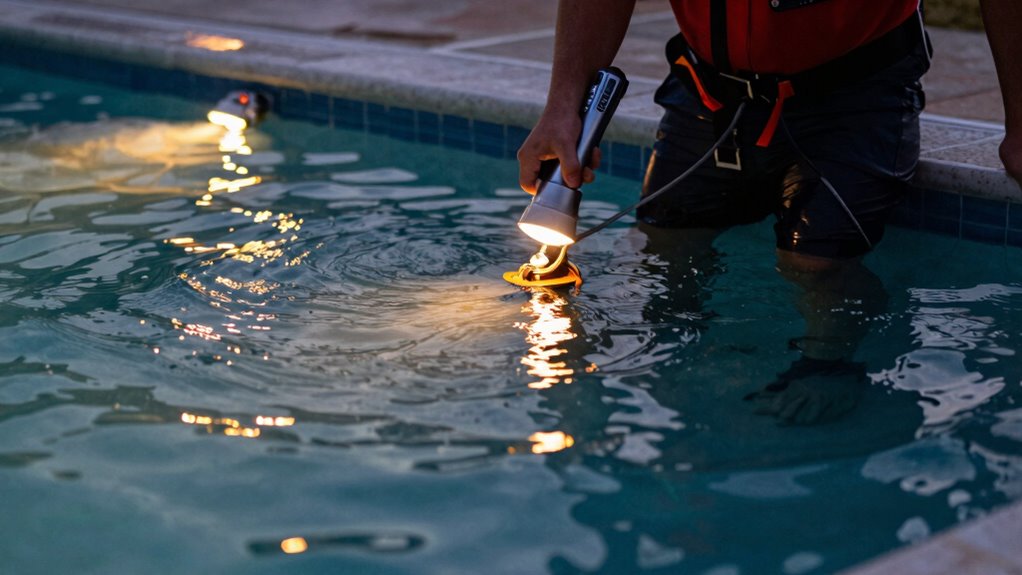
A malfunctioning pool light can quickly turn your relaxing swim into a frustrating experience, but before panicking, it’s important to identify the issue and take the right steps. First, remember that pool safety is your top priority. If you notice the light isn’t working, avoid attempting to repair it while the pool is still powered or the circuit breaker is on. Turn off the power to prevent electrical hazards, as water and electricity don’t mix well. Once the power is off, you can begin troubleshooting safely.
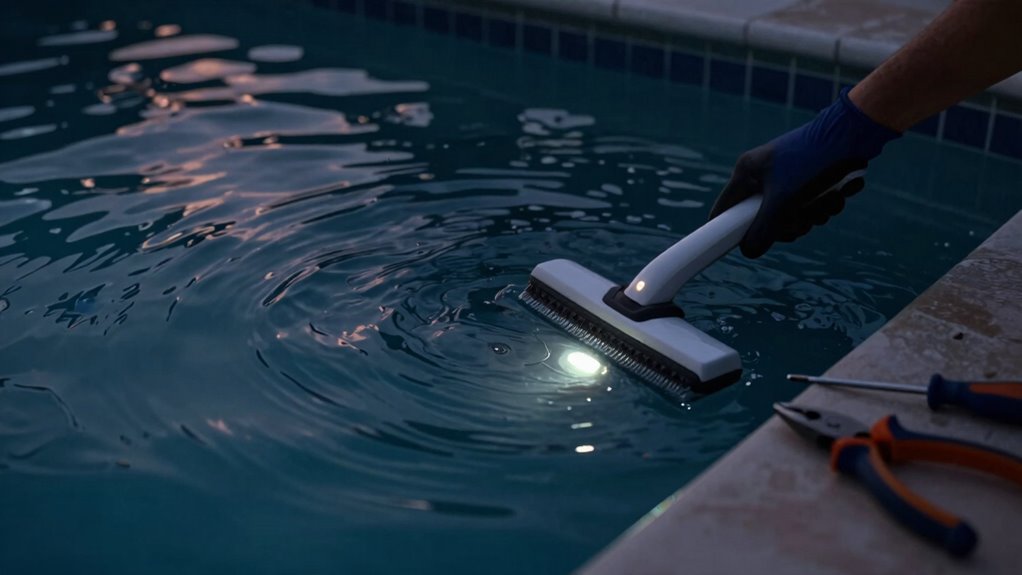
Start by inspecting the bulb itself. Often, a simple bulb replacement solves the problem. Depending on your setup, you may need a ladder or a pool skimmer pole with a bulb remover attached. Carefully remove the fixture’s cover and check if the bulb is burnt out or damaged. If it looks fine, try screwing it back in securely—sometimes, a loose connection can cause the light to stop working. When replacing the bulb, be sure to use a waterproof, pool-rated bulb compatible with your fixture. This ensures safety and longevity.
If replacing the bulb doesn’t fix the issue, the problem might lie within the electrical components or wiring. This is where electrical troubleshooting becomes necessary. Check the circuit breaker associated with your pool light; if it’s tripped, simply reset it and see if the light works again. If it trips repeatedly, there could be a short circuit or faulty wiring that needs professional attention. Inspect the wiring connected to the fixture—look for visible damage, corrosion, or loose connections. It’s also helpful to understand the importance of pool electrical systems for maintaining proper function and safety. Proper maintenance and timely repairs are essential for preventing further issues and ensuring your pool light brightens your nights as it should. Additionally, regular pool system inspections can help detect potential problems early. Be cautious—if you notice any signs of corrosion or frayed wires, don’t attempt to repair them yourself unless you’re qualified. Instead, call a licensed electrician experienced in pool wiring and electrical systems.
waterproof pool light bulb replacement
As an affiliate, we earn on qualifying purchases.
As an affiliate, we earn on qualifying purchases.
Frequently Asked Questions
How Often Should Pool Lights Be Maintained or Replaced?
You should check and maintain your pool lights annually to guarantee safety and functionality. Pool bulb lifespan varies, but most last around 3 to 5 years, so plan for replacements accordingly. Regular inspections help you spot issues early. Additionally, verify electrical compatibility before installing a new bulb or fixture. Proper maintenance ensures your pool lights stay bright and safe, giving you peace of mind during evening swims.
Are There Safety Concerns With Handling Pool Light Repairs?
Handling pool light repairs involves important safety concerns. You should prioritize electrical safety by turning off the power before starting any work, avoiding water hazards that could cause slips or electrical shocks, and using insulated tools. Never work on a pool light while the water is still present or if you’re unsure about electrical systems. Taking these precautions protects you from potential shocks, injuries, and further damage.
Can I Replace a Pool Light Myself or Hire a Professional?
You can replace a pool light yourself if you follow proper DIY safety precautions, like turning off power and using the right tools. However, if you’re uncomfortable or unsure, it’s best to hire a professional repair. Professionals have the expertise to handle electrical components safely and guarantee the job’s done correctly. Prioritize safety, and don’t hesitate to seek professional help to avoid accidents or damage.
What Types of Pool Lights Are Most Durable?
Think of your pool lights as the sturdy ships sailing your backyard oasis. LED lights, like resilient vessels, are the most durable, thanks to advanced lighting technology and their resistance to corrosion. They’re also energy-efficient, saving you money while providing bright, reliable illumination. With their long lifespan and robust build, LED pool lights stand up to the elements, ensuring your pool stays illuminated and inviting season after season.
How Can I Prevent Future Pool Light Failures?
To prevent future pool light failures, regularly inspect and clean your pool light to avoid buildup and corrosion. Choose energy-efficient bulbs with longer lifespans, and guarantee your electrical connections are secure. Maintain proper water chemistry to prevent damage, and consider upgrading to more durable, weather-resistant fixtures. Regular maintenance and using high-quality, energy-efficient bulbs will extend your pool light lifespan and keep your pool illuminated reliably.
Conclusion
When your pool light goes dark, don’t panic. Check the bulb, wiring, and switch first—simple fixes often do the trick. If that doesn’t work, call in a professional to avoid turning your backyard into a scene from Frankenstein’s lab. Remember, even the most advanced tech needs a little TLC now and then. So, stay calm, troubleshoot wisely, and keep your pool shining bright—because, in the end, a well-lit pool is worth its weight in gold.
Halloween Picks
halloween
As an affiliate, we earn on qualifying purchases.