
Using a pressure washer can keep your pool area clean and inviting, but it’s essential to respect surface limits. Adjust the pressure to match the materials, like lowering it for delicate surfaces to prevent damage. Proper technique and equipment guarantee effective cleaning without harming your surfaces. Remember, eco-friendly practices and careful water management improve results and protect the environment. If you stick to these tips, you’ll reveal even more ways to maintain a safe, beautiful pool area.

Get pool and patio gear delivered free with Prime
- Fast, free delivery on millions of items
- Prime Video, Amazon Music and more included
- Member-only deals all year
Key Takeaways
- Proper pressure settings prevent surface damage while effectively removing dirt, algae, and grime from pool areas.
- Using gentle bursts and appropriate nozzles helps clean delicate surfaces without peeling or cracking.
- Regular cleaning with pressure washers extends surface lifespan and keeps pool surroundings inviting.
- Respecting material-specific limits minimizes the risk of costly repairs and surface degradation.
- Eco-friendly practices and proper runoff management reduce environmental impact during cleaning.
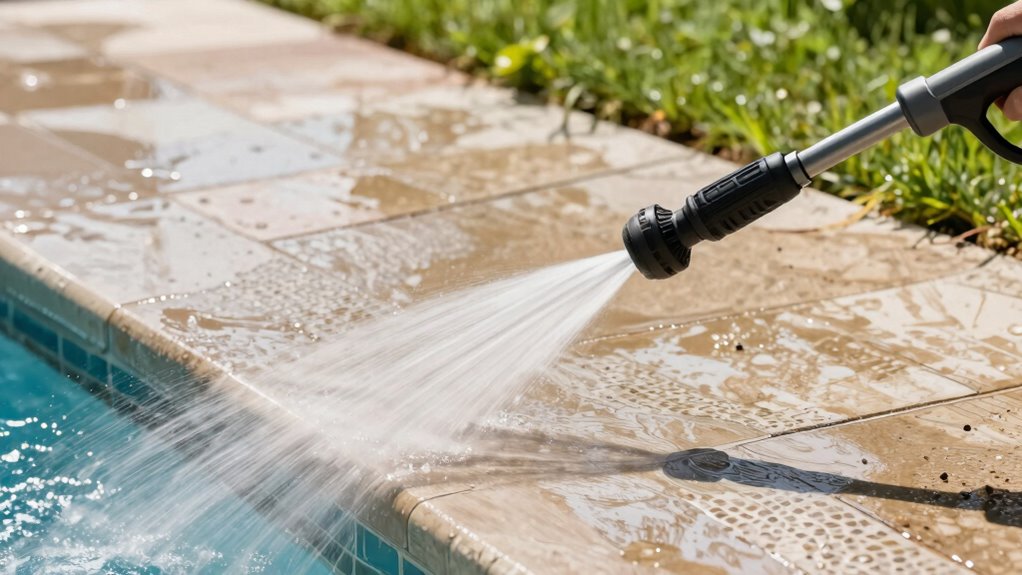
Have you ever wondered how to keep your pool area spotless and inviting? Using a pressure washer can be a game-changer, but only if you respect the surface limits of your surfaces. When you power wash your pool decking, patio, or surrounding areas, you remove stubborn dirt, algae, and grime that build up over time. A clean environment not only enhances the visual appeal but also prevents slipping hazards and extends the lifespan of your surfaces. However, if you’re not cautious, the high-pressure water can cause surface damage, peeling paint, or even cracks, which can be costly to repair. It’s essential to adjust the pressure settings appropriately and test on a small, inconspicuous area first. Additionally, understanding the importance of surface integrity can help prevent unintended damage during cleaning. Recognizing the surface limits of your materials is crucial to avoid costly repairs and ensure longevity. Beyond surface damage, the environmental impact of using pressure washers is something to consider. When you blast away dirt and algae, you’re often displacing debris and potentially releasing chemicals or contaminants into the environment. Using eco-friendly detergents and minimizing excess water runoff can help you mitigate these effects. Also, being mindful of where the water flows is important; directing it toward gardens or drains that are designed to handle runoff prevents pollutants from spreading into local waterways. Properly maintaining your equipment and using the right nozzle can reduce water waste and energy consumption, making your cleaning routine more sustainable. Additionally, choosing the right pressure washer accessories can help you clean more effectively while protecting your surfaces. Pressure washers are powerful tools, but they require respect and knowledge to use effectively. You want to avoid damaging delicate surfaces like stamped concrete, painted wood, or certain types of stone. For softer materials, a lower pressure setting is usually enough to do the job without risking surface damage. If you’re unsure, consult the manufacturer’s recommendations or seek advice from professionals. Taking your time and applying even, controlled bursts of water will help you clean thoroughly without harming your surfaces. It’s also helpful to be aware of environmental impact considerations, such as runoff and chemical use, to ensure your cleaning practices are eco-conscious. Remember, the goal isn’t just to make your pool area look good temporarily, but to do so safely and responsibly, ensuring the area remains attractive and functional for years to come. In the end, pressure washing can make your pool area look fresh and inviting, but only if you respect the limits of your surfaces and consider the environmental impact. With careful technique, eco-conscious choices, and a little patience, you’ll enjoy a pristine outdoor space that’s both beautiful and sustainable.
As an affiliate, we earn on qualifying purchases.
Frequently Asked Questions
Can Pressure Washers Remove Pool Chemical Stains Effectively?
Yes, pressure washers can help remove pool chemical stains effectively. When dealing with chemical residue, a pressure washer provides powerful stain removal by blasting away stubborn deposits. Just make certain you use the right pressure setting and appropriate nozzles to avoid surface damage. It’s also wise to pre-treat heavily stained areas for better results. Proper technique ensures you clean thoroughly while respecting surface limits, restoring the appearance of your pool area.
What Safety Gear Should I Wear During Pressure Washing?
A stitch in time saves nine, and safety gear keeps you protected. When pressure washing, always wear protective clothing to shield your skin from high-pressure water and debris. Don’t forget safety goggles to protect your eyes from splashes and particles. Using the right gear prevents injuries and guarantees a safer cleaning process, so suit up properly before you start. Staying cautious keeps you safe and your project on track.
How Often Should Pool Areas Be Pressure Washed?
You should pressure wash your pool area every 1 to 3 years to maintain cleanliness. Regular pool deck maintenance prevents buildup of algae, dirt, and stains. Use the right type of pressure washer, such as a lower-pressure model for delicate surfaces, to avoid damage. Always start with a gentle spray, and adjust pressure as needed. Consistent cleaning keeps your pool area safe, attractive, and inviting for everyone.
Are There Eco-Friendly Pressure Washing Options?
Using eco-friendly pressure washing options is like choosing a gentle breeze over a storm; it’s better for the environment. You can opt for eco-friendly detergents and biodegradable cleaning solutions that effectively remove dirt without harming nearby plants or water sources. These options reduce chemical runoff and promote sustainability, guaranteeing your pool area stays fresh while respecting nature’s boundaries. Always check product labels to ensure they’re truly environmentally friendly.
Can Pressure Washing Damage Pool Deck Materials?
Yes, pressure washing can damage pool deck materials if you’re not careful. High pressure can cause surface damage or compromise material compatibility, especially on delicate surfaces like wood or older concrete. To prevent this, use the right pressure setting and nozzle for your deck type. Always test in a small, inconspicuous area first, and adjust your technique to avoid damaging the surface or affecting the deck’s integrity.
Conclusion
Think of your pool area as a delicate garden. Just as a gardener tends carefully, respecting each plant’s limit, you must honor surface boundaries when pressure washing. Overdoing it is like watering too much—sure, it might seem beneficial at first, but it can cause damage and chaos. By respecting these limits, you’re nurturing a clean, beautiful space that lasts. Handle your pressure washer with care, and your pool area will remain a revitalizing oasis, thriving for years to come.
Halloween Picks
halloween
As an affiliate, we earn on qualifying purchases.