
If your skimmer isn’t pulling water properly, start troubleshooting with the clog-hunt flowchart. Check for simple issues like debris in the skimmer basket, dirty filters, or closed valves. Inspect for blockages in the pipes, leaks, or air leaks around fittings and gaskets. Ensuring the system is clean and sealed often fixes low suction. If problems persist, you’ll find more detailed steps to identify and resolve stubborn clogs or leaks that could be causing the issue.

Get pool and patio gear delivered free with Prime
- Fast, free delivery on millions of items
- Prime Video, Amazon Music and more included
- Member-only deals all year
Key Takeaways
- Check and clean the skimmer basket and door to ensure unobstructed water flow.
- Inspect and clear the skimmer line and plumbing for blockages or debris.
- Verify water levels are adequate for proper skimmer operation.
- Inspect for air leaks around pump lid, skimmer gasket, and fittings, and seal as needed.
- Perform routine maintenance on filters, pump components, and plumbing to prevent clogs and improve suction.
As an affiliate, we earn on qualifying purchases.
How to Use the Clog-Hunt Flowchart to Troubleshoot Low Skimmer Suction

When you notice low suction at your skimmer, using the clog-hunt flowchart can help you quickly identify the problem. First, check your pool chemistry—imbalances like high pH or low sanitizer levels can cause debris buildup, affecting flow. Next, consider recent weather impact; heavy rain or wind can introduce debris or cause water level changes, reducing suction. Follow the flowchart steps: confirm if the skimmer basket is clean, then assess if water levels are adequate. If pool chemistry is off, balance it to prevent debris accumulation. If weather has disturbed your pool’s environment, wait for conditions to stabilize. Additionally, understanding industry standards and inclusive casting can help ensure your pool equipment and accessories are suitable for diverse needs. This systematic approach helps you pinpoint whether the issue relates to chemistry, weather, or other factors, streamlining your troubleshooting process. Maintaining proper pool maintenance practices can also prevent future suction issues. Staying informed about pool safety standards can further support your efforts to keep your pool environment safe and efficient. Incorporating regular inspections can help catch potential problems early before they affect skimmer performance.
How to Check for Clogged Pipes and Blockages in Your Pool Skimmer System
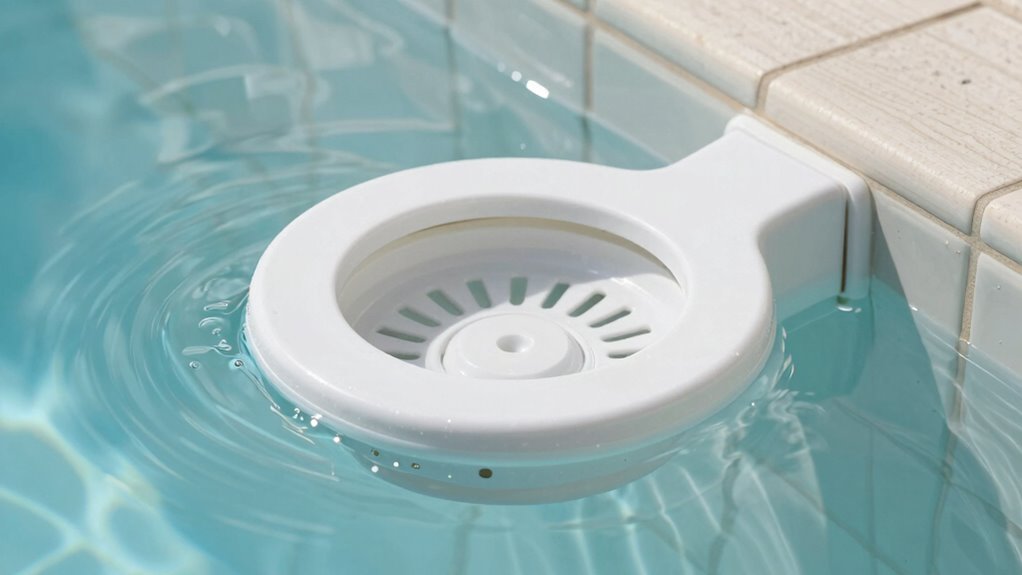
To guarantee your skimmer system is functioning properly, you need to check for clogged pipes and blockages that can restrict water flow. Start by inspecting the pool filtration system, ensuring filters aren’t dirty or clogged, as debris can cause flow restrictions. Next, examine the skimmer and pump baskets for leaves or debris buildup. If water flow remains weak, check for obstructions in the pipes by disconnecting sections or using a hose to flush out any impediments. Also, verify that water chemistry levels are balanced, as improper chemistry can lead to algae or mineral buildup that may clog pipes over time. Regular maintenance and monitoring help prevent blockages, ensuring ideal flow and effective filtration, which keeps your pool water clean and healthy. Additionally, understanding the Horsepower of Electric Dirt Bikes can help you appreciate the importance of proper motor function in related equipment. To further prevent issues, consider inspecting pipe materials for corrosion or damage that could contribute to blockages over time. Performing routine inspections and system flushing can also help maintain unobstructed water flow. Regularly checking for debris buildup in the pipes can significantly reduce the risk of clogs and ensure smooth operation. Keep in mind that proper motor function is essential for maintaining consistent water flow and system efficiency.
How to Detect and Fix Air Leaks That Reduce Pool Skimmer Suction
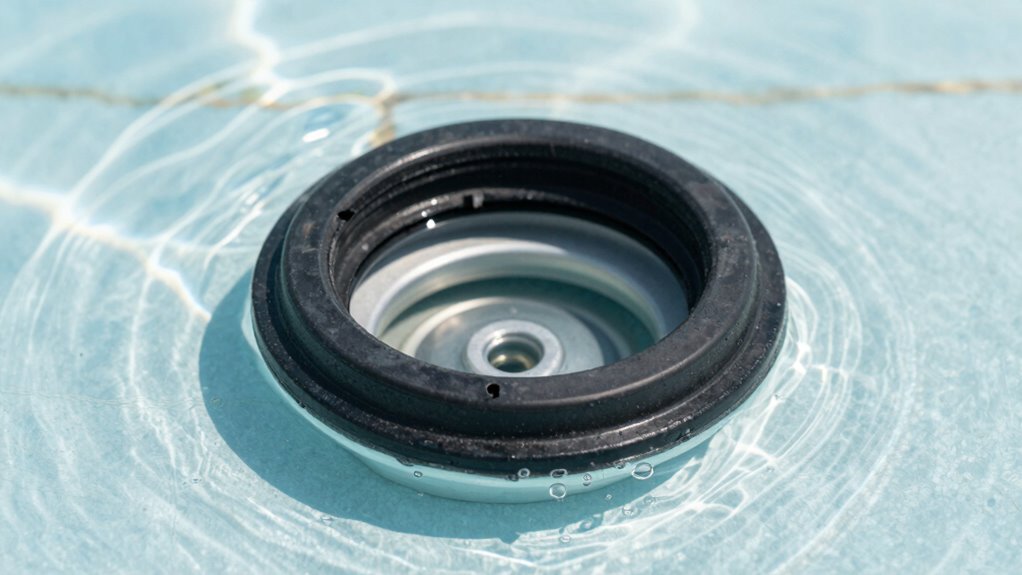
Even after clearing clogs and ensuring your pipes are unobstructed, low skimmer suction can still occur due to air leaks in the system. Air leaks introduce air into the suction line, reducing the overall flow. To detect leaks, check common points like the pump lid, skimmer gasket, and valve connections for cracks or loose fittings. You can also perform a simple test: with the pump off, observe if the water level drops in the skimmer or if bubbles appear when the pump is running. Use the table below to help identify potential leak locations:
| Location | Signs of Air Leaks | Fixing Tips |
|---|---|---|
| Pump lid gasket | Air bubbles, hissing sounds | Replace or tighten gasket |
| Pipe joints | Reduced suction, visible leaks | Seal with waterproof tape or replace fittings |
| Skimmer gasket | Loss of prime, air in basket | Replace gasket or tighten fittings |
Properly maintaining cable connections and ensuring the integrity of all fittings can also prevent inadvertent air entry into the system. Regular system maintenance, including inspecting for air leaks, is essential for optimal pool operation. Additionally, inspecting the filter system regularly can help identify unseen leaks that may affect performance.
What Are Other Common Causes of Low Skimmer Suction and How to Fix Them
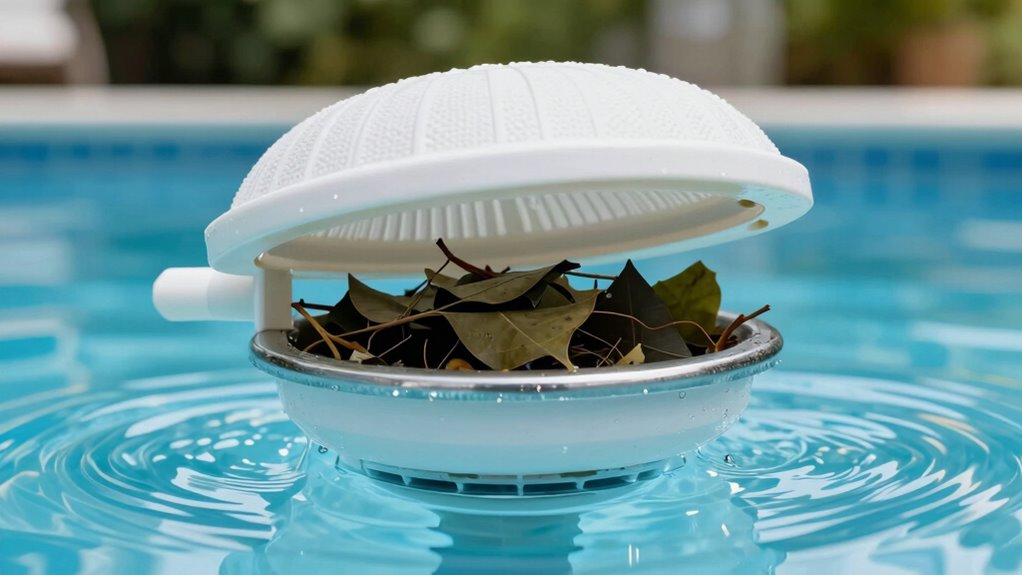
Have you checked for blockages or debris in your skimmer basket lately? Sometimes, debris can restrict water flow, leading to low skimmer suction. Additionally, poor pool chemistry, such as unbalanced pH or high algae levels, can cause debris buildup or algae growth that clogs the skimmer. Skimmer design also plays a role; an improperly sized or positioned skimmer can reduce efficiency and suction. Regularly cleaning your skimmer basket and maintaining proper pool chemistry help prevent clogs. Ensure the skimmer door and weir are functioning correctly to allow smooth water flow. If debris or algae buildup persists despite cleaning, consider adjusting or upgrading your skimmer to improve water circulation and restore proper suction. Proper skimmer placement and design can also optimize skimmer performance and enhance water flow efficiency. Additionally, inspecting your pool equipment for any malfunctions can help identify other underlying issues affecting suction.
Signs You Need a Professional to Fix Your Pool Skimmer Problem
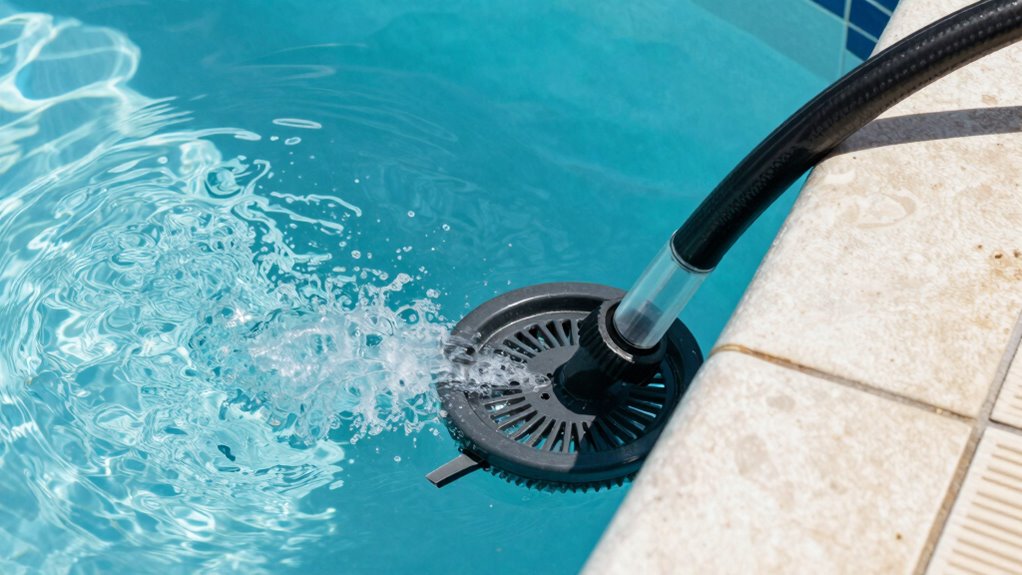
If your skimmer continues to have low suction despite cleaning and adjustments, it’s a clear sign that professional help is needed. Poor water chemical balance can cause debris buildup and hinder proper skimmer operation, while cloudy or murky water indicates underlying issues affecting circulation. If you’ve checked for obvious clogs, leaks, and valve problems, but the suction remains weak, a professional can diagnose deeper issues like hidden pipe blockages or faulty equipment. Persistent low suction can also lead to compromised water clarity, making it harder to maintain a healthy, inviting pool. Recognizing these signs early ensures you don’t neglect critical repairs that could worsen over time, ultimately saving you money and ensuring your pool stays clean, safe, and properly balanced. Regular maintenance and proper pool equipment operation are essential to prevent these issues from recurring, and addressing clog-related problems promptly can help maintain optimal water flow and filtration. Additionally, a professional assessment can identify hidden pipe blockages that are not apparent through routine inspections. Regular inspection of filtration systems can also prevent unexpected failures that contribute to low suction.
Tools and Tips for Troubleshooting Low Pool Skimmer Suction
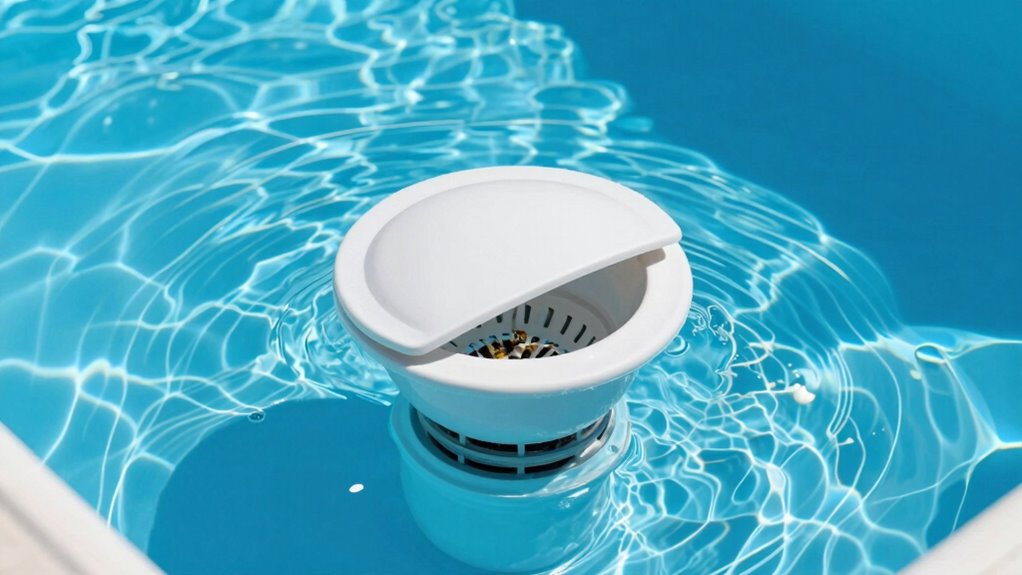
Start by verifying for any blockages in the skimmer basket, hoses, or pump strainer. Next, inspect your pump equipment to ensure everything is operating properly and there are no leaks or damaged parts. These simple tools and tips can help you identify the source of low suction quickly and effectively.
Check for Blockages
Blockages are a common cause of low skimmer suction, so inspecting your pool’s plumbing is a crucial first step. Start by checking for debris in the skimmer basket and ensuring the pool’s chemical balance is correct, as imbalances can affect water flow. Also, verify the pool liner integrity; tears or leaks can reduce suction. Use a simple tool like a plumber’s snake or a garden hose to clear any stubborn clogs in the skimmer line. Here’s a quick reference:
| Troubleshooting Step | Key Tip |
|---|---|
| Inspect skimmer basket | Remove debris and clean |
| Check for line obstructions | Use a snake or hose |
| Verify chemical balance | Maintain proper pH and chlorine levels |
| Assess pool liner integrity | Look for tears or leaks |
Addressing these issues ensures essential suction and pump performance.
Inspect Pump Equipment
Inspecting your pump equipment is essential when troubleshooting low skimmer suction, as issues here can directly impact water flow. Start by checking for leaks or cracks in the pump housing, which can impair efficiency. Next, perform pump maintenance by inspecting and cleaning the impeller to ensure it’s free of debris that can cause restrictions. Finally, verify that the valve adjustment is correct; improper valve positions can reduce suction. Always confirm the pump strainer basket is clean and that all clamps and fittings are secure. These steps help maintain ideal pump performance and restore proper water flow. Regular pump maintenance and correct valve adjustment are key to preventing low skimmer suction issues and keeping your pool system running smoothly. Proper gear care and maintenance are also essential to ensure your swimming equipment functions effectively and lasts longer.
Frequently Asked Questions
How Often Should I Perform Maintenance on My Pool Skimmer System?
You should perform pool maintenance and skimmer cleaning at least once a week, especially during heavy use or fall when debris is abundant. Regularly checking and removing debris prevents clogs and maintains proper suction. If you notice low suction or other issues, clean the skimmer more often until the problem resolves. Consistent maintenance guarantees your pool stays clean, safe, and functioning efficiently.
Can Low Skimmer Suction Affect Overall Pool Water Circulation?
Low skimmer suction can negatively impact your pool’s circulation, reducing skimmer efficiency and causing debris to settle. When circulation is compromised, your pool water doesn’t circulate properly, which can lead to poor water quality and algae growth. To maintain peak circulation, check for clogs or blockages regularly. Addressing low suction promptly ensures your skimmer works efficiently, keeping your pool clean and well-maintained.
Are There Specific Signs Indicating a Failed Pool Pump Motor?
You notice your pool’s flow slowing, then suddenly, the pump fails to start. This could signal pump failure, often caused by electrical issues like blown fuses or faulty wiring. You might hear strange noises or see burning smells, indicating trouble. Don’t ignore these warning signs—they point to a malfunction that needs quick attention. Addressing electrical problems early can prevent complete pump failure and keep your pool running smoothly.
What Safety Precautions Should I Take When Inspecting Pool Plumbing?
When inspecting pool plumbing, you should prioritize electrical safety by turning off the power supply before starting. Wear personal protective equipment like gloves and safety goggles to protect yourself from debris or sharp edges. Confirm the area is dry to prevent slips and electrical hazards. Use proper tools and handle pipes carefully. Always double-check that the system is fully powered down before touching any electrical components or plumbing to stay safe.
How Long Does It Typically Take to Fix Common Skimmer Suction Issues?
Oh, fixing skimmer suction issues is always lightning-fast—usually just a quick fix, right? In reality, it often takes a couple of hours, especially if you discover a skimmer leak or need to perform blockage removal. The process involves diagnosing the problem, clearing debris, and sealing leaks, which can be time-consuming. So, plan for a couple of hours, or more if unexpected complications arise, to guarantee a thorough repair.
Conclusion
Don’t let low skimmer suction ruin your pool time. Using the clog-hunt flowchart makes troubleshooting straightforward, saving you time and money. If you think it’s too complicated, remember—most issues are simple clogs or leaks you can fix yourself. But if problems persist, calling a pro isn’t a sign of failure; it’s a smart move to keep your pool running smoothly. You’ve got this—just follow the steps and enjoy your crystal-clear pool!
Halloween Picks
halloween
As an affiliate, we earn on qualifying purchases.