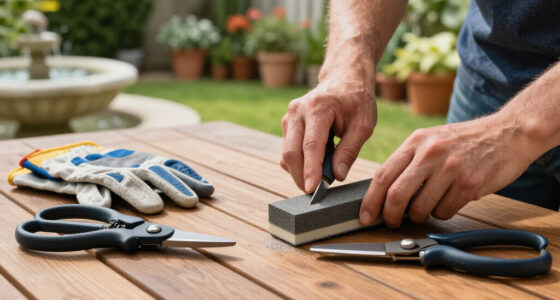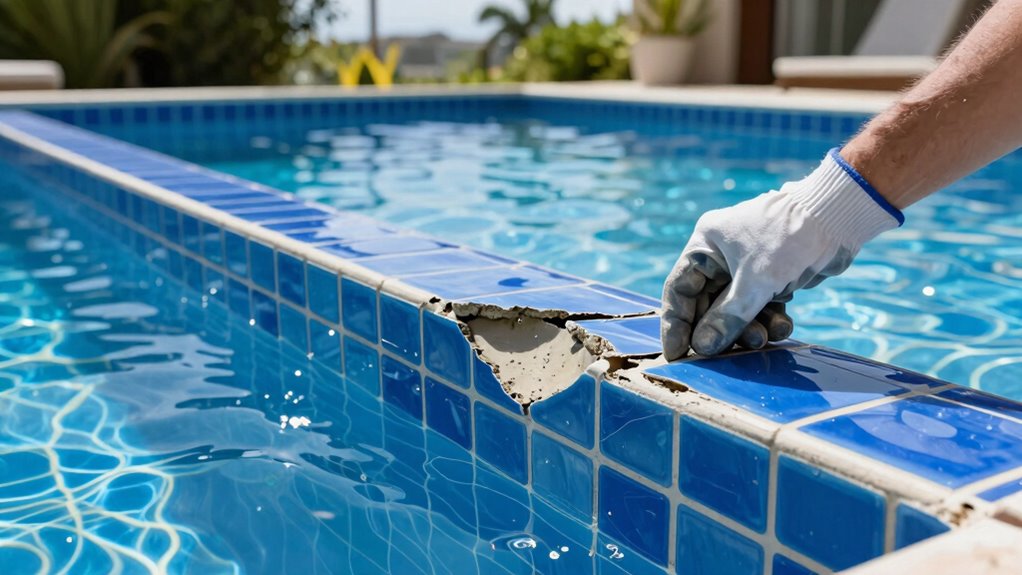

You can handle small issues like replacing cracked or loose tiles yourself using a putty knife, cleaning the area thoroughly, and applying the right adhesive. However, avoid DIY repairs if there’s widespread damage, underlying structural problems, or if tiles are missing extensively. If problems seem complex, it’s best to call in professionals to prevent further damage or leaks. Keep going to discover more tips on maintaining a safe, attractive pool.

Get pool and patio gear delivered free with Prime
- Fast, free delivery on millions of items
- Prime Video, Amazon Music and more included
- Member-only deals all year
Key Takeaways
- Small cracks or loose tiles can often be repaired DIY with proper cleaning and pool-safe adhesive.
- Avoid fixing extensive damage or structural issues yourself; seek professional assessment.
- Regular inspection helps identify early signs of damage manageable through simple repairs.
- Do not attempt complex repairs like retiling or addressing underlying surface problems without expert help.
- Prioritize professional intervention for large cracks, missing tiles, or signs of underlying structural damage.
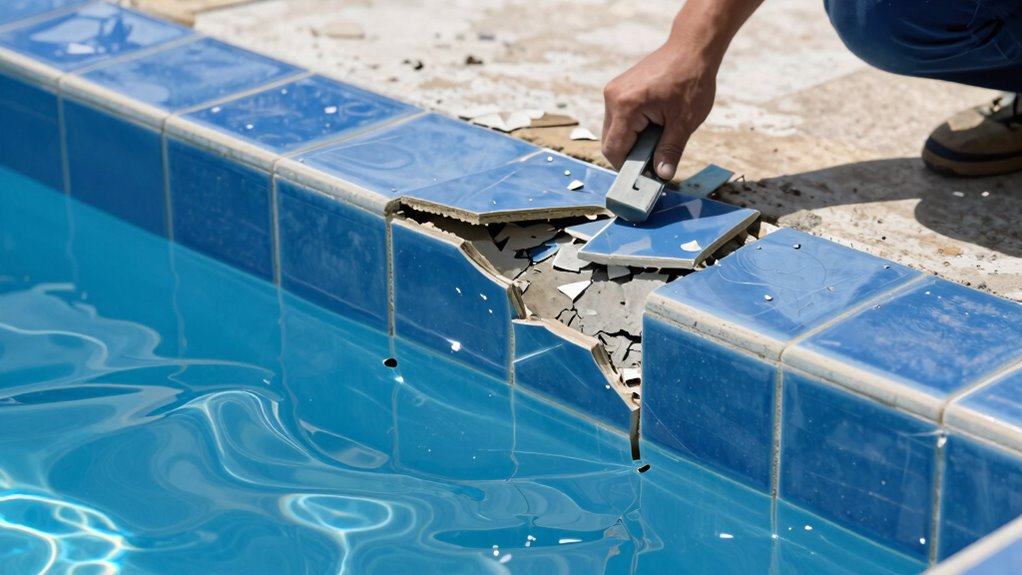
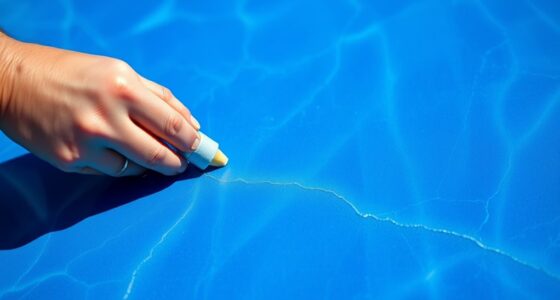
Have you noticed cracks or missing tiles in your pool lately? If so, you might be wondering whether you can handle the repairs yourself or if it’s time to call in a professional. Addressing issues with your pool tiles is significant for both safety and aesthetics. Small problems, like loose or chipped tiles, may seem manageable, but they can quickly turn into bigger concerns if ignored. Regular pool cleaning helps you spot these issues early, so you can take action before water leaks or further damage occur. Sometimes, applying tile sealing around the affected areas can prevent water from seeping behind tiles, which is a good interim step for minor issues. However, it’s vital to understand what repairs you can confidently do on your own and when to seek expert help.
If you’re comfortable with basic DIY tasks, you might be able to replace a few loose or cracked tiles. This usually involves carefully removing damaged tiles with a putty knife, cleaning the area thoroughly, and then applying a suitable adhesive designed for pool tiles. Once the new tiles are set, you should let the adhesive cure fully before refilling the pool. During this process, applying a fresh layer of tile sealing around the new tiles helps prevent water penetration and prolongs their lifespan. Keep in mind, though, that proper preparation and patience are key to a successful repair. If you notice widespread damage or issues with the tiles’ underlying surface, it’s best to consult a professional. They can assess whether the problem stems from structural issues or improper installation, which DIY fixes won’t resolve. Understanding the pool environment and how it influences tile longevity can also help you anticipate and prevent future problems. Additionally, understanding the importance of biodiversity in maintaining a healthy environment can influence how you care for your pool area, ensuring it remains a safe and enjoyable space for all.
Being aware of environmental factors like surrounding vegetation and water chemistry can also help prevent future tile damage and other issues. It’s also helpful to recognize that regular maintenance is essential for prolonging the life of your pool tiles and preventing costly repairs. While some minor repairs are within your skill set, handling larger problems like significant cracks, missing tiles over a large area, or underlying surface damage requires specialized tools and experience. Attempting to fix these issues without the right knowledge can lead to further damage, water leaks, or safety hazards. Professionals have the expertise to perform thorough repairs, ensure proper sealing, and recommend long-term solutions that protect your investment. Remember, regular pool cleaning not only keeps your water clear but also helps identify early signs of tile damage. Paying attention to early detection can save you money and headaches in the long run. When in doubt, it’s smarter to rely on trained technicians who can guarantee the integrity of your pool’s structure and appearance. Taking care of small issues early on can save you money and headaches down the line, but knowing your limits is essential for maintaining a safe and beautiful pool environment.
As an affiliate, we earn on qualifying purchases.
Frequently Asked Questions
How Often Should Pool Tiles Be Inspected for Damage?
You should inspect your pool tiles at least once every few months for damage. Regular pool tile maintenance helps you catch issues early, preventing costly repairs later. Look for cracked, loose, or missing tiles, as well as signs of grout deterioration. Timely inspections help with damage prevention, ensuring your pool stays safe and visually appealing. If you notice problems, address them promptly to avoid further damage.
What Types of Pool Tile Repairs Are Diy-Friendly?
You can handle simple pool tile repairs like cleaning techniques and minor grout fixes yourself. Regularly scrub the tiles with a gentle brush and a mild cleaning solution to keep them looking good. If you notice cracked or loose tiles, you might replace small sections yourself, but avoid doing extensive tile replacement. For major damage, it’s best to call in a professional to guarantee the repair lasts and avoids further issues.
How Can I Prevent Future Tile Damage?
To prevent future tile damage, you should regularly perform pool cleaning to remove debris that can cause wear. Keep your chemical balance in check, especially pH and chlorine levels, to avoid corrosive conditions that weaken tiles. Avoid harsh chemicals and abrasive tools during maintenance. Consistent upkeep helps protect your tiles, ensuring they stay intact longer and reducing the need for repairs. Proper maintenance is your best defense against tile damage.
What Are the Signs of Underlying Structural Issues?
You should watch for signs like cracks around the pool, uneven tiles, or shifting surfaces, which indicate underlying structural issues. A thorough structural assessment can reveal problems with foundation stability that might be affecting your pool. If you notice these signs, it’s vital to consult a professional to evaluate the foundation and guarantee safety. Addressing these issues early can prevent costly repairs and maintain your pool’s integrity.
How Long Do Pool Tile Repairs Typically Last?
Pool tile repairs typically last between 5 to 15 years, depending on the quality of tile and maintenance. If you regularly perform pool cleaning and address small issues early, your tiles can stay in good shape longer. When tiles become loose or damaged, tile replacement becomes necessary, which can extend the lifespan of your pool’s surface. Proper maintenance helps guarantee your repairs last and keeps your pool looking great.
Conclusion
Remember, tackling pool tile repairs is like steering a delicate dance—some moves you can master, but others require a seasoned partner. Trust your skills for minor fixes, but don’t hesitate to call in the pros for the more intricate steps. Like a painter knowing when to leave the canvas to a master, recognize your limits. With the right balance, your pool will shine like a jewel, reflecting a sparkling harmony of effort and expertise.
Halloween Picks
halloween
As an affiliate, we earn on qualifying purchases.