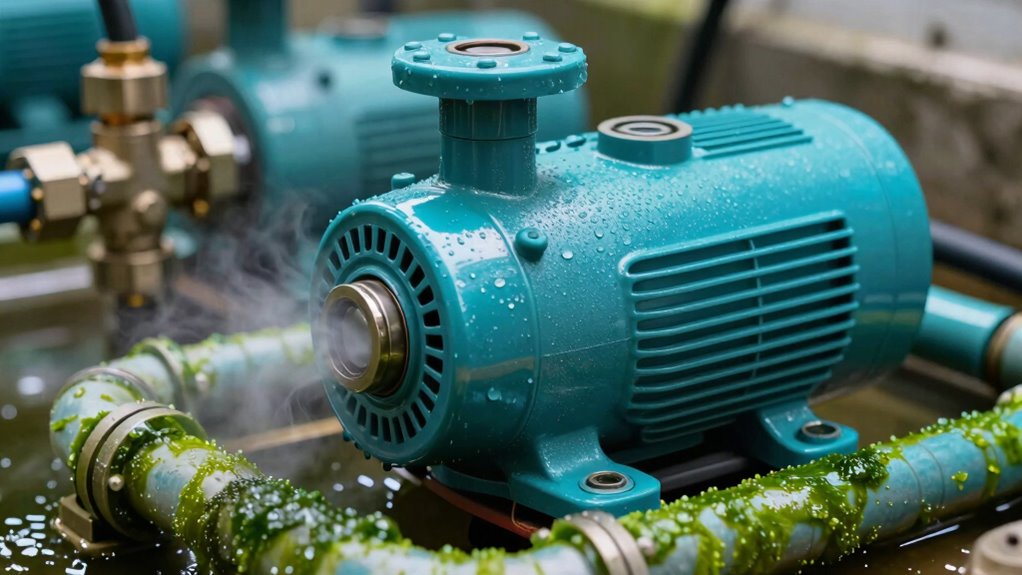
If your pool pump sounds like a jet, it’s likely due to common issues like debris buildup, worn bearings, or loose parts that create vibrations and rattling. Air leaks can produce jet-like noises, while clogged filters and impellers force the pump to work harder and louder. Incorrect pump size or poor mounting can also cause excessive noise. For more tips on quieting your pump and fixing these problems, keep exploring these secrets.
Key Takeaways
- Air leaks at fittings, seals, or the pump lid can cause jet-like noises in your pool pump.
- Clogged impellers or dirty filters increase strain, resulting in loud, jet-like sounds.
- Surface foam from pool chemistry traps air, amplifying pump noise similar to a jet engine.
- Loose mounting or uneven surfaces cause vibrations that produce loud, rattling sounds.
- Incorrect pump size or high flow rates create turbulence, leading to louder operation and jet-like noise.
Why Is Your Pool Pump So Loud? Understanding the Causes
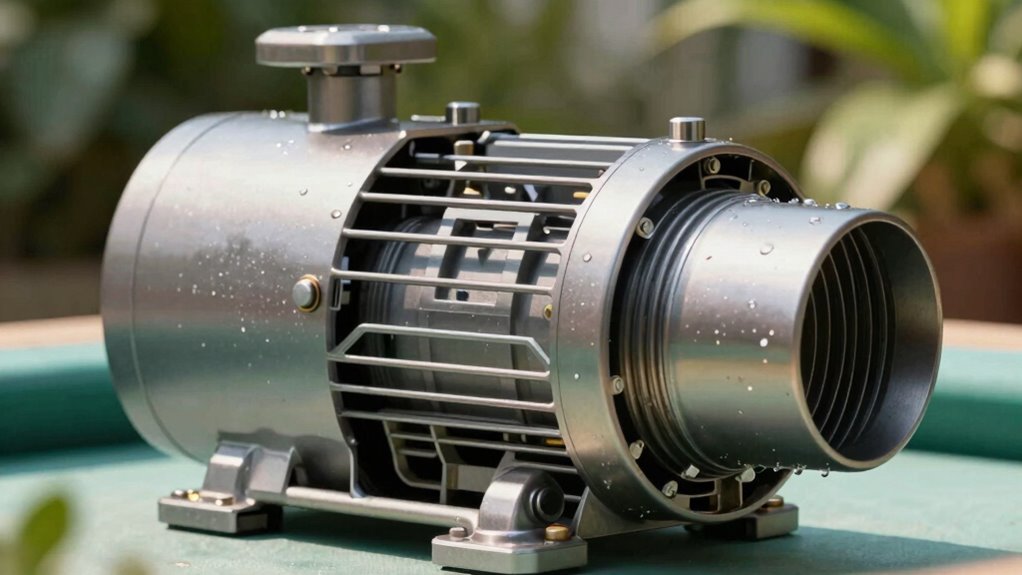
If your pool pump suddenly becomes loud, it’s usually a sign that something isn’t working right. Often, poor pump maintenance leads to increased noise and decreased efficiency. A loud pump might indicate that debris or buildup is causing strain on the motor, or that parts like bearings are worn out. Regularly inspecting and maintaining your pump helps with noise reduction and keeps it running smoothly. Check for loose or damaged components, and clean out any debris clogging the system. Proper pump maintenance not only quiets the operation but also prolongs your pump’s lifespan. Additionally, understanding the history of pool equipment can help you identify the origins of common issues. Recognizing common pump problems early can save time and repair costs, preventing minor issues from escalating. Staying informed about pump component functions can help you troubleshoot problems more effectively. Being aware of routine maintenance practices ensures your pump operates quietly and efficiently, reducing the likelihood of unexpected breakdowns.
How to Detect a Loose or Damaged Pump Impeller
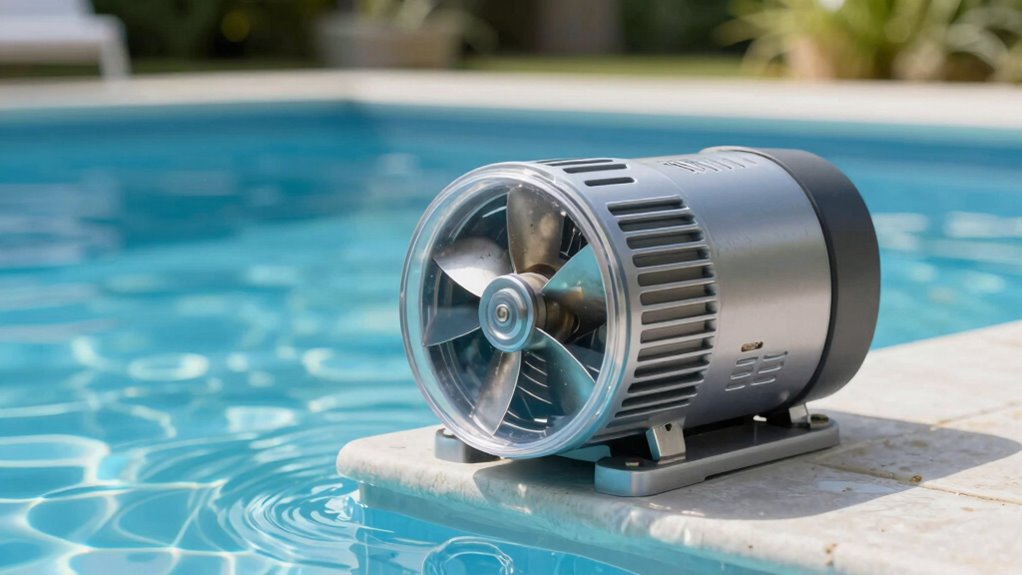
Ever wonder how to tell if your pool pump’s impeller is loose or damaged? During pump maintenance, listen for unusual noises like grinding or rattling, which can indicate impeller issues. You might also notice decreased water flow or inconsistent pressure. To check, turn off the pump and open the pump housing carefully. Inspect the impeller for signs of damage, such as cracks, chips, or wear. If it spins loosely or wobbles, it’s likely loose or damaged, requiring impeller repair. A damaged impeller can cause vibrations and noise, making your pump sound like a jet. Proper equipment placement and home design and architecture considerations, such as adequate equipment placement, can also help reduce noise and vibration. Ensuring proper pump installation and regular maintenance practices can minimize unnecessary stress on components and contribute to quieter operation. Proper inspection techniques, including checking for debris or corrosion, can help identify early signs of impeller damage. Regular inspection and timely impeller repair help prevent further damage, ensuring your pump operates quietly and efficiently.
How Air Leaks Make Your Pool Pump Sound Like a Jet
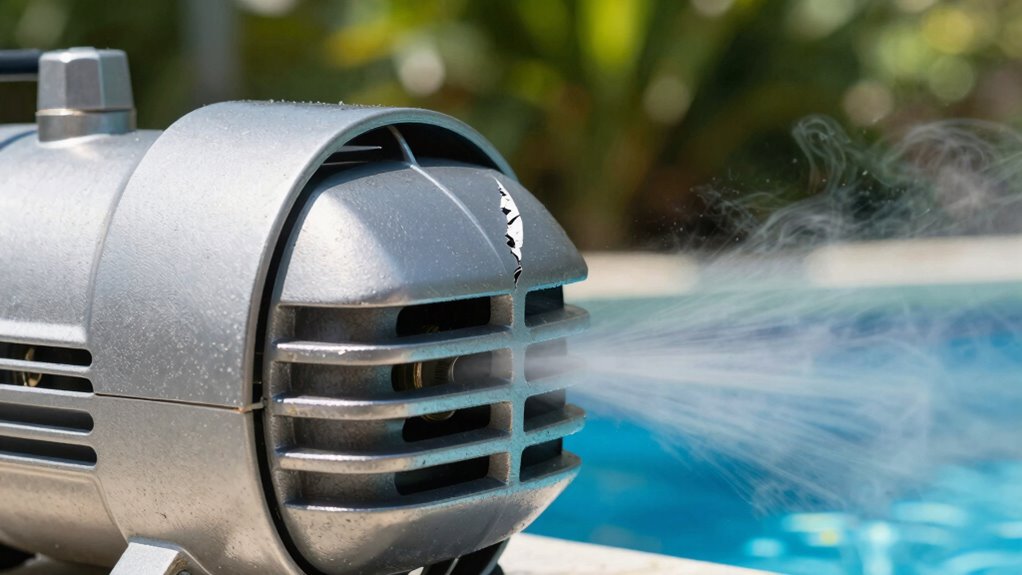
Air leaks can cause your pool pump to make loud, jet-like noises that disrupt quiet operation. You should check common sources like fittings, seals, and hoses for signs of air intrusion. Addressing these leaks quickly helps keep your pump running smoothly and quietly. Regular inspection and maintenance of sealing components can prevent leaks from developing over time. Additionally, understanding the air filtration process can help identify subtle leaks that may not be immediately obvious. Properly functioning sealings ensure that air does not escape and cause noise issues. Being aware of how air flow impacts pump noise can also assist in diagnosing and preventing these problems. Recognizing the impact of air leaks on performance can further aid in maintaining a quiet, efficient pump operation.
Common Air Leak Sources
When your pool pump starts making a loud, jet-like noise, air leaks are often the culprit. Common sources include loose fittings, cracked hoses, or worn-out pump seals. Check the pump lid and drain plugs for tightness, as even small gaps can cause air to enter the system. Proper pool chemical balance can also lead to surface foam, which may trap air in the system, intensifying noise. Additionally, neglecting pool cover maintenance can allow debris or moisture to interfere with the skimmer and pump lid seals, creating air leaks. Regularly inspecting and tightening fittings, replacing worn hoses, and maintaining proper pool chemistry help prevent these leaks. Proper pool maintenance can also reduce the likelihood of air intrusion. Keeping your pool cover in good condition also reduces the chance of air intrusion, keeping your pump quieter. Ensuring the system is properly sealed is essential to prevent ongoing air leaks and noise issues. Paying attention to air leak detection techniques can help identify hidden leaks early before they cause more significant problems. Implementing pressure testing methods can further assist in locating leaks that are not immediately visible. Incorporating professional inspection services can further ensure that your system remains airtight and operates smoothly.
Signs of Air Intrusion
Noticing your pool pump making a loud, jet-like noise is a clear sign that air has entered the system. This air intrusion can disrupt your pump’s performance and impact your pool chemistry. To identify air leaks, look for:
- Bubbling or whistling sounds near the pump or skimmer
- Reduced water flow or cloudy water
- Frequent air bubbles in the pump basket or return jets
These signs indicate that air is compromising pump maintenance and affecting your pool’s filtration. If you ignore these symptoms, it can lead to inefficient operation and potential damage. Regularly inspecting fittings, seals, and the pump lid helps prevent air from sneaking in. Being aware of air intrusion is essential for maintaining a quiet and efficient pool system. Understanding pump troubleshooting techniques can help you quickly diagnose and fix leaks, saving time and money. Staying attentive to these signs ensures your pool stays clean, balanced, and running quietly.
Preventing Pump Noise
A loud, jet-like noise from your pool pump often signals that air is entering the system, causing unnecessary strain and noise. To prevent this, focus on regular pump maintenance, which includes checking seals, O-rings, and connections for leaks. Tighten loose fittings and replace worn-out parts promptly. Ensuring your pump basket lid is secure and the lid gasket is in good condition also helps prevent air from sneaking in. Properly priming the pump and maintaining consistent water levels reduces air intrusion. These simple steps are essential for noise reduction and keeping your pump running smoothly. By staying proactive with pump maintenance, you minimize air leaks, protect your equipment, and enjoy a quieter, more efficient pool pump.
How Clogged Pump Parts Increase Noise and What to Do About It
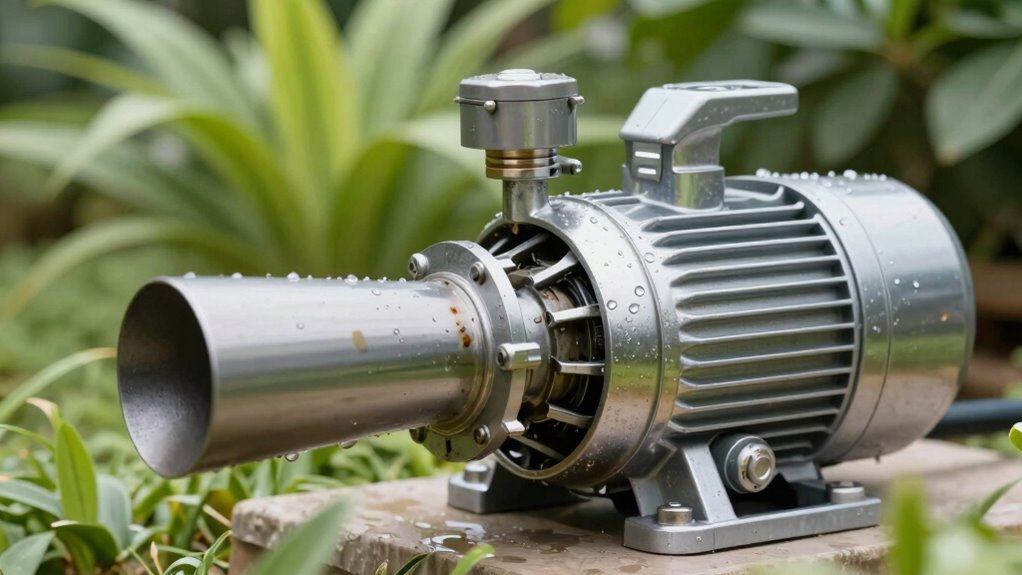
When your pump parts get clogged, you’ll notice more noise and less efficiency. A blocked impeller can cause unusual sounds, while a dirty filter makes the pump work harder than it should. Cleaning or replacing these parts can restore quiet operation and improve performance.
Blocked Impeller Causes Noise
Blocked impellers are a common cause of noisy pool pumps, as debris or buildup can hinder the blades’ movement. When the impeller is obstructed, the pump has to work harder, creating louder noises similar to a jet. Regular pump maintenance helps prevent this issue and promotes noise reduction. To address a blocked impeller:
- Turn off the pump and disconnect power
- Remove the pump cover and inspect the impeller
- Clear out debris or buildup with a brush or tool
Neglecting impeller blockages can lead to further damage and inefficient operation. By keeping the impeller clear, you ensure quieter operation and extend your pump’s lifespan. Regular inspection and cleaning are key steps in maintaining a peaceful, effective pool system.
Clogged Filter Reduces Efficiency
Have you noticed your pool pump making more noise than usual or running less efficiently? A clogged filter could be the culprit. When your filter isn’t maintained properly, debris builds up, restricting water flow and forcing your pump to work harder. This added strain increases noise levels and reduces overall efficiency. Regular filter maintenance is essential to prevent clogs and keep your pump running smoothly. Additionally, verify your pump has proper lubrication; dry or neglected parts can cause vibrations and squealing sounds. Cleaning or replacing the filter regularly allows water to flow freely, decreasing strain on your pump and minimizing noise. Taking these simple steps helps maintain quiet operation while prolonging your pump’s lifespan.
Vibration and Mounting Issues That Cause Noisy Pool Pumps
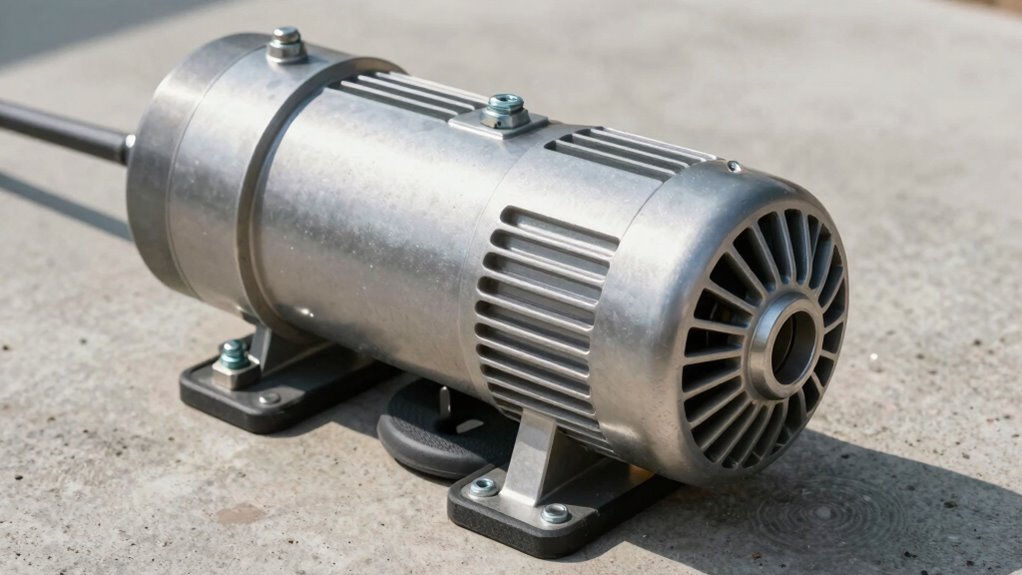
Vibrations and improper mounting are common culprits behind noisy pool pumps. When your pump isn’t securely mounted, it can cause excessive vibration issues that create loud noises. Mounting problems often stem from uneven surfaces or loose bolts, which make the pump shake during operation. To prevent this, check that the pump sits on a stable, level surface and tighten all mounting bolts. Additionally, consider using vibration pads or rubber mounts to absorb shocks and reduce noise. Here are some key points:
- Uneven surfaces can amplify vibration issues
- Loose mounting bolts cause instability and noise
- Vibration pads help dampen operational sound
Addressing these mounting issues can make your pool pump run quieter and extend its lifespan.
Does Pump Size and Flow Rate Affect Noise Levels?
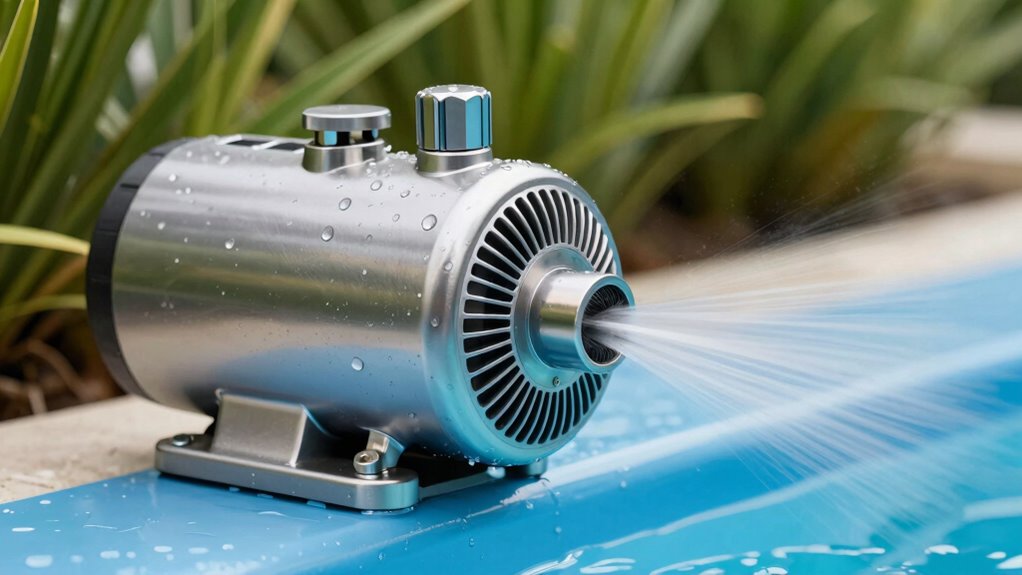
The size of your pool pump and its flow rate directly influence how loud it operates. A pump that’s too small for your pool needs may run continuously at high speeds, causing increased noise. Conversely, a pump with an excessively large size can also generate more sound due to higher motor power and turbulence. The flow rate plays a vital role; if it’s too high, water movement becomes turbulent, amplifying noise levels. Adjusting the flow rate to match your pool’s requirements can help reduce sound. Selecting the right pump size ensures it runs efficiently without unnecessary noise. Proper sizing and flow rate optimization prevent your pump from sounding like a jet and promote quieter operation overall.
Easy Steps to Troubleshoot and Quiet Your Pool Pump
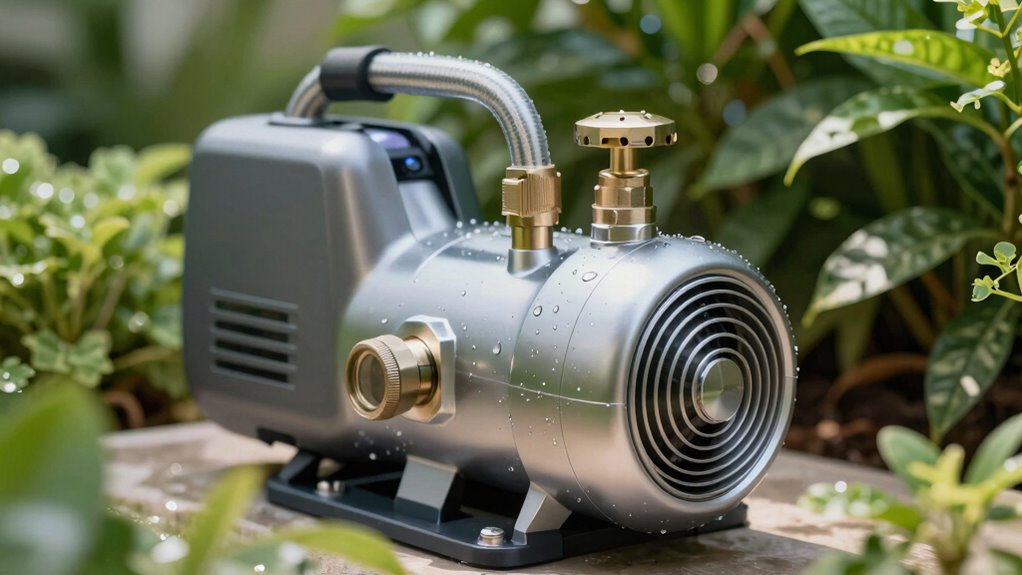
If your pool pump is making more noise than usual, troubleshooting is a straightforward way to identify and fix the problem. Start with basic pool maintenance checks and DIY repairs to reduce noise. First, inspect the pump for debris or obstructions that could cause vibration or noise. Next, check the pump’s mounting and ensure it’s secure; loose fittings can rattle. Finally, examine the motor and impeller for wear or damage, replacing parts if necessary.
If your pool pump is noisier than usual, check for debris, secure fittings, and inspect the motor and impeller for damage.
To add depth:
- Clean or replace clogged filters
- Tighten loose bolts and fittings
- Lubricate moving parts if applicable
Taking these simple steps helps quiet your pump quickly, saving you time and money while maintaining peak pool performance.
Frequently Asked Questions
Can Using Energy-Efficient Pumps Reduce Noise Levels?
Yes, using energy-efficient pumps can reduce noise levels. These pumps often operate more smoothly and quietly, leading to better noise reduction. Plus, they help you save energy, which benefits your utility bills. When you choose an energy-efficient pump, you’re not only cutting down on noise but also making a smarter, eco-friendly investment. You’ll enjoy a quieter pool area while contributing to overall energy savings.
Does Weather Impact Pool Pump Noise?
Ever notice how your pool pump suddenly sounds louder during a storm or cold snap? Weather definitely impacts pump noise—rain, wind, and temperature fluctuations can increase pump vibration and motor noise. Cold weather makes parts contract, while humidity can cause vibrations to resonate more. So, when the weather’s unpredictable, expect your pump to be noisier, and consider inspecting or insulating it to minimize those disruptive sounds.
Are Noise Levels Different Between Above-Ground and Inground Pool Pumps?
Yes, noise levels differ between above-ground and inground pool pumps. Above-ground pumps tend to be louder due to their pump placement and simpler motor design, which often lacks noise-reducing features. In contrast, inground pumps usually have better insulation and quieter motor designs, reducing overall noise. Proper placement and choosing a pump with a quieter motor design can make a significant difference in how much noise you hear during operation.
How Often Should I Maintain My Pool Pump for Quiet Operation?
Your pool pump needs regular maintenance to stay whisper-quiet—think of it as the heartbeat of your pool, essential and delicate. You should check and clean your pump monthly, inspecting for debris and lubricating parts as needed. This routine pump maintenance minimizes noise and maximizes noise reduction. Keep up with these simple steps, and you’ll enjoy peaceful, serene swimming days without that jet engine roar disrupting your relaxation.
Can Installing Soundproofing Materials Help Reduce Pump Noise?
Yes, installing soundproofing materials can help reduce your pool pump noise. Using noise reduction techniques like rubber mats, acoustic panels, or foam barriers around your pump can substantially dampen vibrations and sound. Make sure to seal any gaps and insulate the pump area properly. These methods create a barrier that absorbs and blocks sound, making your pool area quieter and more enjoyable without sacrificing pump performance.
Conclusion
Sometimes, a little attention can turn a noisy pool pump into a peaceful oasis. By checking for loose parts, air leaks, or clogs, you’re gently guiding your system back to harmony. Remember, small adjustments often make a big difference—like tuning a quiet melody. With a bit of patience, you’ll enjoy serene, whisper-quiet swimming days, where the only sound is the gentle ripple of your tranquil pool embracing its perfect rhythm.