
To reattach loose pool handrails and ladders, start by inspecting the hardware for rust, damage, or missing parts. Clean the mounting surfaces thoroughly to make certain of a secure fit, and then tighten or replace the bolts and screws using the appropriate tools. Be careful not to overtighten, and check the fixtures for stability once secured. For detailed steps on maintaining safety and sturdy attachments, continue exploring effective reattachment tips.
Key Takeaways
- Turn off the pool’s filtration system and ensure a secure, stable workspace before beginning reattachment.
- Remove old hardware, clean mounting surfaces thoroughly, and inspect fixtures for damage or corrosion.
- Align handrails or ladders correctly and insert new hardware, ensuring proper fit before tightening.
- Tighten bolts securely using appropriate tools, avoiding overtightening to prevent damage.
- Test fixture stability, perform regular inspections, and promptly address any loose or damaged components.

Have you noticed your pool handrails or ladders become loose or wobbly? If so, it’s vital to address the issue promptly to prevent accidents and guarantee safe swimming. Loose or unstable handrails and ladders can pose serious safety risks, especially for children or elderly swimmers. Before attempting any repairs, you should understand the necessary safety precautions to avoid injury and follow maintenance tips to keep your pool area secure.
Address loose pool handrails or ladders promptly to ensure safety and prevent accidents.
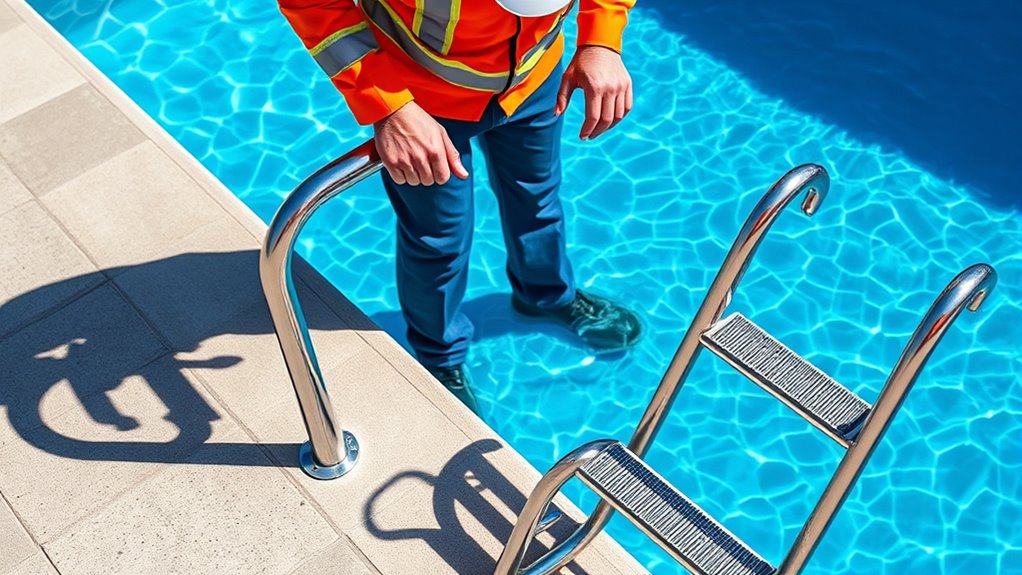
First, turn off the pool’s filtration system. This step prevents movement of the water or debris that might interfere with your repair work. Use a sturdy ladder or step stool to reach the handrails or ladders comfortably, ensuring you have stable footing. Wear gloves to protect your hands from rust, sharp edges, or hardware that might be corroded. Safety glasses are also a good idea, especially if you plan to use power tools or if rust removal creates debris. These safety precautions help you work securely and avoid accidents while maintaining your pool equipment.
Next, inspect the loose handrails or ladders carefully. Check whether the bolts or screws securing them are rusted, stripped, or missing. If you notice corrosion, it’s best to replace the hardware with stainless steel or other corrosion-resistant materials. Regular maintenance tips include periodically tightening these fasteners and applying a silicone-based lubricant to prevent rust and make future adjustments easier. If the handrails are bent or damaged, consider replacing them altogether to ensure stability. Additionally, understanding the difference between SACC vs BTU can help you select appropriate tools and accessories for your maintenance tasks.
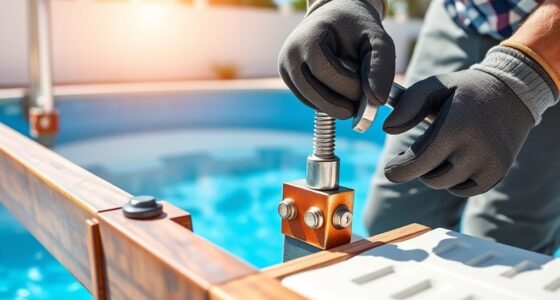
When reattaching, remove any old hardware and thoroughly clean the mounting surfaces. Dirt, algae, or rust can weaken the connection, so wipe down the area with a clean cloth and a mild cleaning solution. If necessary, use a wire brush to remove rust from the mounting points. Once the surface is clean, align the handrail or ladder properly, then insert the new hardware. Tighten the bolts securely, but avoid overtightening, which can strip threads or damage the fittings. Use a torque wrench if available to guarantee the right tightness.
Finally, double-check the stability of your reattached handrails or ladders. Give them a firm tug to confirm they’re secure. Regular maintenance tips include inspecting these fixtures monthly, especially after storms or heavy use, and promptly tightening any loose hardware. Taking these precautions and following proper maintenance tips helps prolong the life of your pool fixtures and keeps your swimming area safe for everyone. Addressing loose handrails or ladders immediately not only preserves their functionality but also protects your loved ones from potential accidents.
Frequently Asked Questions
How Often Should I Check My Pool Handrails for Looseness?
You should check your pool handrails for looseness at least once a month as part of your pool maintenance routine. Regular inspections help prevent accidents and ensure safety tips are followed. If you notice any movement or wobbling, tighten or reattach the hardware promptly. Consistent checks keep your pool safe, prolong the life of the equipment, and give you peace of mind knowing your family’s safety is prioritized during every swim.
Can I Reattach a Broken Handrail Myself?
Yes, you can do a DIY repair if the broken handrail is safe to fix yourself. First, make certain you follow all safety precautions, like turning off power if necessary and wearing protective gear. Use appropriate tools and secure the broken parts firmly. If the damage is extensive or unsure, it’s best to consult a professional to avoid further injury or damage. Always prioritize safety during the repair.
What Tools Are Necessary for Reattaching Pool Ladders?
Think of pool ladder maintenance like fixing a ship’s rigging—you’ll need the right tools to keep everything secure. Grab a screwdriver, wrench, and possibly pliers to tighten bolts and screws. Having a drill can speed up the process. Use handrail repair tools like a level or measuring tape to guarantee proper alignment. With these tools, you’ll confidently reattach your pool ladder, making it safe and sturdy for swimming adventures ahead.
Are There Safety Precautions During Reattachment?
Yes, you should take safety precautions when reattaching pool ladders. Always make certain the ladder’s weight capacity isn’t exceeded, and handle it carefully to prevent injury. Keep pool chemical safety in mind by avoiding splashes or spills onto yourself or nearby surfaces. Turn off the pool pump to prevent accidents, wear protective gloves and goggles, and double-check secure attachments before use to guarantee safety for everyone.
How Long Does It Take to Reattach a Loose Handrail?
Reattaching a loose handrail typically takes about 30 minutes to an hour, depending on your experience and the complexity of the handrail installation. You’ll want to make certain the handrail is securely fastened to maintain pool safety. Take your time during installation to double-check all screws and brackets, as a properly reattached handrail prevents accidents and keeps your pool area safe for everyone.
Conclusion
Now that you know how to reattach loose pool handrails and ladders, you can keep your pool safe and inviting. Just remember, a stitch in time saves nine—addressing small issues early prevents bigger problems down the road. With a little effort, you’ll enjoy a secure, worry-free swimming experience. So don’t wait until it’s too late; take action now and make certain your pool remains a fun, safe oasis for everyone.