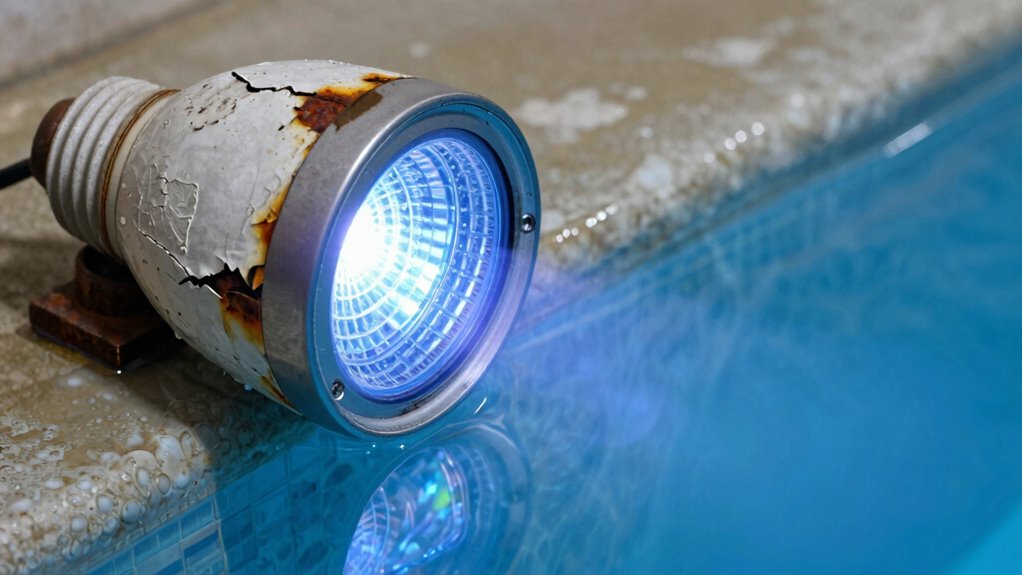

If your pool light is broken or flickering, upgrading to an LED option can be a simple, cost-effective fix that doesn’t require a full remodel. First, verify compatibility by checking your fixture type, voltage, and wiring. Then, safely remove your old light and install an appropriate LED retrofit kit. This upgrade boosts energy efficiency and appearance without major work. To discover detailed steps and tips for a successful replacement, continue exploring.
Key Takeaways
- Identify your existing fixture type and voltage to ensure compatible LED retrofit options.
- Turn off power and carefully remove the broken light before installing a new LED unit.
- Choose LED pool lights designed for your fixture’s compatibility to avoid the need for a full remodel.
- Follow proper waterproofing and wiring procedures to ensure safety and longevity of the upgrade.
- Test the new LED light and troubleshoot any issues like flickering or water leakage promptly.
Is Your Pool Light Flickering or Out? When to Consider LED Replacement
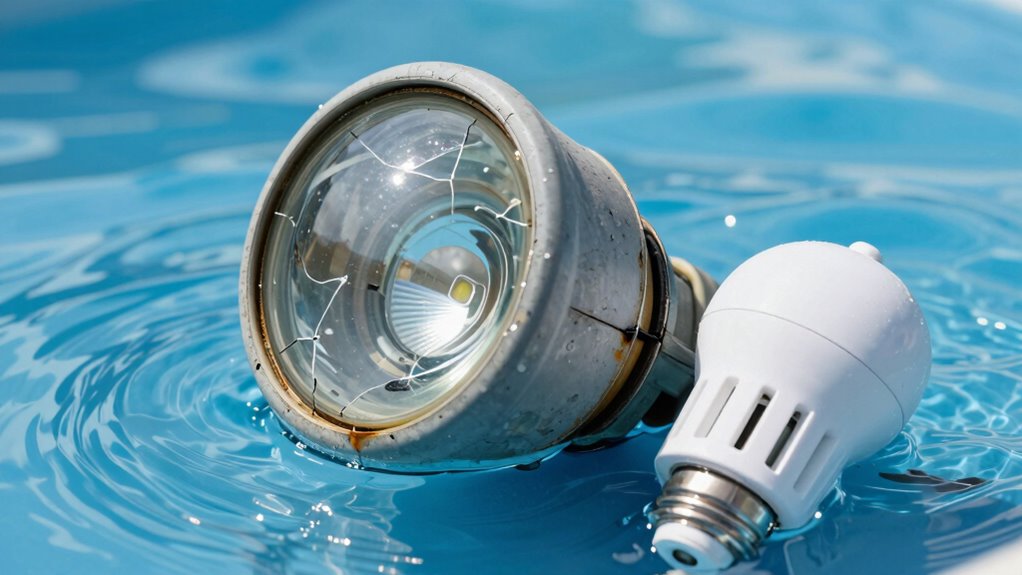
If your pool light is flickering or has gone completely out, it’s a sign that something needs attention. Ignoring this issue can compromise pool safety, making it harder to see hazards or swimmers in the water. A malfunctioning light may also indicate electrical problems that could pose safety risks. When considering an LED replacement, think about light color options—LEDs offer a variety of hues to enhance the ambiance and visibility of your pool. Upgrading to LED can improve safety by providing brighter, more reliable illumination and reducing energy consumption. If your current light flickers or fails, it’s time to evaluate your options and consider a replacement that guarantees both safety and aesthetic appeal. Proper lighting is essential for a secure and enjoyable swimming environment. Lighting maintenance can also extend the lifespan of your new LED fixture and ensure consistent performance. Additionally, choosing high-quality storage and backup solutions can help protect your pool’s electrical components and related equipment from power surges and failures. Regular electrical inspections are crucial for identifying potential issues early and maintaining safe operation of your pool lighting system. Incorporating contrast ratio considerations can also help improve visibility underwater, especially in low-light conditions. Being aware of electrical safety guidelines can further reduce the risk of accidents associated with pool lighting.
How to Check if Your Pool Light Is Compatible With LED Upgrades
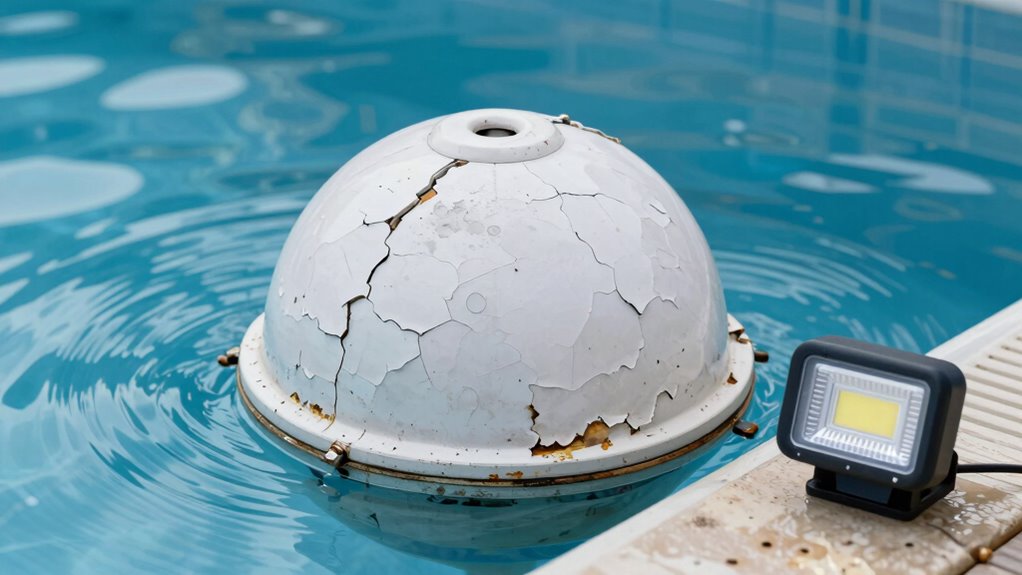
First, identify what type of fixture you have to guarantee it can support an LED upgrade. Next, verify that your pool light’s voltage matches the LED replacement’s requirements to prevent any electrical issues. Taking these steps helps confirm compatibility before making any changes. Additionally, reviewing the content formats used in your pool lighting system can ensure the new LED components fit properly and function correctly. Confirming the correct wiring and understanding your existing setup can also help avoid potential installation problems. It’s also helpful to consider regional lighting standards, which can influence the type of LED upgrade suitable for your pool. Being aware of safety regulations related to electrical components can further ensure a secure upgrade process.
Check Existing Fixture Type
Before upgrading your pool light to LED, it’s important to determine whether your current fixture is compatible. Start by identifying your fixture type, as different designs may require specific LED bulbs or modules. Check the fixture’s manual or look for manufacturer labels to gather this info. Consider these key points:
- Fixture types: In-ground, above-ground, or niche-mounted fixtures may have different compatibility needs.
- Bulb compatibility: Some fixtures only work with specific bulb bases or sizes.
- Material and design: Ensure the fixture’s material supports LED installation without damage.
- Age of the fixture: Older fixtures might not support modern LED upgrades or may need adapters.
Knowing your fixture type helps you select the right LED upgrade and avoids compatibility issues down the line.
Confirm Voltage Compatibility
To guarantee your pool light is suitable for an LED upgrade, you need to verify its voltage compatibility. Check your current fixture types and note whether they run on low voltage (12V) or line voltage (120V) or (240V). Most LED retrofit kits specify the voltage range they support, so matching this is essential. Turn off power and inspect the label on your existing fixture or junction box for voltage details. If you’re unsure, consult the manufacturer’s specifications or a professional. Using an LED compatible with your fixture’s voltage ensures safe operation and ideal performance. Confirming voltage compatibility helps you avoid electrical issues and ensures your upgrade is both effective and durable. Additionally, understanding pool lighting systems can help you select the most suitable LED option for your setup. Recognizing the difference between low voltage and line voltage systems is key to choosing the right LED retrofit kit for your pool. Ensuring proper electrical compatibility is critical for a safe and successful upgrade.
Step-By-Step: Replacing Your Broken Pool Light With Energy-Efficient LEDS
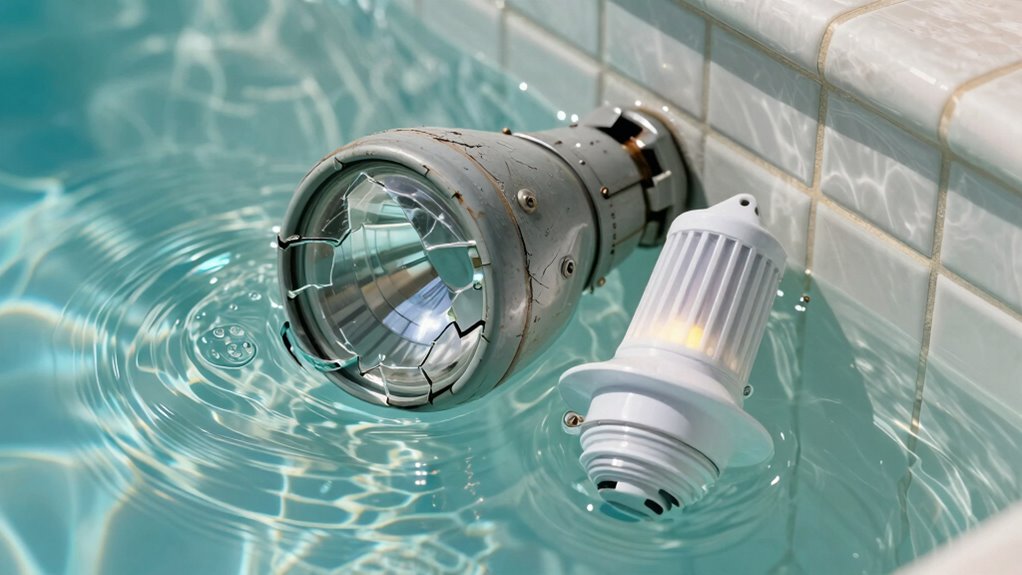
Before installing your new LEDs, make sure the pool area is clear and safe. You’ll want to turn off the power supply and carefully prepare the space for the replacement. Once you’re ready, follow the steps to install your energy-efficient LEDs securely and correctly. Smart lock technology can also be integrated afterward to enhance overall security around your pool area. Additionally, ensuring proper outdoor lighting safety can prevent accidents and prolong the lifespan of your new lighting system. Proper lighting maintenance after installation can further extend the durability and performance of your new LED pool light. To avoid hazards, always be aware of portable oil radiator safety tips if you plan to use heating devices nearby.
Prepare Pool Area
Ensuring your pool area is safe and accessible is the first step before replacing your broken pool light with energy-efficient LEDs. Clear the surrounding space to prevent accidents and make the process easier. Check that water chemistry is balanced to avoid corrosion or damage during repairs. Consider your poolside decor—removing loose items or decorations that could obstruct access or pose hazards. Keep a waterproof cover or tarp nearby to protect nearby surfaces from debris or water spills. Confirm the area is well-lit and ventilated, especially if you plan to work during the day or evening. Proper lighting and ventilation are essential for a safe working environment during maintenance. Additionally, being mindful of ethical considerations in consumer choices can help you select environmentally friendly and energy-efficient LED options. Incorporating sustainable lighting options not only benefits the environment but also reduces long-term energy costs.
Install New LEDs
Ready to replace your broken pool light with energy-efficient LEDs? First, turn off the power and remove the old fixture. Check your new LED light’s compatibility and verify it has the desired color options to match your pool’s ambiance. Carefully connect the wiring, following manufacturer instructions, and secure the fixture in place. Many LED pool lights come with a remote control, allowing you to change colors and adjust brightness easily from afar. This feature makes it simple to customize your pool’s look for any occasion. When selecting a new LED pool light, consider energy efficiency to ensure you save on operating costs. Additionally, understanding the symbolism behind different light colors can enhance your poolside experience and create a more inviting atmosphere. It’s also beneficial to review installation guidelines to ensure the fixture is properly secured and waterproofed. Once installed, turn the power back on and test your new LED light. With vibrant colors and remote control convenience, you’ll enjoy a stunning, energy-efficient pool glow that lasts longer and costs less to operate.
Benefits of Upgrading to LED Pool Lights: Energy Savings and Better Aesthetics
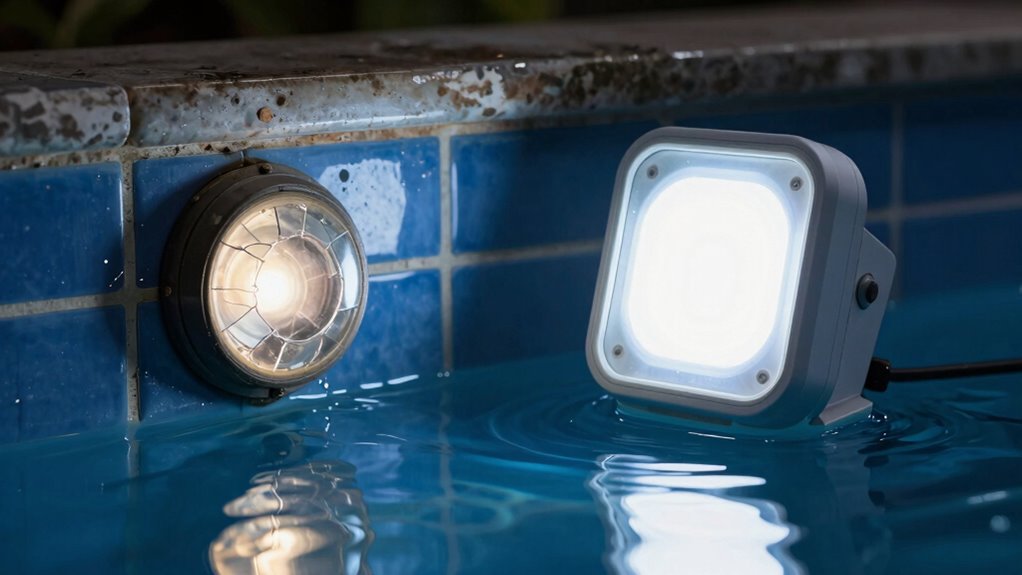
Upgrading to LED pool lights offers significant energy savings and enhances your pool’s visual appeal. LED lights use less power, reducing your energy bills, while providing bright, customizable illumination. You can easily change the pool color to match your mood or party theme, creating a stunning nighttime ambiance. LED lights also allow you to adjust light brightness for perfect visibility or a subtle glow. The benefits include:
- Lower energy consumption and cost savings
- Vibrant, customizable pool color options
- Adjustable light brightness for mood or function
- Long-lasting performance with minimal maintenance
These advantages mean your pool looks better and saves you money in the long run. Plus, with better aesthetics and efficiency, upgrading to LED is a smart choice for any pool owner seeking a modern, attractive upgrade.
Troubleshooting Common Issues During LED Pool Light Installation

While LED pool lights offer many advantages, their installation can sometimes present unexpected challenges. Common issues include flickering, poor water coverage, or wiring problems that affect pool safety. Ensuring the water chemistry is balanced prevents corrosion and extends your light’s lifespan. Troubleshooting often involves checking connections, verifying power supply, or adjusting water pH levels. Here’s a quick guide:
| Issue | Possible Cause | Solution |
|---|---|---|
| Flickering | Loose wiring | Tighten connections |
| No light | Power supply failure | Replace faulty transformer |
| Dim or uneven light | Water chemistry imbalance | Adjust pH and sanitizer levels |
| Water leakage | Seal or gasket failure | Replace seals and gaskets |
Always prioritize pool safety and water chemistry for a smooth LED installation.
How to Maintain Your LED Pool Light for Longevity and Performance
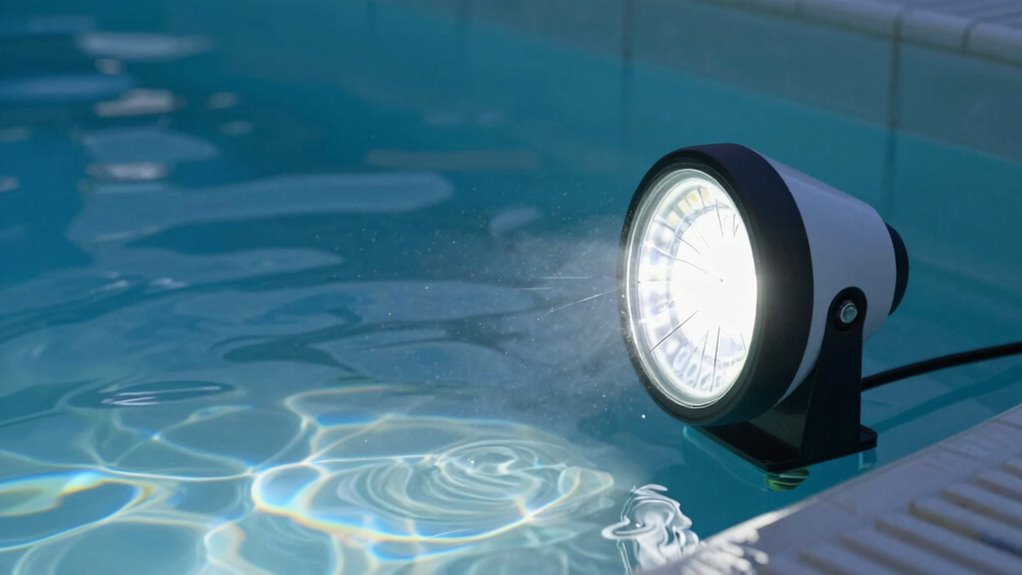
Proper maintenance is essential to keep your LED pool light operating at its best and extending its lifespan. Regular pool maintenance helps prevent issues and ensures safety precautions are followed during inspections. To maintain peak performance, regularly clean the light’s lens to remove debris and algae buildup. Check the wiring and connections for corrosion or damage, replacing parts as needed. Always turn off power before inspecting or working on the light to avoid electrical hazards. Additionally, monitor the light’s brightness and color consistency to catch early signs of malfunction.
Regular maintenance ensures your LED pool light’s optimal performance and longevity.
- Clean the lens with a soft cloth and non-abrasive cleaner
- Inspect wiring for corrosion or damage
- Turn off power during maintenance for safety precautions
- Schedule periodic professional checkups for long-term performance
Frequently Asked Questions
Can I Upgrade My Pool Light Without Draining the Water?
Yes, you can upgrade your pool light without draining the water. Many LED pool lights are designed for easy installation with minimal disruption, making it simple to improve your pool’s energy efficiency and overall aesthetics. During routine pool maintenance, you can replace the old light with a new LED fixture, saving energy and enhancing visibility. Just guarantee you follow safety protocols and consult a professional if needed.
Are LED Pool Lights Compatible With All Pool Types?
Did you know that over 80% of modern pools now use LED lighting? LED pool lights are compatible with most pool types, including concrete, vinyl, and fiberglass, making upgrades straightforward. They offer a wide variety of pool color options and considerably boost energy efficiency. Before installing, check your pool’s existing wiring and fixture size to ensure compatibility, but generally, LED lights are a versatile, cost-effective choice for any pool.
How Long Does an LED Pool Light Typically Last?
LED pool lights typically last around 50,000 hours, making them highly durable for pool maintenance. Their light durability means you won’t need frequent replacements, saving you time and money. With proper care, an LED pool light can shine brightly for years, even through harsh weather conditions. This longevity guarantees your pool stays well-lit and inviting without the hassle of constant bulb changes, keeping your pool maintenance simple and effective.
Will Upgrading to LED Affect My Current Pool Wiring?
Upgrading to LED won’t cause your pool wiring to become a tangled mess; in fact, it often simplifies electrical compatibility. LEDs operate on lower voltage and draw less power, reducing strain on your existing wiring. As long as your pool’s electrical system meets safety standards, the upgrade should be smooth sailing. You won’t need a complete overhaul—just make sure your wiring is compatible, and you’re good to go.
Is Professional Installation Necessary for LED Pool Light Upgrades?
You should have a professional install your LED pool light to guarantee pool safety and maximum energy efficiency. While some might attempt a DIY upgrade, a certified electrician knows how to handle wiring properly, preventing potential hazards. Proper installation guarantees your pool remains safe, operates efficiently, and complies with electrical codes. Don’t compromise on safety—trust a professional to upgrade your pool lighting effectively and securely.
Conclusion
Upgrading your pool light to LED is like giving your backyard a fresh breath of life—bright, efficient, and easy to enjoy. With a little effort, you can transform a flickering nuisance into a stunning centerpiece that lasts for years. Don’t let a broken light dim your poolside fun—embrace the upgrade and swim in the glow of smarter, more reliable lighting. Your pool’s new look will shine as brightly as your summer memories.