To choose the right robotic cleaner for your pool surface, first identify your surface type—vinyl, concrete, fiberglass, or plaster—as each needs different cleaning methods. Opt for models designed specifically for your material to prevent damage and prolong the finish’s life. Consider energy efficiency, ease of use, and the pool size and shape. Well-chosen models also have durable parts and good support. Keep these tips in mind, and you’ll discover how to pick the perfect cleaner for your pool.

Get pool and patio gear delivered free with Prime
- Fast, free delivery on millions of items
- Prime Video, Amazon Music and more included
- Member-only deals all year
Key Takeaways
- Match the cleaner’s surface compatibility to avoid damage to painted, vinyl, fiberglass, or plaster pools.
- Use gentle brushes or soft pads for vinyl liners to prevent scratching.
- Select models with sturdy brushes and strong suction for textured concrete surfaces.
- Ensure the robot’s cleaning features are suitable for your pool’s size and shape for efficient coverage.
- Prioritize energy-efficient, easy-to-maintain models with reliable customer support for long-term use.
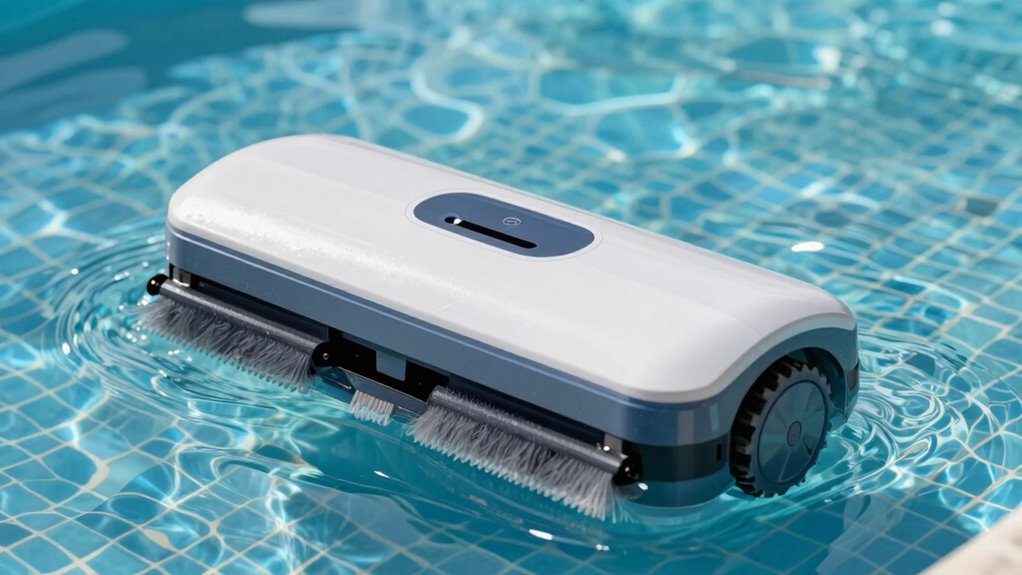
Are you tired of spending hours scrubbing your pool manually? If so, a robotic pool cleaner could be the game-changer you need. But before making a purchase, it’s essential to consider how well it will work with your specific pool surface. Different surfaces require different cleaning approaches to keep your pool sparkling without causing damage. When choosing a robotic cleaner, you should think about your pool’s material—whether it’s painted concrete, vinyl, fiberglass, or plaster—and find a model designed for that surface. This guarantees effective cleaning while minimizing wear and tear on your pool’s finish.
Pool maintenance is simplified greatly when you select a robot tailored to your pool type. For example, vinyl liners are delicate, so opt for a model with gentle brushes or soft pads that won’t scratch the surface. Conversely, textured concrete pools need more aggressive scrubbing, so a robot with sturdy brushes and strong suction power will do the job best. Knowing your surface helps you avoid damage and guarantees thorough cleaning, freeing up your time and effort. Additionally, understanding surface compatibility is crucial for selecting the right cleaner that won’t cause long-term damage. Choosing a robot with compatible cleaning methods can also prevent surface deterioration, thereby extending the lifespan of your pool finish.
Choose a robot with gentle brushes for vinyl and sturdy brushes for textured concrete pools to protect surfaces and ensure thorough cleaning.
Energy efficiency is another key factor. Some robotic pool cleaners consume less power, which not only saves you money on electricity but also aligns with eco-friendly practices. Look for models that feature energy-efficient motors and smart navigation systems that optimize cleaning paths, reducing unnecessary movement. These features help you get the most out of your investment without inflating your energy bills. A well-chosen robotic cleaner will clean your pool thoroughly with minimal energy use, making it a valuable addition to your pool maintenance routine.
Ease of use is also important. Pick a model that’s simple to operate, with features like programmable schedules and intuitive controls. This way, you can set it to clean during off-peak hours or when you’re not around, ensuring your pool stays clean without you having to lift a finger. Additionally, consider the size and shape of your pool. Some robotic cleaners work better with larger or irregularly shaped pools, while others are designed for smaller, rectangular pools. Matching the robot to your pool’s dimensions guarantees efficient coverage and reduces the chance of missed spots. A user-friendly design can significantly reduce the learning curve and maintenance time.
Finally, think about maintenance and durability. A robotic cleaner is an investment, so choose one with easily replaceable parts and good customer support. Regular maintenance will keep it functioning smoothly for years, ensuring you get consistent pool cleaning without extra hassle. By carefully considering your pool surface, energy efficiency, size, and maintenance needs, you’ll be able to choose a robotic cleaner that keeps your pool pristine, saves energy, and reduces your overall pool maintenance efforts. Proper selection based on surface-specific features can also help prevent premature wear and tear, extending the lifespan of your equipment.
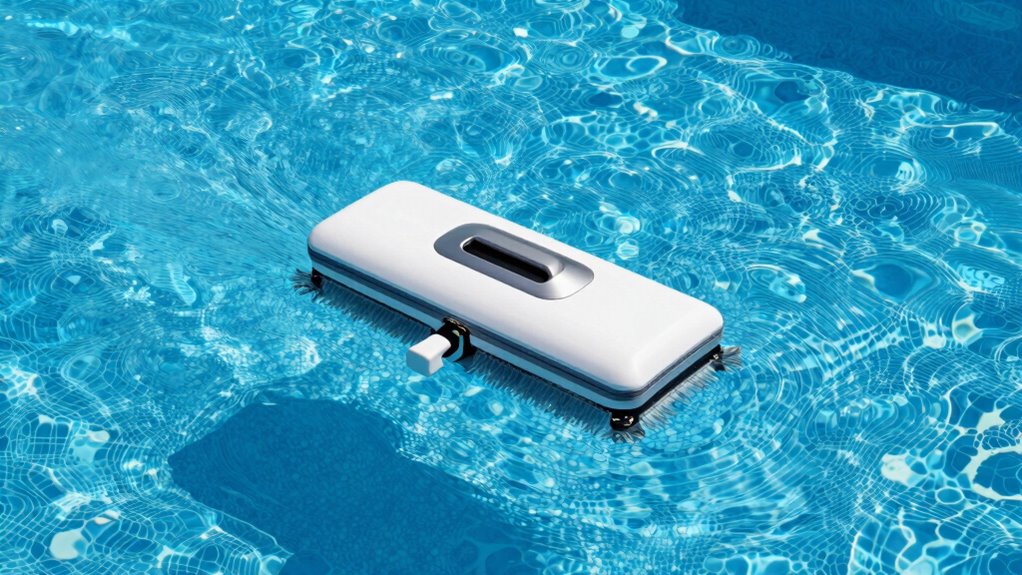
robotic pool cleaner for vinyl pool
As an affiliate, we earn on qualifying purchases.
As an affiliate, we earn on qualifying purchases.
Frequently Asked Questions
Can Robotic Cleaners Handle Saltwater Pools Effectively?
Yes, robotic cleaners can handle saltwater pools effectively. Look for models with saltwater compatibility and good chemical resistance, guaranteeing they withstand the salty environment without damage. These cleaners are designed to operate smoothly in saltwater, helping you keep your pool clean without corrosion issues. By choosing a robot with proper saltwater compatibility, you ensure long-lasting performance and easier maintenance, making your pool cleaning routine hassle-free.
How Often Should I Replace the Filter or Brushes?
Your robotic cleaner’s filters and brushes are the loyal workers of your pool’s cleanliness. Change the filters every 1 to 3 months, depending on usage and debris buildup, and replace brushes every 6 to 12 months to keep them agile. Regular filter maintenance clears out clogs, while fresh brushes sweep away grime with ease. Keep these parts in top shape, and your cleaner will perform like a well-oiled machine.
Are Robotic Cleaners Suitable for Above-Ground Pools?
Yes, robotic cleaners are suitable for above-ground pools. You should consider your pool’s depth and water temperature when choosing one. A deeper pool may require a model with a longer cord or stronger suction, while warmer water can affect cleaning efficiency. Make sure the cleaner’s size and navigation capabilities match your pool’s dimensions, ensuring it covers all areas thoroughly without getting stuck. Always check compatibility before purchasing.
Do Robotic Cleaners Work on Textured or Pebble Finishes?
Robotic cleaners can work on textured or pebble finishes, but surface compatibility affects cleaning efficiency. Textured surfaces might pose challenges, so look for models with stronger brushes or adjustable settings. Pebble finishes require gentle handling to avoid damage, so choose a cleaner designed for delicate surfaces. Remember, not all cleaners are created equal—select one that’s compatible with your pool’s surface to keep it sparkling without a hitch.
Can Robotic Cleaners Navigate Around Pool Ladders and Lights?
Yes, robotic cleaners can navigate around pool ladders and lights. They’re equipped with advanced systems like pool ladder navigation and light obstacle avoidance, allowing them to detect and maneuver around obstacles efficiently. This guarantees thorough cleaning without getting stuck. To maximize performance, choose a model with sensors designed for obstacle detection, which helps your robotic cleaner adapt to your pool’s unique features and maintain a clean, sparkling surface.
Conclusion
Picking the right robotic cleaner is like finding the perfect dance partner—when they move in sync with your pool’s needs, everything glides smoothly. By understanding your pool surface and considering key features, you’ll guarantee a spotless, hassle-free clean every time. Don’t settle for a one-size-fits-all solution; instead, choose a cleaner that fits your pool like a glove. With the right match, your pool will shine brighter than a star in a clear night sky.
Halloween Picks
halloween
As an affiliate, we earn on qualifying purchases.