
Pool automation can seem amazing at first, offering convenience and seamless control through your smartphone. But if you don’t set it up correctly, that magic quickly fades into frustration. Poor placement of sensors, incompatible hardware, or outdated software can cause glitches and errors. This results in more manual work and less trust in your system. If you want to avoid these pitfalls and restore that smooth experience, keep going to discover how proper setup makes all the difference.

Get pool and patio gear delivered free with Prime
- Fast, free delivery on millions of items
- Prime Video, Amazon Music and more included
- Member-only deals all year
Key Takeaways
- Poor installation or placement of sensors can cause inaccurate readings and system malfunctions.
- Incompatibility between devices or outdated software leads to frequent errors and frustration.
- Lack of proper customization reduces automation effectiveness and can cause unpredictable system behavior.
- Initial setup overconfidence may result in overlooked troubleshooting, causing system failures.
- Manual adjustments due to setup issues diminish the convenience and luxury of automation.
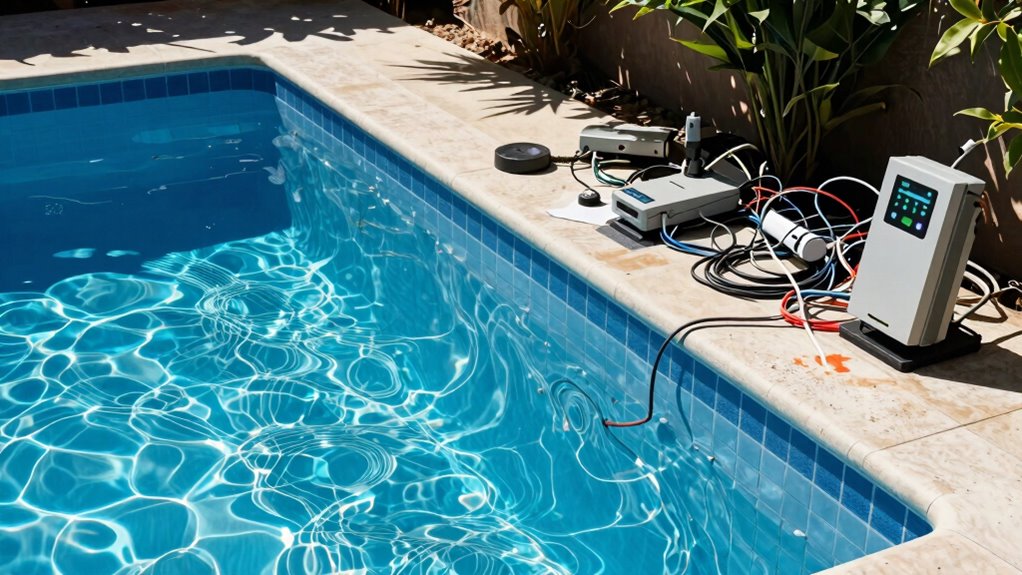
Pool automation promises convenience, but a poor setup can quickly turn it into a nightmare. When you first install smart technology, it feels almost magical—your pool responds seamlessly to your commands, schedules keep the water at just the right temperature, and you can control everything from your phone. That initial thrill makes you believe that your pool has become a luxurious extension of your smart home. But if the system isn’t configured correctly or if the components don’t work well together, that magic quickly fades. Instead, you’re left frustrated, wasting time troubleshooting instead of enjoying your pool.
Poor pool automation setup turns initial magic into frustration and manual troubleshooting.
A bad setup often begins with neglecting compatibility. When you buy a pool automation system, you might assume everything will automatically sync with your existing smart devices. But if the hardware isn’t compatible or if the software isn’t updated, you’ll encounter frequent glitches. These issues undermine the user experience, turning what should be a simple, relaxing task into an ongoing hassle. You might find yourself manually adjusting settings more often than letting the system do its job, defeating the purpose of automation altogether.
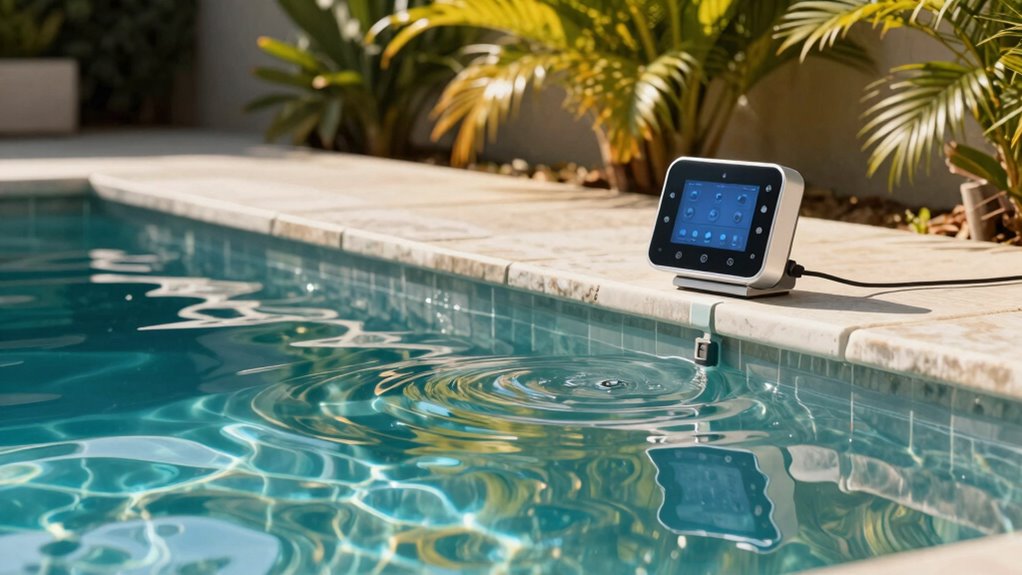
Another common mistake is poor placement of the control hub or sensors. If the automation system’s components aren’t installed correctly, it can lead to unreliable performance. For example, sensors placed in areas with lots of sunlight or wind might send inaccurate readings, causing your pool to overheat or not heat enough. Misplaced controls can make it difficult to access or operate the system, forcing you to dig through menus or physically go to the equipment just to make simple changes. This diminishes the user experience, turning what should be effortless into a chore. Additionally, proper installation is crucial for ensuring the system functions reliably over time.
Furthermore, inadequate customization can ruin the system’s effectiveness. If you don’t take the time to tailor the automation to your specific needs—like scheduling cleaning or adjusting chemical levels—you might find the system less useful. Instead of simplifying pool maintenance, it becomes a source of confusion and disappointment. When the system doesn’t reflect your preferences or behaves unpredictably, your trust in it wanes, and the experience feels more like a constant battle than a luxury. Proper setup, including detailed planning and understanding of your equipment, is essential to avoid these pitfalls.
In addition, understanding the importance of compatibility between devices is crucial for a smooth setup. If your components don’t work well together from the start, you’ll likely face ongoing frustrations that could have been avoided with proper planning. The right integration can make a significant difference in performance and ease of use. Ultimately, when a pool automation setup isn’t done right, your experience suffers. Instead of enjoying the convenience of smart technology, you face repeated issues that drain your time and patience. The promise of a seamless, automated pool becomes a distant dream, replaced by frustration and manual labor. To truly harness the benefits of pool automation, you need careful planning, proper installation, and ongoing management—so the system complements your lifestyle rather than complicates it.
pool automation system compatible with smart home
As an affiliate, we earn on qualifying purchases.
As an affiliate, we earn on qualifying purchases.
Frequently Asked Questions
How Often Should Pool Automation Systems Be Calibrated?
You should calibrate your pool automation system at least once a season, or more often if you notice issues with water chemistry or inconsistent automation. Regular calibration guarantees accurate readings for pH, chlorine, and other chemicals, which simplifies pool maintenance. Keep an eye on water chemistry and system performance, and calibrate promptly if you notice discrepancies—this keeps your pool experience smooth and enjoyable.
What Are Common Signs of a Faulty Pool Automation Setup?
Did you know that 60% of pool owners experience issues due to faulty automation setups? If your system isn’t responding correctly, it’s likely a sign of faulty pool automation. Common signs include inconsistent water temperature, skimming errors, or equipment not activating as scheduled. Regular pool maintenance and system troubleshooting can resolve these issues. Keep an eye on these signs to prevent larger problems and make sure your pool automation runs smoothly.
Can Manual Adjustments Fix Automation Issues Temporarily?
Yes, manual adjustments can temporarily fix automation issues, helping you maintain your pool while troubleshooting. When you notice problems, you can manually control features like pumps and heaters to keep your pool comfortable. However, it’s essential to take into account regular pool maintenance and plan for technology upgrades, as outdated systems can cause persistent problems. Relying solely on manual fixes isn’t sustainable long-term, but they’re useful for short-term solutions.
How Long Does a Typical Pool Automation Installation Take?
Imagine you’re stepping into a time machine, and in real life, a typical pool automation installation takes about one to two days. During this period, professionals handle system troubleshooting and setup, ensuring seamless pool maintenance. While it may seem quick, rushing can lead to issues. Proper installation guarantees your automation works smoothly, so you enjoy effortless pool maintenance without the frustration of troubleshooting later.
Are There Specific Brands Recommended for Easy Setup?
For easy setup, consider brands like Hayward and Pentair, known for their user-friendly interfaces and excellent brand compatibility. These brands design their automation systems to be intuitive, making installation straightforward even for beginners. Selecting reputable brands guarantees smooth integration with your existing pool equipment, reducing setup time and frustration. Prioritize models with clear instructions and reliable customer support to guarantee a seamless, enjoyable automation experience from the start.
Conclusion
So, all that magic of pool automation can vanish in an instant with one bad setup. You think you’re about to relax, only to be reminded that even the smartest systems need proper guidance. Ironically, the very technology designed to make your life easier can turn into a headache if not handled right. It’s a stark reminder: sometimes, the simplest setup is the most important. After all, a perfect pool is only as good as its worst configuration.
Halloween Picks
halloween
As an affiliate, we earn on qualifying purchases.