
To make remote pool monitoring truly effective, you need properly set up alerts. When alerts are correctly configured, you’ll get immediate notifications about issues like water chemistry imbalances or equipment failures. This guarantees you can respond quickly, preventing costly repairs and maintaining safe swimming conditions. Without accurate alerts, problems may go unnoticed until they become serious. Keep exploring to discover how fine-tuning your alerts makes all the difference in keeping your pool safe and healthy.

Get pool and patio gear delivered free with Prime
- Fast, free delivery on millions of items
- Prime Video, Amazon Music and more included
- Member-only deals all year
Key Takeaways
- Proper alert configuration ensures timely notifications of critical water chemistry or equipment issues, preventing costly damage or health risks.
- Accurate thresholds matching pool conditions reduce false alarms and ensure alerts only trigger for genuine concerns.
- Clear, specific notifications enable quick, effective responses to maintain safe swimming conditions.
- Regular review and adjustment of alert settings optimize system performance and adapt to seasonal or environmental changes.
- Multiple notification channels guarantee prompt awareness, supporting immediate action regardless of location or device.
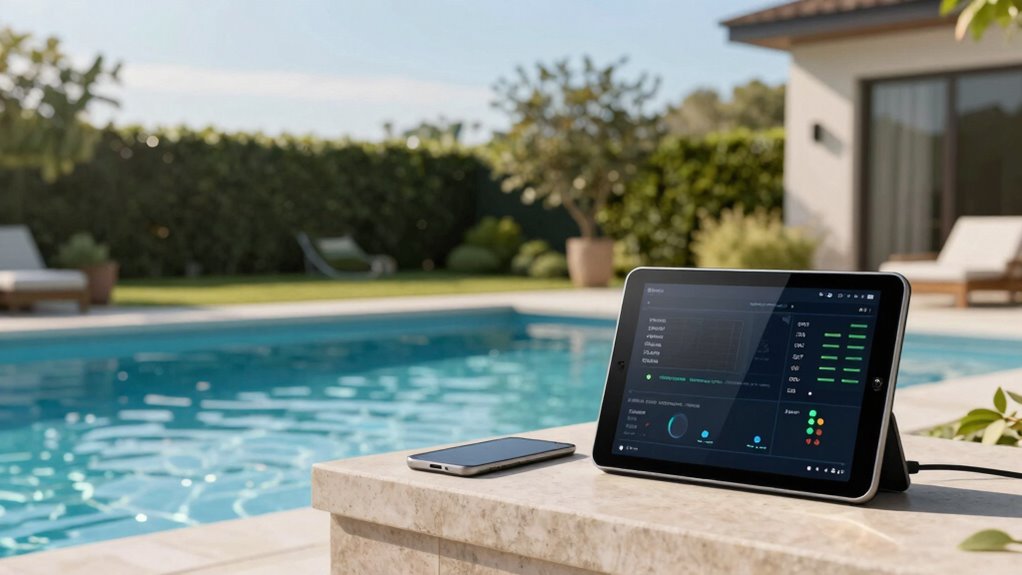
Remote pool monitoring has revolutionized how you manage and maintain your swimming pool, offering real-time data at your fingertips. With this technology, you can keep a close eye on essential aspects like water chemistry and overall pool health without constantly being on-site. But simply having the system in place isn’t enough—if you don’t set up alerts correctly, you might miss critical issues that could turn into costly repairs or unsafe swimming conditions. Properly configured alerts are the backbone of effective remote monitoring, ensuring you’re notified immediately when something’s off.
When it comes to pool maintenance, timely alerts are your best tool for preventing problems. For example, if your water chemistry drifts outside safe parameters, an alert should notify you to add chemicals or adjust pH levels. But if you ignore or fail to customize these alerts, you risk letting problems fester, leading to cloudy water, algae growth, or equipment damage. The key is to set thresholds that match your pool’s typical conditions, so you’re not overwhelmed with false alarms but still get alerted to genuine issues. For instance, if your alkalinity levels drop unexpectedly, an alert prompts you to correct it before it impacts the entire water chemistry balance.
It’s also crucial to understand that alerts should be specific and actionable. Instead of generic notifications, your system should tell you exactly what’s wrong—whether it’s low chlorine levels, high cyanuric acid, or increased water temperature. This way, you can respond quickly and accurately, saving time and avoiding unnecessary chemical adjustments. Proper alert setup also involves choosing the right channels for notifications—be it text messages, emails, or app alerts—so you receive updates promptly, no matter where you are. Additionally, understanding the importance of air quality and proper ventilation can help maintain a healthier environment around your pool area, reducing related health risks. Regularly reviewing and fine-tuning alert settings according to seasonal changes will help prevent overlooked issues and ensure your system remains effective. Incorporating biodiversity considerations into your pool environment, such as native plantings and minimal chemical use, can also contribute to a more sustainable and eco-friendly pool area.
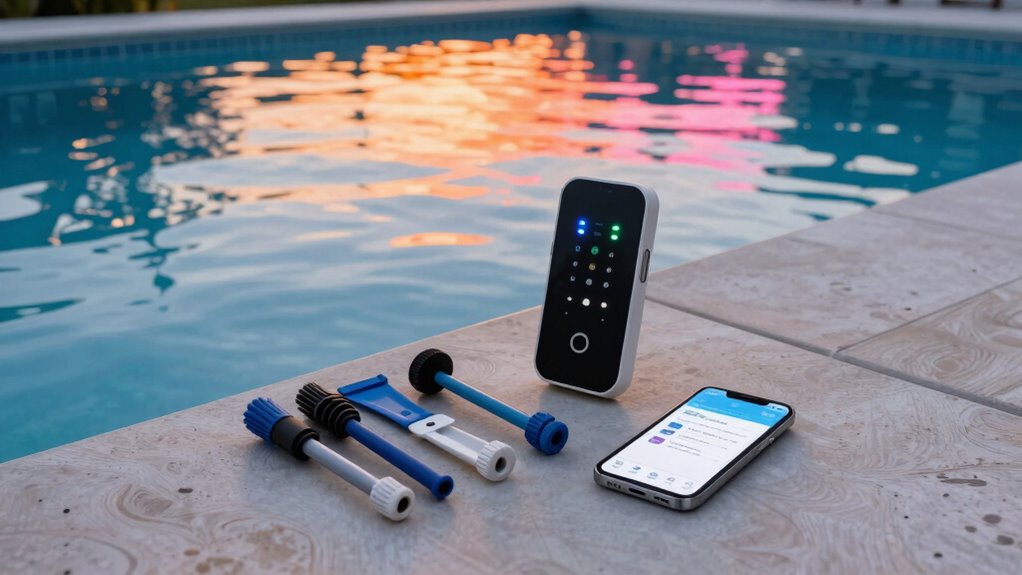
pool water chemistry monitor with alerts
As an affiliate, we earn on qualifying purchases.
As an affiliate, we earn on qualifying purchases.
Frequently Asked Questions
How Often Should Remote Pool Data Be Checked?
You should check your pool data daily to guarantee everything’s running smoothly. Regular frequency checks help you catch issues early, like chemical imbalances or equipment problems. Even if alerts are set up, don’t rely solely on them—manually reviewing pool data provides peace of mind. Staying consistent with your checks allows you to maintain superior water quality and equipment performance, keeping your pool safe and inviting.
What Are Common False Alarms in Pool Monitoring Systems?
Common false alarms in pool monitoring systems often happen due to sensor calibration issues or environmental factors like debris or temperature changes. To prevent these, you should regularly calibrate sensors and maintain them properly. Also, verify your alert thresholds are correctly set, so minor fluctuations don’t trigger unnecessary alarms. Proper sensor maintenance and calibration help distinguish real issues from false alarms, keeping your pool monitoring reliable and stress-free.
Can Remote Monitoring Prevent All Pool-Related Emergencies?
Remote monitoring helps prevent many pool-related emergencies by alerting you to issues like unsafe water temperature or improper pool chemical levels. However, it can’t prevent all emergencies, especially sudden accidents or equipment failures. You still need regular physical inspections and safety precautions. Properly setting up alerts ensures you’re promptly notified about critical issues, but proactive maintenance and supervision are essential for thorough pool safety.
What Maintenance Is Required for Remote Monitoring Equipment?
You need to regularly check the sensor calibration to guarantee accurate readings and prevent false alerts. Keep the power supply maintained by inspecting it for any damage or loose connections, and replace batteries or power sources as needed. Regular cleaning of sensors and ensuring stable internet or network connections help keep your remote monitoring equipment functioning properly. Schedule routine maintenance to avoid unexpected failures and guarantee your pool stays safe and well-monitored.
How Secure Is the Data From Remote Pool Monitoring Systems?
You can trust that your remote pool monitoring system keeps your data secure through strong data encryption, which safeguards your information from unauthorized access. However, it is crucial to stay aware of privacy concerns, ensuring the system complies with data protection standards. Regularly update your software and choose reputable providers to maintain security. By doing so, you can enjoy the convenience of remote monitoring without compromising your privacy.
Conclusion
Remember, remote pool monitoring holds great potential, but only when alerts are thoughtfully configured. Think of it as a helpful guide that gently nudges you in the right direction, ensuring your pool stays pristine without constant oversight. With properly set alerts, you can enjoy peace of mind while avoiding unnecessary worries. Embrace the system’s true value by fine-tuning it carefully—you’ll find that a little attention goes a long way in keeping your pool perfect.
Fall Picks
fall essentials
As an affiliate, we earn on qualifying purchases.