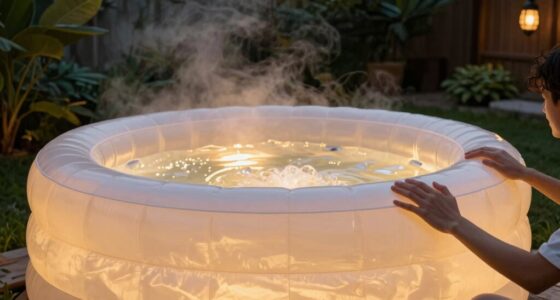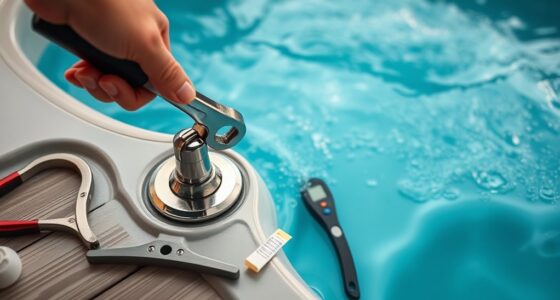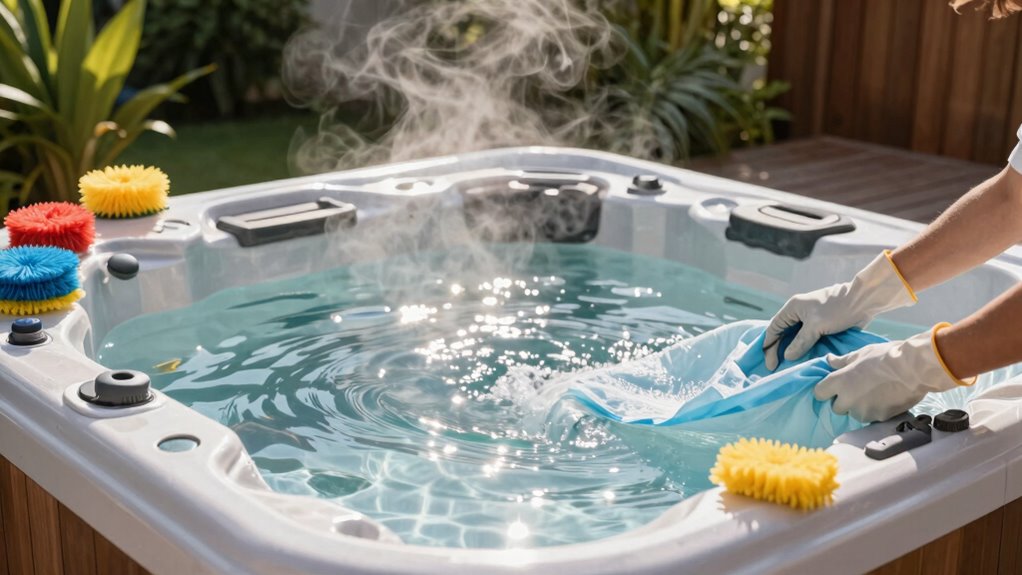

To extend your hot tub’s lifespan, develop consistent habits like regularly checking and balancing water chemistry to prevent corrosion and bacterial growth. Keep filters clean and replace them as needed to maintain water clarity and system efficiency. Inspect components like jets and pumps frequently for wear or leaks, and always cover your tub when not in use to minimize dirt and evaporation. These simple steps will help your hot tub stay in top shape longer, and more tips await if you keep exploring.

Get pool and patio gear delivered free with Prime
- Fast, free delivery on millions of items
- Prime Video, Amazon Music and more included
- Member-only deals all year
Key Takeaways
- Regularly test and adjust water chemistry to prevent corrosion and component damage.
- Clean and replace filters according to schedule to maintain water clarity and system efficiency.
- Conduct routine inspections of jets, seals, and electrical parts to identify issues early.
- Keep the hot tub covered when not in use to minimize dirt, evaporation, and exposure to elements.
- Perform small, consistent maintenance tasks to prolong the lifespan of all hot tub components.
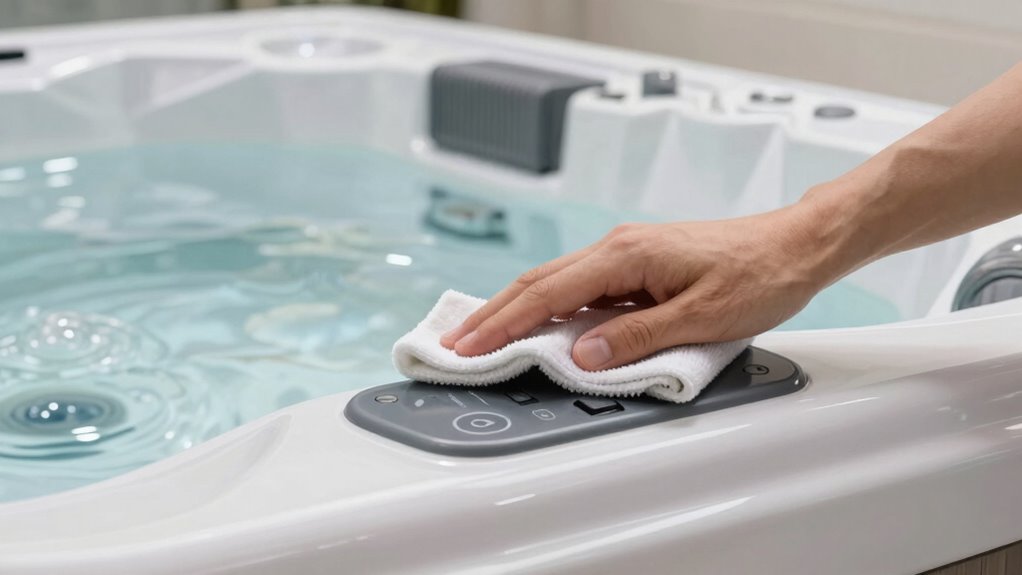
Hot tubs are a great way to unwind, but their components can wear out quickly if not properly maintained. To extend their lifespan, paying attention to water chemistry is crucial. Proper water chemistry prevents corrosion, scale buildup, and bacterial growth, all of which can damage your hot tub’s parts over time. Regularly test the water using test strips or a liquid test kit, aiming for ideal levels of pH (around 7.4 to 7.6), alkalinity, and sanitizer. When the pH drifts out of the acceptable range, it can cause cloudy water, skin irritation, and damage to the heater or pump. Keep a consistent maintenance routine, adjusting chemicals as needed to maintain balanced water. This simple step helps protect your hot tub’s internal components and guarantees a safe, enjoyable soak every time.
Another critical habit is filter maintenance. Your hot tub’s filter traps dirt, oils, and debris, preventing these contaminants from circulating through the system and causing damage. Neglecting filter care can lead to clogged or dirty filters, which forces your pump to work harder and increases the risk of equipment failure. Check your filter regularly—at least once a month—and clean it thoroughly with a filter cleaner or a gentle rinse if it’s only lightly soiled. For heavily soiled filters, consider soaking them overnight in a cleaning solution before rinsing. Replacing filters periodically, usually every 1-2 years depending on usage, is also essential to keep the water clean and the system functioning efficiently. Proper filter maintenance not only extends the life of your hot tub components but also improves water clarity and reduces chemical use, making your experience more enjoyable. Additionally, understanding the importance of water chemistry can help you better maintain optimal conditions and prevent damage.
Regular inspections are crucial for early problem detection, as they can reveal issues such as leaks, worn seals, or electrical concerns before they escalate into costly repairs. In addition to water chemistry and filter care, remember to regularly inspect and clean other parts, such as jets, skimmer baskets, and pumps. Keeping the equipment dry and free of debris prevents corrosion and mechanical issues. Cover your hot tub when it’s not in use to minimize dirt accumulation, evaporation, and exposure to the elements. Taking these small, consistent steps helps prevent costly repairs and prolongs the life of your hot tub’s components. Fundamentally, the more attentive you are to maintaining balanced water chemistry and clean filters, the fewer problems you’ll face down the line. This proactive approach ensures your hot tub remains a relaxing oasis for years to come, providing peace of mind as you enjoy its benefits.
As an affiliate, we earn on qualifying purchases.
Frequently Asked Questions
What Are Common Signs of Hot Tub Component Failure Early On?
You’ll notice early signs of hot tub component failure through irregular water chemistry, such as cloudy water or strong odors, indicating filter or chemical imbalances. Watch for equipment noises, leaks, or inconsistent heating, which signal aging parts. Regular component maintenance helps catch issues early, preventing costly repairs. Staying attentive to these signs guarantees your hot tub remains in good shape longer and operates smoothly, saving you time and money.
How Often Should Hot Tub Filters Be Replaced for Optimal Performance?
Like a vintage radio, your hot tub filter needs regular attention. Typically, you should replace your filters every 1-2 years for peak performance. During this time, maintain proper chemical balancing and clean the filters regularly to guarantee effective water filtration. Neglecting these steps can cause buildup, reduce water clarity, and strain the system. Staying consistent helps extend your hot tub’s lifespan and keeps water fresh and inviting.
Can Using Non-Recommended Chemicals Harm Hot Tub Components?
Using non-recommended chemicals can harm your hot tub components by disrupting chemical safety and water balance. These improper chemicals may cause corrosion, scale buildup, or damage to the heater and pump. Always follow manufacturer guidelines for water chemistry, ensuring proper chemical levels. Maintaining proper water balance and using approved chemicals protect your hot tub’s system, prolonging its lifespan and ensuring safe, enjoyable soaks every time.
What Emergency Steps Should Be Taken if a Hot Tub Component Breaks?
If a hot tub component breaks, you should follow your maintenance checklist to shut down the system safely. Turn off power immediately and disconnect the hot tub to prevent further damage. Keep emergency preparedness supplies nearby, like a basic repair kit and contact info for professional repair services. Document the issue with photos, and avoid using the hot tub until repairs are complete. Acting quickly helps prevent costly damage and guarantees safety.
Are There Specific Brands or Types of Parts Better for Longevity?
Think of your hot tub components as the heart of relaxation—choose wisely. When comparing brands, look for those known for superior part durability, like Balboa or Tru-Temp. These brands often offer higher-quality materials that withstand wear and tear longer. Investing in reputable brands guarantees longevity, reduces replacements, and keeps your hot tub running smoothly. Remember, quality parts are the foundation of a stress-free, enjoyable hot tub experience.
Conclusion
By adopting these better habits, you’ll keep your hot tub running smoothly for years to come. Think of your hot tub as a delicate garden—regular care and attention nurture its health and longevity. When you stay consistent with maintenance, you’re watering the roots and trimming the weeds, ensuring it stays vibrant and inviting. With a little effort, your hot tub will be a reliable oasis, always ready to offer relaxation and refreshment whenever you need it.
Halloween Picks
halloween
As an affiliate, we earn on qualifying purchases.