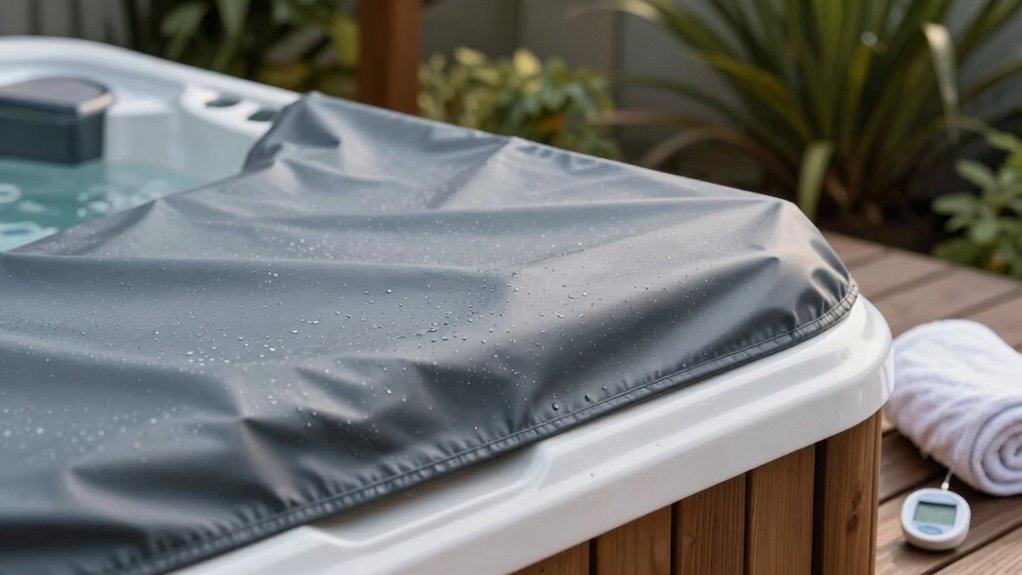

To save the most money on your hot tub cover, stick to regular routines of cleaning with eco-friendly products and inspecting for tears or cracks. Always use a cover lifter and store it in shaded areas to prevent damage from sun and weather. Maintain good ventilation to avoid mold and moisture buildup. Proper UV protection and handling extend the cover’s lifespan, keeping your hot tub warmer and cleaner longer. Keep these habits up, and you’ll find more tips below to boost savings even further.

Get pool and patio gear delivered free with Prime
- Fast, free delivery on millions of items
- Prime Video, Amazon Music and more included
- Member-only deals all year
Key Takeaways
- Regularly clean and inspect the cover to prevent damage and extend its lifespan.
- Use a cover lifter to avoid unnecessary strain and potential tears during handling.
- Store the cover in shaded areas and shield it from harsh weather to prevent UV and weather damage.
- Choose high-quality, UV-protected materials for durability and reduced replacement costs.
- Ensure proper ventilation to prevent mold, moisture buildup, and related maintenance expenses.
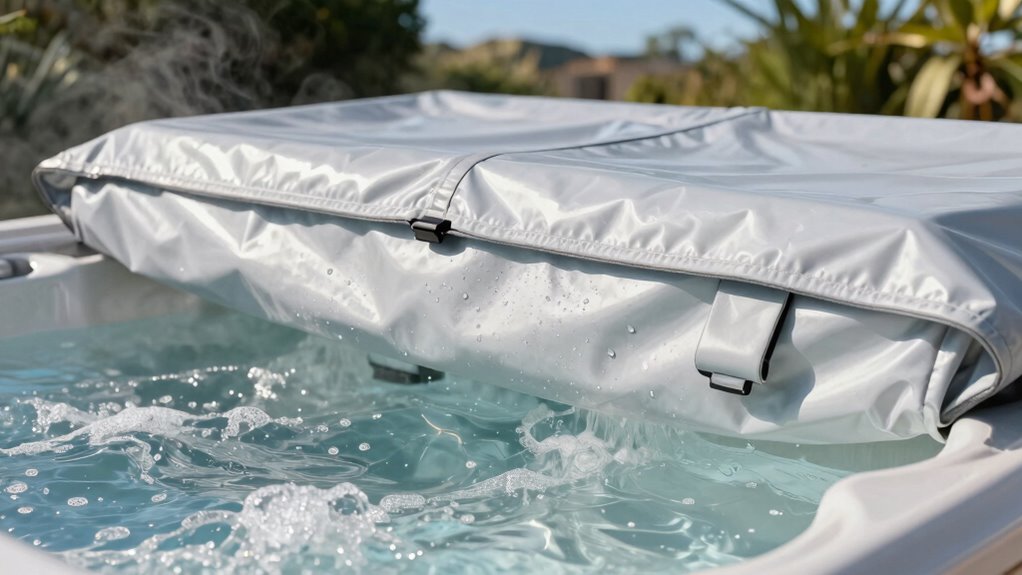
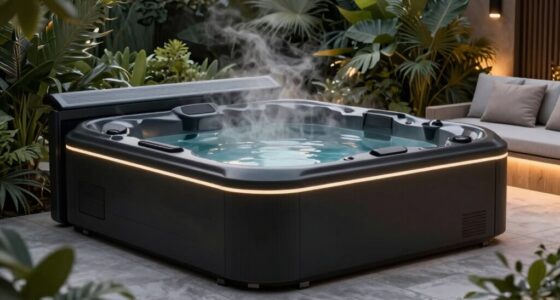
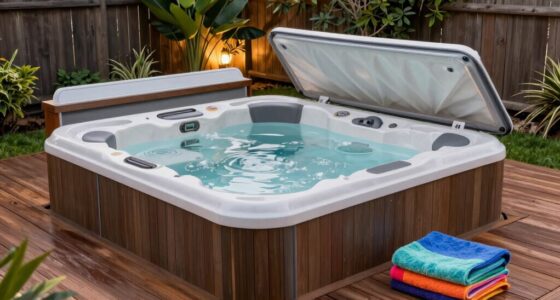
Maintaining proper habits for your hot tub cover is vital to keep your spa clean, safe, and in good condition. When you stick to consistent maintenance routines, you prevent dirt, debris, and moisture from accumulating, which can cause mold, mildew, or even damage over time. Regularly cleaning your cover not only extends its lifespan but also guarantees that your hot tub remains inviting and hygienic. Make it a habit to wipe down the cover with a damp cloth and a gentle cleaner every couple of weeks. This simple routine removes dust, oils, and other residues that can degrade the material and compromise insulation. Choosing the right cover material plays a key role in both maintenance and cost savings. Quality materials such as marine-grade vinyl or heavy-duty polyester are more resistant to weather, UV rays, and wear. These materials require less frequent cleaning and are less prone to cracking or tearing, saving you money on replacements down the line. When selecting your cover, consider options with thermal insulation layers—these help maintain your hot tub’s temperature more efficiently, reducing energy expenses. The extra investment in high-quality cover material choices pays off by lowering your utility bills and minimizing the need for repairs. In addition to routine cleaning and choosing durable materials, implementing protective habits can markedly prolong your cover’s life. Always use a cover lifter to avoid unnecessary strain when removing or replacing it. This not only prevents damage but also makes it easier to maintain a regular cleaning schedule. When your cover is off, avoid leaving it exposed to direct sunlight or harsh weather for extended periods; instead, store it in a shaded area or use a cover to shield it from the elements. Regularly inspecting your cover for tears, cracks, or signs of deterioration allows you to address issues early, preventing costly replacements. It’s also beneficial to use eco-friendly cleaning products to reduce your environmental impact and promote a healthier surrounding environment. Incorporating biodiversity-friendly practices around your hot tub area, such as using eco-friendly cleaning products, can also contribute to a more sustainable environment. A proactive approach to maintenance routines coupled with thoughtful cover material choices ultimately results in substantial savings. You’ll spend less on frequent replacements, repairs, and increased energy costs. When your cover is well-maintained, it performs better, keeping your hot tub warmer and cleaner for longer periods. Proper air circulation and ventilation around your hot tub area can also help prevent moisture buildup and mold growth on your cover and surroundings. Additionally, good ventilation helps reduce humidity levels, which is crucial for preventing mold and mildew. These habits also help preserve the appearance and functionality of your cover, so you enjoy your spa without the worry of unnecessary expenses. Ensuring proper UV protection can further extend the longevity of your cover by preventing sun damage. In the end, consistent care and smart material choices are your best strategy for maximizing savings and guaranteeing your hot tub remains a relaxing, inviting retreat.
As an affiliate, we earn on qualifying purchases.
Frequently Asked Questions
How Often Should I Replace My Hot Tub Cover?
You should replace your hot tub cover every 3 to 5 years, depending on its cover lifespan. Regularly inspect for cracks, mold, or signs of wear, and replace it sooner if needed. Proper maintenance, like cleaning and conditioning, can extend its lifespan. Keep an eye on how well it seals—if it no longer keeps heat in effectively, it’s time for a replacement to save energy and money.
Are Cheaper Covers More Cost-Effective Long-Term?
Like the tale of the tortoise and hare, cheaper covers may seem cost-effective but often fall short long-term. You should compare prices and consider cover customization options to guarantee durability. Cheaper covers might save money upfront but can lead to frequent replacements, increasing costs over time. Investing in a quality cover might cost more initially but ultimately saves you money by lasting longer and providing better insulation.
What Materials Are Best for Durability and Insulation?
You should choose a hot tub cover with durable cover construction and high insulation levels. Look for covers made from marine-grade vinyl or heavy-duty polyester, which resist wear and tear. For insulation, foam cores like polystyrene or polyurethane provide better energy efficiency. These materials guarantee your cover withstands weather, prolongs its lifespan, and keeps heat in, saving you money on energy costs over time.
How Can I Tell if My Cover Is Energy-Efficient?
You can tell if your cover is energy-efficient by performing regular cover inspections for damage, sagging, or gaps that let heat escape. Look for signs of wear, tears, or warping that reduce insulation. An energy-efficient cover maintains a tight seal, minimizing heat loss. If you notice increased energy bills or your hot tub takes longer to heat, it might be time to replace or upgrade your cover for better energy savings.
Do Covers Need Special Maintenance or Cleaning?
Yes, covers need special maintenance and cleaning to stay in top shape. You should regularly perform cover cleaning with a gentle, non-abrasive cleaner to prevent dirt buildup and mold. Cover maintenance involves inspecting for tears or damage and applying a protective cover conditioner periodically. Keeping your hot tub cover clean and well-maintained helps it last longer, insulates better, and saves you money in the long run by reducing energy loss.
Conclusion
By adopting these hot tub cover habits, you’ll keep your spa warmer, save money, and extend its lifespan. Regularly checking and maintaining your cover is a simple yet powerful way to cut costs and avoid unnecessary repairs—like a wise old sage once said, “An ounce of prevention is worth a pound of cure.” Embrace these habits now, and you’ll enjoy cozy, cost-effective dips for years to come—no need to wait for the future to reap the benefits.
Fall Picks
fall essentials
As an affiliate, we earn on qualifying purchases.