
To keep your hot tub clean and clear, shock treatments should be used after heavy use, parties, or when you notice cloudiness and odors. Test your water chemistry beforehand to make certain of proper pH and sanitizer levels, then add the shock product according to the manufacturer’s instructions. Run the jets for 15-20 minutes to circulate, and avoid using the hot tub for at least 8 hours afterward. If you want to learn more, you’ll find helpful tips below.

Get pool and patio gear delivered free with Prime
- Fast, free delivery on millions of items
- Prime Video, Amazon Music and more included
- Member-only deals all year
Key Takeaways
- Test water chemistry before shocking to ensure proper chemical balance and effectiveness.
- Perform shock treatments weekly or after heavy use, cloudy water, or odors for optimal sanitation.
- Choose a shock product compatible with your sanitizer (chlorine or bromine) and follow manufacturer instructions.
- Add shock directly to water, run jets for 15-20 minutes, and avoid using the hot tub for at least 8 hours afterward.
- Regularly monitor water chemistry to maintain safety, prevent damage, and ensure the shock treatment works effectively.
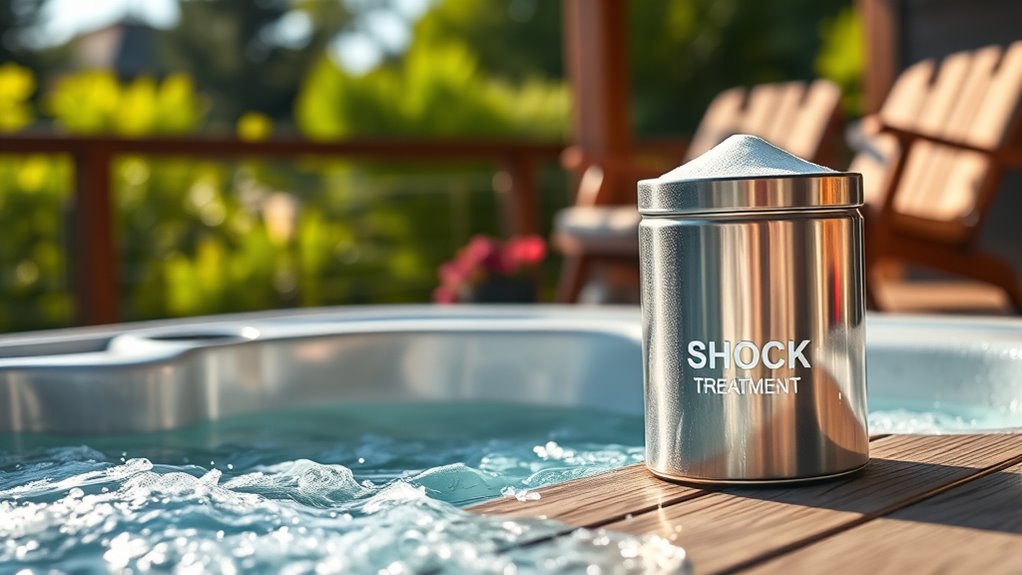
Maintaining a clean and safe hot tub often requires regular shock treatments to eliminate bacteria, algae, and organic contaminants. These treatments are essential to keep the water clear, prevent unpleasant odors, and ensure a healthy soaking environment. To do this effectively, you need to understand the importance of maintaining a proper chemical balance and sticking to a consistent maintenance schedule. When your water’s pH, alkalinity, and sanitizer levels are within the recommended range, shock treatments work more efficiently, helping to break down organic matter and restore water clarity. Ignoring these factors can lead to cloudy water, algae growth, and potential skin or eye irritation.
Your maintenance schedule should include regular testing of water chemistry, ideally two to three times a week, especially during peak use or hot weather. Always test before adding shock treatments to determine if the water’s chemical balance is within the proper range. If the pH is too high or low, the shock treatment may not be as effective, and you might risk damaging your hot tub equipment or causing skin irritation. Typically, shocking is done after heavy use, such as parties or frequent baths, or if you notice signs of cloudiness, strong odors, or algae. It’s also wise to perform a shock treatment at least once a week as part of your regular maintenance routine.
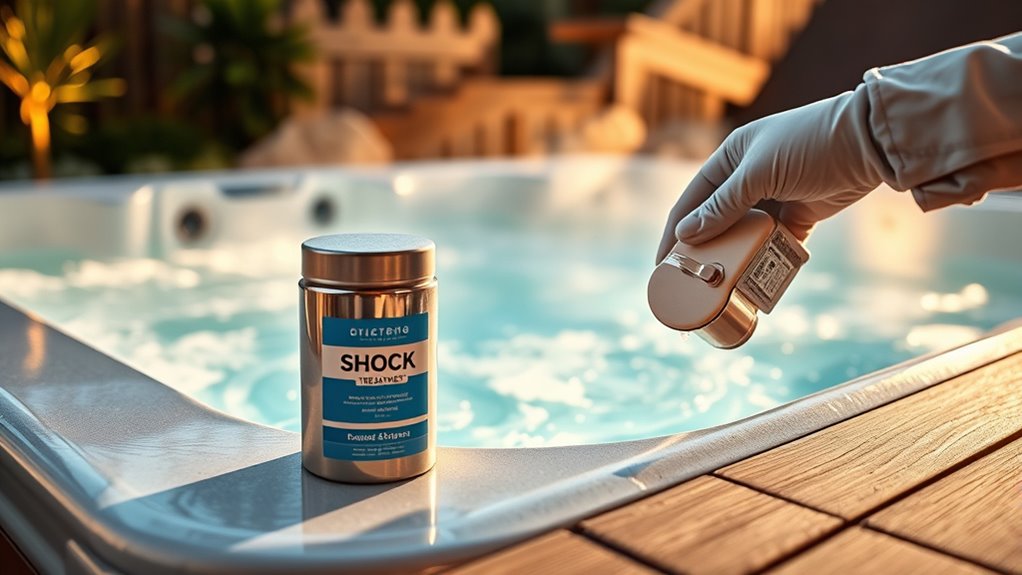
When selecting a shock product, choose one that’s compatible with your hot tub’s sanitizer system—chlorine or bromine—and follow the manufacturer’s instructions carefully. Most shock treatments require you to add the chemical directly to the water and run the jets for at least 15-20 minutes to circulate it thoroughly. Do this during the evening or when the hot tub isn’t in use, and avoid using the hot tub for at least 8 hours afterward to allow the chemicals to work effectively and dissipate. Remember, over-shocking can lead to high chlorine or bromine levels, which might cause skin irritation or damage the hot tub’s components, so stick to recommended dosages. Regularly checking the water chemistry helps ensure your shock treatments are effective and safe for continued use.
hot tub shock treatment chemical
As an affiliate, we earn on qualifying purchases.
As an affiliate, we earn on qualifying purchases.
Frequently Asked Questions
Can Shock Treatments Harm My Hot Tub’s Equipment?
Shock treatments can harm your hot tub’s equipment if you don’t follow proper pool maintenance and water chemistry guidelines. Using too much shock or applying it at the wrong time can cause corrosion or damage to filters, pumps, and heaters. Always measure the right amount, guarantee proper water balance, and follow manufacturer instructions. This way, you protect your equipment while keeping the water clean and safe.
How Often Should I Perform Shock Treatments?
Imagine you notice cloudy water after heavy use—that’s a sign you should shock your hot tub. Typically, you should perform shock treatments weekly to maintain proper chemical balance and water clarity. If you notice algae or strong odors, increase frequency. Regular shocking helps break down contaminants, ensuring your water stays clear and safe. Remember, consistent maintenance keeps your hot tub inviting and prolongs its lifespan.
Are There Natural Alternatives to Chemical Shock Treatments?
Yes, you can explore natural alternatives to chemical shock treatments. Using hydrogen peroxide or bromine-based products can act as chemical substitutes, helping to sanitize your hot tub without harsh chemicals. Regularly draining and cleaning your tub, along with maintaining proper pH levels, also reduces the need for shock treatments. These natural options can keep your hot tub clean and safe while minimizing chemical use, making your soak more eco-friendly and skin-friendly.
Can I Use Shock Treatments in Cold Weather?
Yes, you can use shock treatments in cold weather, but you should do so cautiously. During winter maintenance, cold temperatures can affect chemical stability, so it’s best to add shock when the water is slightly warmer or after a warm bath. Make sure to test your water frequently, follow manufacturer instructions, and wait until the water temperature is safe. This helps ensure effective shock treatment and maintains water clarity and safety.
How Do I Know if My Hot Tub Needs a Shock?
You’ll know your hot tub needs a shock if your water looks cloudy, smells off, or you notice algae starting to form. Check the pH balance; if it’s outside the ideal range (7.2-7.8), shock treatments can help restore it. Regular shocking also prevents algae growth, keeping your water clean and clear. Always follow manufacturer instructions for dosage and frequency to maintain supreme water quality.
Conclusion
Think of shock treatments as the heartbeat of your hot tub’s health—pulsing life back into its waters. When you use them correctly, you’re nurturing a clear, inviting oasis that welcomes you like a warm embrace. Regular shock therapy keeps unseen impurities at bay, much like a guardian watching over your sanctuary. By tending to your hot tub with care, you assure it remains a sparkling haven where relaxation and refreshment always flow freely.
Halloween Picks
halloween
As an affiliate, we earn on qualifying purchases.