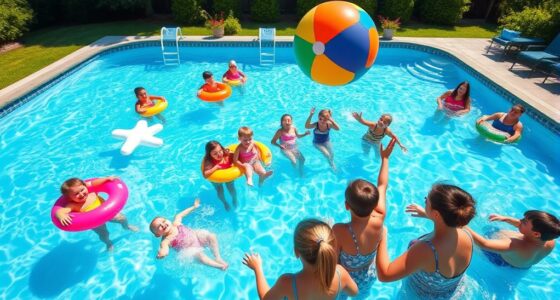
To build a joint-friendly 20-minute pool workout, focus on water walking or jogging to warm up, then add leg lifts, knee bends, and side lunges to strengthen your lower body. Incorporate arm circles and resistance punches for upper-body support, and finish with gentle stretches to improve flexibility. The water’s buoyancy reduces joint stress, while resistance builds muscle safely. Keep your routines safe and effective—continue on to discover how to optimize your aquatic exercise plan.
Key Takeaways
- Incorporate low-impact water exercises like water walking, leg lifts, and gentle stretches to protect joints.
- Use water resistance and buoyancy to strengthen muscles without overloading joints.
- Focus on smooth, controlled movements and proper technique to prevent joint strain.
- Keep workouts short (around 20 minutes) with warm-ups and cool-downs for joint safety.
- Ensure pool safety and water quality to create a secure environment for joint-friendly routines.
How Pool Workouts Are Easy on Your Joints and Why They Work

Because water provides natural buoyancy, pool workouts put less stress on your joints than traditional land exercises. This makes aquatic therapy ideal for reducing joint pain and preventing injury. The water’s supportive element allows you to perform joint friendly exercises that improve strength, flexibility, and range of motion without overloading your joints. The resistance of the water also helps build muscle safely, which supports and stabilizes your joints. Plus, the soothing properties of water reduce inflammation and discomfort often associated with joint issues. Additionally, many pools are equipped with smart security features that ensure a safe environment for your workouts. Modern measurement tools, such as pH meters, can help monitor water quality to maintain optimal conditions for safe exercise. Implementing water temperature control can further enhance comfort and effectiveness during your routines. Maintaining proper water clarity can also prevent accidents and improve visibility during exercises. Regular maintenance of pool water quality, including filter systems, is essential for a safe and hygienic workout environment. Whether you’re recovering from an injury or simply aiming to protect your joints, pool workouts offer a low-impact, effective way to stay active. This gentle approach ensures you get the benefits of exercise while safeguarding your joint health.
Top 5 20-Minute Pool Exercises to Strengthen and Protect Your Joints
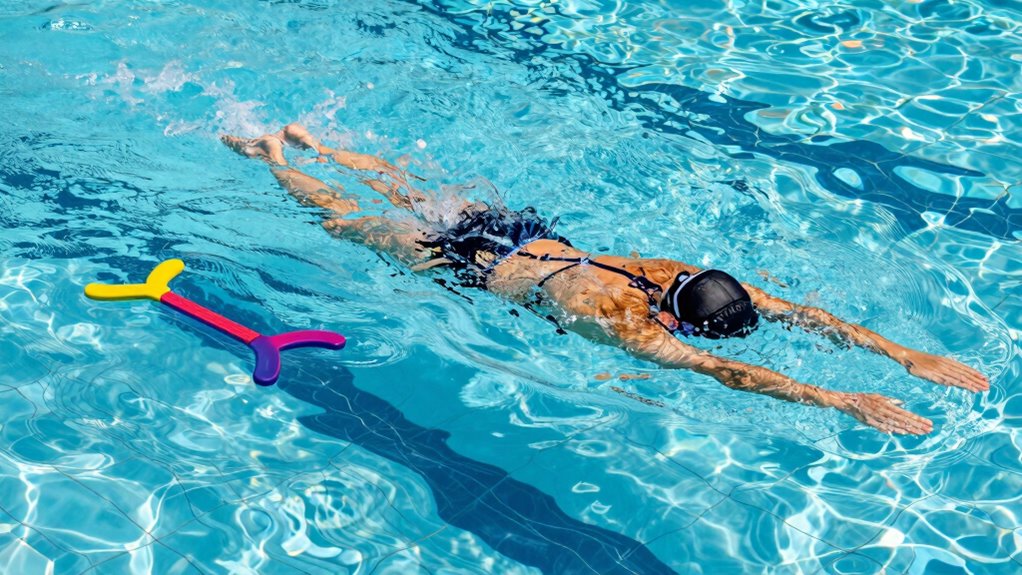
If you’re looking to strengthen and protect your joints in just 20 minutes, these pool exercises are perfect for fitting into your busy schedule. Using water resistance, you can challenge your muscles without putting undue stress on your joints, promoting joint stability. Start with water walking or jogging to warm up, engaging your legs and core. Incorporate leg lifts and knee bends to improve joint flexibility and strength. Arm circles and resistance punches boost upper-body stability while utilizing water’s natural resistance. Side lunges in the shallow end help strengthen hip and knee joints. Incorporating low-impact movements can further reduce joint strain while maintaining effectiveness. Additionally, integrating water-based therapy techniques can enhance recovery and joint support. Water exercises that focus on proper joint alignment can help prevent injuries and improve overall mobility. Paying attention to muscle balance during your workouts can prevent compensatory movements that lead to joint stress. Finish with gentle water stretches to enhance mobility. These targeted exercises harness water resistance to build strength and support joint stability, keeping your joints healthy and resilient. Embracing a Free Floating approach in your water workouts can further optimize your joint health by reducing impact and encouraging full-body engagement.
Simple Safety Tips to Keep Your Pool Workouts Comfortable and Effective
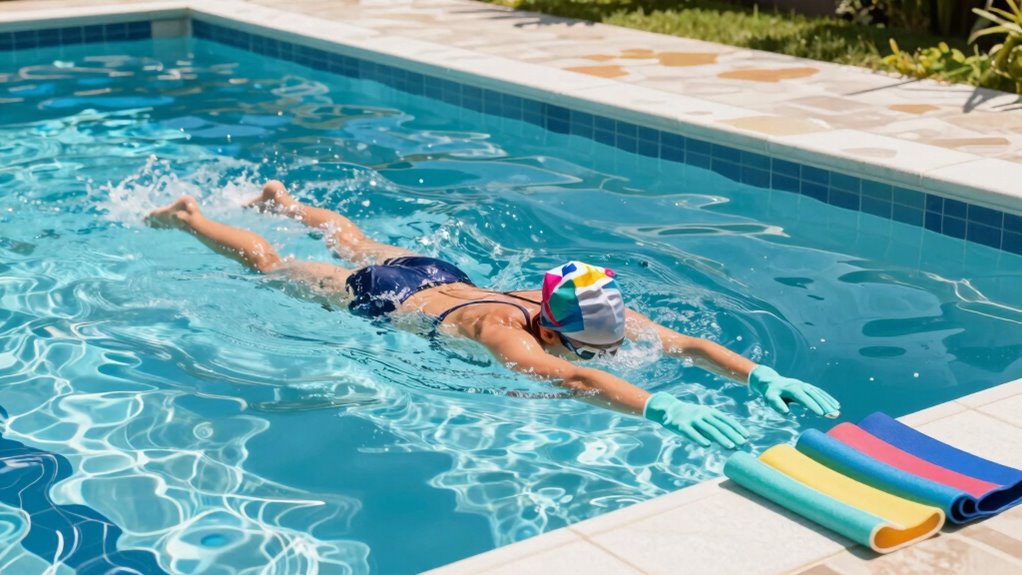
To guarantee your pool workouts are both comfortable and effective, it’s important to follow simple safety tips. Prioritize pool safety by warming up before you start; gentle stretches loosen muscles and reduce injury risk. Always stay hydrated and avoid overexertion, especially in the water, where fatigue can sneak up on you. Use proper techniques to prevent strain on your joints, focusing on smooth, controlled movements. Keep the pool environment safe—check for slipping hazards and ensure the water is clean. Listening to your body is key; if you feel pain or discomfort, stop immediately. Additionally, incorporating sauna safety tips such as monitoring heat exposure can help prevent heat-related issues during recovery or after workouts. Being aware of pool maintenance and ensuring proper water quality can also help avoid skin irritations and infections. Proper use of fitness equipment, like resistance bands or pool noodles, can further reduce injury risk. Incorporating joint-friendly exercises designed specifically for low-impact movement can enhance your workout safety. Engaging in auditory processing techniques, such as focused listening during water exercises, may also help improve coordination and safety. These steps help promote injury prevention, making your workouts safer and more enjoyable while protecting your joints from unnecessary stress.
Frequently Asked Questions
Can Pool Workouts Help Recover From Joint Injuries?
Yes, pool workouts can help you recover from joint injuries. Aquatic therapy reduces joint stress while promoting healing and improving joint mobility. The buoyancy of water supports your body, allowing you to move more freely and with less pain. Regular, gentle exercises in the pool strengthen muscles around your joints, speeding recovery and increasing flexibility without risking further injury. It’s an effective, low-impact way to regain mobility safely.
What Equipment Is Best for Low-Impact Pool Exercises?
Imagine floating effortlessly, supported by pool noodles and waterproof dumbbells, making low-impact exercise feel weightless. These are your best tools for gentle workouts that protect your joints. Pool noodles provide buoyancy and stability, while waterproof dumbbells add resistance without strain. Together, they create a safe, effective routine, allowing you to strengthen muscles and improve flexibility without risking joint pain or injury.
How Often Should I Do Pool Workouts for Joint Health?
You should aim for water resistance training or aquatic flexibility exercises about three to four times a week. This frequency helps improve joint health without overloading your joints. Incorporate gentle, low-impact movements in your pool workouts, focusing on building strength and flexibility. Consistent sessions will boost joint stability, reduce pain, and enhance mobility, making your routine effective and safe for long-term joint health.
Are Pool Workouts Suitable for All Age Groups?
Pool workouts are suitable for all age groups because water resistance provides low-impact support, reducing joint stress. The key is adjusting the pool temperature—warmer water helps soothe muscles and joints, making exercise more comfortable for seniors or those with arthritis. Younger individuals can still benefit from varied routines. Always listen to your body and consult a professional if you’re unsure, ensuring safe, effective workouts regardless of age.
How Do I Modify Exercises for Different Joint Conditions?
Like a wise old sage once said, “Adapt and conquer.” To protect your joints, tailor your pool exercises by reducing range of motion, avoiding high-impact moves, and using floatation aids. Focus on exercise modifications that minimize joint stress, such as gentle water jogging or arm circles. Always listen to your body, and consult a professional to guarantee your routine promotes joint protection without sacrificing effectiveness.
Conclusion
Did you know that water-based workouts can reduce joint stress by up to 50% compared to land exercises? By incorporating these 20-minute pool routines, you not only strengthen your muscles but also protect your joints from wear and tear. Staying consistent with these safe, effective exercises can improve your mobility and reduce pain over time. Immerse yourself in your routine today—your joints will thank you for it!