TL;DR

Get pool and patio gear delivered free with Prime
- Fast, free delivery on millions of items
- Prime Video, Amazon Music and more included
- Member-only deals all year
Gardening Know How has published four suggestions for keeping bird-bath water available in winter: move the bath to a sunnier, sheltered spot, add a dark stone, float an object on the water, or use a thermostatic de-icer. The report also advises regular cleaning and topping up the bath. It does not provide independent research or data establishing how reliably the methods work in different conditions.
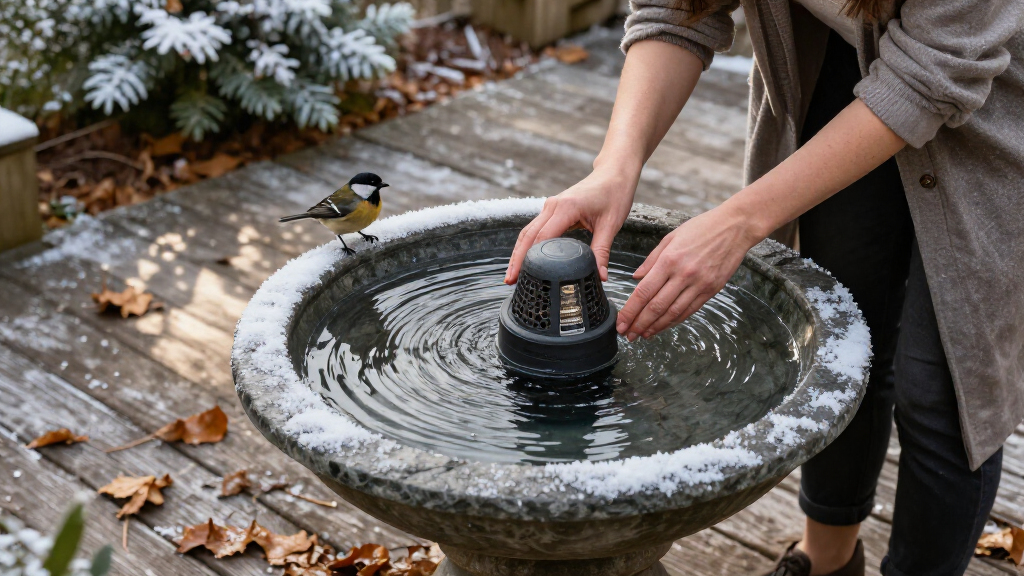
Gardening Know How has published four suggestions for keeping bird-bath water from freezing during winter, offering gardeners options that range from changing the bath’s position to installing a thermostatic heater. The guidance matters because birds may have fewer open natural water sources in cold weather, although the report does not present testing data showing how effective each method is across different climates or bath designs.
The first suggestion is to move the bath to a sunny, sheltered location. Gardening Know How says a spot near a south-facing wall may receive more sunlight and less exposure to cold northerly winds. It suggests placing the bath about six feet from such a wall, while noting that the sunniest part of a garden can shift between summer and winter. A position protected from wind may also slow heat loss, but sunlight and local weather will affect the result.
A second option is to place a large, dark stone in the water. The report says a stone can absorb warmth in sunlight and release it as the air cools. It recommends a rock at least four inches across, with part of it above the water, while cautioning that it should not displace more than a third of the bath’s water. A third suggestion is to float an object, such as a ping-pong ball, tennis ball or rubber duck. Gardening Know How says movement on the surface may disrupt ice formation, and advises choosing an item suited to how windy the location is.
The fourth option is a bird-bath de-icer with a thermostat. The report recommends looking for a product intended for bird baths, set to operate when temperatures fall and switch off as they rise. It suggests a 60- to 120-watt rating, but the source does not provide comparative product tests or explain what size bath those ratings suit. It also advises considering cord length and bath placement. After choosing a method, gardeners are advised to keep water topped up, remove fallen leaves and scrub the bath weekly.
Keeping Winter Water Accessible
The guide addresses a practical seasonal problem: water can become harder for birds to access when garden baths and natural sources freeze. Gardening Know How says small birds need water for drinking and for bathing and preening, which helps maintain their feathers. These are claims made by the source; the supplied material does not cite studies or quantify how many birds use garden baths in winter.
For readers, the four approaches differ in cost, upkeep and dependence on conditions. Moving a bath or adding a floating object may require little equipment, but neither is presented as a guarantee against ice. A heater may provide more active temperature control, while requiring a suitable product, power access and attention to safe placement. Whatever the method, clean water and regular maintenance remain part of the source’s advice, especially if the bath attracts frequent use.
Products Worth Considering

Philips Hue Festavia Globe Outdoor String Lights, 32 Bulbs, 91 ft

Ring Floodlight Cam Wired Plus, 1080p HD Outdoor Security Camera with Motion-Activated Floodlights, 4-Pack, White

Ring Outdoor Cam 4K Plus Battery Security Camera, 3-Pack, White
As an affiliate, we earn on qualifying purchases.
The Four Methods in Brief
The article is a seasonal gardening advice report, not an announcement of new scientific findings or a change in wildlife policy. Its four recommendations rely on straightforward mechanisms described by the outlet: sunlight and a dark stone may add or retain warmth; a floating object may disturb ice formation; and a thermostatic de-icer may heat water when needed. The report does not compare these methods in controlled conditions.
Gardening Know How also explains why summer and winter placement may differ. Partial shade can help limit algae during warmer months, while a sunnier location may be useful in winter. The source recommends keeping a bath away from strong wind where possible. It further says that fallen leaves can affect water quality and that a busy bath should be scrubbed weekly, particularly if many birds visit.
Effectiveness Depends on Conditions
The source does not state when the report was published in the supplied material, nor does it provide test results, expert interviews or independent evidence comparing the four methods. It is not clear how well the stone or floating-object approaches perform during prolonged sub-zero weather, in deep shade, or in baths of different sizes. The suggested heater wattage is also not tied to a stated temperature range, water volume or product standard.
The report names retail products and gives example specifications, but the supplied source material does not establish whether those models remain available, meet current requirements or are suitable for every garden setup. It also does not give detailed electrical-safety instructions. Readers should follow the heater manufacturer’s directions and applicable safety guidance, and should not treat the article’s general recommendations as a guarantee that a bath will remain ice-free.
Practical Steps for Gardeners
The report offers no follow-up study or scheduled next milestone. For now, its advice is to choose a method suited to the garden, check the bath regularly as temperatures change, and refill it as needed. Gardeners considering an electrical de-icer can check its intended use, thermostat, power requirements and cord length against the bath’s location, then follow the manufacturer’s installation and operating instructions.
Regular upkeep is also part of the recommended routine: clear leaves and other debris, replace dirty water and scrub the bath weekly, with more frequent checks if it is heavily used. Whether any of the four methods prevents freezing will depend on local weather, exposure and equipment; the source provides no measured results to predict performance.
Key Questions
What are the four ways the report recommends?
Gardening Know How suggests moving the bath to a sunny, sheltered place, adding a dark stone, floating an object such as a ball or rubber duck, or using a thermostatic bird-bath de-icer.
Will a stone or floating object stop a bird bath freezing?
The report says these methods may slow ice formation, but it offers no test data or guarantee. Results may vary with sunlight, wind, temperature and the bath’s size.
What kind of de-icer does the report suggest?
It recommends a thermostatic model designed for bird baths, rather than assuming a heater intended for another use is suitable. The source suggests 60 to 120 watts but does not specify the bath size or conditions for that range. Follow the product’s instructions and safety guidance.
How often should a winter bird bath be cleaned?
Gardening Know How recommends scrubbing it weekly and removing fallen leaves. It says a heavily used bath may need particular attention because more bird traffic can increase opportunities for disease to spread.
Source: gardeningknowhow.com