TL;DR

Get pool and patio gear delivered free with Prime
- Fast, free delivery on millions of items
- Prime Video, Amazon Music and more included
- Member-only deals all year
A Planet Natural report says late-season powdery mildew calls for a plant-by-plant decision, not an automatic spray or removal. Protect a productive plant only when useful growth remains; remove spent annuals and handle diseased debris according to local disposal guidance.
A Planet Natural report on late-season powdery mildew advises gardeners to decide whether to treat or remove a plant based on its remaining productivity and type, rather than spraying automatically. The guidance says a crop still producing useful harvests may warrant limited care, while a spent annual is generally better cleared away, with diseased debris handled according to local disposal rules.
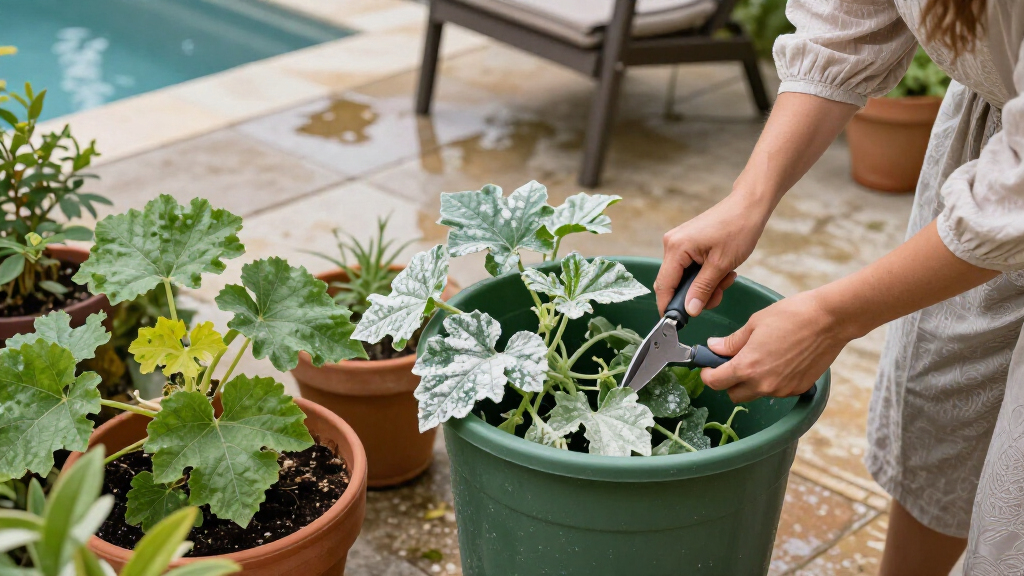
The report describes powdery mildew as a group of fungal diseases that commonly produce a white-to-gray, powdery coating on leaves and sometimes stems, flowers or fruit. It cautions that similar-looking symptoms can come from other diseases, insect damage, aging leaves or spray residue. Gardeners should identify the plant and problem before choosing a treatment, especially when the plant is valuable or the symptoms are unfamiliar.
For a crop that remains productive, the report recommends removing the worst affected leaves only if doing so will not strip away most of the plant’s functioning foliage. Improving airflow and directing irrigation to the soil can help manage conditions, but these steps do not restore infected tissue. Fungicides are described as protective tools, not a way to erase an established coating; any product should be labeled for the specific plant and problem, with label directions and harvest intervals followed.
For an annual that has stopped producing, the report favors removing the plant and collecting loose infected leaves and fallen debris over starting a late spray program. It warns that household compost may not reliably reach temperatures that reduce disease spores. Whether material belongs in household trash or municipal green-waste collection depends on local program rules, which gardeners should check before disposal.
Choosing Between Spraying and Cleanup
The decision affects both the effort spent at the end of the season and the amount of useful growth preserved. Spraying a declining plant near the end of its productive life may have little practical return, according to the report. By contrast, removing foliage indiscriminately from a productive crop or returning perennial could take away healthy tissue the plant still needs.
Cleanup also has limits. Removing infected material can reduce one possible source of disease carryover, but the report says it cannot guarantee that mildew will be absent next year: spores may arrive from nearby hosts or move on air currents, and some fungi overwinter on plant material. Gardeners therefore need to balance sanitation with early observation, suitable spacing and, where available, resistant or tolerant varieties.
powdery mildew fungicide for vegetables
As an affiliate, we earn on qualifying purchases.
As an affiliate, we earn on qualifying purchases.
How Plant Type Changes the Decision
The report distinguishes between seasonal annuals and returning perennials. Once a cucumber, squash or annual flower is no longer producing useful growth, removal and debris cleanup are usually the practical next steps. A perennial with late-season symptoms is different: unattractive foliage alone does not mean its crown or root system should be discarded.
For perennials such as phlox, bee balm or peony, the guidance favors selective removal of badly affected leaves and stems in line with normal seasonal care, while retaining healthy structure the plant needs. Repeated severe disease, substantial dieback or symptoms that do not fit a typical powdery coating merit closer diagnosis. The source recommends recording the plant, location, timing and symptoms, and seeking local diagnostic help when the answer could change what a gardener does.
The report also recommends keeping visibly diseased material separate from healthy leaves, which may be suitable for compost or leaf mold, and cleaning tools before moving from a suspect plant to healthy ones. It advises removing plant fragments and washing soil or sap from blades; where a disease is confirmed, follow local disinfection guidance.
Diagnosis and Disposal Still Vary
The report does not establish that every white or pale patch is powdery mildew. Downy mildew, insects, natural aging, residue and other diseases can resemble it, and the source does not identify a specific garden, outbreak or pathogen. Diagnosis may require local expertise, particularly before treating an edible crop or removing a valued perennial.
Disposal advice also depends on local waste services and the capacity of a home compost system. The report says many home piles do not reliably reach or sustain temperatures that reduce spores, but it does not provide a universal temperature threshold or a single disposal method suitable everywhere. Gardeners should check local program instructions rather than assume curbside organics or home composting is appropriate.
Prepare Before Next Season
The report’s next-season advice is preventive: choose resistant or tolerant varieties where available, provide mature spacing, avoid unnecessary nitrogen that can encourage lush growth, and check plant canopies early. Gardeners should also record recurring symptoms and the conditions in which they appear, so treatment decisions can be made before foliage is heavily affected.
For plants affected now, the immediate next step is to assess whether useful growth remains, confirm the likely diagnosis when uncertain, and select a treatment or cleanup route that fits the plant and local disposal rules. The source provides general gardening guidance, not a specific product recommendation or a diagnosis for any individual plant.
Key Questions
Should I spray a plant with powdery mildew at the end of the season?
Not automatically. The report says treatment may make sense if the plant is still productive and has useful growth left, but a late spray may offer little return for a declining annual. Use only a product labeled for the specific plant and problem, and follow its directions.
Should I remove a perennial with late-season mildew?
Not solely because its leaves look damaged. The report recommends selective removal of affected parts while preserving healthy structure the plant still needs. Seek local diagnostic help if symptoms are severe, recurring or unclear.
Can I put diseased leaves in my home compost?
It depends on the compost system. The report says many home piles may not reliably reach or sustain temperatures that reduce spores. Check local guidance and your system’s capacity before composting visibly diseased material.
Will cleanup prevent powdery mildew next year?
No guarantee is offered. Cleanup can reduce one source of disease carryover, but spores may arrive from nearby plants or travel on air currents. Early monitoring, suitable spacing and resistant varieties can also help manage risk.
Source: rss
Halloween Picks
halloween
As an affiliate, we earn on qualifying purchases.