TL;DR

Get pool and patio gear delivered free with Prime
- Fast, free delivery on millions of items
- Prime Video, Amazon Music and more included
- Member-only deals all year
Caladiums in climates with freezing winters should be lifted in fall as their leaves fade, before a freeze can damage the plants. The corms need to dry thoroughly before being packed in dry medium and stored above 55°F; exact timing varies with local conditions.
A Gardener’s Path guide outlines how gardeners can lift, dry and store caladium corms before winter, allowing the tropical foliage plants to be replanted in spring in places where the ground freezes. It recommends acting as the leaves fade in fall and before a freeze, then keeping the corms dry in storage at temperatures above 55°F.
Caladiums grow as perennials in USDA hardiness zones 9 to 11, according to the guide. In colder areas they are often treated as annuals, but their corms can be dug up and kept over winter. Gardeners in warm, frost-free regions may also lift them if winter rain leaves the soil persistently wet, since waterlogged ground can cause corms to rot.
The guide says to watch for fading, drooping foliage and falling temperatures rather than relying on a single date. In areas where the ground freezes, it suggests lifting when soil is around 60°F, with weather patterns and plant appearance serving as additional cues. Caladiums grow best in soil at 70°F or warmer and are vulnerable to a freeze; the guide warns that even one freeze can kill them.
To lift a cluster, loosen soil about six to eight inches around it and roughly eight inches deep, taking care not to cut or bruise the shallow corms. Lift the root-and-soil clump gently by gathering the leafstalks. Rinse soil away with a gentle hose setting, or let the clump dry enough to brush the soil off. Remove dead, soft or rotten material, then cure the corms in a warm, dry place out of direct sun. This can take a week or longer; the corms should feel dry and the foliage should be withered before storage.
Once cured, remove foliage and trim roots. Place corms at least an inch apart in dry vermiculite, sphagnum peat moss or sand, then cover them with two to three inches of the same material. Keep the containers in a cool, dry place above 55°F, away from direct sunlight, and keep the packing medium dry. The guide says gardeners may use a sulfur-based fungicide according to its label, but presents this as an optional step rather than a requirement.
Protecting Corms Through Winter
Correct timing and dry storage can let gardeners reuse caladium corms instead of replacing plants every spring. The advice is particularly relevant where winter freezes make outdoor survival unlikely, or where heavy winter rain keeps soil wet enough to encourage rot. Lifting too late risks freeze damage; storing corms before they have dried fully raises the risk of spoilage.
The process also calls for patience: curing may take a week or more, and the guide says drying time varies. A cool storage space is useful only if it stays within the recommended temperature range and the medium remains dry. Those conditions, rather than a fixed calendar schedule, are central to preserving the corms.
As an affiliate, we earn on qualifying purchases.
Fall Signs and Temperature Cues
Caladiums are tropical plants whose leaves emerge in spring and grow through summer. As fall arrives, the foliage fades and the plants enter winter dormancy. In regions where soil stays above about 60°F year-round, the guide says plants may be left in the ground, although very wet soil can still be a reason to lift them.
For plants in pots, the guide says containers can be brought indoors when night temperatures begin to fall below 60°F. Once growth stops and dormancy begins, watering should pause; watering can resume when new spring growth appears. For stored corms, planting outdoors should wait until frost danger has passed and soil is at least 70°F. Starting corms indoors in early or mid-spring is another option, with outdoor planting later in the season.
Local Timing and Storage Conditions
The guide does not give one universal fall date for lifting: climate, soil temperature and plant condition differ by location. It also says curing can take a week or more, without specifying an exact duration for every setting. Gardeners must check that corms and packing medium are dry and that the chosen storage place stays above 55°F; the source does not provide a single storage temperature target beyond that lower limit.
The recommendation to use sulfur-based fungicide is optional in the guide, and no product or effectiveness comparison is provided. Local frost forecasts and garden conditions will determine when an individual planting should be lifted.
Replant After Frost Risk Passes
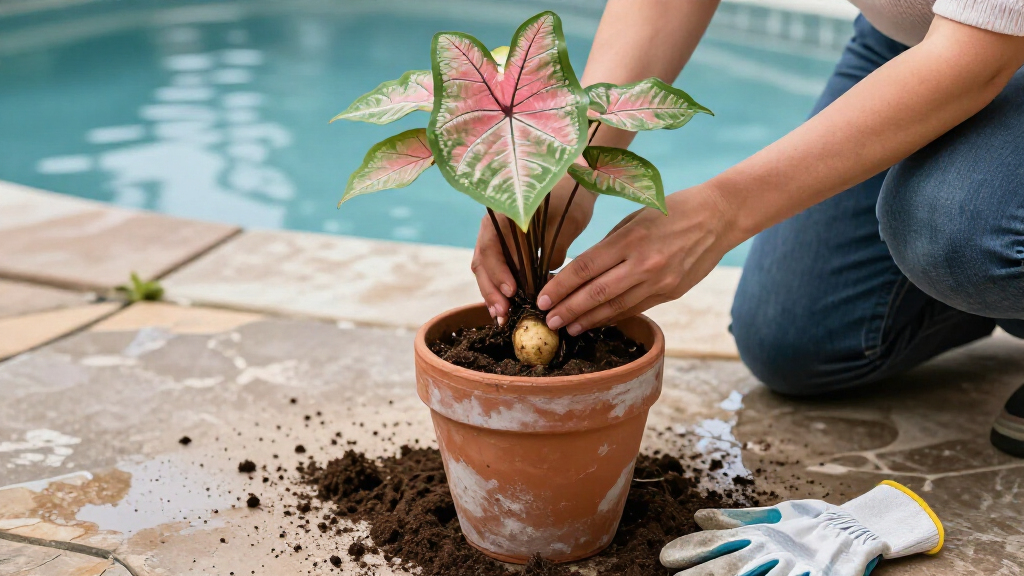
Stored corms can go back into the garden once all risk of frost has passed and soil has warmed to at least 70°F. Alternatively, gardeners can pot them indoors in early to mid-spring, keep the potting mix moist but not waterlogged, and place the container in a warm spot with indirect light before planting outside.
Until then, check storage periodically to confirm the medium remains dry and the corms are not showing signs of rot. The source gives no fixed inspection schedule, so gardeners should use their storage conditions and the corms’ condition as guides.
Key Questions
When should I lift caladiums for winter?
Lift them in fall as the foliage fades and before a freeze. The guide suggests soil near 60°F as a cue in freezing regions, alongside local forecasts and the plant’s condition.
How long should caladium corms dry before storage?
Allow at least about a week, and longer if needed. Store them only when the corms feel dry and remaining foliage is withered and easy to remove.
What temperature should stored caladiums stay above?
Keep the storage location cool and dry, but do not let temperatures fall below 55 to 60°F, according to the guide.
Can caladiums remain in the ground all winter?
They may be left in the ground in warm regions where soil remains above about 60°F year-round. In freezing climates they should be lifted, and in very wet winters lifting may help reduce the risk of rot.
When can stored corms be planted again?
Plant outdoors after frost danger has passed and soil reaches at least 70°F. You can also start corms indoors earlier in spring in warm, well-draining potting medium.
Source: rss
Halloween Picks
halloween
As an affiliate, we earn on qualifying purchases.