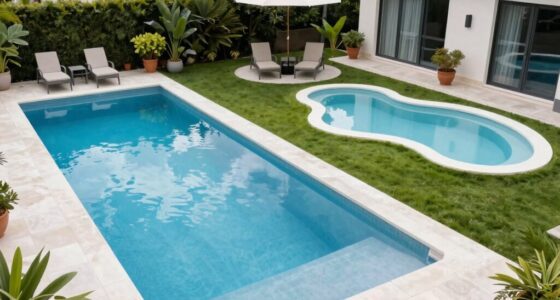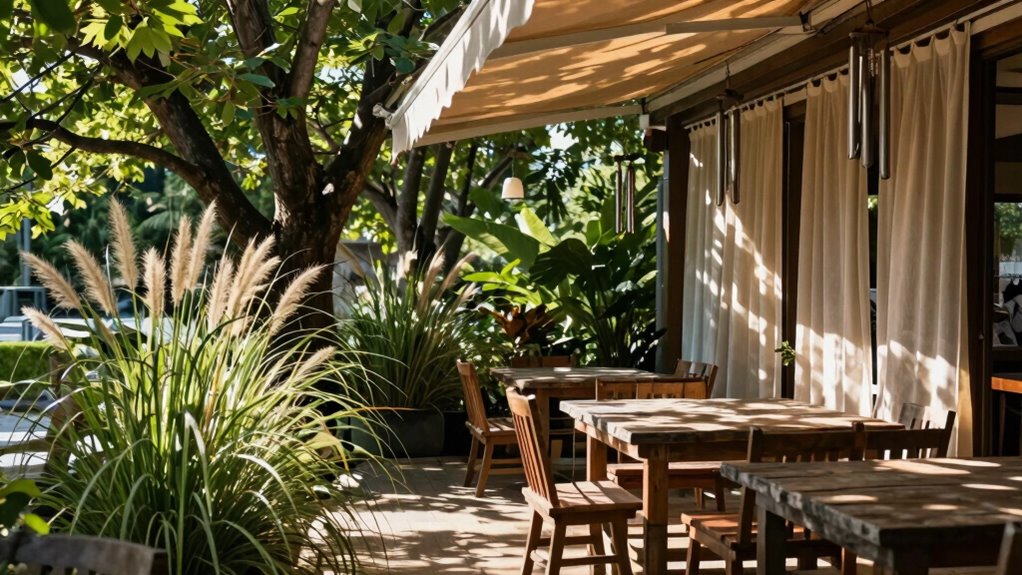

To plan for shade, wind, and sun together, observe how sunlight, wind, and shade shift daily and seasonally. Position plants, barriers, and shelters strategically to block harsh winds, provide shade during peak sun hours, and allow sunlight in winter. Use deciduous trees for seasonal shade changes and microclimates to customize comfort. Adjust placements over time to optimize airflow and sunlight. Keep exploring these strategies to create a balanced, comfortable outdoor space year-round.

Get pool and patio gear delivered free — and shop member deals
- Fast, free delivery on millions of items
- Access to Prime Big Deal Days deals on October 6–7
- Prime Video, Amazon Music and more included
Key Takeaways
- Analyze solar movement and prevailing winds to strategically position shade structures and windbreaks simultaneously.
- Use deciduous trees and layered plantings to provide seasonal shade and wind protection.
- Orient outdoor spaces to maximize sun exposure during cold months while blocking excessive heat in summer.
- Place barriers downwind of seating areas to reduce wind without obstructing sunlight access.
- Incorporate microclimates and adjustable elements to adapt outdoor comfort throughout different seasons.

When designing an outdoor space, understanding how shade, wind, and sun move throughout the day is vital for creating a comfortable environment. This helps determine where to place your shelter and how to choose plants that will thrive in the varying light conditions. Plant selection is essential; opt for deciduous trees that provide shade in summer but allow sunlight through in winter. Shrubs and ground covers can also help block wind without overly obstructing sunlight, creating a layered effect that promotes comfort in all seasons. Incorporating microclimates into your design can further enhance comfort by creating specific areas tailored to different weather conditions. Understanding how windbreaks impact airflow can help you design more effective barriers that protect your outdoor space from harsh gusts. Strategic placement of these barriers can also influence how heat and cold are distributed, contributing to a more comfortable environment year-round. Shelter placement plays a key role in managing wind and sun. Position windbreaks—like fences, hedges, or dense shrubbery—on the prevailing wind side to reduce gusts that can make the space uncomfortable. Be strategic: placing these barriers downwind of seating areas ensures you minimize wind exposure without blocking sunlight you want to enjoy. Conversely, if you need to cool down a hot spot, place shelters or screens to provide shade during peak sun hours. Think about the orientation of your outdoor furniture; positioning it in the shade during the hottest parts of the day can markedly boost comfort. Additionally, observing how solar movement interacts with your space can help you optimize shelter placement and plant choices for maximum comfort and energy efficiency. Taking note of seasonal variations can help you plan for adjustments throughout the year, ensuring your outdoor environment remains comfortable regardless of the season. These adjustments rely heavily on your understanding of how sun and wind move across your yard, so take time to observe and note patterns.
As an affiliate, we earn on qualifying purchases.
Frequently Asked Questions
How Do Seasonal Changes Affect Shading and Wind Planning?
Seasonal shifts greatly impact your shading and wind planning. As seasons change, wind variability increases or decreases, influencing how you position shade structures. In winter, you might need more windbreaks, while summer requires ample shade to block the sun. You should adapt your strategies throughout the year, considering the shifting angles of the sun and prevailing wind patterns, ensuring comfort and protection regardless of seasonal fluctuations.
What Are Eco-Friendly Options for Natural Shading?
You can choose eco-friendly natural shading options like planting deciduous trees, which provide shade in summer and let sunlight in winter. Incorporate solar panels to generate energy while offering shade, and consider small wind turbines to harness breeze for power. These solutions reduce your environmental impact, enhance energy efficiency, and create a sustainable outdoor space. Combining trees with solar and wind options offers effective, eco-conscious shading that benefits both your property and the planet.
How Can I Incorporate Wildlife Considerations Into My Design?
Think of your garden as a bustling wildlife city. You can invite nature’s residents by creating wildlife habitats and planting native species that attract birds, butterflies, and beneficial insects. Incorporate trees, shrubs, and ground covers that provide shelter and food sources. By designing with native plantings, you support local ecosystems, making your garden a lively, thriving sanctuary where wildlife feels safe and welcomed.
What Are Budget-Friendly Solutions for All-Season Shading?
For all-season shading on a budget, consider cost-effective pergolas or DIY shade solutions. You can build a simple pergola with affordable materials and add retractable fabric or curtains for flexibility. Using outdoor blinds or shade sails also offers versatile, cost-effective options. These solutions help you enjoy your outdoor space year-round without breaking the bank, providing protection from sun, wind, and even light rain.
How Do Local Building Codes Impact Shading and Wind Structures?
Local building codes can feel like a maze, but they’re essential for safe, legal structures. You’ll need to secure building permits before installing shade or wind structures, ensuring they meet safety regulations. Ignoring these rules could lead to hefty fines or dangerous collapses—imagine your project turning into a disaster movie! Always check with your local authorities to understand specific requirements, so your structures stay sturdy and compliant.
Conclusion
By thoughtfully considering shade, wind, and sun, you create a perfect outdoor oasis that feels like your personal paradise—no matter the weather. When you plan ahead, you’re not just saving time or money; you’re crafting a space so comfortable and harmonious that it’ll make every moment outside feel like a vacation. Don’t underestimate the power of good planning—you’re building a sanctuary so inviting, it might just outshine the sun itself!
Halloween Picks
halloween
As an affiliate, we earn on qualifying purchases.