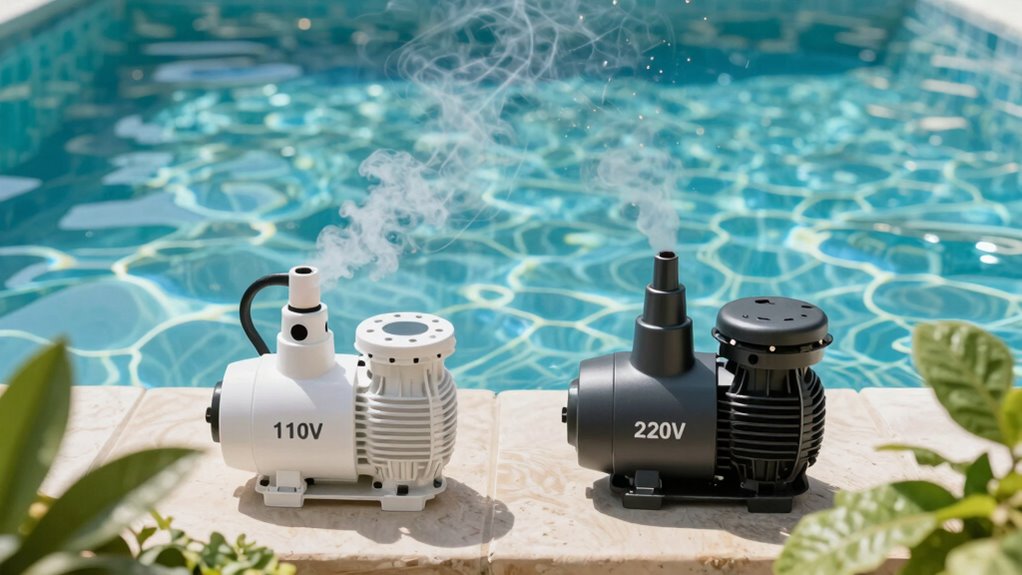
Using the wrong voltage for your pool pump can cause serious damage, overheating, or even electrical hazards. A 110V pump isn’t designed for higher voltage outlets like 220V, which can fry the motor or trip circuit breakers, while a 220V pump may not work safely on a 110V supply. To avoid these risks and guarantee smooth operation, it’s essential you match the pump’s voltage to your home’s system. Keep going to discover how to get it right.
Key Takeaways
- Connecting a 110V pump to a 220V outlet can cause overheating and severe motor damage.
- Using a 220V pump on a 110V supply results in insufficient power, reducing performance and risking damage.
- Mismatched voltage can trip circuit breakers, halt operation, and potentially damage your home’s electrical system.
- Incorrect voltage setup increases electrical hazards like shocks and fire risks during installation or operation.
- Always verify pump and home voltage compatibility to prevent costly repairs and ensure safe, reliable operation.
As an affiliate, we earn on qualifying purchases.
Which Voltage Is Right for Your Pool?

Choosing the right voltage for your pool pump depends on your specific setup and needs. First, check voltage compatibility with your home’s electrical system, as some areas only support certain voltages. A 110V pump is generally easier to install and requires a standard outlet, making it ideal for smaller pools or limited electrical access. On the other hand, a 220V pump often delivers better power efficiency and higher performance, especially for larger or more complex pools. While 220V models may require professional wiring, they can operate more efficiently and save energy over time. Additionally, understanding electrical safety is crucial to prevent hazards and ensure proper installation. Properly assessing your pool’s size and power requirements can help determine which voltage is best suited for your needs. Evaluating electrical codes and regulations in your area can also influence your choice and ensure compliance. Being aware of the electrical capacity of your property can help prevent overloads and potential electrical failures. Ultimately, selecting the correct voltage guarantees your pump runs smoothly, safely, and efficiently, preventing potential electrical issues and optimizing power use for your pool’s size and demands.
How Does Voltage Affect Pool Pump Performance and Efficiency?

Voltage directly influences your pool pump’s performance and efficiency by determining how much power it can draw and how effectively it operates. Higher voltage systems, like 220V, generally provide more consistent power delivery, reducing strain on the motor and improving overall operation. Proper voltage regulation guarantees your pump runs smoothly without fluctuations that could cause it to work harder or overheat. When voltage is stable, your pump maintains ideal flow rates and energy efficiency, saving you money on electricity. Additionally, using the correct voltage helps extend pump longevity by minimizing electrical stress and wear on components. Consistent power supply is crucial for maintaining optimal pump performance and preventing damage. Ensuring your wiring and connections are correctly rated for your system’s voltage helps prevent electrical issues that could lead to costly repairs or replacements. Properly matching the voltage also reduces the risk of electrical surges, which can be damaging to your equipment. A voltage mismatch can cause increased heat and mechanical stress, further jeopardizing your pump’s health. Conversely, mismatched voltage can lead to performance issues, increased energy consumption, and a higher risk of damage, ultimately shortening your pump’s lifespan.
How to Choose the Correct Pool Pump Voltage for Your Setup?
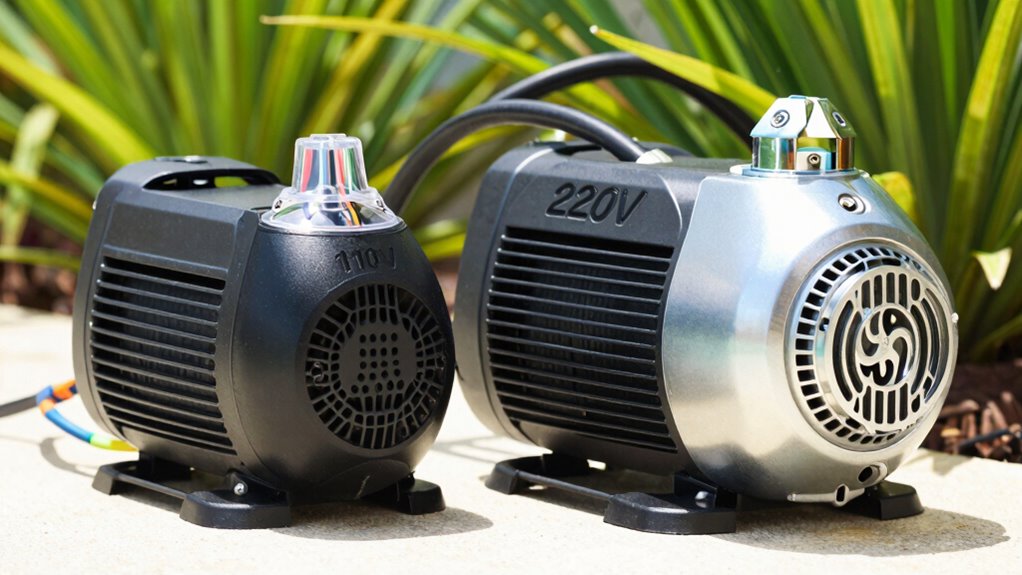
To guarantee your pool operates smoothly and efficiently, selecting the right pump voltage is essential. First, check your existing electrical setup to determine whether your circuit supports 110V or 220V. Consider your pool size and filtration needs to choose a pump with appropriate horsepower that matches your setup. For energy efficiency, opt for a pump designed for your voltage, as running a pump at the wrong voltage can increase energy consumption and strain your system. Proper pool pump maintenance, including regular checks of wiring and connections, ensures safe operation and longevity. Additionally, understanding electrical compatibility can help prevent potential hazards and ensure your pump functions correctly. Being aware of voltage requirements is crucial to avoid damaging your equipment or creating safety risks. To further enhance safety and performance, familiarize yourself with essential safety tips for portable oil radiators when installing or servicing electrical equipment around water. Always verify electrical codes and regulations to ensure your setup complies with local safety standards. Recognizing the importance of correct wiring practices can significantly reduce the risk of electrical faults. If you’re unsure, consult a professional to assess your electrical configuration and recommend the best voltage for your pool, ultimately saving energy and preventing costly mistakes.
Common Mistakes to Avoid When Selecting Your Pool Pump Voltage?
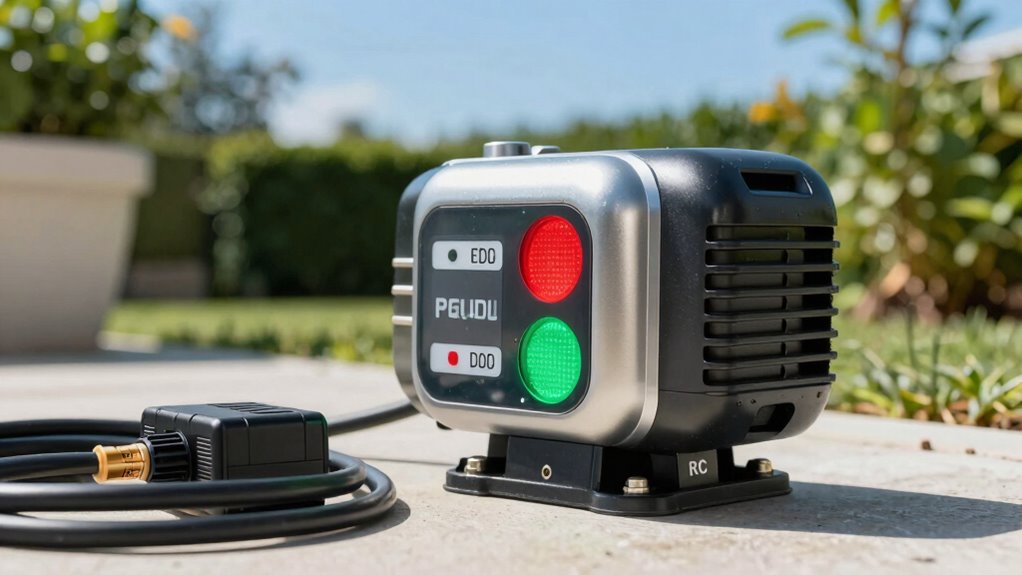
One common mistake is overlooking voltage compatibility with your pool equipment and power supply. You need to confirm your pump matches the voltage available in your setup to avoid damage or inefficiency. Failing to verify these aspects can lead to costly mistakes and downtime. Consulting a trusted business or service can help ensure your system is properly configured and safe. Additionally, understanding the Affiliate Disclosure concept can help you better manage your pool’s electrical setup and prevent potential hazards. For example, employing the correct essential DIY tools and following safety tips can significantly reduce risks during installation or maintenance. Recognizing the importance of electric power standards can also assist in selecting the appropriate pump voltage for your specific needs.
Voltage Compatibility Check
Choosing the right voltage for your pool pump is crucial to guarantee safe and efficient operation. Before installation, you need to check voltage compatibility between your power supply and the pump motor. Using a pump designed for a different voltage can cause serious issues, including overheating or electrical failure. Verify your home’s electrical system specifications and ensure they match the pump’s requirements. If your pump is rated for 110V, don’t connect it to a 220V outlet without proper conversion, as it can fry the pump motor. Conversely, connecting a 220V pump to a 110V supply won’t provide enough power, leading to poor performance. Always double-check the voltage compatibility labels and consult an electrician if you’re unsure. Proper matching is key to avoiding equipment damage and ensuring smooth operation. Additionally, understanding voltage conversion procedures can help prevent costly mistakes during installation. Being aware of electrical system specifications can further ensure safe and reliable operation of your pool equipment. Taking the time to verify your system’s power supply compatibility can save you from unexpected repair costs. Ensuring that your electrical connections are correctly installed and protected is also essential for safety and longevity of your pool pump.
Power Supply Compatibility
Many pool owners make the mistake of assuming their pump will work with any power supply, but mismatched voltage can cause serious problems. Proper power supply compatibility requires careful voltage conversion to match your pump’s voltage rating. Using a pump designed for 110V on a 220V outlet, or vice versa, can lead to motor damage or failure. Additionally, ensure your power supply provides stable power; fluctuations can cause your pump to run inefficiently or overheat. Check that your outlet can deliver consistent power without surges or interruptions. Avoid relying on adapters or quick fixes that don’t address voltage conversion or power stability. Correctly matching your pool pump’s voltage with your power supply safeguards your investment and ensures reliable operation.
Signs You Might Be Using the Wrong Voltage Pool Pump?
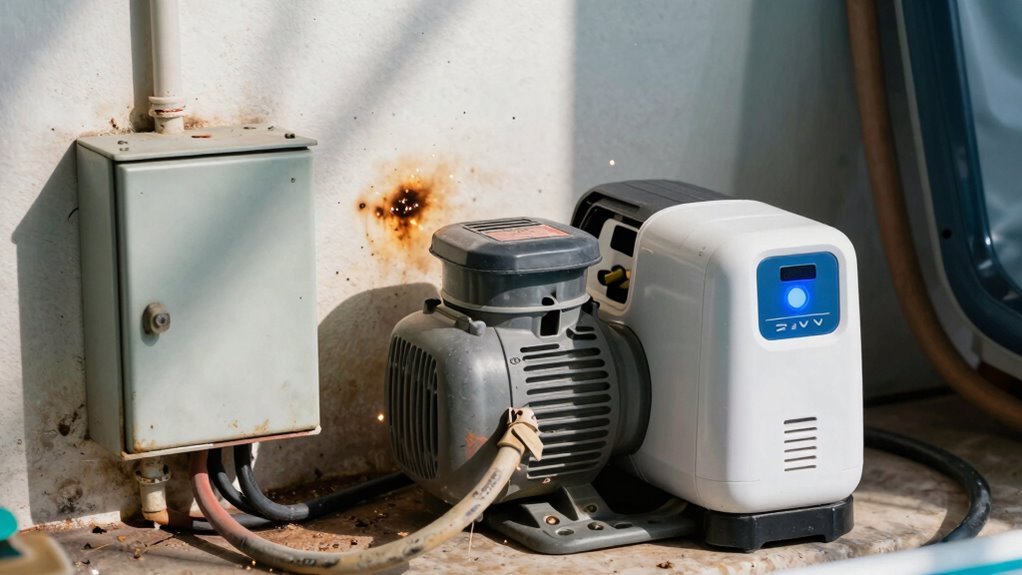
If your pool pump is acting oddly or shutting off unexpectedly, you might be using the wrong voltage. Frequent circuit breakers trips are also a red flag that something’s off. Pay attention to these signs—they can save you time and prevent damage.
Unusual Pump Behavior
Unusual pump behavior is often a clear sign that you might be using the incorrect voltage pool pump. If you notice strange pump noise, such as grinding or humming louder than usual, it could indicate electrical issues caused by incorrect voltage. Additionally, inconsistent water flow—either too weak or erratic—might be a sign your pump isn’t operating properly. When a pump runs on the wrong voltage, it struggles to maintain normal function, leading to abnormal noise and water flow problems. You might also see the pump overheating or shutting off unexpectedly. These signs suggest the pump is under stress or malfunctioning due to voltage mismatch. Addressing these issues quickly can prevent further damage and ensure your pool stays clean and properly circulated.
Frequent Circuit Breakers
Frequent circuit breaker trips are a strong indicator that your pool pump may be mismatched with the voltage supply. If you notice circuit breaker overloads whenever you turn on your pump, wiring compatibility could be the culprit. Using a pump designed for a different voltage than your circuit can cause it to draw excessive current, triggering the breaker repeatedly. This often happens when a 110V pump is connected to a 220V supply or vice versa. Not only does this strain your wiring, but it also increases the risk of damage or fire. To avoid these issues, double-check that your pump’s voltage matches your electrical setup. Ensuring proper wiring compatibility is key to keeping your pool system running smoothly and preventing constant breaker trips.
What Are the Safety Risks of Using the Wrong Voltage?

Using the wrong voltage for your pool pump can pose serious safety risks that you might not immediately recognize. Incorrect voltage can lead to electrical safety hazards, including electric shocks, fires, and equipment damage. When you attempt voltage conversion without proper knowledge, you risk creating unsafe conditions that could harm you or others nearby. Overloading circuits or mismatched voltage levels can cause wiring to overheat, increasing the chance of electrical fires. Additionally, inconsistent power supply can damage internal components, leading to leaks or short circuits. Always make sure your pump’s voltage matches your power source, and avoid DIY voltage conversion unless you’re qualified. Prioritizing safety helps prevent accidents, equipment failure, and unnecessary hazards in your pool area.
Cost and Savings of Choosing the Right Pool Pump Voltage?

Choosing the right voltage for your pool pump can lead to significant savings over time, as it guarantees ideal energy efficiency and reduces wear on the motor. A proper voltage setup results in lower electricity bills through better power consumption, maximizing your savings potential. When comparing costs, a 220V pump typically uses less energy than a 110V model of similar size, translating into long-term financial benefits. While the initial investment might be higher for a 220V pump, the reduced energy consumption and fewer repairs can offset the upfront cost. Focusing on the cost comparison helps you understand how choosing the appropriate voltage maximizes your pool’s efficiency and minimizes operating expenses, ensuring you save money in the long run.
How to Install or Upgrade Your Pool Pump Voltage Safely?
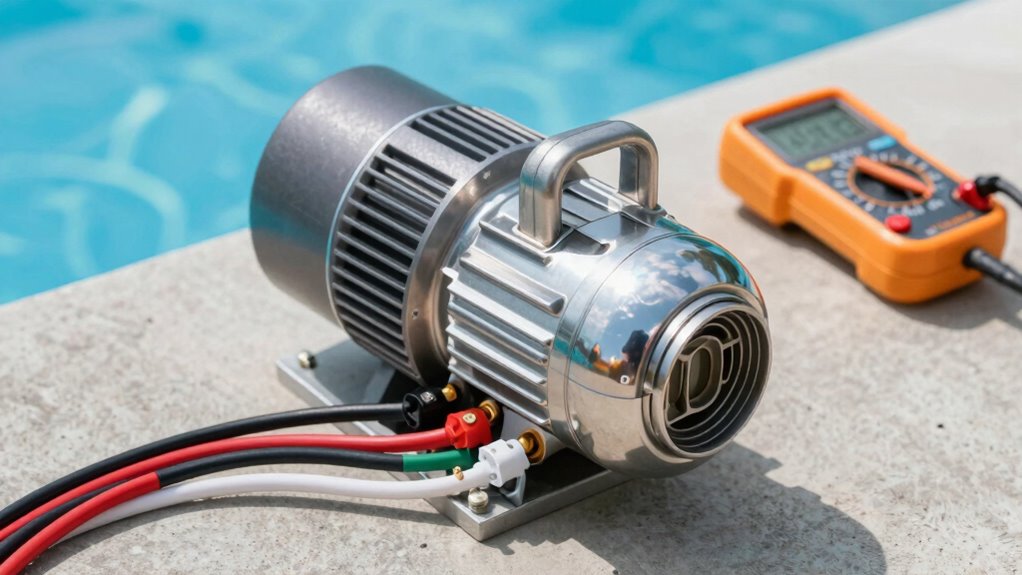
Upgrading or installing your pool pump voltage safely starts with understanding your electrical system and ensuring compatibility. First, verify your existing electrical wiring and circuit capacity to handle the new voltage. Next, turn off power at the breaker to prevent shocks. Then, follow these steps:
- Check the pump’s voltage requirements and match them with your electrical wiring.
- Use proper gauge wiring rated for the voltage and current.
- Connect the wiring securely, following local electrical codes.
- Test the setup before restoring full pool maintenance routines.
Always consult a licensed electrician if you’re unsure. Proper installation minimizes the risk of damaging your pool equipment or electrical fires, ensuring safe and efficient pool maintenance.
Frequently Asked Questions
Can a 110V Pump Be Converted to 220V Easily?
You can’t easily convert a 110V pump to 220V because of voltage compatibility issues. Pump conversion isn’t straightforward; it requires rewiring and possibly replacing internal components, which can be risky if you’re not experienced. Instead, it’s safer to select a pump designed for your voltage supply. Always consult a professional electrician to ensure proper setup and avoid damaging your equipment or risking safety.
What Are the Long-Term Effects of Using the Wrong Voltage Pump?
Using the wrong voltage pump is like forcing a square peg into a round hole—it’s bound to cause damage. Voltage compatibility issues can lead to overheating, shortened pump durability, and even electrical failures over time. You might notice your pump struggles or stops working prematurely. To keep your pool running smoothly and avoid costly repairs, always verify your pump matches the voltage specifications recommended by the manufacturer.
Are There Universal Pool Pumps Compatible With Both Voltages?
You might find universal pool pumps with compatibility for both voltages, but they’re rare. Most require voltage adapters or dual-voltage motors to work safely across different power sources. Always check the pump’s specifications and make sure it supports universal compatibility before purchasing. Using the right adapter can help, but matching your pump to your power supply ensures longevity and safety, preventing potential damage or electrical hazards.
How Does Voltage Impact the Lifespan of a Pool Pump?
Imagine you’re the captain of a ship in rough seas—voltage compatibility directly impacts your pump’s durability. Using the correct voltage prevents overheating and electrical stress, extending its lifespan. Running a pump at improper voltage can cause premature wear or even failure. So, always guarantee your pool pump matches your power supply. Proper voltage management safeguards your investment and keeps your pool running smoothly, much like a well-maintained vintage car.
What Safety Equipment Should Be Used When Installing High-Voltage Pumps?
When installing high-voltage pumps, you need to prioritize safety equipment. Always use protective gear like insulated gloves, safety goggles, and non-conductive footwear. Follow grounding precautions to prevent electrical shocks, making sure the pump is properly grounded. Double-check wiring connections and use appropriate tools. These steps protect you from electrical hazards and help ensure a safe installation process. Safety first keeps your day trouble-free and your equipment functioning correctly.
Conclusion
Choosing the right voltage for your pool pump is vital to avoid frying your day, much like avoiding a gremlin in a spaceship. Double-check your setup and consult a professional if needed. Remember, using the wrong voltage can lead to costly damage or safety hazards. Don’t repeat the mistakes of the past—be vigilant and guarantee your pump runs smoothly and safely, so your pool remains a invigorating oasis instead of a tech disaster.